10.2 Plant tissue culture and micropropagation

🥀Intro to Botany Unit 10 Review
10.2 Plant tissue culture and micropropagation
Plant tissue culture is a technique for growing plant cells, tissues, or organs under sterile conditions on artificial nutrient media. It enables rapid production of genetically identical plants, elimination of diseases, and genetic improvement. These capabilities make it a core tool in horticulture, agriculture, and plant science research.
Micropropagation is a specific application of tissue culture that produces whole plants from small pieces of plant tissue called explants. It works because plant cells are totipotent, meaning any living plant cell can regenerate into a complete organism given the right conditions. The process moves through defined stages, from preparing healthy source plants all the way to transferring finished plantlets into soil.
Overview of plant tissue culture
Plant tissue culture means growing plant cells, tissues, or organs in a sterile environment on an artificial nutrient medium. Because every cell produced this way comes from the same parent, the resulting plants are genetically identical clones.
This technique is used across multiple fields:
- Horticulture and agriculture: Rapid propagation of high-value or hard-to-propagate species
- Disease elimination: Producing virus-free planting stock through meristem culture
- Research: Studying plant development, physiology, and genetics under controlled conditions

Top images from around the web for Stages of micropropagation
Frontiers | Potential Role and Utilization of Plant Growth Promoting Microbes in Plant Tissue ... View original
Is this image relevant?
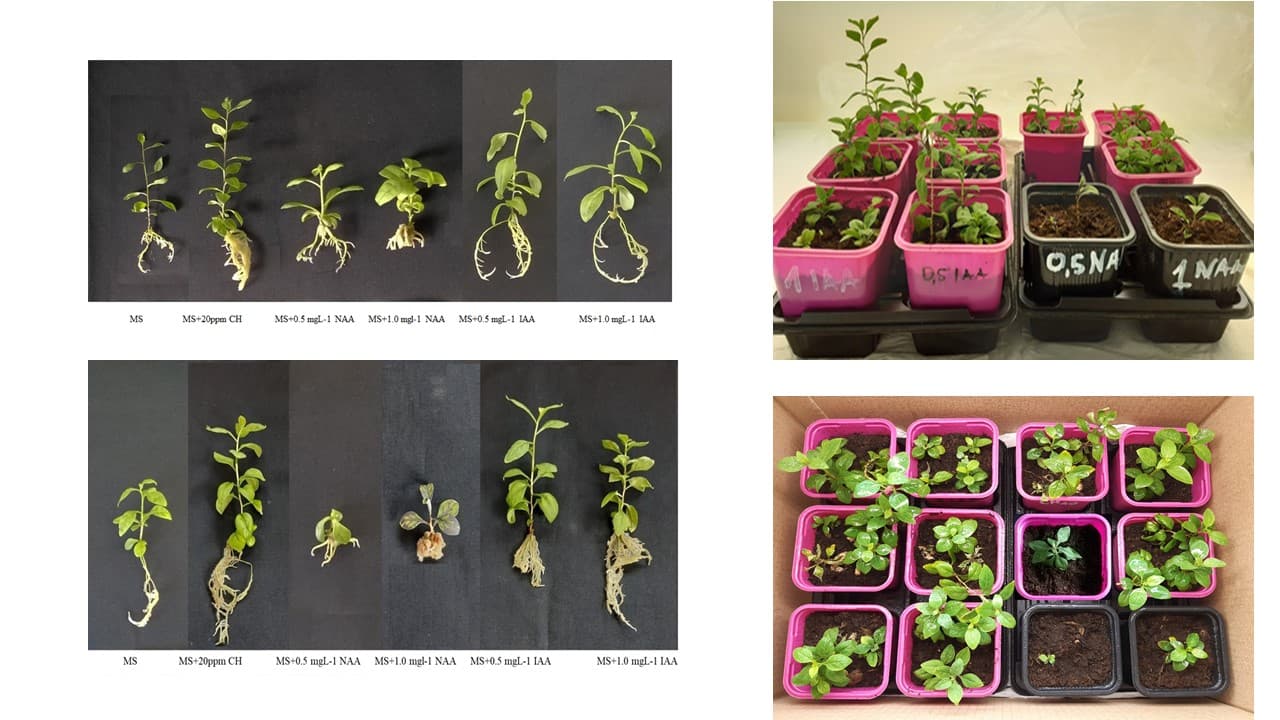
Micropropagation, rooting, and acclimatization of two cultivars of goji (Lycium chinense ... View original
Is this image relevant?
Frontiers | A Micropropagation Protocol for the Endangered Medicinal Tree Prunus africana (Hook ... View original
Is this image relevant?
Frontiers | Potential Role and Utilization of Plant Growth Promoting Microbes in Plant Tissue ... View original
Is this image relevant?
Micropropagation, rooting, and acclimatization of two cultivars of goji (Lycium chinense ... View original
Is this image relevant?
Principles of micropropagation
Micropropagation produces whole plants from small explants. The key biological principle behind it is totipotency: any living plant cell has the genetic information needed to develop into a complete organism, as long as it receives the right nutrients and hormonal signals.
This makes it possible to generate thousands of genetically uniform plants in a short time using very little space, which is a major advantage over traditional propagation methods like cuttings or grafting.
Stages of micropropagation
Micropropagation follows five recognized stages:
- Stage 0 (Preparation): Stock plants are grown under controlled, clean conditions to ensure explants will be healthy and disease-free.
- Stage 1 (Establishment): Explants are surface-sterilized and placed onto nutrient media under aseptic conditions. The goal is to get a clean, living culture started.
- Stage 2 (Multiplication): Shoots or somatic embryos are multiplied through repeated subculturing on media containing high cytokinin levels, which promote shoot proliferation.
- Stage 3 (Rooting): Individual shoots are transferred to media with high auxin levels to induce root formation, producing complete plantlets.
- Stage 4 (Acclimatization): Plantlets are gradually adjusted to normal (ex vitro) conditions and transferred to soil or potting mix. This step is critical because lab-grown plants have weak cuticles and poorly functioning stomata.
Advantages vs disadvantages
- Advantages:
- Rapid multiplication of plants that are difficult to propagate conventionally, such as orchids and many woody species
- Production of disease-free plants through meristem culture and virus indexing
- Preservation of genetic resources, including rare or endangered species
- A platform for genetic improvement through somaclonal variation, somatic hybridization, and genetic engineering
- Disadvantages:
- High startup costs for lab equipment, sterile facilities, and trained staff
- Risk of somaclonal variation (unwanted genetic changes) from prolonged culture and growth regulator exposure
- Some species acclimatize poorly to ex vitro conditions, leading to high mortality during Stage 4
- If cultures aren't properly screened, systemic diseases or mutations can be unknowingly multiplied across thousands of plants
Techniques for establishing cultures
Getting a clean, viable culture started is one of the most challenging parts of micropropagation. The explant must be free of contaminating bacteria and fungi, yet still alive and capable of growth.
Surface sterilization methods
Surface sterilization removes microorganisms from the outside of the explant without killing the plant tissue inside. Common agents include:
- Chemical sterilants: Sodium hypochlorite (), calcium hypochlorite (), mercuric chloride (), hydrogen peroxide ()
- Antibiotics: Gentamicin, streptomycin, rifampicin, targeting bacterial contamination
- Fungicides: Benomyl, nystatin, targeting fungal contamination
Exposure time and concentration must be calibrated for each explant type. Too little sterilization leaves contaminants; too much kills the tissue.
Explant selection and preparation
Not all plant parts work equally well as explants. Common choices include apical or axillary buds, shoot tips, nodal segments, embryos, leaves, and roots.
Several factors guide explant selection:
- Genotype: Some cultivars respond better to culture than others
- Age and physiological state: Younger, actively growing tissues generally perform best
- Position on the plant: Meristematic regions (growing tips) tend to have lower pathogen loads
Stock plants are often pretreated by growing them under controlled conditions, pruning to stimulate new growth, and spraying with fungicides or insecticides. During excision, damaged or contaminated outer tissues are trimmed away to reduce the explant to clean, viable material.
Culture media components
Culture media supply everything the explant needs to grow: mineral nutrients, an energy source, vitamins, and plant growth regulators. The exact formulation depends on the species, explant type, and micropropagation stage.
Macronutrients and micronutrients
- Macronutrients (needed in larger amounts): Nitrogen (N), phosphorus (P), potassium (K), calcium (Ca), magnesium (Mg), and sulfur (S), supplied as inorganic salts
- Micronutrients (needed in trace amounts): Iron (Fe), manganese (Mn), zinc (Zn), boron (B), copper (Cu), molybdenum (Mo), chlorine (Cl), cobalt (Co), and nickel (Ni), supplied as inorganic salts or chelates
The most widely used basal formulation is Murashige and Skoog (MS) medium, developed in 1962. It contains relatively high salt concentrations optimized for a broad range of species, though some plants require modified or alternative formulations.

Plant growth regulators
Growth regulators are the main tools for directing what cultured tissue does. By adjusting the ratio of auxins to cytokinins, you can push tissue toward shooting, rooting, or remaining as undifferentiated callus.
- Auxins (IAA, IBA, NAA, 2,4-D): Promote cell division, elongation, and root formation. High auxin-to-cytokinin ratios favor rooting and callus induction.
- Cytokinins (BAP, kinetin, zeatin, TDZ): Promote cell division and shoot proliferation. High cytokinin-to-auxin ratios favor shoot multiplication.
- Gibberellins (): Promote stem elongation and can help break dormancy.
- Abscisic acid (ABA): Regulates stomatal closure, induces dormancy, and can inhibit growth.
- Ethylene: Promotes fruit ripening and abscission; often an unwanted byproduct in sealed culture vessels that inhibits shoot elongation.
Organic supplements
- Vitamins: Thiamine (), pyridoxine (), nicotinic acid (niacin), and myo-inositol support cell division and growth
- Amino acids: Glycine, glutamine, and asparagine provide reduced nitrogen
- Complex organic extracts: Coconut water, casein hydrolysate, yeast extract, and malt extract supply a mix of vitamins, amino acids, and undefined growth factors. Coconut water, for example, contains natural cytokinins and is commonly added to orchid media.
- Gelling agents: Agar, gellan gum, and phytagel solidify the medium to support explants and help prevent hyperhydricity (a condition where tissues become waterlogged and glassy)
Types of plant tissue cultures
Different culture types serve different purposes. The choice depends on the explant, the media formulation, and what you're trying to achieve.
Callus cultures
Callus is an undifferentiated mass of dividing cells, induced from explants (leaves, stems, roots) on media with high auxin and low cytokinin levels. Callus doesn't look like any particular plant organ; it's just a lump of proliferating cells.
Callus cultures are useful for:
- Producing valuable secondary metabolites (e.g., paclitaxel/Taxol from Taxus callus)
- Generating somatic embryos that can develop into whole plants
- Serving as a target for genetic transformation
Callus can be maintained indefinitely through regular subculturing onto fresh media.
Suspension cultures
When friable (crumbly) callus is placed in liquid media and agitated on a shaker, it breaks apart into single cells or small clusters, forming a suspension culture. These cultures provide a homogeneous cell population, which is ideal for:
- Studying cell physiology and biochemistry
- Producing secondary metabolites or recombinant proteins at scale in bioreactors
- Genetic engineering experiments
Examples include shikonin production from Lithospermum erythrorhizon cells and anthocyanin production from Vitis vinifera (grape) cells.
Organ cultures
Organ cultures maintain isolated plant organs (roots, shoots, flowers, fruits) on media with specific growth regulator combinations. Unlike callus, these cultures retain organized tissue structure.
Applications include:
- Studying organ development and physiology in a controlled setting
- Producing virus-free plants through meristem tip culture (meristems are often virus-free because vascular tissue, which carries viruses, hasn't differentiated yet)
- Propagating crops like potato through nodal cultures or producing pathogen-free citrus through shoot tip grafting
Factors affecting culture growth
Optimizing both physical and chemical conditions in the culture environment is essential for healthy growth and successful micropropagation.
Physical factors
- Temperature: Affects cell division, elongation, and differentiation. The optimal range for most species is 20–28°C.
- Light: Regulates photosynthesis, morphogenesis, and secondary metabolite production. Optimal intensity and photoperiod (hours of light per day) vary by species and culture stage. Some stages are kept in darkness.
- Humidity: Influences transpiration and nutrient uptake. Relative humidity inside culture vessels is typically maintained at 40–70%. Excess humidity contributes to hyperhydricity.
- Aeration: Supplies oxygen for cellular respiration and helps remove accumulated ethylene. Achieved through vessel design, semi-solid media (which trap air pockets), or forced ventilation systems.

Chemical factors
- pH: Affects nutrient solubility and enzyme activity. Most species grow best at pH 5.5–6.0. Media pH tends to drift during autoclaving and culture, so it's adjusted before sterilization.
- Carbohydrate source: Provides energy and carbon skeletons. Sucrose (typically 2–3%) is most common, though glucose, fructose, or maltose may work better for certain species.
- Mineral nutrition: A balanced supply of macro- and micronutrients is essential. Deficiencies or toxicities directly impair growth and differentiation.
- Plant growth regulators: The specific combination and concentration of auxins, cytokinins, gibberellins, and other hormones determines whether cultures proliferate as callus, produce shoots, form roots, or develop somatic embryos.
Applications of micropropagation
Commercial plant production
Micropropagation is used commercially to clone high-value plants at scale:
- Ornamentals: Orchids, roses, and chrysanthemums are among the most commonly micropropagated crops
- Fruit crops: Banana, strawberry, and pineapple are propagated this way to ensure uniformity and disease-free stock
- Forest trees: Eucalyptus, pine, and teak are clonally propagated to capture superior growth traits
- Disease-free planting material: Crops prone to viral infections (potato, sugarcane, cassava) benefit enormously from meristem-derived, virus-indexed stock
- Transgenic plants: Genetically engineered plants with traits like herbicide resistance or improved nutrition are regenerated through tissue culture after transformation
Conservation of rare species
- Endangered plant species can be conserved in vitro through slow-growth storage (reducing temperature and light to slow metabolism) or cryopreservation (storage in liquid nitrogen at )
- Micropropagated plants can be reintroduced into natural habitats to boost wild population sizes
- In vitro gene banks provide long-term preservation of plant genetic diversity independent of field conditions
Genetic improvement of crops
- Somaclonal variation: Plants regenerated from callus sometimes display novel traits like disease resistance or stress tolerance. These variants can be selected and evaluated for crop improvement.
- Somatic hybridization: Protoplasts (cells with walls removed) from different species can be fused to create interspecific hybrids that wouldn't be possible through sexual crossing.
- Genetic transformation: Foreign genes are introduced into plant cells using Agrobacterium tumefaciens, particle bombardment (gene gun), or electroporation. Transformed cells are then regenerated into whole transgenic plants through tissue culture.
Challenges in micropropagation
Contamination and culture losses
Microbial contamination by bacteria, fungi, or yeast is the most common cause of culture failure. Contamination can originate from the explant itself, improperly sterilized media, the lab environment, or the people handling cultures.
Prevention relies on multiple strategies working together:
- Strict aseptic technique (working in a laminar flow hood, flame-sterilizing tools)
- Thorough surface sterilization of explants
- Use of antibiotics or fungicides when needed
- Regular monitoring of cultures and prompt disposal of contaminated ones
Somaclonal variation
Somaclonal variation refers to genetic or epigenetic changes that arise during tissue culture. While sometimes useful for generating novel traits, it's usually unwanted because it compromises the genetic fidelity of clones.
Causes include chromosomal rearrangements, point mutations, changes in DNA methylation, and activation of transposable elements. The risk increases with longer culture duration and higher concentrations of growth regulators (especially 2,4-D).
Mitigation strategies:
- Minimize the number of subculture cycles
- Use the lowest effective concentrations of growth regulators
- Select genotypes known to be stable in culture
- Conduct thorough field testing of micropropagated plants before commercial release
Cost and scalability issues
Micropropagation requires significant upfront investment in lab infrastructure, sterile equipment, and trained personnel. The process is labor-intensive, particularly for species with low multiplication rates or difficult rooting.
Acclimatization (Stage 4) requires specialized greenhouse facilities, and mortality during this stage can be substantial for some species.
Strategies to improve cost-effectiveness include:
- Automating repetitive culture steps (e.g., robotic cutting and transfer)
- Using lower-cost media components (e.g., substituting table sugar for reagent-grade sucrose)
- Optimizing protocols to increase multiplication rates
- Integrating micropropagation with conventional propagation, using tissue culture to produce initial stock that is then multiplied through cuttings or grafting
See Fiveable more often in Google
Mark Fiveable as a preferred source and Google is more likely to show you our guides in Top Stories, with a "preferred" badge in AI Mode and AI Overviews.