10.4 Plant field studies and ecological sampling

🥀Intro to Botany Unit 10 Review
10.4 Plant field studies and ecological sampling
Importance of Plant Field Studies
Plant field studies are how researchers gather real data about plant communities in their natural habitats. Without them, our understanding of plant ecology, distribution, and diversity would rely entirely on lab work and remote sensing, both of which miss critical on-the-ground details.
- Field studies let researchers observe plants interacting with other organisms and responding to environmental conditions in real time
- The data collected directly informs conservation planning, resource management, and predictions about how plant communities will respond to climate change or habitat loss
- They also serve as ground-truth for satellite imagery and modeling efforts

Top images from around the web for Random sampling
Definition of sampling units begets conclusions in ecology: the case of habitats for plant ... View original
Is this image relevant?
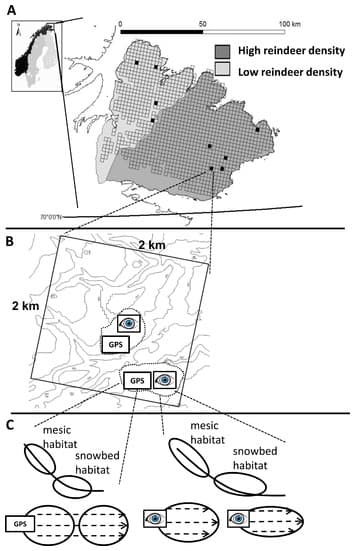
Definition of sampling units begets conclusions in ecology: the case of habitats for plant ... View original
Is this image relevant?
Frontiers | Tapping Diversity From the Wild: From Sampling to Implementation View original
Is this image relevant?
Definition of sampling units begets conclusions in ecology: the case of habitats for plant ... View original
Is this image relevant?
Definition of sampling units begets conclusions in ecology: the case of habitats for plant ... View original
Is this image relevant?
Types of Ecological Sampling
Before collecting any data, you need a plan for where to sample. The three main approaches each solve different problems.
Random Sampling
Sampling units (quadrats or points) are placed at random locations within the study area, giving every spot an equal chance of being selected. This avoids bias and allows for statistical inference. Random sampling works best in relatively homogeneous habitats or when you don't have prior knowledge of the area's layout.
To do it in practice, you typically overlay a grid on a map of the study area and use a random number generator to pick coordinates.
Stratified Sampling
Here you divide the study area into distinct subunits called strata based on known differences, such as soil type, slope, or vegetation type. You then randomly sample within each stratum.
- Ensures every habitat type in the study area gets represented
- Increases precision by reducing variability within each stratum
- Particularly useful in heterogeneous landscapes where random sampling might miss uncommon habitat types entirely
Systematic Sampling
Sampling units are placed at regular intervals along a grid or transect. This guarantees even coverage and can reveal spatial patterns or gradients across the landscape.
The main drawback: if your sampling interval happens to align with a repeating pattern in the vegetation (say, evenly spaced tree rows in a former plantation), you could get skewed results. Always check for this possibility before committing to a systematic design.
Sampling Techniques
Quadrat Sampling
A quadrat is a frame (square or rectangular) of fixed size placed on the ground to define a sampling unit. Within each quadrat, you record species present, count individuals, and estimate cover.
- Quadrats can be placed randomly, systematically, or within strata
- Size matters: small quadrats (e.g., 0.25 ) work for grasslands, while larger ones (e.g., 10 × 10 m) suit forests with bigger, more widely spaced plants
- This technique gives you detailed, quantitative data on density, cover, and composition
Line Transect Sampling
You establish a straight line of fixed length through the study area and record every plant that intersects the line (or touches points at regular intervals along it).
Line transects are especially useful for capturing changes in vegetation along environmental gradients, like the transition from a wetland edge to upland forest (an ecotone). They're also practical for covering more ground than quadrats alone.
Point-Intercept Sampling
A vertical pin or laser pointer is lowered at specific points along a transect or within a quadrat. Every plant the pin contacts gets recorded.
- Fast and objective, reducing the guesswork of visual cover estimates
- Works well in dense or layered vegetation where it's hard to visually separate species
- Each "hit" contributes to cover estimates: a species contacted at 15 out of 100 points has roughly 15% cover
Field Equipment
Quadrats and Transects
Quadrats are commonly built from PVC pipe, metal frames, or rope. Their size should match the vegetation type and your research questions. Transects are laid out with measuring tapes, ropes, or flagging tape to keep the line straight and intervals consistent. In rough terrain, laser rangefinders or GPS units help establish accurate transect lines.
Measuring Tapes and Rulers
Measuring tapes (typically 30–100 m) are used for laying out transects and measuring distances between sampling points. Rulers, calipers, or diameter tapes measure plant height, stem diameter (DBH), or leaf dimensions. Folding rulers and retractable tapes are the most practical for fieldwork.
Field Guides and Keys
- Field guides provide species descriptions, illustrations, and distribution maps for the study region
- Dichotomous keys walk you through a series of either/or choices based on morphological features until you arrive at an identification
- Specialized guides for specific groups (grasses, ferns, mosses) or habitats (wetlands, alpine zones) improve identification accuracy considerably
Data Collection Methods

Species Identification
Every plant within a sampling unit gets identified, ideally to species, and recorded by its scientific name. This requires familiarity with local flora and regular use of field guides and dichotomous keys. Voucher specimens (pressed samples deposited in a herbarium) confirm identifications, and photographs are useful for later verification or consultation with taxonomic experts.
Density and Abundance
Density is the number of individuals of a species per unit area, typically expressed as individuals per . For example, if you count 12 individuals of a species in a 1 quadrat, the density is 12 individuals/.
Abundance refers to the relative representation of a species within the community, often expressed as a percentage of total individuals. Together, density and abundance data reveal the structure and composition of the plant community.
Frequency and Cover
Frequency is the proportion of sampling units in which a species occurs. If a species appears in 8 out of 20 quadrats, its frequency is 40%.
Cover is the proportion of ground surface a species occupies when viewed from above. It can be estimated visually or measured more precisely with point-intercept methods. Frequency and cover together tell you about both spatial distribution and dominance within the community.
Environmental Factors
Plant distribution rarely makes sense without understanding the environment. Recording these factors alongside vegetation data lets you test for relationships between species patterns and their physical surroundings.
Soil Properties
Soil texture (proportions of sand, silt, and clay), pH, nutrient content, and moisture all influence which plants grow where. Samples can be collected for lab analysis, or you can use portable field kits for quick pH and nutrient tests. Soil depth, compaction, and organic matter content are also worth assessing on-site.
Light Availability
Light intensity, duration, and quality drive photosynthesis and shape competitive dynamics. Canopy cover, slope aspect, and steepness all affect how much light reaches the understory. Light meters provide direct readings, while hemispherical photography captures the full canopy structure above a point.
Temperature and Humidity
Air temperature, soil temperature, and relative humidity can all limit plant growth and survival. Portable data loggers or small weather stations record these variables at set intervals. Placing sensors in different microhabitats (e.g., under canopy vs. in a gap) captures microclimatic variation within a single study area.
Vegetation Analysis
Community Composition
Describing a plant community means characterizing its species richness (total number of species), evenness (how equally abundant those species are), and overall diversity.
- Ordination techniques like non-metric multidimensional scaling (NMDS) visualize patterns in community composition across sites
- Indicator species analysis identifies species strongly associated with particular environmental conditions or disturbance types
Species Diversity Indices
Two widely used indices:
- Shannon-Wiener index:
- Simpson's index:
In both formulas, is the proportion of individuals belonging to species , and is the total number of species. Shannon-Wiener increases with both richness and evenness, while Simpson's actually increases with dominance (lower diversity), so it's often reported as .
Rarefaction curves allow you to compare species richness between samples of different sizes by standardizing to the same number of individuals.
Similarity and Dissimilarity
These indices quantify how alike or different two communities are:
- Jaccard index: (presence/absence data; = shared species, and = species unique to each community)
- Sørensen index: (also presence/absence, but weights shared species more heavily)
- Bray-Curtis dissimilarity: (incorporates abundance data, not just presence/absence)
Cluster analysis or NMDS can then group communities based on these values to reveal ecological patterns.
Spatial Patterns
Dispersion of Individuals
The spatial arrangement of individuals within a population falls into three categories: random, clumped, or uniform. Clumped is the most common in nature, often driven by patchy resources or vegetative reproduction.
Statistical tools like Ripley's K function or nearest neighbor analysis detect and quantify these patterns. The pattern you observe can reflect environmental heterogeneity, species interactions, or dispersal limitations.

Zonation and Gradients
Zonation is the arrangement of distinct plant communities along an environmental gradient, such as elevation or distance from a water source. Gradients can be discrete (sharp forest edge to open field) or continuous (gradual change in species along an altitudinal slope).
Transect sampling combined with ordination techniques can reveal these patterns and help identify which environmental drivers are most important.
Edge Effects
Where two distinct habitats meet, a transition zone forms with its own unique environmental conditions and species mix. These edge effects can alter plant growth, reproduction, and interactions with herbivores and pollinators. Sampling along transects perpendicular to the edge captures how vegetation structure and composition shift across the boundary.
Temporal Dynamics
Seasonal Variations
Plant communities change through the year in species composition, phenology (timing of life events), and productivity. Repeated sampling across seasons captures these patterns and links them to environmental drivers like temperature and precipitation. Phenological monitoring tracks specific events such as leaf emergence, flowering, fruiting, and senescence.
Succession and Disturbances
Succession is the directional change in community composition over time, often triggered by a disturbance like fire, flooding, or logging. Two common study approaches:
- Chronosequence studies sample communities at different stages of succession (e.g., sites burned 1, 5, 20, and 50 years ago) to infer temporal patterns from spatial variation
- Before-and-after monitoring tracks the same plots through a disturbance event to measure resilience and recovery directly
Long-term Monitoring
Repeated sampling of the same plots or transects over years to decades reveals slow changes that short-term studies miss, such as shifts driven by climate change or altered land use. Permanent plots with consistent methods are essential for producing reliable long-term datasets.
Applications of Field Data
Habitat Conservation
Field data on community composition, structure, and diversity help prioritize areas for protection. Understanding the specific habitat requirements of rare or threatened species guides management decisions. Ongoing vegetation monitoring also lets managers evaluate whether conservation interventions are actually working.
Ecological Restoration
Field studies identify reference ecosystems (intact examples of the target community) and appropriate species for restoration projects. Data on environmental conditions and existing community composition guide site preparation, species selection, and planting strategies. Monitoring restored sites over time evaluates success and informs adaptive management.
Biodiversity Assessment
Field data contribute to inventories and maps of plant species across a region, establishing baselines for conservation. Comparing diversity across habitats or land-use types identifies areas of high conservation value. Long-term monitoring detects biodiversity changes driven by human activities or environmental pressures.
Limitations and Challenges
Sampling Bias and Errors
- Plot placement can introduce bias, such as oversampling accessible or visually conspicuous areas while undersampling remote spots
- Observer inconsistencies in species identification or cover estimation affect data quality; training and calibration among field workers help reduce this
- Inadequate sample size or non-random sampling can fail to capture the full range of variability in the study area
Logistical Constraints
Field studies are often time-consuming, labor-intensive, and expensive, especially in remote or rugged terrain. Access may be limited by land ownership, permit requirements, or seasonal conditions (snowpack, flooding). Equipment transport, accommodation, and personnel logistics can all constrain the scope of what's feasible.
Ethical Considerations
- Minimize disturbance to plants, animals, and their habitats during fieldwork
- Collecting specimens or soil samples may require permits; follow guidelines for sustainable harvesting
- Engage with local communities and respect traditional ecological knowledge to ensure research is inclusive and culturally appropriate
See Fiveable more often in Google
Mark Fiveable as a preferred source and Google is more likely to show you our guides in Top Stories, with a "preferred" badge in AI Mode and AI Overviews.