11.4 In situ conservation and protected areas

🥀Intro to Botany Unit 11 Review
11.4 In situ conservation and protected areas
🥀 Intro to Botany
In situ conservation focuses on protecting species and ecosystems right where they naturally occur, rather than moving them to gardens or seed banks. This approach is the backbone of plant conservation because it keeps entire ecosystems functioning and allows species to continue evolving in response to their environment.
In situ conservation
In situ conservation means protecting species, their genetic diversity, and their ecological relationships in the habitats where they naturally live. Instead of removing organisms from the wild, you protect and manage the places they already exist. The goal is to maintain viable, self-sustaining populations within their native ranges.

Top images from around the web for Definition of in situ conservation
Frontiers | Agricultural Landscape Heterogeneity Matter: Responses of Neutral Genetic Diversity ... View original
Is this image relevant?
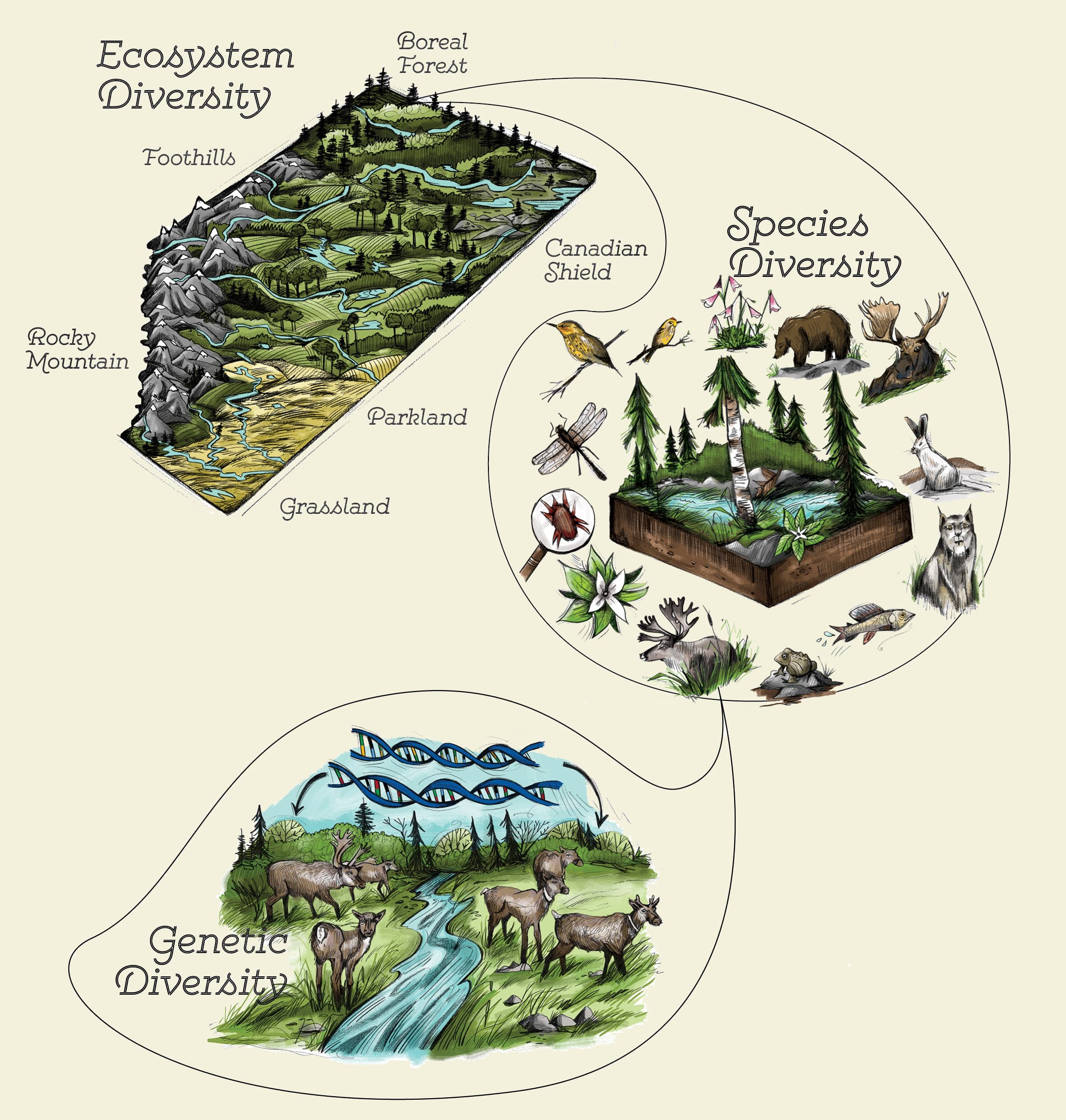
Taxonomy | Biology for Non-Majors I View original
Is this image relevant?
ESS Topic 3.1: Introduction to Biodiversity - AMAZING WORLD OF SCIENCE WITH MR. GREEN View original
Is this image relevant?
Frontiers | Agricultural Landscape Heterogeneity Matter: Responses of Neutral Genetic Diversity ... View original
Is this image relevant?
Taxonomy | Biology for Non-Majors I View original
Is this image relevant?
Importance of in situ conservation
This approach matters because it preserves more than just individual species. It maintains the ecological processes that connect them: pollination networks, nutrient cycling, mycorrhizal relationships, and the countless other interactions plants depend on. Species conserved in situ retain their evolutionary potential, meaning they can continue adapting to shifting environmental conditions over generations.
Protected natural habitats also deliver ecosystem services that benefit people directly, from water filtration to climate regulation. And for many cultures, these landscapes carry deep spiritual and cultural significance that can't be replicated elsewhere.
Advantages over ex situ conservation
In situ conservation has several key strengths compared to ex situ methods like botanical gardens and seed banks:
- Species continue to evolve and adapt alongside their pollinators, symbionts, and competitors
- Complex ecological relationships stay intact, which is nearly impossible to recreate artificially
- It's far more cost-effective when you need to conserve large numbers of species across whole ecosystems
- Genetic diversity within populations is maintained more naturally than in small captive collections
Ex situ conservation still plays an important backup role (seed banks, for example, are invaluable insurance), but it lacks the ecological context that keeps species truly viable long-term.
Protected areas
A protected area is a clearly defined geographical space that is legally recognized, dedicated, and managed to achieve long-term conservation of nature. These range from strictly off-limits reserves to areas where sustainable human use is permitted. They vary widely in size, management intensity, and legal status, but all share the core purpose of conserving biodiversity and ecological processes.
Types of protected areas
- National parks: Large areas protecting whole ecosystems along with their wildlife and recreational value (e.g., Yellowstone, Serengeti)
- Wildlife reserves and sanctuaries: Targeted protection for specific species or habitats. Giant Panda Reserves in China, for instance, protect critical bamboo forest habitat for a single flagship species.
- Marine protected areas: Conserve ocean and coastal ecosystems. The Great Barrier Reef Marine Park and Papahānaumokuākea in Hawai'i are two well-known examples.
- Community conserved areas: Managed by indigenous peoples or local communities, such as the Kayapó Indigenous Territory in Brazil or Locally Managed Marine Areas across the Pacific Islands
IUCN protected area categories
The International Union for Conservation of Nature (IUCN) classifies protected areas into seven categories based on management objectives. You don't need to memorize every detail, but understanding the spectrum from strict protection to sustainable use is important:
| Category | Name | Key Feature |
|---|---|---|
| Ia | Strict nature reserve | Strictly protected; mainly for science and biodiversity |
| Ib | Wilderness area | Large, unmodified areas with no permanent human habitation |
| II | National park | Large natural areas for ecological protection and recreation |
| III | Natural monument or feature | Protects a specific outstanding natural or cultural feature |
| IV | Habitat/species management area | Active management targeting particular species or habitats |
| V | Protected landscape/seascape | Conservation of landscapes shaped by long-term human interaction |
| VI | Sustainable use area | Conserves ecosystems while allowing traditional, sustainable resource use |
The categories move from most restrictive (Ia) to most permissive (VI). Many countries use a mix of these to balance conservation with human needs.
Establishing protected areas
Setting up a protected area involves more than drawing lines on a map. It requires identifying the right sites, getting people on board, and building legal structures that will hold up over time.
Criteria for site selection
Several factors guide where protected areas should be established:
- Biodiversity value: Species richness, levels of endemism (species found nowhere else), and presence of threatened or rare plants
- Ecological representation: Whether the site captures diverse ecosystems, habitat types, and environmental gradients not already protected elsewhere
- Ecosystem services: The site's importance for water provision, carbon storage, soil stability, or other services
- Socio-economic factors: Local community needs, cultural significance of the land, and potential for sustainable use
Stakeholder involvement
Conservation that ignores local people tends to fail. Effective protected area planning engages local communities, indigenous peoples, government agencies, NGOs, and researchers from the start. This means incorporating traditional ecological knowledge into management plans, addressing conflicts over resource use or land tenure, and building local capacity so communities can participate in long-term management.
Legal frameworks and policies
Protected areas need legal backing to function. This includes national laws governing their establishment and management, alignment with international agreements like the Convention on Biological Diversity (CBD), the World Heritage Convention, and the Ramsar Convention. Clear rules about land tenure, access rights, funding mechanisms, and enforcement are all essential.
Management of protected areas
Designating a protected area is only the first step. Without effective ongoing management, protection exists only on paper.
Zoning and land use planning
Most protected areas are divided into zones with different rules:
- Core zones: Strict protection for biodiversity conservation and research only
- Buffer zones: Limited, sustainable activities that support conservation goals
- Transition zones: Areas where sustainable development and community engagement are permitted
This layered approach balances conservation priorities with the reality that people often live in or near protected areas.
Monitoring and evaluation
Managers regularly track key ecological indicators like species populations, habitat quality, and ecosystem health. This data reveals whether management actions are actually working. Without monitoring, there's no way to know if a protected area is meeting its conservation objectives.

Adaptive management
Protected area management works best as a flexible, iterative process. As new data comes in from monitoring, or as conditions change (a new invasive species arrives, climate patterns shift), managers adjust their strategies. This "learn and adapt" cycle is more effective than rigid, unchanging management plans.
Challenges in protected area management
Human-wildlife conflicts
When wildlife damages crops, kills livestock, or threatens human safety, local support for conservation erodes quickly. Elephants raiding farms or large carnivores attacking livestock are common examples. Mitigation strategies include physical barriers like fencing, compensation schemes for losses, and community-based management programs that give local people a direct stake in wildlife conservation.
Invasive species control
Non-native species can devastate native plant communities by outcompeting them for resources, altering soil chemistry, or changing fire regimes. Effective control follows a clear priority order:
- Prevention: Stop new introductions before they happen
- Early detection and rapid response: Catch and eradicate new invasions quickly
- Long-term management: Control established invasives that can't be fully eradicated
- Habitat restoration: Help native species recover in areas where invasives have been removed
Climate change impacts
Climate change is reshaping where species can survive, altering flowering times, disrupting pollinator relationships, and increasing vulnerability to drought and fire. Protected area managers are responding by incorporating climate projections into planning, enhancing ecological connectivity between protected areas so species can migrate, and implementing adaptation measures like habitat restoration.
Role of local communities
Traditional ecological knowledge
Indigenous peoples and local communities often hold generations of accumulated knowledge about local ecosystems, sustainable harvesting practices, and ecological relationships. This knowledge is a genuine scientific resource for conservation planning. Respecting community rights over their knowledge and supporting its transmission to younger generations strengthens both cultural heritage and conservation outcomes.
Community-based conservation
The most durable conservation happens when local communities are active partners, not passive bystanders. Community-based conservation involves local people in planning and decision-making, develops community-led initiatives, and provides training and financial support. Recognizing community land rights and traditional governance systems is a prerequisite for this to work.
Sustainable resource use
Many protected areas allow sustainable harvesting of plants, animals, or other resources to support local livelihoods. This requires clear guidelines, monitoring systems to prevent overuse, and market access for sustainably harvested products. When communities benefit economically from a healthy ecosystem, they have strong incentive to protect it.
Ecosystem services of protected areas
Biodiversity conservation
This is the primary purpose: maintaining populations of threatened, endemic, and rare species while preserving the genetic diversity that makes populations resilient. Protected areas also conserve entire ecological communities and the processes (seed dispersal, pollination, decomposition) that sustain them.
Carbon sequestration and climate regulation
Protected forests, peatlands, and other ecosystems store enormous amounts of carbon in their vegetation and soils. By preventing deforestation and degradation, protected areas reduce greenhouse gas emissions. They also regulate local climate through evapotranspiration and influence regional weather patterns.

Water catchment and soil protection
Intact forests and wetlands within protected areas filter water, regulate stream flow, and prevent flooding. Upstream protection directly benefits downstream communities that depend on clean water. Vegetation cover stabilizes slopes, prevents erosion, and maintains the soil fertility that all plant growth depends on.
Ecotourism in protected areas
Ecotourism can generate revenue for conservation and create economic opportunities for local communities, but it's a double-edged tool.
Benefits of ecotourism
- Generates funding for protected area management
- Creates jobs and alternative livelihoods for local people
- Builds public awareness and political support for conservation
- Can encourage preservation of cultural heritage and traditional practices
Negative impacts of poorly managed ecotourism
- Habitat degradation from overuse and foot traffic in sensitive areas
- Disturbance to wildlife behavior, breeding, and feeding
- Pollution, waste, and infrastructure development in otherwise pristine environments
- Cultural commodification that erodes local traditions
Sustainable ecotourism practices
Minimizing harm requires visitor limits, permit systems for sensitive areas, low-impact infrastructure, investment in renewable energy, and ongoing monitoring of ecological and social impacts. Training local community members to lead and manage ecotourism operations keeps benefits local.
International agreements and conventions
Convention on Biological Diversity (CBD)
The CBD is the primary international treaty for biodiversity conservation. It has three main objectives: conserving biodiversity, using its components sustainably, and sharing benefits equitably. The CBD promotes in situ conservation through protected area networks and encourages countries to integrate biodiversity into national policies. It also supports capacity building and funding for conservation in developing countries.
UNESCO World Heritage Sites
These are areas of "outstanding universal value" for their natural or cultural significance. Sites like the Great Barrier Reef, Serengeti National Park, and portions of the Amazon Rainforest receive international recognition, technical assistance, and funding. Countries that nominate sites commit to protecting and managing them according to international standards.
Ramsar Convention on Wetlands
This treaty focuses specifically on wetland conservation and wise use. It recognizes that wetlands provide critical ecological, economic, and cultural services. Designated "Ramsar Sites" receive special protection status, and the convention promotes sustainable wetland management through land use planning and stakeholder participation.
Case studies
Successful in situ conservation projects
- Amazon Region Protected Areas (ARPA) Program, Brazil: The largest tropical forest conservation initiative in the world, protecting over 60 million hectares of Amazon rainforest through a network of protected areas
- Namibia's Community-Based Natural Resource Management: A model program that empowers local communities to manage wildlife on communal lands, generating income from conservation-compatible activities
- Coral Triangle Marine Protected Area System: A collaborative effort across six countries (Indonesia, Malaysia, Papua New Guinea, Philippines, Solomon Islands, Timor-Leste) to protect the world's most biodiverse marine region
Lessons learned from failures
Conservation projects most commonly fail due to:
- Insufficient funding and staffing for effective management and enforcement
- Lack of community engagement, leading to conflicts and non-compliance with regulations
- Failure to address root causes of biodiversity loss like poverty, population pressure, and unsustainable development
- Inadequate monitoring, making it impossible to know whether strategies are working
Future directions in protected area management
- Expanding protected area coverage and connectivity to meet global targets (the CBD's Kunming-Montreal Global Biodiversity Framework calls for protecting 30% of land and ocean by 2030)
- Integrating biodiversity conservation into agriculture, forestry, and urban planning
- Strengthening the role of indigenous peoples and local communities in conservation governance
- Developing innovative financing like payments for ecosystem services and biodiversity credits
- Building resilience of protected areas to climate change and emerging threats
See Fiveable more often in Google
Mark Fiveable as a preferred source and Google is more likely to show you our guides in Top Stories, with a "preferred" badge in AI Mode and AI Overviews.