11.1 Plant extinction and endangered species

🥀Intro to Botany Unit 11 Review
11.1 Plant extinction and endangered species
🥀 Intro to Botany
Causes of Plant Extinction
Plant extinction occurs when a species no longer exists anywhere, whether in the wild or in cultivation. With roughly 40% of the world's plant species now estimated to be threatened, understanding what drives extinction is one of the most pressing topics in botany.
Several factors, both natural and human-caused, push plant species toward extinction. Most of the time, it's not a single cause but a combination of threats acting together.

Top images from around the web for Human activities
File:Riau deforestation 2006.jpg - Wikipedia View original
Is this image relevant?
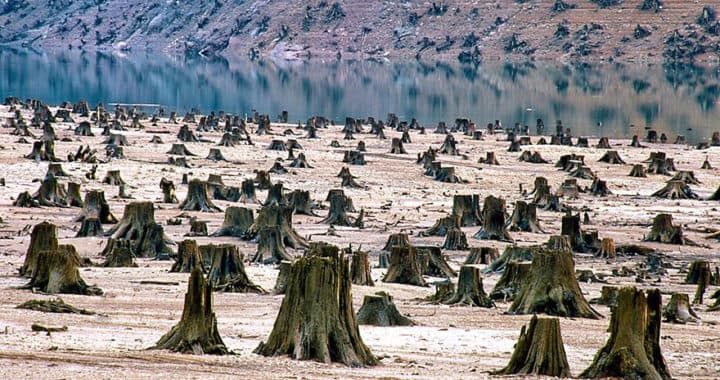
14 Shocking Images showing Impact of Human activities on Earth View original
Is this image relevant?
38% of remaining Amazon forest already degraded - South Africa Today View original
Is this image relevant?
File:Riau deforestation 2006.jpg - Wikipedia View original
Is this image relevant?
14 Shocking Images showing Impact of Human activities on Earth View original
Is this image relevant?
Human Activities
Human activity is the single largest driver of plant extinction today.
- Deforestation for agriculture, urbanization, and resource extraction directly destroys plant habitats. Tropical deforestation alone eliminates an estimated 15 million hectares of forest per year.
- Pollution from industrial runoff, pesticides, and herbicides damages plant populations and degrades soil quality.
- Unsustainable harvesting of wild plants for medicine, ornamental trade, or timber depletes populations faster than they can recover.
- Human-caused wildfires can devastate plant communities and permanently alter the ecosystem's composition.
Climate Change
Rising global temperatures affect plant growth, reproduction, and where species can survive. Plants that can't migrate or adapt fast enough face decline.
- Changes in precipitation patterns create droughts or flooding that stress plant populations.
- Shifts in seasonal timing (phenology) disrupt plant-pollinator relationships. If a flower blooms before its pollinator is active, reproduction fails.
- Climate change also amplifies other threats. Warmer, drier conditions encourage invasive species and increase wildfire frequency.
Habitat Loss and Fragmentation
This is the most common direct cause of plant endangerment worldwide.
- Converting natural land to farms, cities, or roads shrinks the total area available for plant populations.
- Fragmentation splits large habitats into small, isolated patches. Isolated populations can't exchange pollen or seeds with each other, which reduces gene flow and genetic diversity over time.
- Edge effects occur at the boundaries of fragmented habitats, where plants experience altered light, temperature, humidity, and wind exposure compared to the habitat interior.
- Fragmentation also disrupts plant-animal interactions needed for pollination and seed dispersal.
Invasive Species
Non-native species introduced to new environments can outcompete native plants for light, water, and nutrients.
- Invasive plants can alter soil chemistry, water availability, and even fire regimes, making conditions unsuitable for native species. For example, cheatgrass (Bromus tectorum) in the western U.S. increases fire frequency, which native shrubs can't survive.
- Invasive animals like feral goats or introduced insects can decimate native plant populations through herbivory or seed predation.
- Without natural predators or diseases to keep them in check, invasive species spread rapidly and dominate ecosystems.
Overexploitation
Overexploitation means harvesting plants at a rate faster than populations can replenish themselves.
- Commercial logging and collection for horticulture deplete wild populations of slow-growing or rare species.
- Destructive harvesting methods like clear-cutting damage entire habitats, not just the target species.
- Overgrazing by livestock prevents seedlings from establishing, gradually shifting plant community composition.
- Poaching of rare species for illegal trade (orchids and succulents are frequent targets) threatens survival in the wild.
Endangered Plant Species
Endangered plant species are those facing a high risk of extinction in the wild. The International Union for Conservation of Nature (IUCN) assesses and categorizes species based on how close they are to disappearing. These assessments help conservationists decide where to focus limited resources.
IUCN Red List Categories
The IUCN Red List is the global standard for evaluating extinction risk. Species are placed into categories based on measurable criteria:
- Extinct (EX) and Extinct in the Wild (EW) apply to species that are gone entirely or survive only in cultivation.
- Critically Endangered (CR), Endangered (EN), and Vulnerable (VU) represent decreasing levels of extinction risk.
- Near Threatened (NT) and Least Concern (LC) describe species not currently at high risk.
Assessments consider population size, rate of decline, geographic range, habitat quality, and the specific threats a species faces.
Critically Endangered Plants
Critically Endangered (CR) plants face an extremely high risk of extinction. These species typically have severely fragmented populations, very small geographic ranges, or rapid population declines.
- The Suicide Palm (Tahina spectabilis), discovered in Madagascar in 2007, has fewer than 100 mature individuals in the wild.
- The Western Underground Orchid (Rhizanthella gardneri) in Australia spends its entire life cycle underground and is known from only a handful of sites.
CR species require urgent action like immediate habitat protection and ex situ conservation programs.
Endangered Plants
Endangered (EN) plants face a very high risk of extinction but are slightly less imperiled than CR species. They typically have small, declining populations or restricted ranges.
- Rafflesia arnoldii, which produces the world's largest individual flower (up to 1 meter across), is endangered due to rainforest destruction in Southeast Asia.
- The Monkey Puzzle Tree (Araucaria araucana) in Chile and Argentina is threatened by logging, fire, and grazing.
Conservation for EN species focuses on habitat management, population monitoring, and legal protection.
Vulnerable Plants
Vulnerable (VU) plants face a high risk of extinction but may have somewhat larger populations or wider ranges than CR and EN species.
- The Venus Flytrap (Dionaea muscipula) grows naturally only within a 120-km radius around Wilmington, North Carolina, and is threatened by poaching and habitat loss.
- Ginkgo biloba, often called a "living fossil" because it has existed for over 200 million years, is vulnerable in its native range in China despite being widely planted in cities worldwide.
Conservation for VU species focuses on reducing threats and promoting sustainable use.
Consequences of Plant Extinction
Losing plant species doesn't just mean one fewer organism on a list. Plants form the foundation of nearly every terrestrial ecosystem, so their loss triggers cascading effects.

Loss of Biodiversity
- Plant extinction reduces the total biodiversity of an ecosystem. When a plant disappears, specialized pollinators, herbivores, and fungi that depend on it may also go extinct. This is called co-extinction.
- Decreased plant diversity makes ecosystems less resilient to disturbances like drought, disease, or further species loss.
- Unique genetic resources vanish permanently, including compounds that might have had future medicinal or agricultural value.
Ecological Imbalances
- Losing key plant species disrupts food webs. Herbivores lose food sources, which affects predators further up the chain.
- Changes in plant community composition alter nutrient cycling, soil structure, and water retention in ways that can degrade entire ecosystems.
- In extreme cases, the loss of foundational plant species (like dominant canopy trees) can cause ecosystem collapse.
Impact on Ecosystem Services
Plants provide ecosystem services that humans depend on, including carbon sequestration, water filtration, oxygen production, and soil stabilization.
- Losing plant diversity reduces an ecosystem's ability to sequester carbon, contributing to climate change.
- Degraded plant cover increases erosion and reduces water quality.
- These losses carry real economic costs for communities that depend on healthy ecosystems for agriculture, clean water, and flood control.
Potential Loss of Medicinal Plants
- An estimated 50,000–80,000 plant species are used in traditional and modern medicine worldwide. About 25% of modern pharmaceuticals are derived from plant compounds.
- When a medicinal plant goes extinct, potential treatments for diseases disappear with it.
- Indigenous knowledge about medicinal plant uses is often lost alongside the species, since that knowledge is tied to living practice with the plant.
Conservation Strategies
Protecting endangered plants requires a combination of approaches. The two broad categories are in situ (protecting plants where they naturally grow) and ex situ (preserving plants outside their natural habitat). The most effective programs use both.
In Situ Conservation
In situ conservation protects species in their natural habitats, allowing them to continue evolving and adapting.
- Protected areas like national parks, nature reserves, and wilderness areas safeguard plant populations and the ecosystems they depend on.
- Active habitat management within protected areas includes controlling invasive species, managing fire regimes, and restoring degraded areas.
- The major advantage of in situ conservation is that it preserves not just the species but also its ecological relationships with pollinators, soil organisms, and other plants.
Ex Situ Conservation
Ex situ conservation preserves plant species outside their natural habitats as a safety net.
- Botanical gardens cultivate living collections of diverse plant species for conservation, research, and public education.
- Seed banks store viable seeds under carefully controlled temperature and humidity conditions for long-term preservation.
- Tissue culture collections maintain plant cells or tissues in laboratory settings, which is especially useful for species that don't produce viable seeds.
The main challenges with ex situ conservation are maintaining genetic diversity in small collections and ensuring plants can survive if reintroduced to the wild.
Seed Banks and Botanical Gardens
- Seed banks preserve seeds for decades or even centuries. The Svalbard Global Seed Vault in Norway acts as a global backup, storing duplicate seed samples from collections around the world in a permafrost-cooled mountain vault.
- The Millennium Seed Bank at Kew, UK, has conserved seeds from over 40,000 species, making it the largest wild plant seed bank in the world.
- Botanical gardens maintain living collections that preserve genetic diversity and serve as sources for species recovery and reintroduction programs.
Habitat Restoration
Habitat restoration is the active process of recovering degraded or destroyed ecosystems. Key steps include:
- Assessing the current condition of the site and identifying what's been lost.
- Removing invasive species and other stressors.
- Replanting native species, prioritizing those that form the structural foundation of the community.
- Improving soil and water conditions to support plant establishment.
- Monitoring the site over time and adjusting management as needed.
Restored habitats can support reintroduction of endangered species and recover ecosystem services like water filtration and erosion control.
Legal Protection and Policies
- CITES (Convention on International Trade in Endangered Species) regulates international trade in threatened plants to prevent overexploitation. Over 30,000 plant species are listed under CITES.
- National and regional laws protect specific threatened species and their habitats from destruction.
- Policies promoting sustainable land use, such as agroforestry and certified sustainable forestry, help conserve plant diversity on working landscapes.
- Effective policy depends on collaboration between governments, conservation organizations, and local communities.
Challenges in Plant Conservation

Lack of Public Awareness
Plants suffer from what researchers call plant blindness, the tendency for people to overlook plants in their environment and undervalue their importance compared to animals. This translates directly into less public support and less funding for plant conservation.
Raising awareness through education, media, and community programs is one of the most important steps for improving plant conservation outcomes.
Limited Funding and Resources
Plant conservation consistently receives less funding than animal conservation. This limits the ability to conduct field surveys, monitor populations, train conservation practitioners, and implement management programs. Many threatened plant species have never even been formally assessed.
Difficulty in Propagation and Reintroduction
Some endangered plants are extremely difficult to grow outside their natural habitat. Species with complex life cycles, specific symbiotic relationships (like orchids that require particular mycorrhizal fungi), or narrow environmental tolerances present real propagation challenges.
Reintroduction success depends on habitat suitability, genetic diversity of the reintroduced population, and whether the original threats have been addressed. Long-term monitoring is essential because reintroduced populations often struggle in the first several years.
Balancing Conservation and Development
Conservation goals frequently conflict with economic development. Expanding agriculture, building infrastructure, and extracting resources all consume plant habitat. Resolving these conflicts requires integrating conservation into land-use planning and providing communities with economic alternatives that don't depend on habitat destruction.
Success Stories
Rediscovery of "Extinct" Species
Some species thought to be extinct have been found alive in remote locations.
- The Wollemi Pine (Wollemia nobilis) was known only from fossils dating back 200 million years until a small population of fewer than 100 trees was discovered in a canyon in Australia in 1994. It's now propagated and sold commercially to fund its conservation.
- The Café Marron (Ramosmania rodriguesii) on Rodrigues Island was down to a single wild individual when it was rediscovered. Cuttings were propagated at Kew Gardens to save the species.
These rediscoveries highlight the value of continued botanical exploration and the need for immediate conservation action once a species is found.
Recovery of Endangered Populations
Targeted conservation has brought some species back from the edge. Recovery programs typically combine habitat protection, invasive species removal, captive propagation, and reintroduction.
Note: The original guide listed the Mauritius Kestrel and Mauritius Pink Pigeon as plant recovery examples, but these are actually bird species. A more relevant plant example is the recovery of the Hawaiian silversword (Argyroxiphium sandwicense), which was brought back from near-extinction through fencing to exclude feral goats and active habitat management on Haleakalā volcano.
Effective Conservation Programs
- The Millennium Seed Bank Partnership, led by the Royal Botanic Gardens, Kew, has conserved seeds from over 40,000 wild plant species across more than 190 countries.
- Community-based initiatives like the Aravalli Biodiversity Park in Delhi, India, have restored degraded land and reestablished native plant communities through local engagement.
- The most effective programs combine scientific expertise, community participation, and long-term adaptive management rather than relying on any single approach.
Future Outlook
Importance of Continued Conservation Efforts
Preventing further plant extinctions requires sustained investment in protected areas, stronger legal frameworks, and ongoing public support. Expanding protected area networks and improving management of existing reserves are both priorities. Regular monitoring and evaluation of conservation programs allow for adaptive management as conditions change.
Role of Research and Technology
New tools are transforming plant conservation:
- DNA barcoding and genomic sequencing help identify species, assess genetic diversity within populations, and guide conservation planning.
- Remote sensing and GIS (Geographic Information Systems) enable large-scale habitat mapping and monitoring of vegetation change over time.
- Cryopreservation (freezing plant tissues at ultra-low temperatures) and advanced tissue culture techniques expand options for preserving species that are difficult to store as seeds.
Engaging Communities in Conservation
Local communities are often the most effective stewards of plant diversity. Successful conservation programs incorporate traditional ecological knowledge, involve indigenous communities in planning, and provide economic incentives for conservation. Environmental education programs build long-term support by helping people understand the value of the plants around them.
Sustainable Use of Plant Resources
Conservation and human use don't have to be in conflict. Sustainable approaches include:
- Developing harvesting practices for non-timber forest products that allow populations to regenerate.
- Encouraging cultivation of commercially important species to reduce pressure on wild populations.
- Implementing certification schemes and eco-labels (like FSC-certified wood) that reward sustainable production and help consumers make informed choices.
See Fiveable more often in Google
Mark Fiveable as a preferred source and Google is more likely to show you our guides in Top Stories, with a "preferred" badge in AI Mode and AI Overviews.