3.6 Plant domestication and agriculture

🥀Intro to Botany Unit 3 Review
3.6 Plant domestication and agriculture
🥀 Intro to Botany
Origins of agriculture
Agriculture, the cultivation of plants and animals for food, fiber, and other products, originated independently in several regions around the world during the Neolithic period (roughly 10,000 years ago). This shift from hunting and gathering to farming was one of the most transformative events in human history, leading to permanent settlements, population growth, and the rise of complex societies.
The exact causes are still debated, but several factors likely worked together: climate stabilization after the last Ice Age, growing population pressure on wild food sources, and cultural innovations in tool use and food storage.

Top images from around the web for Fertile Crescent
Chapter 1 – Mesopotamia and the Fertile Crescent – History of Applied Science & Technology View original
Is this image relevant?
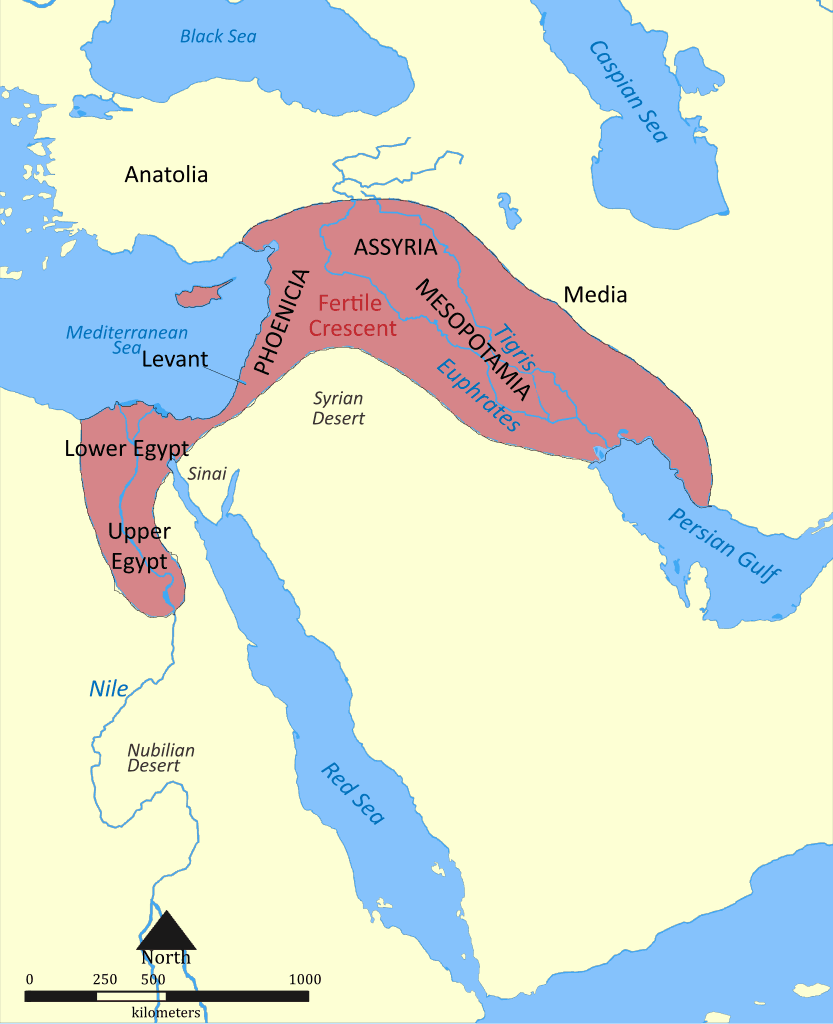
File:Map of fertile crescent.svg - Simple English Wikipedia, the free encyclopedia View original
Is this image relevant?
fertilecrescentnatufian | Edward Elgar Publishing BLOG View original
Is this image relevant?
Chapter 1 – Mesopotamia and the Fertile Crescent – History of Applied Science & Technology View original
Is this image relevant?
File:Map of fertile crescent.svg - Simple English Wikipedia, the free encyclopedia View original
Is this image relevant?
Fertile Crescent
The Fertile Crescent stretches across parts of modern-day Iraq, Jordan, Syria, Lebanon, Israel, Palestine, Egypt, Turkey, and Iran. Its favorable climate, rich soils, and the natural presence of wild ancestors of wheat, barley, lentils, and chickpeas made it one of the earliest centers of agriculture.
Agricultural surpluses in this region supported the emergence of early complex societies like the Sumerians and Babylonians, which is why it's often called the "Cradle of Civilization."
Mesoamerica
Mesoamerica (modern-day Mexico and Central America) developed agriculture independently. The key crops here were maize (corn), beans, and squash, often called the "Three Sisters" because they were grown together in a complementary system. These crops fueled the rise of civilizations like the Olmecs, Mayas, and Aztecs.
China
The Yellow River and Yangtze River valleys in China were another early center of agriculture. Rice was domesticated in the Yangtze region, while millet cultivation arose along the Yellow River. Soybeans also originated here. Chinese agriculture supported early dynasties and led to sophisticated irrigation systems and farming techniques.
New Guinea
New Guinea is a lesser-known but important center of agricultural origins. Crops like taro, yams, and bananas were domesticated independently on this island. New Guinean agriculture is notable for its use of complex irrigation and drainage systems and the cultivation of crops across diverse environments, from lowland swamps to highland terraces.
Domestication process
Domestication is the process by which wild plants and animals are gradually transformed into cultivated crops and livestock through human intervention. This involves genetic, morphological, and behavioral changes that accumulate over many generations, making domesticated species often quite distinct from their wild ancestors.
Artificial selection
Artificial selection is the driving mechanism behind domestication. Instead of natural environmental pressures determining which organisms survive and reproduce, humans choose which individuals to breed based on desirable traits like larger fruits, higher yields, or more docile behavior.
Over successive generations, this selective pressure reshapes the species. It's the same basic principle as natural selection, but the "selecting agent" is a farmer rather than the environment.
Genetic changes
Artificial selection works at the genetic level by favoring certain alleles (gene variants) over others. Over time, this shifts the genetic makeup of the population. For example, genes controlling seed size or fruit sweetness become more common in domesticated lines.
Other genetic processes also play a role:
- Genetic bottlenecks occur when only a small number of individuals are chosen as breeding stock, reducing overall genetic diversity
- Founder effects happen when a new population is established from a small subset of the original wild population
- Hybridization between related species or varieties can introduce new genetic combinations
Morphological changes
Domestication produces visible physical changes. Common morphological shifts in domesticated plants include:
- Larger fruits and seeds (compare wild teosinte kernels to modern corn)
- Reduced branching, concentrating energy into fewer, larger harvestable parts
- Loss of natural seed dispersal mechanisms (non-shattering seeds that stay on the plant for easier harvesting)
These changes make crops more productive for humans but often less capable of surviving in the wild without human care.
Behavioral changes
In animals, domestication selects for more docile and manageable temperaments. Over generations, domesticated animals tend to show reduced aggression, increased tolerance of human presence, and altered social structures compared to their wild ancestors. These behavioral shifts make animals more suitable for farming, herding, and other human uses.
Domesticated crops
Domesticated crops form the foundation of global agriculture. They've been shaped by thousands of years of artificial selection and are typically classified by their plant family, growth habit, or which plant parts are harvested.
Cereals
Cereals are domesticated grasses grown primarily for their edible grains. The major cereal crops are wheat, rice, maize (corn), barley, oats, sorghum, and millet. These are staple foods for most of the world's population and are also used for animal feed, industrial products, and biofuels. Rice alone feeds roughly half the global population as a dietary staple.
Legumes
Legumes belong to the family Fabaceae and are grown for their edible seeds and pods. Important legume crops include soybeans, peanuts, common beans, peas, lentils, and chickpeas.
Legumes are especially valuable in agriculture for two reasons: they're rich in protein (making them critical for plant-based diets), and they can fix atmospheric nitrogen through symbiotic bacteria in their root nodules. This means they actually add nitrogen back to the soil, which is why they're so important in crop rotations.

Fruits
Fruit crops are grown for their edible fruits, which are the mature reproductive structures of the plant. Examples include apples, bananas, citrus fruits (oranges, lemons, limes), grapes, berries (strawberries, blueberries, raspberries), and tropical fruits (mangoes, papayas, pineapples). They're important dietary sources of vitamins, minerals, and other beneficial phytochemicals.
Vegetables
Vegetable crops are plants grown for their edible leaves, stems, roots, or other vegetative parts. Major categories include:
- Leafy greens: lettuce, spinach, kale
- Root vegetables: carrots, potatoes, beets
- Cruciferous vegetables: broccoli, cauliflower, cabbage
- Solanaceous crops: tomatoes, peppers, eggplants
Vegetables provide a wide range of nutrients and dietary fiber essential for a healthy diet.
Domestication of animals
Animal domestication is the process of bringing wild species under human control and selectively breeding them for specific traits. While this is a botany course, understanding animal domestication helps you see the full picture of how agriculture developed.
Domesticated animals serve many purposes: food production (meat, milk, eggs), labor (transportation, plowing), fiber (wool, leather), and companionship.
Livestock
Livestock are domesticated animals raised primarily for food. Major species include cattle (for both beef and dairy), pigs, sheep, and goats. The domestication of livestock enabled pastoralism (herding-based societies) and mixed farming systems where animals and crops are integrated on the same farm.
Poultry
Poultry are domesticated birds raised for meat and eggs. Chickens are by far the most common, but turkeys, ducks, geese, and quail are also raised. Modern poultry production has become highly industrialized, with large-scale facilities and specialized breeding programs.
Beasts of burden
Beasts of burden are animals used for transportation, plowing, and other labor. Horses, donkeys, mules, oxen, and camels all fall into this category. Their domestication dramatically increased human mobility and agricultural productivity, enabling the expansion of trade networks and the development of larger, more complex societies.
Agricultural practices
Agricultural practices are the methods used to cultivate crops and raise livestock. These have evolved over millennia, shaped by climate, soil conditions, available technology, and cultural traditions.
Cultivation methods
Cultivation methods are the techniques used to prepare soil, plant crops, and manage growth. Common methods include:
- Tillage: plowing and harrowing to break up soil
- Sowing: broadcasting (scattering seeds) or drilling (placing seeds in rows)
- Intercropping: growing multiple crops together in the same field, which can reduce pest pressure and improve soil health
- Crop rotation: alternating different crops between seasons or years to prevent nutrient depletion and break pest cycles
The best method depends on crop type, soil properties, climate, and available resources.
Irrigation
Irrigation is the artificial application of water to crops to supplement rainfall. The three main approaches are:
- Surface irrigation: flooding fields or channeling water through furrows
- Sprinkler irrigation: spraying water over crops from above
- Drip irrigation: delivering water directly to plant roots through tubes, which is the most water-efficient method
Proper irrigation management is critical for maximizing yields while conserving water and preventing problems like soil salinization.
Fertilization
Fertilization means adding nutrients to the soil to support plant growth. Fertilizers come in two main types:
- Organic: manure, compost, and other natural materials that release nutrients slowly and improve soil structure
- Inorganic (synthetic): manufactured fertilizers containing specific ratios of nitrogen (N), phosphorus (P), and potassium (K)
Appropriate fertilization maintains soil fertility and optimizes yields, but over-application can cause nutrient runoff into waterways and groundwater contamination.
Pest control
Pest control manages the insects, weeds, and diseases that damage crops. Strategies include:
- Cultural practices: crop rotation and intercropping to disrupt pest life cycles
- Biological control: introducing natural enemies of pests (like ladybugs to control aphids)
- Chemical control: pesticides, herbicides, and fungicides
Integrated pest management (IPM) combines these strategies to minimize chemical use while keeping pest damage below economically harmful levels. This approach promotes ecological balance rather than relying on any single method.
Impact of agriculture
Agriculture transformed human societies in profound ways, both positive and negative.

Population growth
Agriculture dramatically increased the availability and reliability of food, allowing populations to grow far beyond what hunting and gathering could support. The ability to produce food surpluses meant more people could be fed from the same area of land. However, this population growth has continuously pressured agricultural systems to intensify and expand.
Sedentary lifestyles
Farming tied people to specific locations, leading to permanent settlements instead of the nomadic lifestyle of hunter-gatherers. Settled living enabled specialization of labor, trade networks, and eventually the emergence of cities and states. On the downside, dense settlements also facilitated the spread of infectious diseases and contributed to chronic health conditions related to changes in diet and reduced physical activity.
Social stratification
Agricultural surpluses created the conditions for social inequality. Those who controlled land and labor could accumulate wealth and power, leading to ruling classes, religious institutions, and military forces. This produced complex political and economic systems but also entrenched inequality and conflict.
Environmental changes
Agriculture has reshaped the planet's ecosystems. The expansion of farmland has driven deforestation, habitat loss, and biodiversity decline. Intensive practices have contributed to soil degradation, water pollution, and greenhouse gas emissions. At the same time, agriculture has created diverse cultural landscapes and supports the livelihoods of billions of people worldwide.
Spread of agriculture
Agriculture spread from its centers of origin through two main processes:
- Diffusion: crops, animals, and farming knowledge spread from region to region through human migration, trade, and cultural exchange
- Independent origins: agriculture developed separately in different parts of the world without direct influence from other centers
Geography and climate strongly influenced how agriculture spread. Jared Diamond's work has noted that crops spread more easily along east-west axes (similar latitudes and climates) than north-south axes, which helps explain why Eurasian agriculture spread so rapidly compared to agriculture in the Americas or Africa.
Columbian Exchange
The Columbian Exchange refers to the massive transfer of plants, animals, diseases, and technologies between the Old World (Afro-Eurasia) and the New World (Americas) after Columbus's voyages in the late 15th century.
Key transfers included:
- Americas to Old World: maize, potatoes, tomatoes, tobacco, cacao, squash
- Old World to Americas: wheat, barley, sugarcane, horses, cattle, and unfortunately, diseases like smallpox
This exchange transformed agricultural systems, diets, and economies on both sides of the Atlantic and had devastating consequences for Indigenous populations in the Americas.
Green Revolution
The Green Revolution (mid-20th century) involved the development and global spread of high-yielding crop varieties, synthetic fertilizers, pesticides, and modern irrigation techniques. It was spearheaded by scientists like Norman Borlaug, who developed semi-dwarf wheat varieties that dramatically increased yields.
The results were mixed:
- Positive: Crop yields increased significantly, particularly in Asia and Latin America, averting predicted famines
- Negative: Increased dependence on agrochemicals, displacement of traditional farming practices, concentration of land ownership, and environmental degradation in some regions
Modern agriculture
Modern agriculture has evolved rapidly since the mid-20th century, driven by advances in technology and the pressure to feed a growing global population.
Selective breeding
Selective breeding remains a core tool. Modern breeders develop crop varieties and livestock breeds with improved yields, disease resistance, and nutritional quality. Advances in genomics now allow marker-assisted selection, where breeders can identify desirable genes directly rather than waiting to observe traits in mature organisms. This speeds up the process considerably but has raised concerns about narrowing genetic diversity.
Genetic engineering
Genetic engineering involves directly manipulating an organism's DNA using biotechnology tools like recombinant DNA technology and CRISPR gene editing. In agriculture, this produces genetically modified (GM) crops with traits like herbicide tolerance, insect resistance (e.g., Bt crops that produce their own insecticidal protein), and enhanced nutritional content (e.g., Golden Rice with added vitamin A precursors).
GM crops are widely grown in countries like the United States, Brazil, and Argentina, but remain controversial. Debates center on food safety, environmental impacts (like gene flow to wild relatives), corporate control of seed supplies, and effects on small-scale farmers.
Precision farming
Precision farming uses technologies like GPS, remote sensing, drones, and data analytics to optimize crop management at a fine spatial scale. Instead of treating an entire field uniformly, farmers can apply fertilizer, water, and pesticides at variable rates based on the specific conditions of each part of the field.
The goal is to increase productivity and efficiency while reducing waste and environmental impact.
Sustainable practices
Sustainable agricultural practices aim to maintain long-term productivity while protecting ecosystems. Key approaches include:
- Conservation agriculture: minimizing soil disturbance (no-till or reduced-till), maintaining permanent soil cover, and promoting crop diversity
- Integrated pest management (IPM): combining biological, cultural, and chemical methods to control pests with minimal environmental harm
- Agroforestry: integrating trees with crops and/or livestock to improve biodiversity, soil health, and carbon storage
- Organic farming: avoiding synthetic inputs and relying on ecological processes for fertility and pest management
Adopting these practices is increasingly important as agriculture faces challenges from climate change, soil degradation, water scarcity, and biodiversity loss.
See Fiveable more often in Google
Mark Fiveable as a preferred source and Google is more likely to show you our guides in Top Stories, with a "preferred" badge in AI Mode and AI Overviews.