3.4 Plant breeding and hybridization

🥀Intro to Botany Unit 3 Review
3.4 Plant breeding and hybridization
🥀 Intro to Botany
Goals of Plant Breeding
Plant breeding applies genetic principles to develop new plant varieties with improved characteristics. The core aim is to combine traits from different plants so the resulting variety performs better for farmers, consumers, or the environment. This matters because breeding is one of the primary ways agriculture keeps pace with population growth, climate shifts, and evolving nutritional needs.

Top images from around the web for Desirable traits
Frontiers | Mutagenesis in Rice: The Basis for Breeding a New Super Plant View original
Is this image relevant?
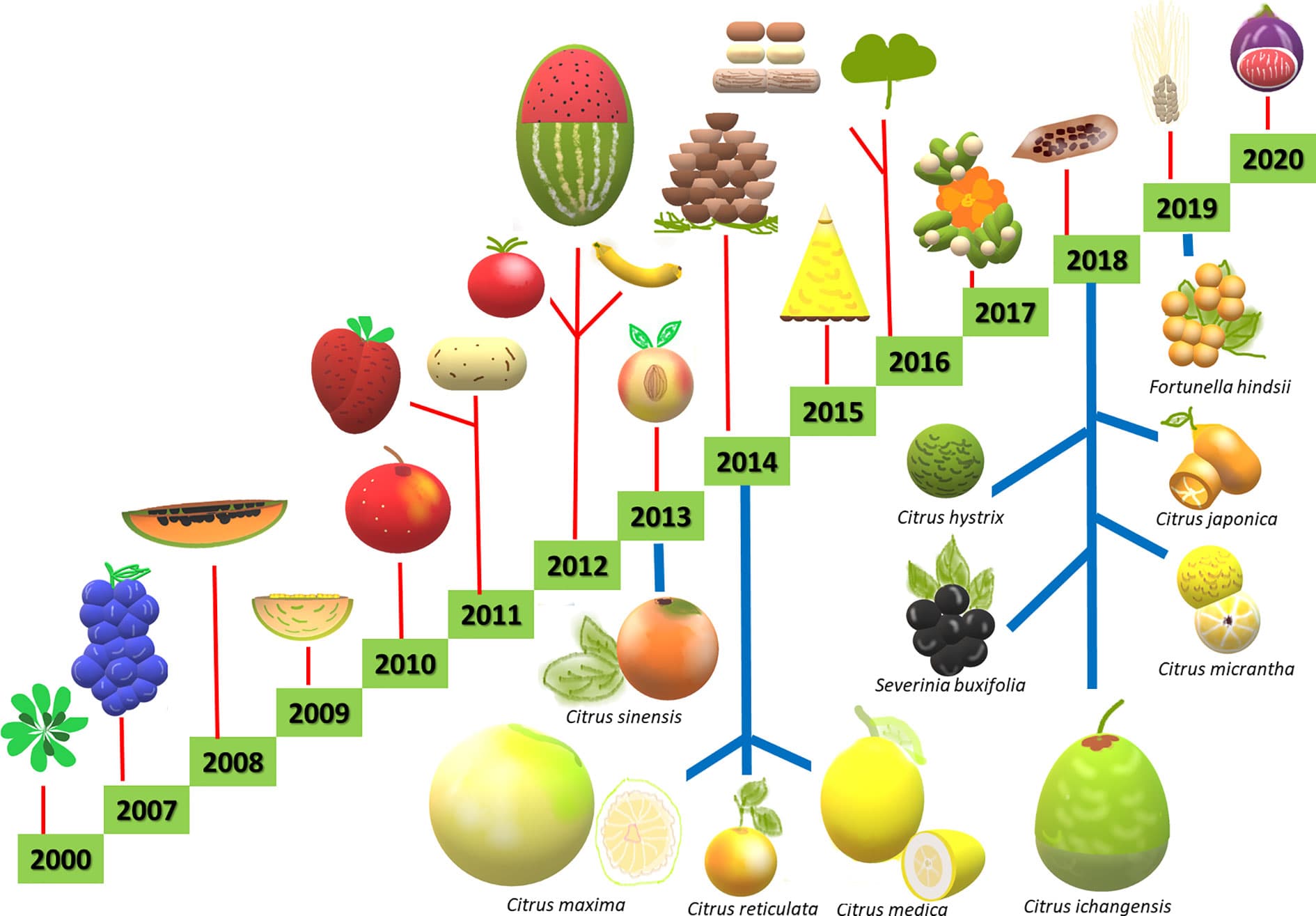
Frontiers | New Plant Breeding Techniques in Citrus for the Improvement of Important Agronomic ... View original
Is this image relevant?
Frontiers | Improving Nutritional and Functional Quality by Genome Editing of Crops: Status and ... View original
Is this image relevant?
Frontiers | Mutagenesis in Rice: The Basis for Breeding a New Super Plant View original
Is this image relevant?
Frontiers | New Plant Breeding Techniques in Citrus for the Improvement of Important Agronomic ... View original
Is this image relevant?
Desirable Traits
Breeders target specific characteristics that make a plant more useful for cultivation, consumption, or industry. These traits vary widely depending on the crop and its purpose:
- Nutritional content — Golden Rice was bred to contain high levels of vitamin A (beta-carotene), addressing nutrient deficiencies in rice-dependent populations
- Storage quality — Tomato varieties bred for longer shelf life reduce post-harvest losses
- Plant architecture — Dwarf wheat varieties (developed during the Green Revolution) resist lodging and direct more energy toward grain production
- Aesthetic appeal — Novel flower colors in ornamental plants like roses and tulips
- Processing qualities — Sunflower varieties bred for high oil content, or high-gluten wheat suited for bread making
Increased Yield
Higher yield per unit of land is one of the most consistent goals in breeding. This can mean more fruits or grains per plant (high-yielding maize hybrids), larger individual fruits (giant pumpkin varieties), or greater total biomass (high-yielding sugarcane). Increased yield helps meet growing demand for food, animal feed, and plant-derived products while making better use of limited farmland.
Improved Quality
Quality breeding targets the traits consumers and processors care about most. This includes taste, texture, and appearance (think sweet, crispy apple varieties), but also nutritional improvements like high-protein soybeans or low-phytate maize (phytate blocks mineral absorption, so reducing it makes nutrients more available). For industrial crops, quality might mean specific processing characteristics, like wheat with the right gluten profile for bread making.
Disease Resistance
Pathogens like fungi, bacteria, and viruses cause enormous crop losses worldwide. Breeders incorporate resistance genes that allow plants to fight off specific diseases. For example, rice varieties have been bred with resistance to blast disease, a devastating fungal infection. Disease-resistant varieties reduce the need for pesticides and stabilize production in regions where particular pathogens are common.
Stress Tolerance
Abiotic stresses (drought, salinity, extreme temperatures, nutrient-poor soils) limit where and how well crops can grow. Breeding for stress tolerance means identifying genes that help plants maintain growth under harsh conditions. Drought-tolerant maize varieties, for instance, can sustain yields during dry spells. Salt-tolerant wheat allows cultivation on saline soils that would otherwise be unproductive. As climate change intensifies these stresses, tolerance breeding becomes increasingly critical.
Genetic Basis of Plant Breeding
Effective breeding depends on understanding how traits are inherited and expressed. Breeders draw on three branches of genetics, each suited to different types of traits and breeding goals.
Mendelian Genetics
Mendelian inheritance describes traits controlled by single genes with clear dominant and recessive alleles. These are qualitative traits — they fall into distinct categories (like purple vs. white flower color) rather than a continuous range. Breeders use Mendelian principles to predict how traits will segregate in offspring and to develop pure-breeding lines. If you cross a plant homozygous dominant for flower color with one homozygous recessive, you can predict exactly what the F1 and F2 generations will look like.
Quantitative Genetics
Most traits breeders care about (yield, height, maturation time) don't follow simple Mendelian patterns. These quantitative traits are controlled by many genes and influenced by the environment, producing continuous variation rather than distinct categories. Quantitative genetics uses statistical methods like ANOVA to estimate heritability (how much of the variation in a trait is due to genetics vs. environment) and predict how a population will respond to selection. High heritability means selection will be more effective.
Molecular Genetics
Molecular genetics works at the DNA level, using tools like molecular markers (such as SNPs, or single nucleotide polymorphisms) to identify which alleles a plant carries without waiting to see the mature phenotype. Marker-assisted selection (MAS) lets breeders screen seedlings for desired alleles early on. Genetic engineering goes further, allowing breeders to insert specific genes directly — Bt cotton, for example, carries a bacterial gene that produces a protein toxic to certain insect pests.
Methods of Plant Breeding
Different breeding methods suit different goals, crop types, and reproductive systems. Here are the major approaches.
Selection
Selection is the most fundamental breeding method: identify plants with desirable traits from a variable population and propagate them. Three main types:
- Mass selection — Choose the best-performing plants from a mixed population and bulk their seed for the next generation. Simple but effective for highly heritable traits.
- Pure-line selection — In self-pollinating crops, select superior individual plants and grow their progeny separately. Over generations, each line becomes genetically uniform.
- Clonal selection — For vegetatively propagated crops (potatoes, sugarcane), select superior individuals and propagate them as clones.
Hybridization
Hybridization crosses two genetically distinct parents to combine their traits in the offspring. Crosses can be intraspecific (within the same species) or interspecific (between different species). A major advantage of hybridization is heterosis (hybrid vigor), where hybrid offspring outperform both parents. Hybrid maize is the classic example — yields jumped dramatically when farmers switched from open-pollinated varieties to hybrids in the mid-20th century.
Mutation Breeding
Sometimes the trait a breeder wants doesn't exist in available germplasm. Mutation breeding creates new genetic variation by exposing seeds or plant tissue to mutagenic agents like gamma radiation or chemicals such as ethyl methanesulfonate (EMS). The resulting mutations are random, so breeders must screen large populations to find useful changes. Semi-dwarf rice varieties, which were central to the Green Revolution, were developed partly through mutation breeding.

Polyploidy
Polyploidy involves increasing the number of chromosome sets in a plant. It can happen naturally (autopolyploidy, where a species doubles its own chromosomes) or be induced artificially using chemicals like colchicine, which disrupts cell division. Practical applications include:
- Triploid watermelons — Three chromosome sets make them seedless
- Larger flowers in ornamentals — Polyploid roses often have bigger blooms
- Triticale — A wheat-rye hybrid where polyploidy restores fertility that would otherwise be lost in the interspecific cross
Genetic Engineering
Genetic engineering uses recombinant DNA technology to insert specific genes from any organism into a plant's genome. Unlike hybridization, it isn't limited to sexually compatible species. Key examples of transgenic crops:
- Roundup Ready soybeans — Carry a gene conferring resistance to the herbicide glyphosate
- Bt cotton — Produces an insecticidal protein from Bacillus thuringiensis
- Golden Rice — Engineered to produce beta-carotene (provitamin A) in the grain endosperm
Hybridization Techniques
Hybridization is central to plant breeding, and different techniques serve different purposes depending on the genetic distance between parents and the breeding goal.
Intraspecific Hybridization
This is crossing individuals within the same species. It's the most common form of hybridization and is used in both self-pollinated crops (wheat, where the goal is often to create new pure lines) and cross-pollinated crops (maize, where the goal is typically to produce high-performing hybrids).
Interspecific Hybridization
Crossing individuals from different species (or closely related genera) lets breeders introgress useful traits from wild relatives into cultivated crops. Wild species often carry disease resistance or stress tolerance genes that cultivated varieties have lost. The challenge is that reproductive barriers frequently prevent successful crosses. Techniques like embryo rescue (culturing the hybrid embryo in vitro before it aborts) and bridge crosses (using an intermediate species to facilitate the cross) help overcome these barriers.
Backcrossing
Backcrossing transfers a specific trait from a donor parent into a recipient parent while preserving the recipient's overall genetic background. Here's how it works:
- Cross the donor parent (carrying the desired trait) with the recipient parent (the elite variety you want to improve)
- Cross the F1 hybrid back to the recipient parent
- Select offspring that carry the desired trait
- Repeat steps 2-3 for multiple generations (typically 6 or more)
- The result is a plant that's genetically almost identical to the recipient parent but now carries the desired trait
This method is widely used for introgressing single resistance genes into elite cultivars, such as adding disease resistance genes to high-yielding tomato varieties.
Heterosis (Hybrid Vigor)
Heterosis is the phenomenon where hybrid offspring outperform both parents in traits like vigor, yield, or stress tolerance. It occurs because combining alleles from genetically diverse parents produces favorable gene interactions. Heterosis is most exploited in cross-pollinated crops. Hybrid rice and hybrid maize are major commercial examples — seed companies produce hybrid seed each year by crossing carefully maintained inbred parent lines.
Breeding Strategies
Breeding strategies are the systematic plans breeders follow to move from initial crosses to finished varieties. The best strategy depends on the crop's reproductive system, the traits being targeted, and available resources.
Pedigree Method
The pedigree method tracks the ancestry of every progeny line through each generation. After an initial cross, breeders select superior individual plants in each generation and record their lineage. This allows selection based on both phenotypic performance and family history. It's labor-intensive but gives breeders detailed control. Most commonly used in self-pollinated crops like wheat and rice for developing pure-line varieties.
Bulk Method
In the bulk method, the hybrid population from an initial cross is grown without individual plant selection for several generations. Natural selection weeds out the weakest genotypes over time. After enough generations (often 5-6), breeders begin selecting individual plants from the now more uniform population. This approach requires much less labor and record-keeping than the pedigree method and works well for traits with high heritability and for adapting varieties to specific environments.
Backcross Method
The backcross method (described above under hybridization techniques) is used strategically when the goal is narrow: transfer one or a few specific traits into an already excellent variety. It's particularly valuable for adding disease resistance genes or specific quality traits to elite cultivars without disrupting their overall performance.
Recurrent Selection
Recurrent selection improves a population gradually over repeated cycles. Each cycle involves:
- Evaluate individuals in a genetically diverse population
- Select the best performers
- Intermate the selected individuals to form the next generation
- Repeat
Selection can be based on phenotype (mass selection), progeny performance (half-sib or full-sib testing), or molecular markers. This strategy is widely used in cross-pollinated crops like maize, where the goal is to steadily increase the frequency of favorable alleles across the whole population.
Challenges in Plant Breeding
Several biological and environmental factors can slow breeding progress or limit what's achievable.

Incompatibility Barriers
Reproductive barriers prevent successful crosses between certain species or even between genotypes within a species. Pre-zygotic barriers (like pollen-stigma incompatibility) prevent fertilization from occurring. Post-zygotic barriers (like embryo abortion or hybrid sterility) cause the cross to fail after fertilization. These barriers restrict the gene pool available to breeders and require specialized techniques (embryo rescue, protoplast fusion, bridge crosses) to overcome.
Linkage Drag
When a desired gene is transferred from a donor parent through backcrossing, nearby genes on the same chromosome tend to come along for the ride. This is linkage drag, and it can introduce undesirable traits (like reduced yield or poor quality) alongside the target gene. Minimizing linkage drag requires extensive backcrossing, careful selection, and often molecular markers to identify recombinants that have the desired gene but have lost the linked undesirable segments.
Inbreeding Depression
When closely related individuals are mated repeatedly, offspring become increasingly homozygous. This exposes deleterious recessive alleles that were previously masked in heterozygous form, leading to reduced vigor, fertility, and productivity. Inbreeding depression is a particular problem in cross-pollinated species (like maize) where populations naturally maintain high heterozygosity. Breeders manage it by maintaining genetic diversity and exploiting heterosis.
Genotype × Environment Interactions
A variety that performs well in one location or year may perform poorly in another. This inconsistency, called genotype × environment (G×E) interaction, arises because the expression of many traits depends on environmental conditions (climate, soil type, management practices). G×E interactions make it difficult to identify truly superior varieties. Breeders address this by conducting multi-location trials across several years and using stability analyses to find varieties that perform reliably across a range of conditions.
Applications of Plant Breeding
Plant breeding extends well beyond staple food crops. The same principles and techniques apply wherever people want to improve plant performance.
Crop Improvement
The most prominent application is improving major food crops like rice, wheat, and maize. Breeding programs worldwide develop high-yielding hybrids, disease-resistant varieties, and climate-resilient crops to enhance food security. The Green Revolution of the 1960s-70s, driven largely by breeding dwarf wheat and rice varieties, dramatically increased global food production.
Ornamental Plant Breeding
Ornamental breeding creates new varieties of roses, chrysanthemums, orchids, and other decorative plants with novel flower colors, shapes, fragrances, and improved disease resistance. Techniques like interspecific hybridization, polyploidy, and mutation breeding are especially common here because novelty and visual appeal are the primary goals.
Medicinal Plant Breeding
Medicinal plant breeding aims to increase the yield of bioactive compounds. A key example is breeding Artemisia annua for higher artemisinin content — artemisinin is the basis for the most effective antimalarial drugs. Breeders also work to improve agronomic traits so medicinal plants can be cultivated reliably rather than wild-harvested.
Biofuel Crop Breeding
Biofuel breeding targets crops like sugarcane, switchgrass, and jatropha for sustainable energy production. Goals include higher biomass yield, better conversion efficiency (how easily the plant material turns into fuel), and adaptability to marginal lands where food crops can't grow productively.
Future Prospects
Plant breeding is being transformed by advances in genomics and molecular biology. Several technologies are accelerating the pace and precision of crop improvement.
Marker-Assisted Selection
MAS uses molecular markers (SNPs, SSRs) to identify plants carrying desirable alleles at the seedling stage, long before traits are visible. This speeds up breeding by eliminating the need to grow plants to maturity for evaluation. MAS also enables gene pyramiding — stacking multiple resistance genes into a single variety so it resists several diseases at once.
Genomic Selection
Genomic selection takes MAS further by using thousands of markers spread across the entire genome. Statistical models estimate each individual's breeding value based on its genomic profile, predicting performance without phenotypic testing. This is especially powerful for complex traits with low heritability (where individual markers have tiny effects) and for species with long generation times, like fruit trees, where traditional breeding cycles take many years.
Gene Editing Technologies
Tools like CRISPR/Cas9, TALENs, and zinc-finger nucleases allow precise modifications to a plant's own DNA — targeted mutations, insertions, or deletions at specific locations. Unlike traditional genetic engineering, gene editing can improve traits without introducing foreign DNA. For example, CRISPR has been used to knock out susceptibility genes, making plants resistant to diseases. The precision and speed of gene editing have the potential to dramatically accelerate variety development.
Sustainable Plant Breeding Practices
Sustainable breeding focuses on developing varieties adapted to local conditions that require fewer inputs (water, fertilizers, pesticides) and support biodiversity. Participatory breeding involves farmers and local communities directly in the selection process, ensuring new varieties meet real-world needs. Conserving and utilizing plant genetic resources — including traditional landraces and wild relatives — provides the raw genetic diversity that all future breeding depends on. As climate change intensifies, these approaches become essential for building resilient agricultural systems.
See Fiveable more often in Google
Mark Fiveable as a preferred source and Google is more likely to show you our guides in Top Stories, with a "preferred" badge in AI Mode and AI Overviews.