8.4 Human Impacts on Wetlands and Mangroves

♻️AP Environmental Science Unit 8 Review
8.4 Human Impacts on Wetlands and Mangroves
♻️ AP Environmental Science
8.1
Sources of Pollution
8.2
Human Impacts on Ecosystems
8.3
Endocrine Disruptors
8.4
Human Impacts on Wetlands and Mangroves
8.5
Eutrophication
8.6
Thermal Pollution
8.7
Persistent Organic Pollutants (POPs)
8.8
Bioaccumulation and Biomagnification
8.9
Solid Waste Disposal
8.10
Waste Reduction Methods
8.11
Sewage Treatment
8.12
Lethal Dose 50% (LD50)
8.13
Dose Response Curve
8.14
Pollution and Human Health
8.15
Pathogens and Infectious Diseases
Wetlands are areas where water covers the soil for at least part of the year, and they deliver ecosystem services like water purification, flood protection, water filtration, and habitat. Human activities such as development, dam construction, overfishing, and pollution can reduce or destroy those services.
Why This Matters for the AP Environmental Science Exam
This topic supports a skill you use across Unit 8: connecting a human activity to its specific effect on an aquatic ecosystem. On the exam you may be asked to describe how a development project, dam, or pollution source harms wetlands or mangroves, and to explain why losing those systems matters for things like flooding and water quality. Being able to name the service a wetland provides and then trace what happens when that service is lost is exactly the cause-and-effect reasoning rewarded in free-response answers.
This guide also connects to nearby topics. Pollutant runoff into wetlands sets up eutrophication (Topic 8.5), and the way pollution moves through wetland food chains links to bioaccumulation and biomagnification (Topic 8.8).
Key Takeaways
- Wetlands are areas where water covers the soil for at least part of the year.
- Wetland ecosystem services include water purification, flood protection, water filtration, and habitat.
- Major threats to wetlands and mangroves are commercial development, dam construction, overfishing, and pollutants from agriculture and industrial waste.
- Mangroves are salt-tolerant trees and shrubs in coastal zones, so they show up in the coastal/tidal type of wetland.
- When a wetland is filled or drained, the service it provided (like flood absorption or filtration) is reduced or lost.
- For free-response answers, pair each human activity with the specific service it damages.
What Are Wetlands?
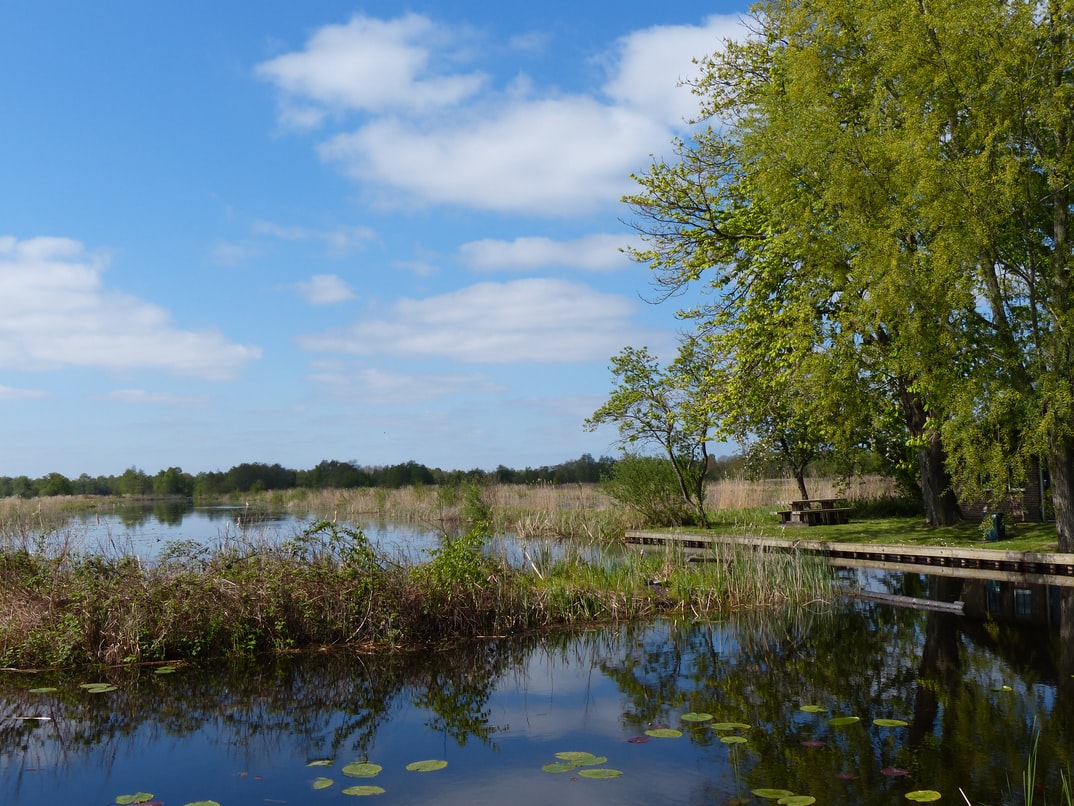

Wetlands are areas where water covers the soil for at least part of the year. That definition is broad on purpose, because it covers many systems with different water levels and seasons.
A common way to sort them:
Coastal/Tidal Wetlands
- Often tied to estuaries, where seawater meets and mixes with freshwater.
- The changing salinity makes it hard for many plants to grow.
- Mangroves are an exception. Mangroves are salt-tolerant trees and shrubs that live in the coastal intertidal zone, so they survive where most plants cannot.
Inland/Non-tidal Wetlands
- Usually near rivers, streams, lakes, and ponds.
- Examples include swamps and marshes.
Ecosystem Services Wetlands Provide
Wetlands matter because of the work they do for ecosystems and people.
-
Water Purification and Filtration
- Wetlands filter runoff, including agricultural pollutants, before it reaches larger bodies of water. Plants take up some of the trapped nutrients.
-
Flood Protection
- Wetlands hold and absorb water, so when heavy rain or runoff arrives, they reduce flooding downstream.
- Filling in a wetland removes this buffer, so areas built on former wetlands can flood more easily.
-
Habitat
- Many species rely on wetlands. Amphibians like frogs and salamanders need wet environments, and many fish and bird species use wetlands for food and shelter.
Why Wetlands and Mangroves Are Disappearing
The threats below are the ones you should be ready to describe: commercial development, dam construction, overfishing, and pollutants from agriculture and industrial waste.
1. Commercial Development
- Wetlands are often filled in to build housing, malls, or other structures, which harms habitat.
- Filling also removes flood protection, so buildings on former wetlands face higher flood risk.
2. Dam Construction
- Dams change where water flows and how much reaches downstream areas.
- When water is held back, wetlands downstream can lose their water supply, dry out, and stop supporting wildlife or filtering water.
3. Overfishing
- Removing too many fish disrupts the wetland food web, including predator and prey relationships.
- Losing key species can cause declines in the other species that depend on them, lowering biodiversity.
4. Pollutants from Agriculture and Industrial Waste
- Runoff carries chemical pollutants into wetlands, where they can stress or harm organisms.
- Excess nutrients from fertilizer runoff can trigger overgrowth of algae. This nutrient enrichment connects directly to eutrophication, covered in Topic 8.5.
How to Use This on the AP Environmental Science Exam
Free Response
- When a prompt names a human activity, state the specific wetland service it damages. Example: filling a wetland for development reduces flood protection, so nearby areas flood more.
- Use clear cause-and-effect chains. "Dam holds back water" then "downstream wetland dries out" then "habitat and filtration are lost" reads better than a vague statement that dams are bad.
- If asked for a solution or trade-off, connect it back to the lost service. Protecting or restoring a wetland restores filtration, flood buffering, and habitat.
MCQ
- Watch for questions that ask you to match a threat (development, dams, overfishing, pollution) to its effect.
- Know that mangroves are coastal, salt-tolerant systems, so questions about saltwater zones may point to them.
Common Trap
- Do not stop at "it hurts the environment." Name the exact service or population affected, since that specificity is what earns points.
Common Misconceptions
- Misconception: Wetlands are just wasteland or swampy areas with no value.Actually: They provide water purification, flood protection, filtration, and habitat, which are real benefits to ecosystems and people.
- Misconception: A wetland has to be wet all year.Actually: By definition, water only has to cover the soil for at least part of the year.
- Misconception: Mangroves are normal trees growing near the coast.Actually: Mangroves are specially adapted, salt-tolerant trees and shrubs that survive in coastal intertidal zones where most plants cannot.
- Misconception: Dams only affect the river behind them.Actually: Dams change downstream water flow, which can dry out wetlands far from the dam itself.
- Misconception: All pollution effects on wetlands are immediate.Actually: Nutrient pollution can build up and trigger algae overgrowth and eutrophication over time, which then lowers oxygen and harms organisms.
Related AP Environmental Science Guides
Practice Questions for 8.4
1 of 10
A food web diagram for a mangrove ecosystem shows energy flow pathways: mangrove leaves are consumed by mangrove tree crabs, which are eaten by juvenile snapper fish. The juvenile snappers are preyed upon by large barracudas. A second diagram models the same ecosystem after severe commercial overfishing, showing the barracuda component removed. In this altered model, the juvenile snapper population box is drawn three times larger, while the mangrove tree crab box is significantly reduced in size.
Which ecological impact of human activity is best illustrated by the altered food web model?
A.
The removal of apex predators causes intermediate predators to occupy the vacant ecological niche without affecting the abundance of primary consumers.
B.
The removal of apex predators reduces herbivory pressure, allowing primary consumers to increase and overexploit primary producers.
C.
The removal of apex predators allows secondary consumers to increase in population and outcompete primary consumers for available resources.
D.
The removal of apex predators causes a trophic cascade that depletes primary consumers.
Vocabulary
The following words are mentioned explicitly in the AP® course framework for this topic.Term | Definition |
|---|---|
commercial development | A human activity that threatens wetlands and mangroves through land conversion for business and urban expansion. |
dam construction | A human activity that threatens wetlands by altering water flow and hydrology. |
ecosystem services | The benefits that humans receive from natural ecosystems, including resources, regulation of environmental processes, and cultural values. |
flood protection | An ecosystem service provided by wetlands that reduces the impact of flooding events. |
mangroves | Coastal ecosystems that provide ecosystem services and are threatened by human activities such as commercial development and overfishing. |
overfishing | The removal of fish from aquatic systems at rates faster than populations can reproduce, leading to depletion of fish stocks. |
pollutants | Harmful substances in the environment that are absorbed and filtered by forest trees. |
water filtration | An ecosystem service provided by wetlands that removes particles and pollutants from water. |
water purification | An ecosystem service provided by wetlands that removes contaminants and improves water quality. |
wetlands | Areas where water covers the soil for at least part of the year, providing ecosystem services such as water purification and habitat. |
Frequently Asked Questions
How do humans impact wetlands and mangroves in AP Environmental Science?
Humans impact wetlands and mangroves through commercial development, dam construction, overfishing, and pollutants from agriculture and industrial waste. These activities reduce ecosystem services such as water purification, flood protection, water filtration, and habitat.
What are wetlands?
Wetlands are areas where water covers the soil for at least part of the year. They can include coastal or tidal wetlands, such as mangrove systems, and inland wetlands near rivers, streams, lakes, or ponds.
What ecosystem services do wetlands provide?
Wetlands provide water purification, water filtration, flood protection, and habitat. For APES answers, connect each service to a specific outcome, such as wetlands absorbing excess water during storms or filtering pollutants before runoff reaches larger bodies of water.
How does commercial development affect wetlands?
Commercial development often fills, drains, or fragments wetlands. That reduces habitat, removes flood buffering, and limits the wetland's ability to filter runoff and protect nearby areas from flooding.
How do dams affect wetlands and mangroves?
Dams change water flow and can reduce the amount of water reaching downstream wetlands. If a wetland loses its regular water supply, habitat quality, filtration, and flood protection can decline.
How is Topic 8.4 tested on the AP Environmental Science exam?
APES questions usually ask you to match a human activity to a specific wetland or mangrove impact. Strong answers name the activity, describe the affected ecosystem service, and explain the consequence in a clear cause-and-effect chain.
See Fiveable more often in Google
Mark Fiveable as a preferred source and Google is more likely to show you our guides in Top Stories, with a "preferred" badge in AI Mode and AI Overviews.