5.10 Impacts of Urbanization

♻️AP Environmental Science Unit 5 Review
5.10 Impacts of Urbanization
♻️ AP Environmental Science
5.0
Required Environmental Legislation
5.1
The Tragedy of the Commons
5.2
Clearcutting
5.3
The Green Revolution
5.4
Impacts of Agricultural Practices
5.5
Irrigation Methods
5.6
Pest Control Methods
5.7
Meat Production Methods
5.8
Impacts of Overfishing
5.9
Impacts of Mining
5.10
Impacts of Urbanization
5.11
Ecological Footprints
5.12
Intro to Sustainability
5.13
Methods to Reduce Urban Runoff
5.14
Integrated Pest Management
5.15
Sustainable Agriculture
5.16
Aquaculture
5.17
Sustainable Forestry
Urbanization concentrates people in cities, which stresses natural resources and disrupts the hydrologic and carbon cycles. The big effects to know are saltwater intrusion and groundwater depletion in the water cycle, more atmospheric CO2 from fossil fuels and landfills, flooding from impervious surfaces, and urban sprawl spreading into rural land.
Urbanization APES Summary
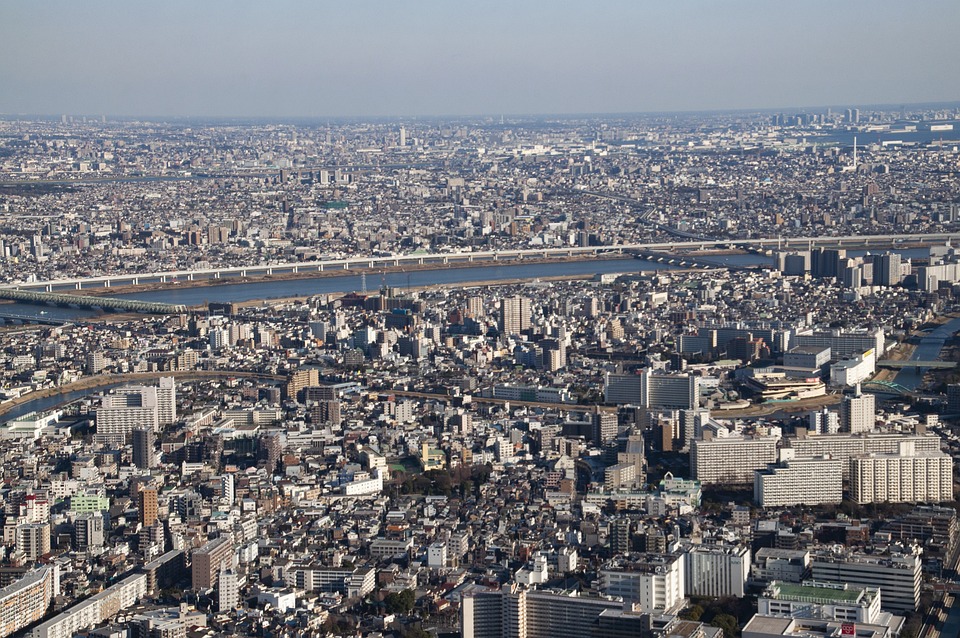
Urbanization in AP Environmental Science means population growth and development around cities. The exam focuses less on whether cities are "good" or "bad" and more on the environmental mechanisms: groundwater overuse can cause saltwater intrusion, fossil fuel use and landfills increase atmospheric CO2, and impervious surfaces increase runoff and flooding.
For Topic 5.10, connect every effect to a process. If a prompt says a suburb adds roads and parking lots, think less infiltration, more runoff, and less groundwater recharge. If it says a coastal city pumps too much groundwater, think saltwater intrusion into aquifers.
Why This Matters for the AP Environmental Science Exam
Urbanization shows up in Unit 5, which carries a noticeable share of the exam weight. The questions usually ask you to describe how human activity changes natural systems and then explain the resulting problems. That means you should be ready to connect a city's growth to a specific cycle being altered, like CO2 rising in the carbon cycle or saltwater pushing into coastal aquifers.
This topic also sets up later free-response style reasoning where you identify an environmental problem, explain its cause, and propose a solution. Impervious surfaces and urban runoff connect directly to mitigation methods you study next, so getting the cause and effect right here pays off later.
Key Takeaways
- Urbanization can deplete resources and cause saltwater intrusion in the hydrologic cycle, especially in coastal areas where overpumping groundwater lets seawater move into aquifers.
- Burning fossil fuels and emissions from landfills add carbon dioxide to the atmosphere, altering the carbon cycle.
- Impervious surfaces like roads, buildings, sidewalks, and parking lots block water from reaching the soil, which leads to flooding and more runoff.
- Urban sprawl is the shift of population from dense areas to low-density suburbs that spread into rural land, creating new environmental problems.
- Less infiltration into the ground means less groundwater recharge, which connects sprawl and pavement back to water supply problems.
Effects on Natural Cycles
Adding a lot of people to one area puts pressure on local resources, and freshwater supply is one of the first things to get stressed.
Water cycle: Cities pump large amounts of groundwater to meet demand. In coastal areas, heavy pumping can pull seawater into freshwater aquifers, which is called saltwater intrusion. Overuse can also deplete the water supply faster than it recharges.
Carbon cycle: Burning fossil fuels for energy and transportation releases carbon dioxide into the atmosphere. Landfills also add carbon as waste breaks down. Together these increase atmospheric CO2 and shift the carbon cycle.
Impervious Surfaces and Flooding
Impervious surfaces are human-made structures such as roads, buildings, sidewalks, and parking lots. These surfaces do not let water soak into the soil. Instead of infiltrating the ground, rain runs off the surface and collects, which leads to flooding and increased stormwater runoff. Less infiltration also means less water recharging groundwater supplies below the surface.
This is why mitigation methods like permeable pavement and green spaces matter. They give water a path back into the soil and reduce both flooding and runoff.
Urban Sprawl
Urban sprawl is the change in population distribution from high-density areas to low-density suburbs that spread out into rural land. As development pushes outward, it converts open and natural land into housing, roads, and commercial areas.
This spread can lead to a range of environmental problems, including habitat loss, more impervious surface area, and added pressure on water supplies and waste systems. The unplanned nature of sprawl is part of why it causes so many ripple effects across natural systems.
How to Use This on the AP Environmental Science Exam
MCQ
Be ready to match a described scenario to the correct cycle or term. If a question describes seawater moving into a coastal aquifer, that is saltwater intrusion in the hydrologic cycle. If it describes water running off pavement instead of soaking in, that points to impervious surfaces and flooding.
Free Response
When asked to describe an effect of urbanization, name the specific change and the system it affects. For example, "Urbanization increases atmospheric CO2 because cities burn fossil fuels for energy and transportation, which alters the carbon cycle." Then if the prompt asks for a solution, connect it back to a real mitigation, like permeable pavement to increase infiltration.
Common Trap
A vague answer like "urbanization is bad for the environment" earns nothing. You need to state the mechanism: which resource, which cycle, and the specific result such as flooding, saltwater intrusion, or higher CO2.
Common Misconceptions
- Misconception: Saltwater intrusion is just ocean flooding.Actually: Saltwater intrusion is not just ocean flooding. It happens when overpumping groundwater lowers the freshwater table and lets seawater move into a coastal aquifer.
- Misconception: Impervious surfaces cause flooding by adding water.Actually: Impervious surfaces do not cause flooding by adding water. They cause it by blocking infiltration, so the same rainfall runs off instead of soaking in.
- Misconception: Urban sprawl is just cities getting taller or denser.Actually: Urban sprawl is about low-density spread into rural land, not just cities getting taller or denser. Dense building up can actually reduce sprawl.
- Misconception: Urbanization affects the carbon cycle only through cutting down trees.Actually: Urbanization affects the carbon cycle through fossil fuel burning and landfill emissions, not only through cutting down trees. Both lost carbon storage and added emissions matter.
- Misconception: More pavement just causes flooding in the moment.Actually: More pavement does not just cause flooding in the moment. It also reduces groundwater recharge over time, which can hurt long-term water supply.
Related AP Environmental Science Guides
Practice Questions for 5.10
1 of 10
A coastal city experiencing rapid urbanization has overdrawn its groundwater aquifer, leading to severe saltwater intrusion. The city must select a water management strategy that provides a reliable water supply and actively reverses the saltwater intrusion to protect existing freshwater wells. The city has a moderate budget and wants to keep energy consumption below 2.0 kWh/m³ to meet climate goals. The figure shows the cost, energy use, and aquifer recharge potential for four proposed solutions.
Based on the data, which water management solution is best supported for addressing the city's specific environmental and economic criteria?
A.
Deep well injection, because it actively restores the aquifer while meeting both the cost and energy constraints.
B.
Expanded coastal pumping, because it has the lowest cost and energy use for supplying the growing population.
C.
Desalination plant, because it provides an unlimited water supply regardless of the aquifer's degraded condition.
D.
Interbasin water transfer, because it stabilizes the aquifer without requiring complex wastewater treatment.
Vocabulary
The following words are mentioned explicitly in the AP® course framework for this topic.Term | Definition |
|---|---|
carbon cycle | The biogeochemical process by which carbon moves between the atmosphere, living organisms, soil, and water systems. |
carbon dioxide | A greenhouse gas produced by combustion of fossil fuels and respiration; a principal contributor to global climate change. |
flooding | The overflow of water onto land areas, often caused by increased runoff from impervious surfaces that prevents water absorption into soil. |
fossil fuels | Non-renewable energy sources formed from ancient organic matter, including coal, oil, and natural gas, that release carbon dioxide when burned. |
hydrologic cycle | The continuous movement of water in its various solid, liquid, and gaseous phases between Earth's surface and the atmosphere, powered by solar energy. |
impervious surfaces | Human-made structures such as roads, buildings, sidewalks, and parking lots that prevent water infiltration into the soil. |
landfills | Designated areas where solid waste is disposed of and buried, which can release methane and carbon dioxide as organic matter decomposes. |
population density | The number of people living in a given area, used to distinguish between densely populated urban centers and sparsely populated rural regions. |
resource depletion | The reduction or exhaustion of natural resources due to overuse or extraction. |
saltwater intrusion | The movement of saltwater into freshwater aquifers and groundwater supplies, typically caused by excessive groundwater extraction in coastal areas. |
urban sprawl | The uncontrolled expansion of urban development into surrounding rural and agricultural areas, characterized by low-density suburban growth. |
urbanization | The process of population growth and development that transforms rural areas into urban centers with increased human settlement and infrastructure. |
Frequently Asked Questions
What is urbanization in AP Environmental Science?
Urbanization is the growth and development of cities and surrounding suburbs. In AP Environmental Science, the focus is how that growth changes resources, the hydrologic cycle, the carbon cycle, and land use.
How does urbanization affect the hydrologic cycle?
Urbanization can increase groundwater use, reduce infiltration, and cause saltwater intrusion in coastal aquifers. Impervious surfaces also increase runoff and flooding by preventing water from reaching the soil.
Why do impervious surfaces cause flooding?
Impervious surfaces like roads, buildings, sidewalks, and parking lots block infiltration. When rain cannot soak into soil, more water runs over the surface, which increases stormwater runoff and flooding.
How does urbanization affect the carbon cycle?
Urbanization increases atmospheric carbon dioxide through fossil fuel burning for transportation and energy, plus emissions connected to landfills and waste. That adds more carbon to the atmosphere.
What is urban sprawl?
Urban sprawl is the spread of population from high-density areas into low-density suburbs and rural lands. It can increase habitat loss, road building, impervious surface area, and pressure on water supplies.
What is a common mistake on APES urbanization questions?
A common mistake is giving a vague effect like “pollution” without explaining the mechanism. Strong answers name the process, such as impervious surfaces reducing infiltration or groundwater pumping causing saltwater intrusion.
See Fiveable more often in Google
Mark Fiveable as a preferred source and Google is more likely to show you our guides in Top Stories, with a "preferred" badge in AI Mode and AI Overviews.