4.6 Watersheds

♻️AP Environmental Science Unit 4 Review
4.6 Watersheds
♻️ AP Environmental Science
A watershed is all the land that drains water to one common outlet, like a river, lake, or ocean. Its main characteristics are area, length, slope, soil type, vegetation, and the divides (high ridges) that separate it from neighboring watersheds.
Watershed APES Summary
In AP Environmental Science, a watershed is the land area where runoff drains to the same discharge point. The main characteristics to describe are area, length, slope, soil, vegetation types, and divides with adjoining watersheds.
For the exam, connect each characteristic to water movement. Steeper slopes speed up runoff, soil texture affects infiltration, vegetation slows runoff and reduces erosion, and divides determine which direction water drains.
Why This Matters for the AP Environmental Science Exam
Watersheds connect several Unit 4 ideas, including soil properties, vegetation, and how water moves across land. On the exam, you may need to describe the parts of a watershed, explain how a feature like slope or soil texture changes runoff, or interpret a diagram or map that shows drainage. This topic also sets up later units on water use, urban runoff, and pollution, so getting the cause-and-effect logic down now helps you explain "what would happen if" scenarios later.
Key Takeaways
- A watershed (drainage basin) is all the land that drains runoff to a single discharge point, usually the lowest spot in the basin.
- Headwaters are where a watershed begins; divides are the high ridges that separate one watershed from the next.
- The main characteristics to know are area, length, slope, soil, and vegetation type.
- Steeper slopes and longer lengths change how fast and how long runoff takes to reach the outlet.
- Soil texture controls how much water soaks in versus runs off, and healthy soil filters water.
- More vegetation reduces erosion, improves soil fertility, and helps filter water.
What a Watershed Is
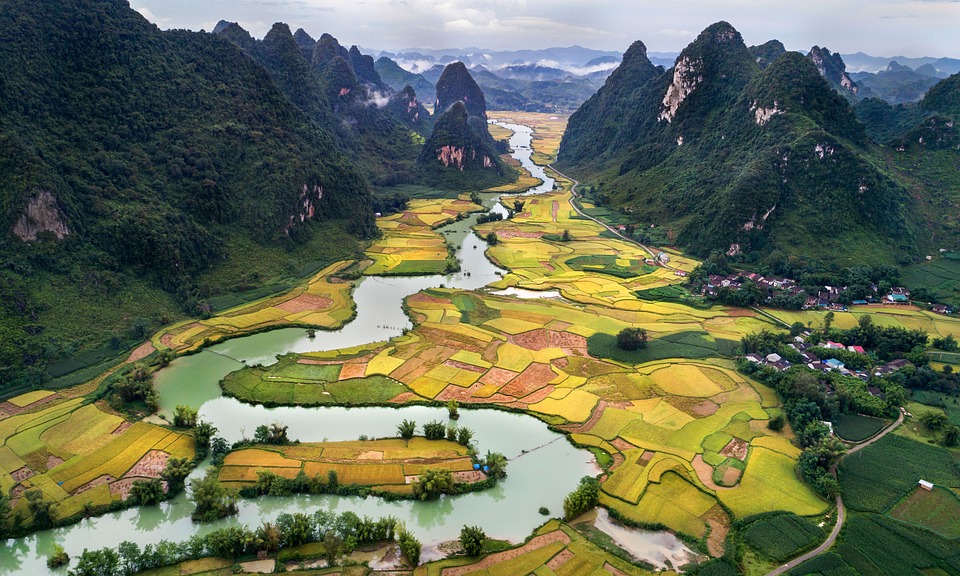
A watershed, also called a drainage basin or catchment, is all the land area that collects and channels runoff toward one main discharge point. That point is usually a large body of water like a lake or ocean, and it sits at the lowest elevation in the watershed.
Headwaters are the beginning of a watershed, often at higher elevations. From there, water flows downhill, forming streams and rivers that move toward the outlet.
Watersheds are separated from each other by divides, which are the ridges or high ground that form the boundary between one watershed and an adjoining one. Runoff on one side of a divide flows toward one outlet; runoff on the other side flows toward a different one.
Within a single watershed, streams and rivers can branch into smaller sub-watersheds, but all of that runoff still ends up draining to the same discharge point.
Characteristics of a Watershed
The features of a watershed control how much water it carries and how quickly that water moves. The ones to know are area, length, slope, soil, vegetation, and divides.
- Area (size): The total land area of a watershed affects how much runoff it can collect and hold. A larger area generally gathers more runoff, which influences whether it feeds a creek, a stream, or a major river.
- Length: The length of a watershed is the distance from the headwaters to the discharge point. A longer watershed means runoff takes more time to reach the outlet.
- Slope: Slope strongly affects runoff rate. Steeper slopes let gravity pull water downhill faster, so runoff moves more quickly and there is less time for it to soak in.
- Soil: Soil type determines how much runoff soaks into the ground versus flowing across the surface. Sandy soils with larger particles absorb more water, while fine or compacted soils let more water run off. Soil also filters and cleans water as it moves through, and fertile soil supports more plant growth.
- Vegetation: Plant cover reduces soil erosion because roots hold soil in place. More vegetation also slows runoff, improves soil fertility, and helps filter water before it reaches streams.
- Divides: These boundaries with neighboring watersheds determine which outlet the runoff drains to.
How to Use This on the AP Environmental Science Exam
Multiple Choice
Be ready to match a watershed feature to its effect. For example, if a question describes a steep, sparsely vegetated watershed, expect faster runoff and more erosion. If it describes flat land with sandy soil and thick vegetation, expect more water to soak in and less runoff.
Free Response
Practice describing a characteristic and then explaining its effect, not just naming it. A strong answer connects cause to effect: "Steeper slope increases runoff rate because gravity moves water downhill faster, reducing the time for infiltration." Use the specific terms area, length, slope, soil, vegetation, and divide when they fit.
Reading Diagrams and Maps
You may see a map or diagram showing headwaters, streams, and divides. Identify the discharge point as the lowest spot where water exits, trace runoff downhill, and use ridges to tell where one watershed ends and another begins.
Common Misconceptions
- Misconception: A watershed is just the river itself.Actually: A watershed is not just the river itself. It is all the land that drains into that river or outlet, including the slopes and ridges around it.
- Misconception: A divide is the low point where water collects.Actually: A divide is the high boundary between watersheds, not the low point where water collects. The discharge point is the low outlet.
- Misconception: More vegetation means more runoff.Actually: More vegetation does not mean more runoff. Plants slow water down and help it soak in, which reduces runoff and erosion.
- Misconception: Sandy soil increases runoff.Actually: Sandy soil does not increase runoff. Larger particles let more water infiltrate, so sandy soil usually means less surface runoff than fine, packed soil.
- Misconception: Bigger watersheds are always faster.Actually: Bigger watersheds are not always faster. Slope and soil affect speed; a long, gentle watershed can carry water slowly even if it is large.
Related AP Environmental Science Guides
Practice Questions for 4.6
1 of 10
A geologist claims that pesticide application at Farm X will not affect the water quality of a nearby pristine lake. As evidence, the geologist cites a topographic map showing that although Farm X is 2 km from the lake, a continuous 500-meter-high rocky ridge separates the farm from the lake shoreline.
Which statement best explains the reasoning connecting the map evidence to the claim?
A.
The rocky terrain neutralizes agricultural chemicals before they can enter the lake.
B.
The steep slope of the rocky ridge increases infiltration and prevents runoff entirely.
C.
The high elevation of the ridge dilutes pesticide concentration before it reaches surface water.
D.
The ridge forms a watershed divide that directs surface runoff away from the lake basin.
Vocabulary
The following words are mentioned explicitly in the AP® course framework for this topic.Term | Definition |
|---|---|
soil | The layer of weathered rock and organic material on Earth's surface that supports plant growth and varies among biomes. |
vegetation types | The different kinds of plants and plant communities present in a watershed, which influence water infiltration and runoff. |
watershed | A geographic area of land where all water drains to a common outlet, characterized by specific physical and biological features. |
watershed area | The total surface area of land contained within a watershed that contributes water to a common outlet. |
watershed divides | The boundaries or ridgelines that separate one watershed from adjacent watersheds, determining the direction of water flow. |
watershed slope | The gradient or steepness of the land within a watershed, which affects water flow rate and erosion patterns. |
Frequently Asked Questions
What is a watershed in APES?
A watershed is the land area where runoff drains to the same discharge point, such as a river, lake, or ocean. It includes the slopes, soil, vegetation, streams, and divides around that drainage area.
What are the main characteristics of a watershed?
The APES CED lists watershed characteristics as area, length, slope, soil, vegetation types, and divides with adjoining watersheds. These features affect runoff, infiltration, erosion, and water flow.
How does area affect a watershed?
A larger watershed area can collect more runoff because more land drains toward the same outlet. Area affects how much water can enter streams and rivers after precipitation.
How does slope affect runoff in a watershed?
Steeper slopes increase runoff speed because gravity moves water downhill faster. Faster runoff usually means less time for infiltration and a higher risk of erosion.
How do soil and vegetation affect a watershed?
Soil affects how much water infiltrates versus runs off, while vegetation slows runoff, reduces erosion, and helps filter water. Sandy soils usually allow more infiltration than compacted or fine-textured soils.
What is a divide in a watershed?
A divide is high ground or a ridge that separates adjoining watersheds. Water on one side of the divide drains toward one outlet, while water on the other side drains toward a different outlet.
See Fiveable more often in Google
Mark Fiveable as a preferred source and Google is more likely to show you our guides in Top Stories, with a "preferred" badge in AI Mode and AI Overviews.