5.13 Methods to Reduce Urban Runoff

♻️AP Environmental Science Unit 5 Review
5.13 Methods to Reduce Urban Runoff
♻️ AP Environmental Science
5.0
Required Environmental Legislation
5.1
The Tragedy of the Commons
5.2
Clearcutting
5.3
The Green Revolution
5.4
Impacts of Agricultural Practices
5.5
Irrigation Methods
5.6
Pest Control Methods
5.7
Meat Production Methods
5.8
Impacts of Overfishing
5.9
Impacts of Mining
5.10
Impacts of Urbanization
5.11
Ecological Footprints
5.12
Intro to Sustainability
5.13
Methods to Reduce Urban Runoff
5.14
Integrated Pest Management
5.15
Sustainable Agriculture
5.16
Aquaculture
5.17
Sustainable Forestry
How do you reduce urban runoff in AP Environmental Science?
Urban runoff is rainwater and snowmelt that flows off hard city surfaces instead of soaking into the ground. You reduce it by increasing water infiltration: swapping regular pavement for permeable pavement, planting trees, using more public transportation, and building up instead of out. These methods cut down flooding, pollution, and groundwater depletion in cities.
Why This Matters for the AP Environmental Science Exam
This topic is your go-to for proposing solutions to a human-caused environmental problem, which is exactly the kind of thinking AP Environmental Science rewards. When you understand why impervious surfaces create runoff, you can connect this topic back to urbanization (Topic 5.10) and forward to water pollution ideas in later units.
On the exam, you may be asked to describe methods that reduce urban runoff and explain how each method works. Being able to name a specific method and then explain the mechanism (more infiltration, less surface flow) is what separates a full-credit answer from a vague one.
Key Takeaways
- Urban runoff happens when precipitation hits impervious surfaces like roads, sidewalks, and parking lots and cannot soak into the soil.
- The main goal of runoff mitigation is to increase water infiltration so water reaches the ground instead of rushing off.
- Permeable pavement lets water pass through into the soil below, reducing surface flow.
- Planting trees helps because roots and soil absorb water, and tree canopy slows rainfall.
- Increasing public transportation use reduces the need for wide roads and large parking lots, which means fewer impervious surfaces.
- Building up instead of out keeps development compact, leaving more open ground that can absorb water.
What Causes Urban Runoff
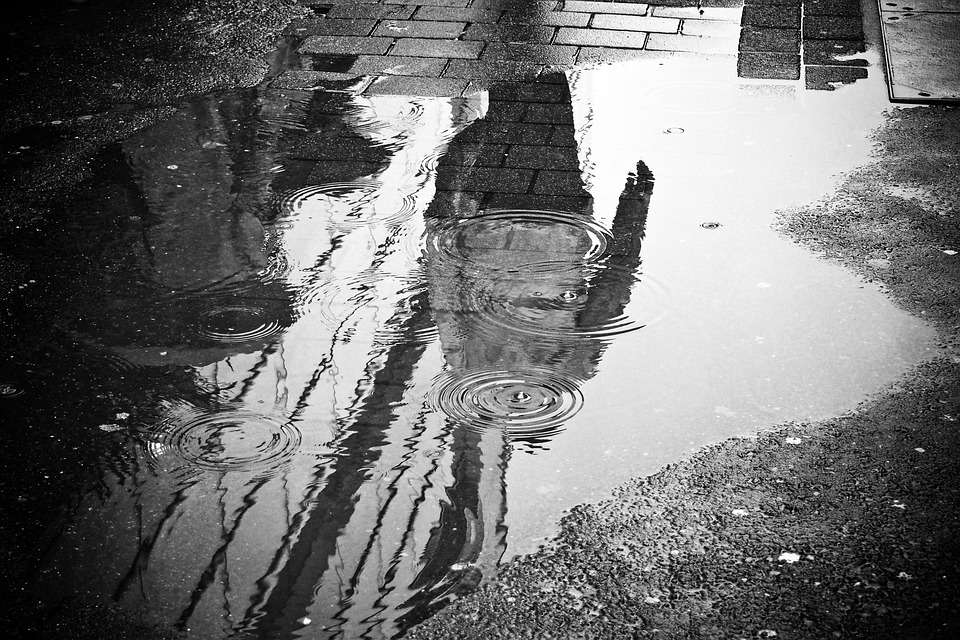
Urban runoff is the water from rain and snow that collects on city and human-made structures. In a natural area, precipitation can soak into the soil, form puddles, or feed streams and rivers. In a city, much of that water lands on hard surfaces and flows off instead.
Impervious surfaces are the core problem. These are human-made structures like roads, buildings, sidewalks, and parking lots that do not let water reach the soil. When water cannot infiltrate, it builds up and runs across the surface, often getting channeled straight into oceans or large bodies of water.
Why Runoff Is a Problem

- It reduces groundwater because water that should soak in instead leaves the area.
- It can pick up pollutants like oil, chemicals, and trash from hard surfaces and carry them into water bodies.
- It contributes to flooding because there is nowhere for the extra water to go.
Methods to Reduce Urban Runoff

Every method here works by increasing water infiltration, meaning water gets a chance to soak into the ground instead of running off.
- Permeable pavement: Replace traditional pavement and concrete with materials that let water pass through, such as porous pavers with holes that allow water to drain into the soil below.
- Planting trees: Trees and their roots help water soak into the ground, and the canopy slows down rainfall before it hits the surface.
- Increased use of public transportation: When more people use transit, cities need fewer wide roads and giant parking lots, which lowers the total amount of impervious surface.
- Building up, not out: Compact, taller buildings take up less ground area than sprawling development, leaving more open soil that can absorb water.
Other green infrastructure approaches, such as green roofs and rain gardens, are common real-world applications of the same idea. They are useful examples of how cities increase infiltration and slow runoff, though the core methods you should know are permeable pavement, trees, public transportation, and building up.
How to Use This on the AP Environmental Science Exam
Free Response
If a question asks you to describe a method to reduce urban runoff, name a specific method and then explain the mechanism. For example: "Replacing pavement with permeable pavement increases infiltration because water can pass through the surface into the soil rather than running off." The explanation of how and why is what earns the point.
Common Trap
Watch for questions that mix up reducing runoff with treating polluted water. This topic is mainly about increasing infiltration and reducing the amount of runoff in the first place, not about cleaning water after it has been collected.
Making Connections
Link this topic to impervious surfaces and urbanization. If a question describes a city with lots of pavement and flooding, you can identify the cause (impervious surfaces) and then propose the fix (infiltration methods). Showing cause and solution together makes for a strong response.
Common Misconceptions
- Misconception: Permeable pavement cleans the water.Actually: Its main job is to let water infiltrate into the soil, reducing surface runoff. Cleaning or treating contaminated water is a separate process.
- Misconception: Any tree planting is just for looks.Actually: Trees actively help with infiltration. Roots open up the soil and the canopy slows rainfall, so planting trees is a real runoff strategy, not just decoration.
- Misconception: Building up has nothing to do with water.Actually: Building up instead of out keeps development compact, which leaves more open ground to absorb water. Sprawling out creates more impervious surface and more runoff.
- Misconception: Public transportation only matters for air pollution.Actually: More transit use also reduces the need for wide roads and large parking lots, cutting impervious surface and the runoff it creates.
- Misconception: Runoff is only a water-quantity issue.Actually: Runoff also carries pollutants like oil and trash into water bodies, so it affects water quality and aquatic life too.
Related AP Environmental Science Guides
Practice Questions for 5.13
1 of 10
A municipality experiences frequent flash flooding during short, intense rainstorms. Civil engineers modeled the stormwater runoff flow rate over a 120-minute period for a standard city street and a street retrofitted with green infrastructure (mature street trees and bioswales). The resulting hydrograph shows the standard street's runoff rising sharply at 10 minutes and peaking at 50 L/s at 30 minutes. The retrofitted street's runoff begins rising at 25 minutes and peaks at 15 L/s at 50 minutes.
Based on the hydrograph data, which statement best supports planting trees and installing bioswales as a mitigation solution for the city's flash flooding?
A.
The green infrastructure delays the peak flow and significantly reduces maximum runoff volume.
B.
The green infrastructure reduces maximum runoff volume but only during low-intensity rainfall events.
C.
The green infrastructure delays the peak flow but allows maximum runoff volume to remain similar to standard street design.
D.
The green infrastructure reduces initial runoff volume but does not significantly delay the peak flow timing.
Vocabulary
The following words are mentioned explicitly in the AP® course framework for this topic.Term | Definition |
|---|---|
mitigation | Actions taken to reduce the severity or impact of environmental problems. |
permeable pavement | Paving material that allows water to pass through it into the soil below, reducing runoff and increasing water infiltration. |
urban runoff | Water from precipitation that flows over urban surfaces such as pavement and roofs, carrying pollutants into water systems rather than infiltrating into the ground. |
water infiltration | The process by which water soaks into the soil and groundwater rather than flowing across the surface as runoff. |
Frequently Asked Questions
How do you reduce urban runoff in AP Environmental Science?
Urban runoff is reduced by increasing water infiltration. APES methods include permeable pavement, planting trees, more public transportation, and building up instead of out.
Why does permeable pavement reduce runoff?
Permeable pavement lets water pass through the surface into the soil below, which reduces the amount of water flowing across hard city surfaces.
How do trees reduce urban runoff?
Trees help water enter the soil through root systems, and their canopy slows rainfall before it reaches the ground. This increases infiltration and reduces surface flow.
How does public transportation reduce urban runoff?
More public transportation can reduce the need for large roads and parking lots. Fewer impervious surfaces means more water can soak into soil.
What does building up instead of out mean?
Building up means using taller, compact development instead of sprawling development. It leaves more open ground available for water infiltration.
What is a common APES mistake with urban runoff?
A common mistake is only naming a method. For full-credit explanations, connect the method to increased infiltration or reduced impervious surface.
See Fiveable more often in Google
Mark Fiveable as a preferred source and Google is more likely to show you our guides in Top Stories, with a "preferred" badge in AI Mode and AI Overviews.