5.4 Impacts of Agricultural Practices

♻️AP Environmental Science Unit 5 Review
5.4 Impacts of Agricultural Practices
♻️ AP Environmental Science
5.0
Required Environmental Legislation
5.1
The Tragedy of the Commons
5.2
Clearcutting
5.3
The Green Revolution
5.4
Impacts of Agricultural Practices
5.5
Irrigation Methods
5.6
Pest Control Methods
5.7
Meat Production Methods
5.8
Impacts of Overfishing
5.9
Impacts of Mining
5.10
Impacts of Urbanization
5.11
Ecological Footprints
5.12
Intro to Sustainability
5.13
Methods to Reduce Urban Runoff
5.14
Integrated Pest Management
5.15
Sustainable Agriculture
5.16
Aquaculture
5.17
Sustainable Forestry
TLDR
Some farming methods cause real environmental damage, and three you need to know are tilling, slash-and-burn farming, and the use of fertilizers. Each one boosts food production in the short term but creates problems like soil erosion, lost nutrients, and water pollution. On the AP Environmental Science exam, you should be able to describe these practices and explain the specific environmental harm each one causes.
Impacts of Agricultural Practices Summary
Agricultural practices can increase food production while also damaging soil, air, and water systems. For AP Environmental Science, the required examples are tilling, slash-and-burn farming, and fertilizer use.
The exam usually wants a cause-and-effect chain. Tilling exposes soil and increases erosion, slash-and-burn releases carbon dioxide and reduces long-term soil fertility, and fertilizer runoff adds excess nutrients to water, which can trigger eutrophication.
Why This Matters for the AP Environmental Science Exam
This topic builds the skill of identifying an agricultural practice and connecting it to a clear environmental consequence. That cause-and-effect reasoning shows up in multiple-choice questions and in free-response answers where you describe a problem and explain its impact.
It also sets up later topics in Unit 5. Once you understand how tilling, slash-and-burn, and fertilizers damage the environment, the sustainable alternatives in Sustainable Agriculture (5.15) and Integrated Pest Management (5.14) make a lot more sense. Free-response prompts often ask you to pair a harmful practice with a solution, so knowing the damage first gives you something concrete to fix.
Key Takeaways
- The three agricultural practices to know for this topic are tilling, slash-and-burn farming, and the use of fertilizers.
- Tilling loosens soil but leaves it exposed, which speeds up soil erosion and washes away nutrient-rich topsoil.
- Slash-and-burn clears land with fire, releasing carbon dioxide and pushing farmers to clear more land as soil loses fertility.
- Fertilizers add nutrients to soil, but runoff carries those nutrients into water and can trigger eutrophication.
- For each practice, practice naming the action and then explaining the specific environmental harm it causes.
Agricultural Practices That Cause Environmental Damage
Agricultural practices are the techniques farmers use to grow more food on their land. Some are more efficient than others, and some cause more environmental damage. For this topic, focus on three: tilling, slash-and-burn farming, and the use of fertilizers.
Tilling
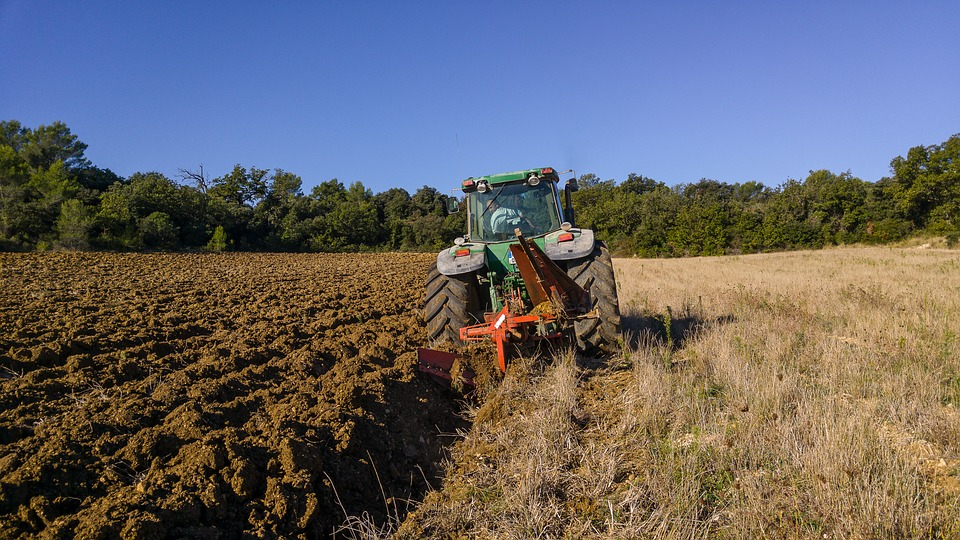
Tilling, also called plowing, digs up and turns over clumps of soil. This loosens the soil so water, air, and nutrients can move through it more easily, which can help crops grow.
The downside is erosion. Once soil is broken up and exposed, it becomes easy for wind and water to carry it away. The nutrient-rich topsoil is usually the first to go, often ending up in nearby streams, rivers, or the ocean. Tilling also disturbs the microbes living in the soil. Over time, repeated tilling leaves farmland less fertile.
Slash-and-Burn Farming
Slash-and-burn farming clears land by cutting down vegetation and then burning it. The ash adds some nutrients back to the soil, creating ready-to-use farmland in the short term.
The problem is that the soil loses fertility fairly quickly, which pushes farmers to slash and burn new areas of land to keep growing crops. Burning vegetation also releases carbon dioxide into the atmosphere, which connects this practice to climate change.
Fertilizers
Fertilizers are chemical or organic substances added to soil to boost fertility and help crops grow. Used correctly, they raise crop yields. Used in excess, they can damage the crops they are meant to support.
The bigger environmental issue is runoff. Fertilizers add extra nutrients like nitrogen and phosphorus to the soil, and rain washes those nutrients into nearby bodies of water. That nutrient buildup can trigger eutrophication, where algae grow rapidly, then die off and get broken down by bacteria that use up the oxygen in the water. Low oxygen levels can cause die-offs of fish and other aquatic species, and the pollution can also affect water supplies.
How to Use This on the AP Environmental Science Exam
MCQ
Multiple-choice questions often give you a scenario and ask which practice caused it, or what consequence a practice leads to. Match the practice to its main effect: tilling to soil erosion, slash-and-burn to lost soil fertility and carbon dioxide release, and fertilizers to runoff and eutrophication.
Free Response
Free-response questions usually want a two-part answer: describe the practice, then explain the environmental harm. A weak answer just names the practice. A strong answer explains the chain of cause and effect.
For fertilizers, do not stop at "runoff." Walk through it: extra nutrients wash into water, algae grow rapidly, algae die and decompose, bacteria use up oxygen, and fish and other organisms die from low oxygen. That full chain is what earns points.
Common Trap
When a prompt asks for a harmful agricultural practice, stick to practices that genuinely cause damage. Stay on topic by pairing each practice with a specific, accurate consequence instead of a vague statement like "it hurts the environment."
Common Misconceptions
- Misconception: Tilling is purely harmful.Actually: Tilling is not purely harmful. It does help crops by loosening soil for water and air, but it also exposes soil to erosion. A good answer mentions both sides when the question asks for benefits and drawbacks.
- Misconception: Algae directly poison the water during eutrophication.Actually: Eutrophication does not mean algae directly poison the water. The damage comes from algae dying, decomposing, and using up oxygen, which then causes aquatic organisms to die off.
- Misconception: Slash-and-burn is a permanent solution.Actually: Slash-and-burn is not a permanent solution. The cleared soil loses fertility quickly, which forces farmers to clear even more land.
- Misconception: Fertilizer is always helpful in larger amounts.Actually: Fertilizer is not always helpful in larger amounts. Too much fertilizer can damage crops and makes runoff pollution worse.
- Misconception: Fertilizer includes only synthetic types.Actually: "Fertilizer" includes both synthetic and organic types. Even organic fertilizers like manure can cause runoff and eutrophication if overused.
Related AP Environmental Science Guides
Practice Questions for 5.4
1 of 10
Environmental scientists tested whether nitrogen fertilizer runoff affects a freshwater lake. They added ammonium nitrate at 0, 5, 10, and 20 mg/L to forty 1,000-L mesocosms in the lake’s shallow littoral zone and measured dissolved oxygen concentration weekly for two months. Preliminary results are shown in the figure.
Which statement is the appropriate null hypothesis for the investigation?
A.
Mesocosms with 20 mg/L of fertilizer will have the largest algal bloom.
B.
Synthetic fertilizers are harmful to freshwater ecosystems and aquatic flora.
C.
Increasing nitrogen concentration will rapidly decrease water quality.
D.
Adding ammonium nitrate will have no significant effect on dissolved oxygen concentration.
Vocabulary
The following words are mentioned explicitly in the AP® course framework for this topic.Term | Definition |
|---|---|
fertilizers | Substances added to soil to increase nutrient content for plant growth, which can cause water pollution and eutrophication when they run off into waterways. |
slash-and-burn farming | An agricultural practice where vegetation is cut down and burned to clear land for cultivation, causing deforestation and air pollution. |
tilling | The practice of turning over and breaking up soil, which can cause soil erosion and damage soil structure. |
Frequently Asked Questions
What agricultural practices cause environmental damage in APES?
The AP Environmental Science CED names tilling, slash-and-burn farming, and fertilizer use as agricultural practices that can cause environmental damage.
How does tilling harm the environment?
Tilling loosens and exposes soil, which makes it easier for wind and water to erode nutrient-rich topsoil. Repeated tilling can also disturb soil organisms and reduce fertility over time.
How does slash-and-burn farming harm the environment?
Slash-and-burn farming clears land by cutting and burning vegetation. It releases carbon dioxide and can lead to repeated land clearing as soil fertility declines.
How do fertilizers cause eutrophication?
Fertilizer runoff carries nitrogen and phosphorus into water. Those nutrients fuel algal blooms; when algae die and decompose, oxygen drops and aquatic organisms can die off.
Why is too much fertilizer a problem?
Too much fertilizer can damage crops and increase nutrient runoff into waterways. Even organic fertilizers can contribute to eutrophication if applied in excess.
What is a common APES mistake with agricultural impacts?
A common mistake is naming the practice without explaining the harm. Strong answers pair the action with a specific consequence, like tilling causing erosion or fertilizer runoff causing eutrophication.
See Fiveable more often in Google
Mark Fiveable as a preferred source and Google is more likely to show you our guides in Top Stories, with a "preferred" badge in AI Mode and AI Overviews.