7.6 Reduction of Air Pollutants

♻️AP Environmental Science Unit 7 Review
7.6 Reduction of Air Pollutants
♻️ AP Environmental Science
Air pollution gets reduced in three main ways: regulatory practices, conservation practices, and alternative fuels. In AP Environmental Science, you should know how source-control devices like vapor recovery nozzles, catalytic converters, scrubbers, and electrostatic precipitators capture or convert pollutants before they reach the air.
Why This Matters for the AP Environmental Science Exam
This topic builds your ability to propose solutions to air pollution and back them with reasoning, which is exactly the kind of thinking the AP Environmental Science exam rewards. On multiple-choice questions, you may need to match a control device to the pollutant it removes or the source it targets. On free-response questions, you may be asked to describe a method to reduce a specific pollutant and explain how it works. Being precise about the difference between regulatory, conservation, and alternative-fuel approaches helps you write clear, scorable answers.
Key Takeaways
- Three categories of pollution reduction: regulatory practices, conservation practices, and alternative fuels.
- A vapor recovery nozzle on a gas pump captures fuel vapors (VOCs) so they don't escape while you fill your tank.
- A catalytic converter changes CO, NOx, and hydrocarbons in vehicle exhaust into less harmful CO2, N2, O2, and H2O.
- Wet and dry scrubbers pull particulates and gases out of industrial exhaust streams.
- Coal-burning power plants commonly use scrubbers and electrostatic precipitators to cut emissions.
- Match each device to its target: nozzles for fueling vapors, converters for vehicle exhaust, scrubbers and precipitators for industrial and power-plant exhaust.
Methods of Reduction
Reducing air pollution comes down to three main approaches: regulatory practices, conservation practices, and alternative fuels. Each one attacks the problem from a different angle, and the exam expects you to recognize examples of all three.
Source Control Devices
These are the specific technologies that capture or convert pollutants before they reach the atmosphere. They are the most testable part of this topic, so be precise about what each one does.
Vapor Recovery Nozzle
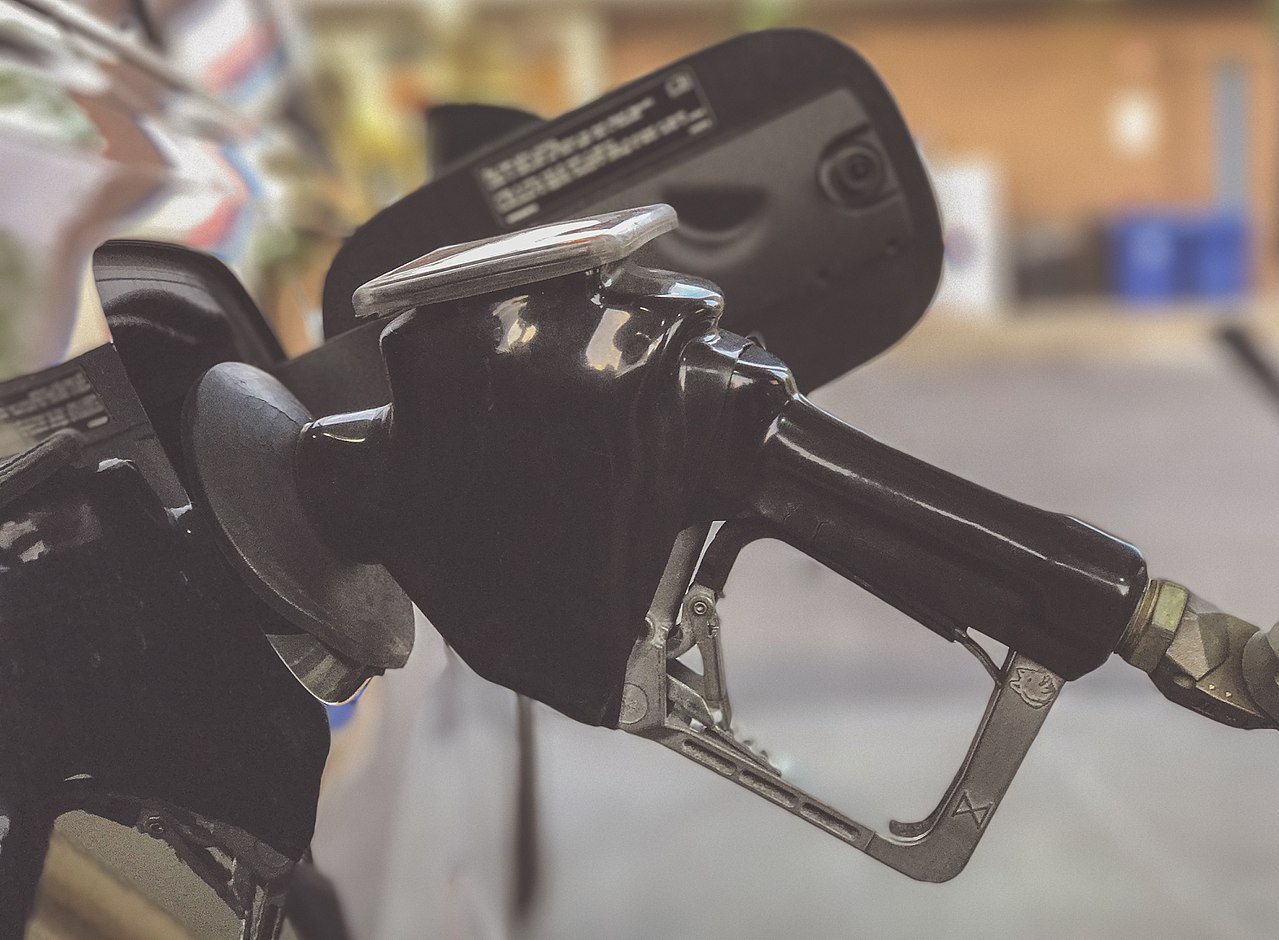
That rubber or plastic ring around the gas pump nozzle is a vapor recovery nozzle. It captures the fuel vapors (VOCs) that would otherwise escape into the air while you fill your tank. You'll usually notice less of a strong gasoline odor when one is working.
Catalytic Converter
A catalytic converter is attached to a vehicle's exhaust system. It converts the toxic gases in exhaust into less harmful molecules:
- CO, NOx, and hydrocarbons go in
- CO2, N2, O2, and H2O come out
This device is what makes internal combustion engine exhaust significantly cleaner than it would be otherwise.
Scrubbers (Wet and Dry)
Scrubbers remove particulates and gases from industrial exhaust streams before they leave the smokestack.
- Wet scrubbers send exhaust through a chamber sprayed with a scrubbing liquid (usually water). Particulates and dissolved gases get trapped in the liquid, which is then filtered, and the cleaned exhaust is released.
- Dry scrubbers use dry reagents to neutralize or convert the exhaust gases. The converted material falls out of the gas stream and gets collected, then the cleaned gas is released.
Electrostatic Precipitators
Coal-burning power plants commonly use electrostatic precipitators to remove particulates. Here's the process:
- Waste gases pass through a high-voltage screen, which gives the particles an electric charge (ionizes them).
- The charged particles travel past oppositely charged collection plates.
- The plates attract and hold the particles, pulling them out of the gas stream.
- The plates are cleaned periodically to collect the captured particulates.
Conservation Practices
Cutting the amount of energy and fuel you use lowers pollution at the source. Carpooling and mass transit release fewer pollutants per person than driving alone. More compact city design means people travel shorter distances. Energy-efficient buildings, green roofs, and better municipal waste management all reduce the demand that drives combustion emissions.
Alternative Fuels
Switching away from fossil fuels reduces greenhouse gas emissions and eliminates combustion particulates. Cleaner sources like solar, wind, hydro, and hydrogen cut emissions, and many buildings can be retrofitted for wind or solar to reduce their dependence on the power grid.
Regulatory Practices
Regulation is the third major approach. In the United States, the Clean Air Act gives the Environmental Protection Agency (EPA) authority to set and enforce air quality standards, including National Ambient Air Quality Standards for certain pollutants. EPA regulation under the Clean Air Act is also why lead was phased out of fuels, which sharply reduced atmospheric lead.
The following are real-world examples of air pollution policy. They help you see how regulation works in practice, but they are illustrations, not required content you must memorize for this topic:
- Montreal Protocol (example): an international treaty that phases out ozone-depleting substances. Many of those substances are also greenhouse gases, so cutting them helps air quality too.
- Kyoto Protocol (example): a United Nations agreement aimed at reducing greenhouse gas emissions tied to global warming.
- Paris Agreement (example): an international agreement focused on limiting the rise in global average temperature.
How to Use This on the AP Environmental Science Exam
MCQ
Expect questions that ask you to match a control device to a pollutant or a source. Quick associations to lock in:
- Vapor recovery nozzle to VOCs while fueling
- Catalytic converter to vehicle exhaust (CO, NOx, hydrocarbons)
- Scrubbers and electrostatic precipitators to industrial and coal power-plant exhaust
Free Response
If a prompt asks you to propose a way to reduce a specific pollutant, name the right method and explain how it works. For example, to reduce particulates from a coal plant, describe how an electrostatic precipitator charges particles and collects them on oppositely charged plates. Then connect that method back to the pollutant or health effect it addresses, and use evidence to support your solution.
Common Trap
Don't mix up which device handles which source. A catalytic converter is for vehicle engines, not smokestacks. Scrubbers and electrostatic precipitators are for industrial and power-plant exhaust, not gas pumps. Keeping the source straight is often the difference between full and partial credit.
Common Misconceptions
- Misconception: A catalytic converter removes all pollutants.Actually: A catalytic converter does not remove all pollutants. It converts CO, NOx, and hydrocarbons into CO2, N2, O2, and H2O. It still produces CO2, a greenhouse gas.
- Misconception: Scrubbers and catalytic converters are the same thing.Actually: Scrubbers and catalytic converters are not the same thing. Scrubbers clean industrial and power-plant exhaust streams, while catalytic converters treat vehicle engine exhaust.
- Misconception: Vapor recovery nozzles clean exhaust.Actually: Vapor recovery nozzles don't clean exhaust. They only capture fuel vapors during refueling, not gases coming out of a tailpipe.
- Misconception: Conservation and alternative fuels are not reduction methods.Actually: Conservation and alternative fuels are reduction methods too. Reducing pollution isn't only about control devices. Driving less, using mass transit, and switching to cleaner energy all count.
- Misconception: Wet and dry scrubbers work the same way.Actually: Wet and dry scrubbers differ in how they work. Wet scrubbers use a liquid spray to trap pollutants, while dry scrubbers use dry reagents to neutralize or convert them.
Related AP Environmental Science Guides
Practice Questions for 7.6
1 of 10
Air quality regulators hypothesized that vapor recovery nozzles at gasoline pumps would reduce ambient volatile organic compound (VOC) concentrations near pumps by more than 50% during peak fueling hours. They measured VOC concentrations at 15 gas stations before installation and one month after installation. The figure shows mean VOC concentrations with 95% confidence intervals.
Which statement best interprets the data relative to the hypothesis?
A.
The data partially support the hypothesis because VOC concentrations decreased, but the final concentration remained above 3.0 ppm.
B.
The data refute the hypothesis because VOC concentrations decreased by only 38% after installation.
C.
The data are inconclusive because the 95% confidence intervals for the two measurements overlap significantly.
D.
The data support the hypothesis because VOC concentrations decreased by approximately 62% after installation.
Vocabulary
The following words are mentioned explicitly in the AP® course framework for this topic.Term | Definition |
|---|---|
air pollutants | Harmful substances released into the atmosphere that can negatively affect air quality and human health. |
alternative fuels | Energy sources other than fossil fuels, such as renewable or cleaner-burning fuels, used to reduce air pollution. |
catalytic converter | An air pollution control device in internal combustion engines that converts harmful pollutants (CO, NOx, and hydrocarbons) into less harmful substances (CO2, N2, O2, and H2O). |
conservation practices | Actions taken to reduce resource consumption and minimize pollution through efficient use of energy and materials. |
dry scrubber | An air pollution control device that removes particulates and/or gases from industrial exhaust streams without using liquid. |
electrostatic precipitator | An air pollution control device that removes particulates from industrial exhaust streams using electrical charges. |
regulatory practices | Government-enforced rules and standards designed to control and reduce air pollution emissions. |
vapor recovery nozzle | An air pollution control device on gasoline pumps that prevents fuel vapors from escaping into the atmosphere during vehicle refueling. |
wet scrubber | An air pollution control device that removes particulates and/or gases from industrial exhaust streams using liquid. |
Frequently Asked Questions
What are the main ways to reduce air pollutants in APES 7.6?
APES 7.6 groups reduction methods into regulatory practices, conservation practices, and alternative fuels. It also expects you to know source-control devices such as vapor recovery nozzles, catalytic converters, scrubbers, and electrostatic precipitators.
What does a catalytic converter do?
A catalytic converter is used in internal combustion engines. It converts carbon monoxide, nitrogen oxides, and hydrocarbons in exhaust into less harmful molecules such as carbon dioxide, nitrogen, oxygen, and water.
What is a vapor recovery nozzle?
A vapor recovery nozzle is a device on a gasoline pump that captures fuel vapors while a vehicle is being filled. It helps keep volatile organic compounds from escaping into the atmosphere.
How do wet and dry scrubbers reduce air pollution?
Wet and dry scrubbers remove particulates and/or gases from industrial exhaust streams. Wet scrubbers use liquid, while dry scrubbers use dry reagents to capture or convert pollutants before exhaust leaves the stack.
What does an electrostatic precipitator remove?
An electrostatic precipitator removes particulates from exhaust, especially from coal-burning power plants. It gives particles an electric charge and collects them on oppositely charged plates.
How is APES 7.6 tested?
APES 7.6 often asks you to match a pollution-control device to a source or pollutant and explain how the method reduces emissions at the source.
See Fiveable more often in Google
Mark Fiveable as a preferred source and Google is more likely to show you our guides in Top Stories, with a "preferred" badge in AI Mode and AI Overviews.