5.4 Elasticity in Areas Other Than Price

🛒Principles of Microeconomics Unit 5 Review
5.4 Elasticity in Areas Other Than Price
🛒 Principles of Microeconomics
Elasticity in Areas Other Than Price
Elasticity isn't just about how quantity responds to price changes. It also measures how demand responds to income changes and to the prices of related goods. Income elasticity reveals whether a good is normal or inferior, while cross-price elasticity shows whether two goods are substitutes or complements. These concepts help explain consumer behavior and are useful for understanding how markets shift when economic conditions change.

Top images from around the web for Income and cross-price elasticity calculations
Elasticity – Introduction to Microeconomics View original
Is this image relevant?
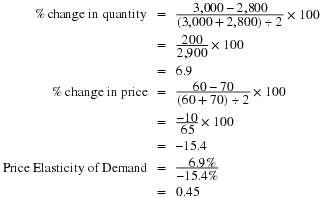
Elasticity | Microeconomics View original
Is this image relevant?
Elasticity | Microeconomics View original
Is this image relevant?
4.1 Calculating Elasticity – Principles of Microeconomics View original
Is this image relevant?
Elasticity – Introduction to Microeconomics View original
Is this image relevant?
Elasticity – Introduction to Microeconomics View original
Is this image relevant?
Elasticity | Microeconomics View original
Is this image relevant?
Income and Cross-Price Elasticity Calculations
Income elasticity of demand measures how responsive demand is to changes in consumer income.
The sign of the result tells you what type of good you're dealing with:
- Normal goods have positive income elasticity. When income rises, people buy more of them. Luxury cars are a classic example: a 10% income increase might lead to a 20% increase in quantity demanded (income elasticity of +2.0).
- Inferior goods have negative income elasticity. When income rises, people buy less of them and switch to higher-quality alternatives. Generic store-brand groceries often fall into this category.
Cross-price elasticity of demand measures how responsive demand for one good is to a change in the price of a different good.
Again, the sign matters:
- Substitutes have positive cross-price elasticity. If the price of Coke rises, demand for Pepsi increases because consumers switch to the cheaper alternative.
- Complements have negative cross-price elasticity. If the price of hot dogs rises, demand for hot dog buns falls because people buy the two goods together.
The magnitude of these elasticities also matters. A cross-price elasticity of +0.1 means the goods are weak substitutes, while +3.0 means they're very close substitutes.
Elasticity in Labor and Financial Markets
Labor supply elasticity measures how responsive the quantity of labor supplied is to changes in wages. Several factors affect it:
- Alternative job opportunities - Workers with more options can more easily leave for higher-paying jobs, making labor supply more elastic.
- Skill level and specialization - Highly specialized workers (like surgeons) are harder to replace, so their labor supply tends to be more inelastic than that of, say, retail workers.
- Time horizon - Labor supply is generally more elastic in the long run because workers have time to retrain, relocate, or switch careers.
Labor demand elasticity works from the employer's side. It measures how responsive employers' demand for workers is to changes in wages. If labor demand is elastic, a small wage increase leads to a large drop in hiring.
Elasticity of savings measures how responsive savings are to changes in interest rates. Higher interest rates raise the opportunity cost of spending money now, which typically encourages more saving. Factors that influence this elasticity include:
- Income level - Low-income households may have little room to adjust savings regardless of interest rates, making their savings behavior more inelastic.
- Life-cycle stage - Young adults saving for a home respond differently than retirees drawing down their savings.
- Alternative investments - When stocks or real estate offer attractive returns, changes in interest rates on savings accounts may have less effect.

Types of Elasticity
This section provides a quick reference for the core elasticity categories you've already covered in earlier sections of this unit.
Price elasticity of demand measures how responsive quantity demanded is to changes in price:
- Elastic demand (elasticity > 1): Quantity demanded changes by a larger percentage than price. A 5% price increase might cause a 10% drop in quantity demanded.
- Inelastic demand (elasticity < 1): Quantity demanded changes by a smaller percentage than price. A 5% price increase might cause only a 2% drop in quantity demanded.
- Unit elastic (elasticity = 1): The percentage change in quantity demanded exactly equals the percentage change in price.
Price elasticity of supply measures how responsive quantity supplied is to changes in price, following the same elastic/inelastic/unit elastic categories.
Real-World Applications of Elasticity
Taxation and elasticity
The burden of a tax falls more heavily on whichever side of the market is more inelastic. For goods with inelastic demand like gasoline, consumers can't easily reduce their consumption, so they end up bearing most of the tax burden. For goods with elastic demand, producers absorb more of the tax because raising prices would cause consumers to walk away.
Subsidies and elasticity
Subsidies are more effective at increasing quantity when demand or supply is elastic. For example, subsidies on solar panels (which have relatively elastic demand) tend to produce larger increases in quantity purchased than subsidies on goods with inelastic demand.
Trade policies and elasticity
Tariffs and quotas depend on elasticity to be effective. If domestic demand for imports like consumer electronics is elastic, a tariff causes consumers to significantly reduce purchases or find alternatives, making the tariff less effective at generating revenue. If demand is inelastic, the tariff raises revenue but doesn't do much to reduce imports.
Business decisions
- Firms use price elasticity of demand to set pricing strategies. If demand is inelastic, raising prices increases total revenue. If demand is elastic, lowering prices can increase total revenue.
- Income elasticity helps firms decide whether to target luxury or budget product lines based on economic conditions.
- Cross-price elasticity helps firms understand how a competitor's pricing changes will affect their own sales.
See Fiveable more often in Google
Mark Fiveable as a preferred source and Google is more likely to show you our guides in Top Stories, with a "preferred" badge in AI Mode and AI Overviews.