6.3 Behavioral Economics: An Alternative Framework for Consumer Choice

🛒Principles of Microeconomics Unit 6 Review
6.3 Behavioral Economics: An Alternative Framework for Consumer Choice
🛒 Principles of Microeconomics
Behavioral Economics and Consumer Choice
Behavioral economics studies how psychological factors shape the choices consumers actually make, as opposed to the perfectly rational choices traditional models predict. This matters because it explains a ton of real-world behavior that standard theory can't, from why people undersave for retirement to why they procrastinate on important tasks.

Top images from around the web for Consumer choices across time
Income Changes and Consumption Choices | Microeconomics View original
Is this image relevant?
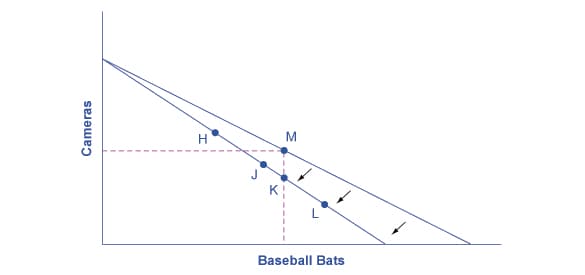
Income Changes and Consumption Choices | Microeconomics View original
Is this image relevant?
Consumer Decision Making Process – Introduction to Consumer Behaviour View original
Is this image relevant?
Income Changes and Consumption Choices | Microeconomics View original
Is this image relevant?
Income Changes and Consumption Choices | Microeconomics View original
Is this image relevant?
Consumer Choices Across Time
Intertemporal choice refers to any decision where costs and benefits occur at different points in time. Buying a car now versus saving for retirement is a classic example. These decisions are where behavioral economics really diverges from traditional theory.
In the standard model, economists assume exponential discounting: you discount future rewards at a constant rate over time. If you'd trade $100 today for $105 next year, you'd also trade $100 in five years for $105 in six years. Your preferences stay consistent no matter when you're asked.
Hyperbolic discounting tells a different story. People tend to use much higher discount rates for near-term events than for distant ones. You might strongly prefer $100 today over $105 tomorrow, but feel roughly indifferent between $100 in a year and $105 in a year and a day. The immediacy of the reward warps your judgment.
This pattern creates present bias, the tendency to overweight payoffs that are closer to the present moment. You genuinely plan to start your diet tomorrow, but when tomorrow arrives, "today" feels different than "tomorrow" did yesterday. Your long-term preferences and your short-term actions don't line up.
Procrastination is a direct consequence. You delay tasks despite knowing you'll be worse off for it. Putting off studying until the night before an exam isn't irrational in the moment if your brain is hyperbolic-discounting the future pain of a bad grade.

Examples of Intertemporal Budgeting
The intertemporal budget constraint represents the tradeoff between consumption now and consumption later. Three things determine it: your current income, your expected future income, and the interest rate. A higher interest rate makes saving more attractive because each dollar saved today buys more consumption in the future.
Here's how this plays out in real decisions:
- Saving for retirement: Contributing part of each paycheck to a 401(k) means less spending today but more consumption in retirement. The earlier you start, the more compound interest works in your favor.
- Investing in education: Taking out student loans to attend college means forgoing current income (and taking on debt) to build human capital. The bet is that higher future earnings will more than offset the cost.
- Borrowing for a home: A 30-year mortgage lets you consume housing now by borrowing against future income. You spread the cost over decades, but you also pay significant interest.
Each of these involves weighing present sacrifice against future benefit, which is exactly where behavioral biases can throw people off course.

Behavioral Factors in US Savings Rates
The US has historically low personal savings rates compared to many other developed countries. Standard theory struggles to explain this, but behavioral economics offers several reasons:
- Lack of self-control: Present bias makes it genuinely hard to resist spending now. Impulse purchases feel rewarding in the moment, even when they come at the expense of an emergency fund.
- Limited attention: People often fail to consider the long-term consequences of small, repeated spending decisions. That $5 daily coffee habit costs roughly $1,825 a year, but the daily amount feels trivial, so it flies under the radar.
- Mental accounting: People treat money differently depending on where it comes from. A $2,000 tax refund feels like "bonus money" and gets spent on a vacation, even though it's no different economically from $2,000 in regular paychecks.
- Default effects: These are surprisingly powerful. When employers automatically enroll workers in a 401(k) with a default contribution rate, participation jumps dramatically compared to opt-in systems. Most people simply stick with whatever the default is, so the choice architecture matters enormously.
- Peer effects: Social comparisons drive spending. A "keeping up with the Joneses" mentality pushes people to match their friends' consumption levels, crowding out savings.
Cognitive Biases and Decision-Making Heuristics
Traditional economics assumes people optimize perfectly. Bounded rationality recognizes that people have limited cognitive resources, so they rely on simplified mental models. The result is decisions that are often "good enough" but not optimal.
Several specific biases shape how consumers choose:
- Loss aversion: Losses hurt roughly twice as much as equivalent gains feel good. Losing $50 stings more than finding $50 feels rewarding. This makes people overly cautious in some situations and irrationally stubborn in others (like holding onto a losing investment too long).
- Framing effects: How information is presented changes decisions, even when the underlying facts are identical. Describing meat as "90% lean" versus "10% fat" leads to different consumer reactions, despite meaning the same thing.
- Anchoring: People rely too heavily on the first piece of information they encounter. If a store lists a jacket's "original price" as $200 before marking it down to $120, that $200 anchor makes $120 feel like a deal, regardless of the jacket's actual value.
Prospect theory, developed by Daniel Kahneman and Amos Tversky, pulls several of these ideas together into a formal model of decision-making under uncertainty. It incorporates loss aversion and the idea that people evaluate outcomes relative to a reference point (usually the status quo), not in absolute terms.
Heuristics are the mental shortcuts people use to make quick decisions. They're often useful, but they can produce systematic errors. For example, the availability heuristic leads people to overestimate the likelihood of events that come easily to mind (like plane crashes after seeing news coverage), which can distort consumer risk assessments.
See Fiveable more often in Google
Mark Fiveable as a preferred source and Google is more likely to show you our guides in Top Stories, with a "preferred" badge in AI Mode and AI Overviews.