13.2 How Governments Can Encourage Innovation

🛒Principles of Microeconomics Unit 13 Review
13.2 How Governments Can Encourage Innovation
🛒 Principles of Microeconomics
Government Policies and Innovation
Innovation drives economic growth, but it comes with a core problem: the benefits of new ideas often spill over to people who didn't pay for the research. This is a positive externality, and it means the private market will underinvest in innovation compared to what's socially optimal. Governments step in with policies designed to close that gap, giving innovators stronger incentives to take on the cost and risk of developing new ideas.

Top images from around the web for Intellectual Property Rights
Innovation | Intellectual Property | Trade & Development - Jeremy de Beer View original
Is this image relevant?
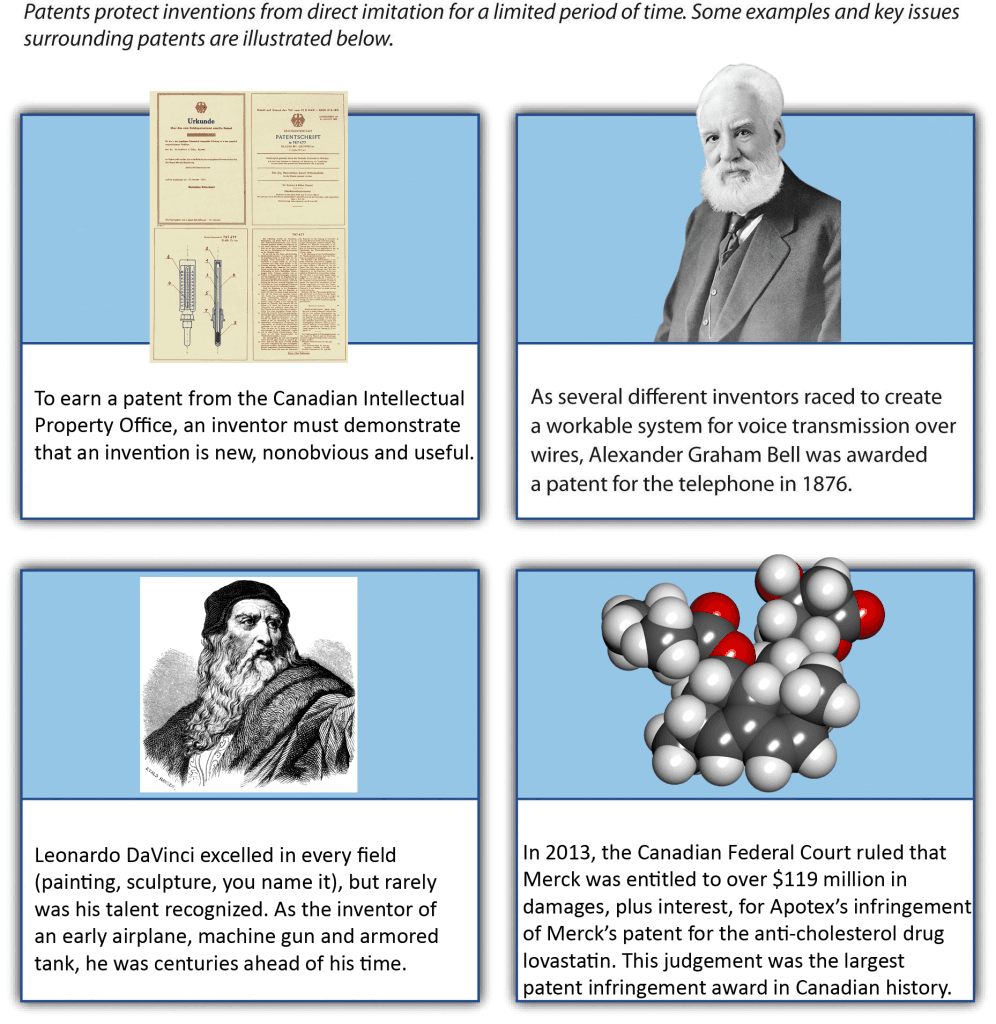
Intellectual Property – Mastering Strategic Management – 1st Canadian Edition View original
Is this image relevant?
Innovation | Intellectual Property | Trade & Development - Jeremy de Beer View original
Is this image relevant?
Intellectual Property – Mastering Strategic Management – 1st Canadian Edition View original
Is this image relevant?
Intellectual Property Rights
Intellectual property rights (IPRs) are legal protections that grant inventors and creators temporary monopoly power over their work. The main types are patents (for inventions), copyrights (for creative works), and trademarks (for brand identifiers). By letting creators charge higher prices and earn profits for a limited time, IPRs make the upfront cost of innovation worth taking on.
But IPRs involve a real trade-off. During the monopoly period, prices are higher than they'd be in a competitive market, which reduces consumer surplus and creates deadweight loss. Society accepts this cost because without the profit incentive, many innovations wouldn't happen at all.
The design details matter a lot:
- Patent length: Longer patent terms give inventors more time to profit, strengthening the incentive to innovate. But they also extend the period of monopoly pricing, keeping prices high for consumers longer than may be necessary.
- Patent scope: Broader patents cover more variations of an idea, which protects the original inventor but can block competitors from making incremental improvements or derivative works. If patents are too broad, they actually stifle follow-on innovation rather than encourage it.

Research and Development Promotion
Governments don't just protect private innovation; they actively fund and incentivize it through several channels.
Direct government funding supports R&D through grants and contracts to universities and labs. This is especially valuable for basic research, where the social returns are high but private returns are low. A pharmaceutical company might not fund early-stage disease research with no clear product in sight, but a government grant can fill that gap because the knowledge generated has broad public benefits (a classic positive externality).
Tax incentives lower the cost of private R&D investment. Two common tools:
- R&D tax credits reduce a firm's tax bill based on how much it spends on qualifying research, effectively making each dollar of R&D cheaper.
- Accelerated depreciation for R&D equipment lets firms write off capital costs faster, lowering the upfront cost of investing in research infrastructure.
Prizes and awards target specific innovation goals or recognize important achievements:
- Inducement prizes define a problem and reward whoever solves it first. For example, a government might offer a prize for developing a more efficient energy storage technology or a new vaccine. These work well when the goal is clear but the path to get there is uncertain.
- Recognition prizes like the Nobel Prize or Fields Medal honor past work and raise the public profile of important research areas, indirectly encouraging future effort.
Government procurement and advance purchase commitments reduce market risk by guaranteeing demand. If a government commits to buying a certain quantity of a new product (say, a novel military technology or a treatment for a rare disease), firms face less uncertainty about whether their R&D investment will pay off. This is particularly useful for orphan drugs, where the patient population is too small to attract private investment on its own.
Public-Private Collaboration
Some of the most effective innovation policy combines public and private strengths.
Public-private research partnerships pair government labs or universities with private firms. The public side often contributes basic science expertise and funding, while the private side brings commercialization know-how and market awareness. Biomedical research and space exploration are areas where these partnerships have been especially productive, since the projects are too large or risky for either sector alone.
Technology transfer policies help move publicly funded discoveries into the marketplace. The Bayh-Dole Act (1980) was a landmark here: it allowed universities to patent and license inventions developed with federal funding, giving them a direct incentive to commercialize research. Cooperative Research and Development Agreements (CRADAs) serve a similar function by creating formal channels for government labs to share technology with private firms.
Research consortia let competing firms pool resources to tackle shared technological challenges. Semiconductor manufacturing is a classic example, where the cost of developing next-generation chip fabrication is too high for any single company. Open-source software development follows a similar logic. Because cooperation among competitors can raise antitrust concerns, governments sometimes grant specific exemptions to permit this kind of collaborative R&D.
International research collaboration extends these principles across borders. Large-scale projects like the Human Genome Project and CERN's particle physics research show how cross-border partnerships and open data-sharing policies can accelerate innovation by spreading knowledge more widely and avoiding duplicated effort.
See Fiveable more often in Google
Mark Fiveable as a preferred source and Google is more likely to show you our guides in Top Stories, with a "preferred" badge in AI Mode and AI Overviews.