19.3 Intra-Industry Trade between Similar Economies

🛒Principles of Microeconomics Unit 19 Review
19.3 Intra-Industry Trade between Similar Economies
🛒 Principles of Microeconomics
Intra-Industry Trade between Similar Economies
Intra-industry trade occurs when countries exchange different products within the same industry. Unlike inter-industry trade (where one country exports cars and imports coffee), intra-industry trade involves both countries producing and trading goods in the same industry. This pattern is especially common between economies at similar levels of development.
Understanding intra-industry trade explains why, for example, Germany and Japan both export cars to each other rather than one country dominating the entire auto market.

Top images from around the web for Specialization and Value Chain Splitting
Examining Intra-Industry Trade between India & China: Is India on the Right Track? View original
Is this image relevant?
Intra-industry Trade between Similar Economies | OpenStax Macroeconomics 2e View original
Is this image relevant?
Intra-industry Trade between Similar Economies · Economics View original
Is this image relevant?
Examining Intra-Industry Trade between India & China: Is India on the Right Track? View original
Is this image relevant?
Intra-industry Trade between Similar Economies | OpenStax Macroeconomics 2e View original
Is this image relevant?
Specialization and Value Chain Splitting
Most modern products aren't made start-to-finish in a single country. Instead, the value chain (the sequence of steps from raw materials to finished product) gets split across borders. Each country focuses on the stages where it has the strongest expertise or resources.
These stages include:
- Research and development (designing new products or processes)
- Component manufacturing (producing specific parts like engines or microchips)
- Assembly (putting components together into a finished product)
- Marketing and distribution (getting the product to consumers)
This splitting creates intra-industry trade in intermediate goods: Country A might export car engines to Country B, while Country B exports transmissions back to Country A. Both countries are in the auto industry, but each specializes in a different piece of the production process.

Economies of Scale and Competition
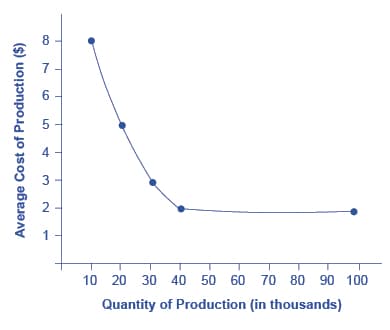
Economies of scale are a major driver of intra-industry trade. When a firm increases output, it spreads fixed costs (factory construction, R&D spending) over more units, which lowers the average cost per unit. By specializing in a narrower range of products and exporting to a global market, firms can produce at a scale large enough to capture these cost savings.
At the same time, global competition pushes firms to differentiate their products rather than make identical goods. Instead of every country producing a generic sedan, firms target specific varieties or market segments. Think of how South Korea's Hyundai and Germany's BMW both make cars but aim at very different buyers.
The result for consumers: a wider variety of products at competitive prices. Countries export the varieties they specialize in and import the varieties they don't produce, so trade flows in both directions within the same industry.

Dynamic Comparative Advantage
Comparative advantage means a country can produce a good at a lower opportunity cost than another country. But comparative advantage isn't fixed. Dynamic comparative advantage describes how a country's strengths shift over time due to factors like:
- Technological progress (new industries become viable)
- Investment in human capital (a more skilled workforce opens up higher-value production)
- Changing consumer preferences (demand shifts toward new product types)
A practical example: South Korea's economy initially had a comparative advantage in labor-intensive manufacturing like textiles. Over decades of investment in education and technology, it shifted toward high-tech industries like semiconductors and electronics.
These shifts reshape intra-industry trade patterns. A country might start by exporting low-end products within an industry and gradually move toward exporting higher-end, more sophisticated versions as its comparative advantage evolves. Meanwhile, it imports the product varieties that no longer align with its strengths.
See Fiveable more often in Google
Mark Fiveable as a preferred source and Google is more likely to show you our guides in Top Stories, with a "preferred" badge in AI Mode and AI Overviews.