6.1 Consumption Choices

🛒Principles of Microeconomics Unit 6 Review
6.1 Consumption Choices
🛒 Principles of Microeconomics
Consumer Utility and Decision-Making

Top images from around the web for Total utility and consumer satisfaction
Consumer Choice and Utility | Microeconomics View original
Is this image relevant?
Consumer Choice and Utility | Microeconomics View original
Is this image relevant?
Marginal Utility versus Total Utility | Microeconomics View original
Is this image relevant?
Consumer Choice and Utility | Microeconomics View original
Is this image relevant?
Consumer Choice and Utility | Microeconomics View original
Is this image relevant?
Total utility and consumer satisfaction
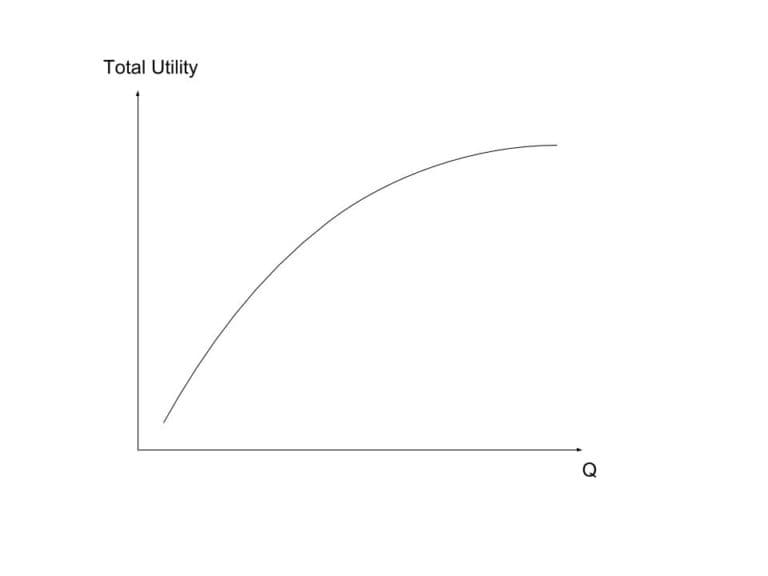
Total utility is the overall satisfaction a consumer gets from consuming a certain quantity of a good or service. You calculate it by adding up the marginal utility from each unit consumed.
For example, if eating your first slice of pizza gives you 10 units of satisfaction and the second gives you 8, your total utility after two slices is 18.
- Total utility generally increases as you consume more, but it increases at a slower rate. This happens because of diminishing marginal utility (more on that below).
- Consumers aim to maximize total utility given their budget and preferences. That means choosing the combination of goods that squeezes the most satisfaction out of every dollar.

Marginal utility in decision-making
Marginal utility is the extra satisfaction you get from consuming one more unit of a good. The formula is:
where is the change in total utility and is the change in quantity consumed.
Why does this matter for decisions? Because consumers with limited income need to decide where each dollar goes. The rule they follow (whether they realize it or not) is the equimarginal principle: keep spending on a good until the marginal utility per dollar spent on it equals the marginal utility per dollar spent on every other good.
If a dollar spent on pizza gives you more marginal utility than a dollar spent on salad, you should buy more pizza (and less salad) until the two ratios even out. That's how you maximize total utility across your whole budget.
The law of diminishing marginal utility states that as you consume more of a good, each additional unit gives you less extra satisfaction. Your first slice of pizza might feel amazing, but by the fifth slice, the added enjoyment is much smaller. This encourages variety in consumption: once the marginal utility of pizza drops low enough, your next dollar is better spent on something else.

Diminishing marginal utility's impact
Diminishing marginal utility has three important consequences for how markets work:
- It explains why demand curves slope downward. Because each additional unit provides less satisfaction, consumers are only willing to buy more units if the price falls. Lower marginal utility means lower willingness to pay.
- It drives diversified consumption. Rather than spending all your money on one good, you spread purchases across many goods. After several slices of pizza, the marginal utility per dollar on a drink or a salad is probably higher, so you switch.
- It creates consumer surplus. Consumer surplus is the gap between what you're willing to pay and what you actually pay. Say you'd pay $5 for the first slice of pizza but the price is $3. That's $2 of consumer surplus on that slice. As marginal utility falls with each additional slice, your willingness to pay drops closer to the market price, so consumer surplus shrinks on later units. The early units are where most of your surplus comes from.
Consumer choice theory
Rational choice theory assumes consumers make decisions that maximize their utility, given their preferences and their budget constraint.
Indifference curves are a tool for visualizing this. Each curve connects all the combinations of two goods that give a consumer the same level of utility. A consumer is equally happy anywhere along a single indifference curve. Curves further from the origin represent higher utility.
When prices or income change, two effects shift consumer choices:
- Substitution effect: When the price of one good rises relative to another, consumers buy less of the now-expensive good and more of the relatively cheaper one. You're substituting away from the pricier option.
- Income effect: A price change also changes your real purchasing power. If pizza gets cheaper, your income effectively stretches further, which can change how much of all goods you buy.
Together, the substitution and income effects explain why quantity demanded changes when price changes. They're the mechanism behind the movement along a demand curve.
See Fiveable more often in Google
Mark Fiveable as a preferred source and Google is more likely to show you our guides in Top Stories, with a "preferred" badge in AI Mode and AI Overviews.