14.5 Employment Discrimination

🛒Principles of Microeconomics Unit 14 Review
14.5 Employment Discrimination
🛒 Principles of Microeconomics
Employment Discrimination in Labor Markets
Employment discrimination occurs when workers receive different treatment in hiring, pay, or promotion based on characteristics unrelated to their productivity. Understanding how discrimination operates helps explain persistent wage gaps and occupational patterns that pure human capital theory can't fully account for.

Top images from around the web for Discrimination Impacts
Discrimination Based on Sex and Gender | Boundless Psychology View original
Is this image relevant?
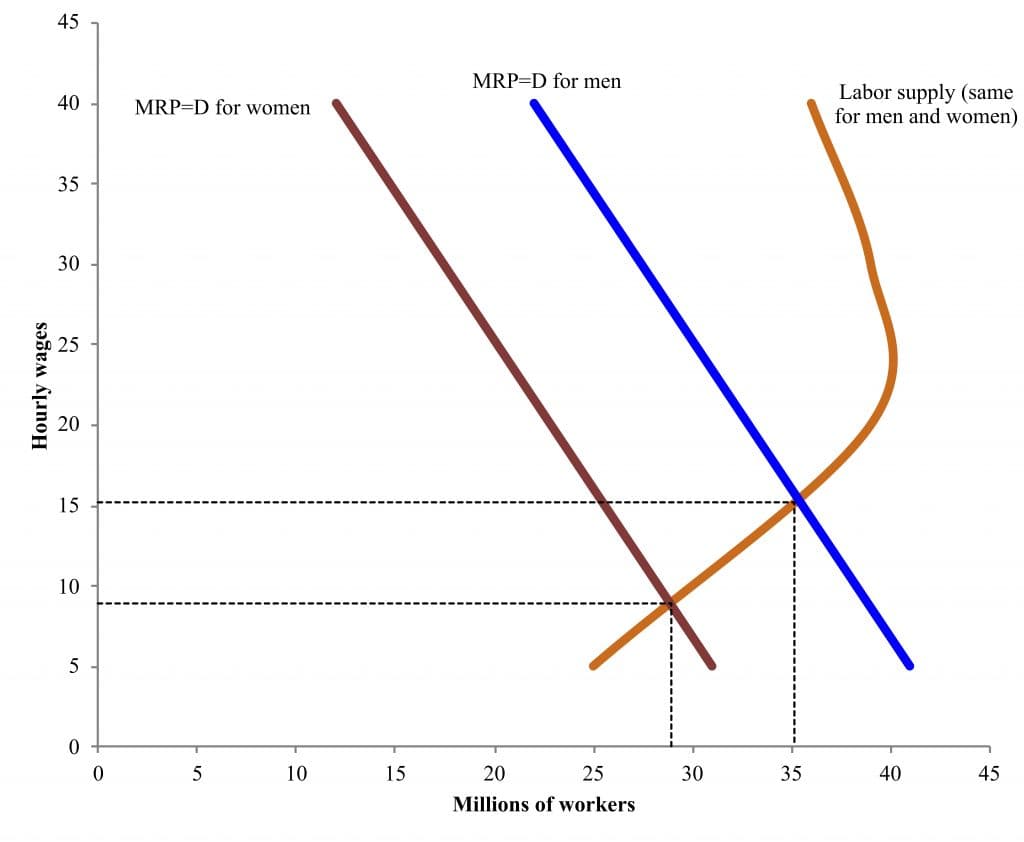
The Economics of Discrimination – Economics for the Greater Good View original
Is this image relevant?
Discrimination Based on Sex and Gender | Boundless Psychology View original
Is this image relevant?
The Economics of Discrimination – Economics for the Greater Good View original
Is this image relevant?
Sources of Discrimination
Discrimination in labor markets comes from three distinct sources, each working through a different mechanism:
- Employer discrimination occurs when employers let prejudices based on race, gender, age, or disability influence hiring, promotion, or wage decisions. An employer might refuse to hire qualified candidates from a particular group or offer them lower starting wages.
- Coworker discrimination happens when employees resist working alongside members of certain groups, creating hostile work environments or limiting collaboration and mentorship opportunities.
- Customer discrimination arises when customers prefer to be served by workers of a particular group, pushing employers to make biased hiring decisions to satisfy that preference.
All three sources reduce demand for labor from affected groups, which drives down their wages and employment rates.
How Discrimination Affects Workers
The effects of discrimination go beyond individual unfairness. They ripple through the economy in compounding ways.
Lower employment and wages. Employers who discriminate are less likely to hire or promote workers from affected groups. With fewer job offers, these workers face weaker bargaining power and often must accept lower-paying positions.
Occupational segregation. When certain groups face barriers to higher-paying fields, they become overrepresented in lower-paying occupations. This concentration perpetuates wage gaps even when individual workers within those occupations are paid the same rate.
Reduced human capital investment. If workers anticipate that discrimination will limit the returns on their education or training, they have less incentive to invest in those skills. This creates a feedback loop: lower investment leads to lower productivity, which appears to justify the original wage gap.

Factors Behind Persistent Earnings Gaps
Even after controlling for education, experience, and job-specific skills, unexplained earnings gaps remain between groups. Several factors contribute:
- Occupational segregation channels women and racial minorities into lower-paying fields through a mix of discrimination, societal expectations, and differences in access to networks or mentors.
- Wage discrimination occurs when employers offer lower pay to equally qualified workers from certain groups. This can stem from outright prejudice or from statistical discrimination, where employers use group averages (like average tenure or quit rates) as a shortcut instead of evaluating individual candidates.
- Family responsibilities disproportionately affect women, who are more likely to take career interruptions for childcare or eldercare. These gaps in employment reduce accumulated experience and limit advancement opportunities.
- Differences in negotiation and job search behavior also play a role. Research shows that women are less likely to negotiate starting salaries or actively pursue higher-paying positions, which compounds over time into significant earnings differences.
The key takeaway: some of the earnings gap reflects measurable human capital differences, but a meaningful portion remains unexplained and is consistent with discrimination.
Anti-Discrimination Policies
Several policy tools aim to reduce discrimination and narrow earnings gaps:
- Anti-discrimination laws like the Civil Rights Act of 1964 and the Equal Pay Act prohibit employment decisions based on race, gender, age, and disability. These laws give workers legal recourse and create incentives for employers to adopt fair practices.
- Affirmative action programs aim to increase representation of underrepresented groups through targeted recruitment or preferential consideration in hiring and admissions. These programs help reduce occupational segregation by expanding access to fields where certain groups have been historically excluded.
- Pay transparency and standardization make salary information openly available within organizations. When pay data is visible, it becomes harder for employers to maintain discriminatory wage differences without justification.
- Diversity and inclusion initiatives such as mentorship programs, employee resource groups, and structured hiring processes work to reduce bias in day-to-day workplace decisions and help retain diverse talent.
- Education and skill development programs including scholarships, vocational training, and workforce development initiatives promote human capital investment among disadvantaged groups. By improving access to skills and credentials, these programs help offset the feedback loop between discrimination and underinvestment.
See Fiveable more often in Google
Mark Fiveable as a preferred source and Google is more likely to show you our guides in Top Stories, with a "preferred" badge in AI Mode and AI Overviews.