5.3 Steel and Metals

👷🏻♀️Intro to Civil Engineering Unit 5 Review
5.3 Steel and Metals
👷🏻♀️ Intro to Civil Engineering
Properties and Applications of Structural Metals
Steel and metals form the backbone of modern civil engineering. Their combination of high strength, predictable behavior, and adaptability makes them essential for structures that need to carry heavy loads or span long distances. This section covers the main structural metals, how they're produced, how they behave under load, and how engineers protect them from corrosion.

Top images from around the web for Characteristics of Common Structural Metals
BIM as a Computer-Aided Design Methodology in Civil Engineering View original
Is this image relevant?
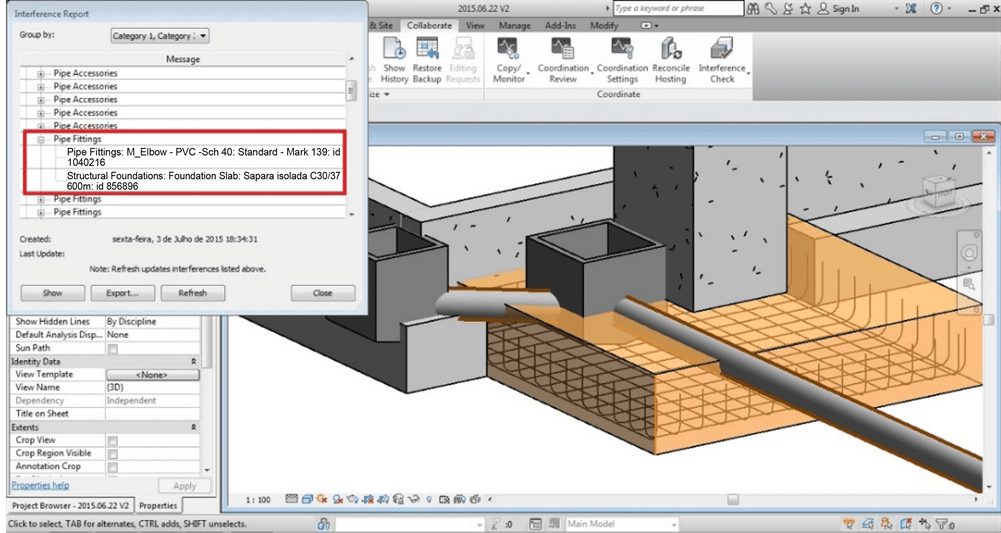
BIM as a Computer-Aided Design Methodology in Civil Engineering View original
Is this image relevant?
Study on the Dynamic Characteristics of Light Steel Residential Structural System View original
Is this image relevant?
BIM as a Computer-Aided Design Methodology in Civil Engineering View original
Is this image relevant?
BIM as a Computer-Aided Design Methodology in Civil Engineering View original
Is this image relevant?
Characteristics of Common Structural Metals
Three metals dominate civil engineering, each with distinct advantages:
Steel is the workhorse of structural engineering. It has high strength, good ductility (meaning it can deform before breaking, which gives warning before failure), and it welds easily. You'll find it in bridges, high-rise buildings, and industrial facilities. A typical structural steel like A992 has a yield strength around 345 MPa.
Aluminum is about one-third the weight of steel, resists corrosion well, and has a strong strength-to-weight ratio. That makes it a good fit for marine structures, architectural facades, and aerospace applications. The tradeoff: it's less stiff and more expensive per unit of strength than steel.
Titanium offers exceptional strength-to-weight ratio and corrosion resistance, but it's costly and difficult to fabricate. Its use in civil engineering is limited to specialized applications like offshore platforms and high-performance components where those properties justify the expense.
Mechanical Properties and Alloys
A metal's mechanical properties determine where and how you can use it:
- Yield strength is the stress at which a material starts to deform permanently (plastically). Below this point, the material springs back to its original shape.
- Tensile strength is the maximum stress a material can handle before it fractures. This sets the upper limit on load-carrying capacity.
- Elastic modulus (also called Young's modulus) measures stiffness. Steel's elastic modulus is about 200 GPa, while aluminum's is roughly 70 GPa, which is why aluminum deflects more under the same load.
Engineers modify base metals into alloys to improve specific properties:
- Stainless steel adds chromium (at least 10.5%) to dramatically improve corrosion resistance.
- Aluminum alloys like 6061 and 2024 boost strength while keeping the material lightweight. The 6061 alloy is common in structural applications; 2024 is more common in aerospace.
Thermal and electrical conductivity also matter in certain applications. Copper alloys work well in heat exchangers because of their high thermal conductivity, while aluminum is commonly used in electrical grounding systems.
Production and Fabrication of Metals
Steel Production Process
Steel production follows a multi-stage process:
-
Iron ore reduction: Iron ore is smelted in a blast furnace to produce pig iron, which contains about 4% carbon and other impurities.
-
Refining: Pig iron is refined in either a basic oxygen furnace (BOF) or an electric arc furnace (EAF). The BOF uses raw iron ore; the EAF primarily melts recycled scrap steel. Both reduce carbon content and impurities to produce crude steel.
-
Continuous casting: Molten steel is solidified into semi-finished shapes:
- Slabs for flat products (sheets, plates)
- Blooms for structural shapes (I-beams, H-beams)
- Billets for long products (rods, bars)
-
Further processing to achieve final properties and dimensions:
- Hot rolling shapes steel at high temperatures, improving strength and ductility
- Cold rolling at room temperature gives a better surface finish and tighter dimensional tolerances
- Heat treatment (annealing, quenching, tempering) fine-tunes mechanical properties for specific uses

Aluminum and Titanium Production
Aluminum production happens in two main stages:
- The Bayer process extracts alumina (aluminum oxide) from bauxite ore.
- The Hall-Héroult process uses electrolysis to reduce alumina into pure aluminum. This step is extremely energy-intensive, which is a big reason aluminum costs more than steel.
Primary fabrication methods for aluminum include:
- Extrusion: Aluminum is forced through a shaped die to create complex cross-sections (window frames, railings)
- Rolling: Produces flat sheets and plates (building facades, aircraft skins)
- Casting: Forms complex shapes for specialized components (structural nodes, engine blocks)
Titanium production uses the Kroll process, where titanium tetrachloride is reduced with magnesium to yield titanium sponge. That sponge is then purified through vacuum arc remelting and consolidated into ingots for further processing.
Joining Methods for Metal Structures
How you connect metal members is just as important as the metal itself. The three main methods each have distinct uses:
- Welding fuses metals together to create strong, permanent joints.
- Arc welding uses an electric arc to melt and join metals, common in structural steel connections.
- Resistance welding applies pressure and electric current to join thin sheets, used more in manufacturing than in structural work.
- Bolting provides connections that can be disassembled for maintenance or modification.
- High-strength bolts are standard in structural connections like bridge girders and steel frame buildings.
- Tension control bolts ensure precise clamping force in critical joints.
- Riveting is less common today but still used in specific contexts.
- Solid rivets remain standard in aircraft structures.
- Blind rivets allow single-sided installation where you can't access both sides of a joint.
Behavior of Metal Structures under Loading
Stress-Strain Relationship and Strength Parameters
The stress-strain curve is the most fundamental tool for understanding how a metal behaves under load. It has two key regions:
- In the elastic region, deformation is reversible. The material follows Hooke's law: , where is stress, is the elastic modulus, and is strain. Remove the load, and the material returns to its original shape.
- In the plastic region, deformation is permanent. This is actually useful in structures because plastic deformation absorbs energy (think of how a car crumples in a crash to protect occupants).
Yield strength marks the boundary between these two regions. For design purposes, it's often the most important property because engineers typically want structures to stay in the elastic range during normal loading. Some metals (like aluminum) don't have a sharp yield point, so engineers use the 0.2% offset method: draw a line parallel to the elastic slope starting at 0.2% strain, and where it intersects the curve is the defined yield strength.
Ultimate tensile strength is the peak stress on the curve. Engineers apply safety factors (typically 1.5 to 2.0 for steel structures) to account for uncertainties in loading, material variability, and construction quality.

Fatigue and Buckling Considerations
Fatigue is failure caused by repeated cyclic loading, even when each individual load is well below the yield strength. Think of bending a paperclip back and forth until it snaps.
- S-N curves (stress amplitude vs. number of cycles to failure) predict fatigue life for a given material and stress level.
- Stress concentration factors account for geometric features like holes, notches, and welds that locally amplify stress and accelerate fatigue cracking.
Buckling is a sudden lateral instability in compression members. A slender column under compression can buckle at a load far below what the material itself could handle in pure compression.
- Euler's formula predicts the critical buckling load: , where is elastic modulus, is the moment of inertia, is the effective length factor (depends on end conditions), and is the column length.
- Local buckling can also occur in thin-walled sections, like the webs of I-beams or flanges of channels, even if the overall member is stable.
Environmental and Dynamic Loading Effects
Temperature affects metal behavior in two ways:
- Thermal expansion causes dimensional changes. Bridge expansion joints exist specifically to accommodate this. Steel has a thermal expansion coefficient of about per °C.
- Mechanical property degradation at extreme temperatures is a serious concern. Steel loses roughly half its strength at around 600°C, which is why fire protection of steel structures is so important.
Dynamic loading from wind or earthquakes requires specialized analysis:
- Every structure has a natural frequency. If the loading frequency matches it, resonance amplifies the response dramatically.
- Damping properties control how quickly vibrations die out. Engineers sometimes add damping devices to tall steel buildings to control wind-induced sway.
Corrosion Protection for Metal Construction Materials
Corrosion is the gradual destruction of metals by chemical reactions with their environment. Left unchecked, it compromises structural integrity. Protection strategies fall into several categories.
Protective Coatings and Surface Treatments
- Galvanization applies a zinc coating to steel. In hot-dip galvanizing, steel is immersed in molten zinc at about 450°C, forming a metallurgical bond. The zinc acts as a sacrificial anode, meaning it corrodes preferentially to protect the steel underneath, even if the coating gets scratched.
- Protective coatings create physical barriers against corrosive agents:
- Epoxy-based paints provide strong chemical resistance, common in industrial environments
- Powder coatings give durable, uniform finishes for architectural applications
- Surface treatments alter the metal itself:
- Anodizing builds up a thick protective oxide layer on aluminum
- Passivation enhances the natural chromium oxide layer on stainless steel
Cathodic Protection and Corrosion Inhibitors
Cathodic protection forces the metal structure to become the cathode in an electrochemical cell, preventing it from corroding:
- Sacrificial anode systems attach blocks of a more reactive metal (zinc or magnesium) to the structure. These anodes corrode instead of the structure. Common for underground pipelines and marine structures.
- Impressed current systems use an external power source to supply protective current. These offer more precise control and are used on large storage tanks and offshore platforms.
Corrosion inhibitors are chemicals added to the environment to slow corrosion:
- Anodic inhibitors (chromates, nitrites) form protective films on the metal surface
- Cathodic inhibitors (zinc compounds, polyphosphates) interfere with the cathodic reaction
Design Considerations and Maintenance
Good corrosion protection starts at the design stage:
- Avoid horizontal surfaces and crevices where water can pool
- Ensure adequate ventilation in enclosed spaces to reduce humidity buildup
- Select materials based on the environment: stainless steel grade 316 handles chloride exposure (coastal areas) better than grade 304; weathering steels like COR-TEN form a stable, protective rust layer in certain atmospheric conditions, eliminating the need for paint
Ongoing maintenance keeps protection effective:
- Non-destructive testing methods (ultrasonic, magnetic particle inspection) detect hidden corrosion before it becomes dangerous
- Scheduled reapplication of protective coatings extends service life significantly
See Fiveable more often in Google
Mark Fiveable as a preferred source and Google is more likely to show you our guides in Top Stories, with a "preferred" badge in AI Mode and AI Overviews.