9.4 Global Supply Chain Management

🏭Intro to Industrial Engineering Unit 9 Review
9.4 Global Supply Chain Management
🏭 Intro to Industrial Engineering
Global supply chains connect businesses across countries, creating networks of suppliers, manufacturers, and distributors that span the world. These networks offer real advantages like access to cheaper materials and new markets, but they also introduce challenges you won't face in domestic operations: longer lead times, currency risk, and the complexity of working across different legal systems and cultures.
This section covers the main challenges and opportunities of going global, how companies manage the risks of global sourcing, the cultural and legal factors that shape these supply chains, and how logistics networks are designed to stay compliant across borders.
Challenges and Opportunities of Global Supply Chains

Top images from around the web for Complex Networks and Management Challenges
Supply Chain Management Risks: the A350 Development Program - Research leap View original
Is this image relevant?
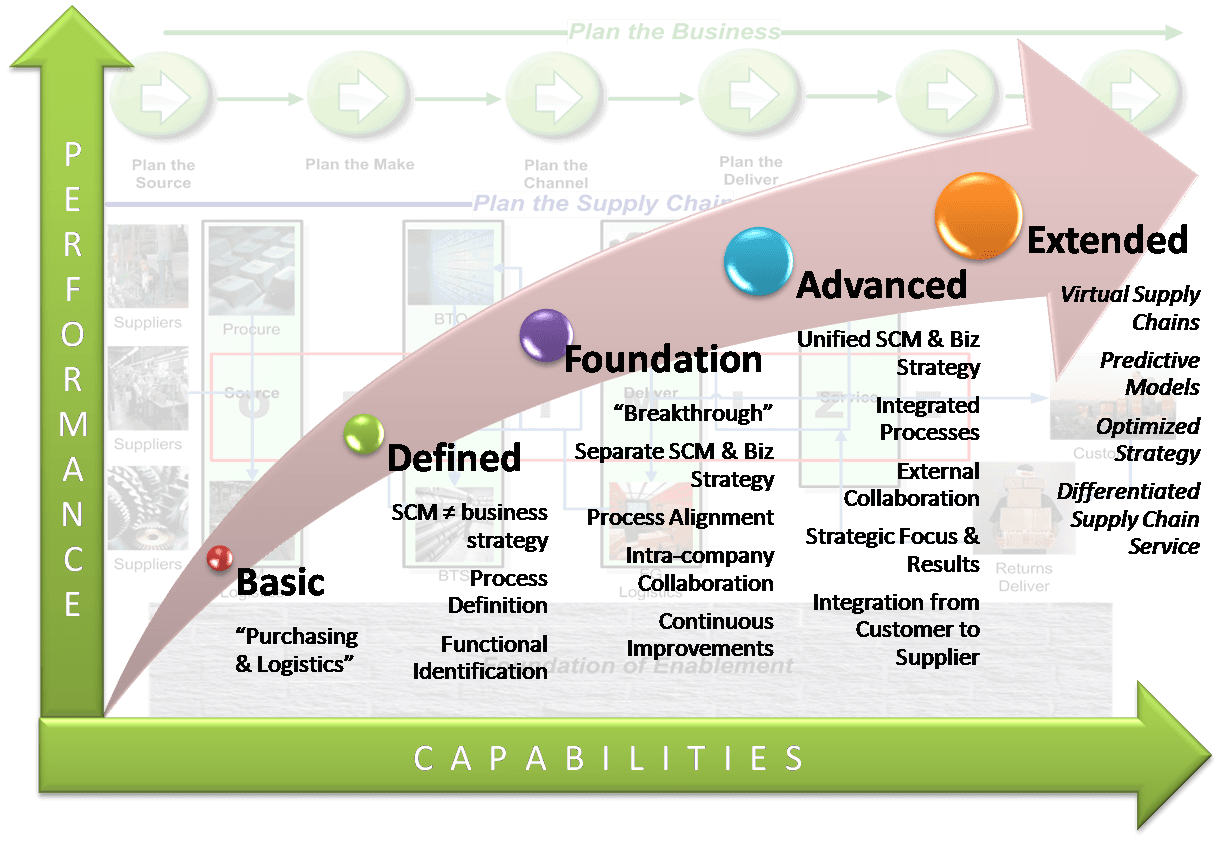
Levels & Barriers to Supply Chain Integration: a Conceptual Model of Supply Chain Performance ... View original
Is this image relevant?
Sustainable Supply Chain Management through Enterprise Resource Planning (ERP)- A Model of ... View original
Is this image relevant?
Supply Chain Management Risks: the A350 Development Program - Research leap View original
Is this image relevant?
Levels & Barriers to Supply Chain Integration: a Conceptual Model of Supply Chain Performance ... View original
Is this image relevant?
Complex Networks and Management Challenges
Global supply chains are significantly more complex than domestic ones. You're coordinating suppliers, manufacturers, distributors, and customers spread across multiple countries, each with its own regulations, infrastructure, and business norms.
The core management challenges include:
- Longer lead times from increased geographical distances (ocean shipping from Asia to North America can take 2-4 weeks, compared to days for domestic trucking)
- Higher transportation costs from cross-border movements, including freight, duties, and customs fees
- Currency fluctuations that can shift your costs and profit margins overnight
- Geopolitical risks like trade wars, sanctions, or political unrest that can disrupt supply flow with little warning
Supply chain visibility is harder to maintain when your network spans continents. Companies need advanced tracking and monitoring systems to know where goods are and what condition they're in at any point in the chain.
Resilience and agility matter more in global operations because disruptions are more likely and harder to recover from. This means building flexible strategies that allow quick pivots (switching suppliers or rerouting shipments) and developing contingency plans for events like natural disasters or sudden trade policy changes.
Opportunities and Strategic Advantages
Despite the complexity, companies go global for strong reasons:
- Access to new markets expands your customer base and revenue potential beyond what domestic sales can offer
- Cost reduction through global sourcing lets you take advantage of regional cost differences (lower labor costs in Southeast Asia, cheaper raw materials in South America)
- Product diversification becomes easier when you can tailor offerings to varied customer needs across different markets
Sustainability and corporate social responsibility also play a growing role. Companies increasingly select suppliers based on ethical labor practices and environmental standards, and they design operations to reduce their carbon footprint across the chain.
Technology is what makes managing all this complexity feasible. Blockchain improves traceability and transaction security across borders. Artificial intelligence helps optimize routing decisions and inventory management when you're dealing with dozens of variables across multiple countries.
Risk Mitigation in Global Sourcing
Risk Assessment and Supplier Management
Effective risk mitigation starts with systematically identifying and assessing what could go wrong. The process looks like this:
- Identify potential risks across categories: supply disruptions, quality failures, geopolitical instability, natural disasters, regulatory changes
- Assess each risk based on its likelihood and potential impact on your operations
- Prioritize which risks need active mitigation versus which ones you can accept or monitor
Supplier diversification is one of the most important strategies. Relying on a single supplier for a critical component is dangerous in a global context. Companies reduce this dependency by qualifying multiple suppliers for key materials and spreading those suppliers across different geographic regions so a disruption in one area doesn't shut everything down.
Selecting reliable suppliers requires a structured evaluation process:
- Assess financial stability (can they survive an economic downturn?)
- Verify production capacity and quality control measures
- Conduct regular audits and performance reviews, not just at onboarding
Strong supplier relationships also reduce risk. When you've built trust and open communication with a key supplier, problems surface earlier and get resolved faster through collaborative problem-solving rather than finger-pointing.

Financial and Operational Risk Management
Contractual risk management means writing agreements that clearly spell out quality standards, delivery terms, penalties for non-compliance, and dispute resolution mechanisms. In global sourcing, you can't assume anything is understood implicitly.
Currency risk management protects against exchange rate swings that can erode your margins. Two common approaches:
- Hedging with financial instruments like forward contracts or options, which lock in exchange rates for future transactions
- Natural hedging by matching revenues and expenses in the same currency (e.g., if you sell in euros, try to source materials priced in euros too)
Inventory management in global supply chains requires a different balance than domestic operations. Pure just-in-time inventory is risky when your lead times are measured in weeks. Most companies maintain safety stock as a buffer against unexpected shortages or delays, especially for critical components, while still using lean principles where possible.
Cultural, Legal, and Economic Impacts on Global Supply Chains
Cultural and Communication Factors
Cultural differences affect global supply chains in ways that are easy to underestimate. These aren't just "soft" issues; they directly influence how negotiations go, how quickly decisions get made, and whether partnerships succeed.
Key areas where culture matters:
- Business practices vary widely. Gift-giving is expected in some cultures and considered bribery in others. Negotiation styles range from highly formal to casual.
- Communication styles differ between direct cultures (common in the U.S. and Germany) and indirect cultures (common in Japan and many Southeast Asian countries), where meaning is conveyed through context rather than explicit statements.
- Time perception varies. Some cultures treat deadlines as firm commitments; others view them as flexible targets.
Negotiation approaches are particularly affected. In many East Asian and Middle Eastern cultures, significant time is spent on relationship-building before any business discussion begins. Decision-making may be hierarchical (one person decides) or consensus-based (the group must agree), and not knowing which to expect can stall a deal.
Legal and Regulatory Considerations
Every country has its own legal framework, and these differences directly shape supply chain decisions.
- Contract law varies in how agreements are enforced. What's binding in one jurisdiction may not hold up in another.
- Intellectual property protection differs significantly. Companies may hesitate to transfer technology to regions with weak IP enforcement.
- Trade regulations dictate import/export procedures, required documentation, and product restrictions.
Trade agreements reshape where companies choose to source and produce. Preferential trade agreements reduce tariffs between member countries, and regional trade blocs like the EU and USMCA influence decisions about where to locate facilities and which suppliers to use. A factory inside a trade bloc can ship to member countries with lower duties than one outside it.
Environmental regulations also vary. Emissions standards affect which transportation modes are practical, and waste management rules influence packaging choices and disposal processes.

Economic and Political Factors
Economic conditions drive many of the location decisions in global supply chains:
- Labor costs vary dramatically. Manufacturing wages in Vietnam or Bangladesh are a fraction of those in Western Europe.
- Raw material availability determines sourcing strategies. You source where the materials are, then optimize logistics from there.
- Market demand patterns guide where you place distribution centers to serve customers efficiently.
Political stability is a major factor in supply chain reliability. Government policies on foreign investment affect whether you can even build a facility in a given country. Infrastructure quality (roads, ports, power grids) determines whether logistics operations can run smoothly.
Currency exchange rates and broader economic volatility round out the picture. When a country's economy is unstable, companies may need to build in risk premiums or develop alternative sourcing plans to protect themselves.
Global Logistics Network Design for Compliance
Network Optimization and Regulatory Compliance
Designing a global logistics network means optimizing the flow of goods, information, and money across borders while staying compliant with every jurisdiction you touch. The goal is to minimize costs and maximize service levels without cutting corners on legal requirements.
Cross-border trade regulations have a huge impact on network design:
- Customs procedures vary by country and affect lead times. Some countries clear goods in hours; others take days.
- Import/export documentation must be accurate. Errors cause delays, penalties, and sometimes seizure of goods.
- Product classification (using systems like the Harmonized System codes) determines which duties and regulations apply to your shipments.
Compliance with international trade laws is non-negotiable. The Foreign Corrupt Practices Act (FCPA) prohibits U.S. companies from bribing foreign officials, and anti-money laundering regulations require due diligence in financial transactions across borders. Violations carry severe penalties.
Transportation mode selection involves balancing several factors:
| Factor | Air Freight | Ocean Shipping | Rail/Truck |
|---|---|---|---|
| Cost | Highest | Lowest for long distances | Moderate |
| Speed | Fastest | Slowest (2-6 weeks) | Moderate |
| Best for | Time-sensitive, high-value goods | Bulk commodities, large volumes | Regional/continental moves |
| Consideration | Carbon footprint, weight limits | Port congestion risk | Border crossing delays |
Strategic Facility Location and Technology Integration
Where you place warehouses and distribution centers is a strategic decision driven by multiple factors:
- Proximity to key markets reduces last-mile transportation costs and delivery times
- Labor availability and costs affect day-to-day operational efficiency
- Local regulations may offer incentives (tax breaks, subsidies) or impose restrictions on operations
Free trade zones (FTZs) and special economic zones (SEZs) are designated areas where companies benefit from reduced trade barriers, potential tax advantages, and simplified customs procedures. Locating a distribution center inside an FTZ can significantly reduce duty costs and speed up cross-border movements.
Technology ties the whole network together:
- Transportation Management Systems (TMS) optimize carrier selection and routing across your global network
- Warehouse Management Systems (WMS) improve inventory accuracy and order fulfillment speed
- Internet of Things (IoT) devices provide real-time tracking of shipment location and condition (temperature, humidity, shock), which is critical for perishable or sensitive goods moving across long distances
See Fiveable more often in Google
Mark Fiveable as a preferred source and Google is more likely to show you our guides in Top Stories, with a "preferred" badge in AI Mode and AI Overviews.