6.4 Warehouse Design and Management

🏭Intro to Industrial Engineering Unit 6 Review
6.4 Warehouse Design and Management
🏭 Intro to Industrial Engineering
Warehouse Design Principles
Warehouse design and management is about optimizing how goods are stored, handled, and distributed within a facility. The goal is to maximize efficiency and minimize costs through smart layout planning, effective space use, and the right storage systems. Getting this right directly affects order accuracy, throughput speed, and overall operating costs.

Top images from around the web for Key Objectives and Concepts
Overstock - Inventory Management View original
Is this image relevant?
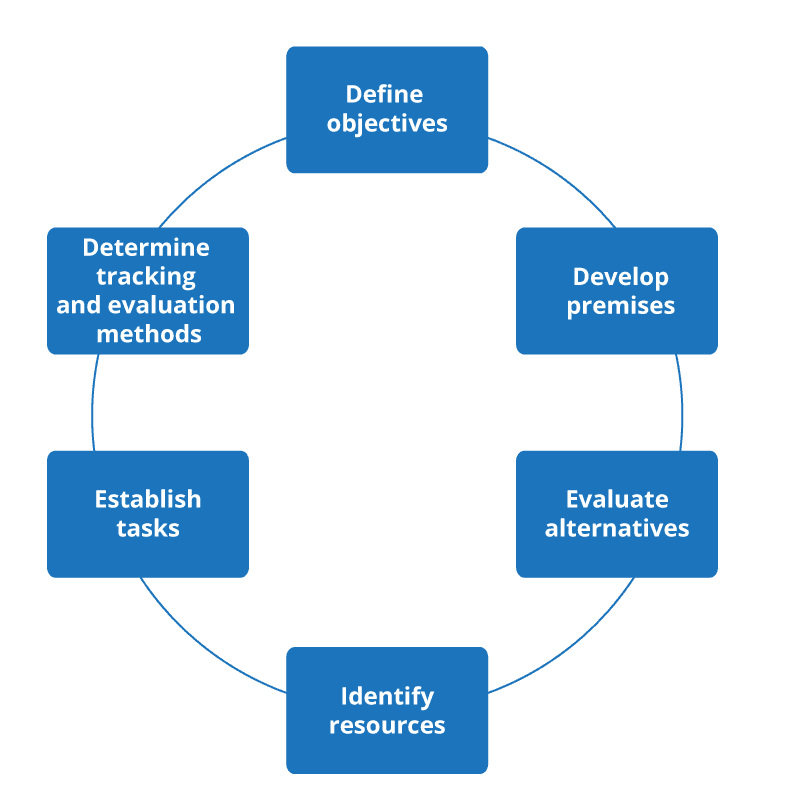
The Planning Cycle | Principles of Management View original
Is this image relevant?
Facility Location and Layout | Introduction to Business View original
Is this image relevant?
Overstock - Inventory Management View original
Is this image relevant?
The Planning Cycle | Principles of Management View original
Is this image relevant?
Key Objectives and Concepts
A well-designed warehouse balances several objectives at once:
- Inventory accuracy so you always know what's in stock and where it is
- Space utilization to get the most out of every square foot (and vertical foot)
- Order fulfillment accuracy to ship the right products to the right customers
- Timely order processing to meet delivery windows consistently
A Warehouse Management System (WMS) is the software that ties all of this together. It coordinates inventory tracking, order processing, and labor allocation in real time. Think of it as the central nervous system of the warehouse.
Lean warehousing applies lean manufacturing principles to warehouse operations: continuous improvement, waste reduction, and a focus on value-added activities. If a step doesn't add value for the customer, you look for ways to eliminate or streamline it.
Safety and Ergonomics
Warehouses involve heavy equipment, repetitive motion, and constant foot and vehicle traffic. Safety and ergonomics aren't just regulatory boxes to check; they directly affect productivity and labor costs. A single workplace injury can cost tens of thousands of dollars in workers' compensation, lost time, and retraining.
- Implement proper lifting techniques and provide ergonomic workstations for picking and packing to reduce musculoskeletal injuries
- Install adequate lighting throughout the facility to improve visibility and reduce accidents
- Use clear aisle markings and signage to guide traffic flow and prevent collisions between workers and equipment
- Require appropriate personal protective equipment (PPE) for specific tasks: hard hats, steel-toed boots, high-visibility vests
- Conduct regular safety training and drills for all personnel
- Track incidents and near-misses through a safety management system to identify patterns and prevent future problems
Sustainability Measures
Modern warehouses increasingly incorporate sustainability into their design and operations, both for environmental reasons and to reduce long-term operating costs.
- LED lighting with motion sensors in low-traffic areas significantly cuts electricity consumption
- Solar panels on warehouse roofs can offset energy costs, especially given the large roof area most warehouses have
- Programmable HVAC systems with zone control avoid heating or cooling unused sections
- Electric forklifts and material handling equipment reduce emissions and often have lower maintenance costs than combustion-powered alternatives
- Recycling programs for packaging materials and waste reduce disposal costs
- Sustainable building materials and insulation improve energy efficiency during construction or renovation
Factors Influencing Warehouse Layout
Product Characteristics and Order Profiles
The physical nature of your products and how customers order them are the two biggest drivers of layout decisions.
Product characteristics like size, weight, shape, and storage requirements determine which storage systems make sense. Bulky items may need pallet racking, while small parts fit better in bin shelving. Temperature-sensitive goods require climate-controlled zones. Fragile or high-value items might need separate, secured storage areas.
Order profiles describe the frequency, size, and complexity of typical orders. These influence both picking methods and where products get stored:
- High-frequency items should be placed near shipping areas to minimize travel time
- Items often ordered together benefit from being stored near each other (this is called affinity-based slotting)
- Small, frequent orders may call for batch picking, while large multi-line orders suit zone picking
Throughput and turnover rates also matter. Fast-moving items need easily accessible locations and efficient material handling paths. Slow-moving items can go into high-density storage where access speed is less critical.
Seasonal fluctuations require flexibility. A warehouse that handles holiday retail, for example, might see volume double or triple for a few months. Temporary storage areas, adjustable racking systems, and adaptable layouts help you handle demand peaks without permanent overcapacity.

Space Constraints and Regulatory Compliance
Physical and legal constraints set the boundaries for what's possible.
- Building dimensions, column spacing, and ceiling height dictate which storage systems are feasible. High ceilings open up vertical storage options like tall racking or mezzanines. Column placement directly influences aisle configuration.
- Regulatory requirements shape layout choices for specific product types. Perishable goods need temperature-controlled environments. Hazardous materials have strict storage separation and containment regulations (OSHA and EPA standards apply here).
- Future growth projections should influence initial design. Modular racking systems allow easy expansion, and flexible conveyor layouts can be reconfigured as needs change. Designing for only today's volume is a common and costly mistake.
- Space utilization strategies like narrow aisle configurations and double-deep racking systems help maximize available square footage when floor space is limited.
Efficient Warehouse Layout Design
Storage Optimization and Material Flow
Good layout design minimizes unnecessary movement and keeps material flowing smoothly from receiving to shipping.
Linear flow is the foundational principle. Products should move in one general direction through the warehouse, from receiving docks through storage to shipping docks, with minimal cross-traffic between operational areas. Cross-traffic creates congestion, increases travel time, and raises the risk of accidents.
ABC analysis is a method for prioritizing product placement based on movement velocity:
- A items (fast-moving, typically ~20% of SKUs generating ~80% of picks) go in the most accessible locations near shipping docks
- B items (moderate movement) fill the middle zones
- C items (slow-moving) go in less accessible, higher-density storage areas
This follows the Pareto principle (80/20 rule). By putting your highest-activity items in prime locations, you cut the total distance workers travel over the course of a day.
Aisle width and orientation balance storage density against equipment needs. Wide aisles (12-13 feet) accommodate counterbalance forklifts but use more floor space. Narrow aisles (8-10 feet) work with reach trucks and increase storage density. Very narrow aisles (under 6 feet) require specialized turret trucks but maximize storage capacity.
Zoning strategies cluster similar products or dedicate areas to specific functions:
- Zone picking assigns workers to specific areas for multi-line orders
- Customer-specific zones can serve large accounts with dedicated storage
Advanced Layout Techniques
Beyond the basics, several techniques can further improve warehouse performance:
- Cross-docking areas allow fast-moving or time-sensitive items to move directly from receiving to shipping with minimal storage, reducing handling steps
- Vertical space utilization through mezzanines or multi-level picking systems increases capacity without expanding the building footprint
- Staging and buffer areas near shipping and receiving docks smooth out material flow and support order consolidation
- Forward pick areas store small quantities of fast-moving items close to packing stations, reducing travel time for the most common picks. These are replenished from bulk storage in the back of the warehouse.
- Flexible storage systems like adjustable pallet racking and reconfigurable shelving accommodate varying product sizes and seasonal inventory swings
Inventory Management Strategies

Inventory Control and Order Picking Methods
Inventory management strategies work alongside layout design to optimize stock levels and reduce carrying costs.
- ABC classification prioritizes inventory control efforts so you spend the most attention on your highest-value or highest-volume items
- Cycle counting maintains inventory accuracy by counting a small subset of inventory on a rotating schedule, rather than shutting down for a full physical count. For example, you might count A items weekly, B items monthly, and C items quarterly.
- Economic Order Quantity (EOQ) is a model for determining optimal order sizes that balance ordering costs against holding costs. The formula is , where is annual demand, is the cost per order, and is the annual holding cost per unit.
Order picking is often the most labor-intensive warehouse activity, accounting for up to 55% of total operating costs. Choosing the right method matters:
- Discrete picking: One worker picks one order at a time. Simple and accurate but involves the most travel.
- Batch picking: One worker picks items for multiple orders in a single trip, then sorts them afterward. Works well for small orders with overlapping items.
- Zone picking: Workers are assigned to specific zones and pick only items within their area. Orders pass from zone to zone. Good for large, multi-line orders.
- Wave picking: Coordinates picking with shipping schedules by releasing groups of orders at timed intervals. Combines well with zone or batch methods.
Slotting optimization ensures frequently picked items sit in the most accessible locations. The golden zone (waist to shoulder height) is reserved for the fastest movers because picks from this height are the fastest and least physically taxing. Items frequently ordered together are grouped nearby.
Performance Measurement and Process Improvement
You can't improve what you don't measure. Key performance indicators (KPIs) for warehouse operations include:
| KPI | What It Measures |
|---|---|
| Order accuracy rate | Percentage of orders shipped without errors |
| Picking productivity | Units or lines picked per labor hour |
| Inventory turnover ratio | How quickly inventory cycles through the warehouse |
| On-time shipping rate | Percentage of orders shipped within the promised window |
Cycle time analysis and labor standards help set realistic performance targets and identify bottlenecks. A WMS paired with a labor management system enables real-time data collection and continuous monitoring.
Technology also boosts picking performance:
- Voice-directed picking gives workers hands-free audio instructions, reducing errors and speeding up training for new employees
- RF (radio frequency) scanners provide real-time inventory updates and confirmation at each pick location
- Barcode and RFID scanning at receiving, putaway, and shipping ensures inventory records stay accurate throughout the product's journey in the warehouse
Automation Impact on Warehouses
Automated Storage and Retrieval Systems
Automation can dramatically increase throughput, accuracy, and storage density, but it requires significant capital investment and careful planning.
Automated Storage and Retrieval Systems (AS/RS) use computer-controlled mechanisms to store and retrieve items from defined locations. They're especially effective for medium-to-slow-moving items in high-bay warehouses where vertical space is available.
- Unit-load AS/RS handles full pallets, maximizing vertical storage in narrow footprints. These systems can reach heights of 100+ feet.
- Mini-load AS/RS handles smaller items like cases or totes, ideal for parts storage and order fulfillment
Pick-to-light systems use illuminated displays at storage locations to guide workers to the correct item and quantity. They reduce picking errors, cut training time for new employees, and increase picking speed.
Automated Guided Vehicles (AGVs) and Autonomous Mobile Robots (AMRs) transport materials within the warehouse without human drivers. AGVs follow fixed paths (wires, magnets, or painted lines), while AMRs navigate dynamically using onboard sensors and mapping software. AMRs are more flexible since they can reroute around obstacles, but AGVs tend to be simpler and cheaper for predictable, repetitive routes. Both reduce labor costs and improve safety by removing human-operated vehicles from busy aisles.
Advanced Automation Technologies
- Conveyor systems and sortation equipment handle high-volume operations where items need continuous movement and automatic routing to the correct shipping lane or consolidation area
- Robotic palletizing and depalletizing systems build or break down pallets automatically, increasing productivity and reducing ergonomic risks from repetitive heavy lifting. Mixed-case palletizing is particularly valuable for retail distribution where each store needs a unique pallet configuration.
When evaluating automation, a cost-benefit analysis should account for:
- Initial capital investment and installation costs
- Ongoing operational savings (labor, error reduction, throughput gains)
- Maintenance requirements and equipment lifecycle
- Flexibility limitations (some automated systems are harder to reconfigure than manual setups)
- Scalability to handle projected volume growth
Integration with the existing WMS is critical. Automation delivers its full benefit only when the WMS can communicate with automated equipment in real time, enabling seamless inventory updates and order fulfillment coordination. Without that integration, you end up with expensive equipment that creates data silos instead of solving problems.
See Fiveable more often in Google
Mark Fiveable as a preferred source and Google is more likely to show you our guides in Top Stories, with a "preferred" badge in AI Mode and AI Overviews.