7.4 Total Quality Management (TQM)

🏭Intro to Industrial Engineering Unit 7 Review
7.4 Total Quality Management (TQM)
🏭 Intro to Industrial Engineering
Total Quality Management Principles

Top images from around the web for Core Concepts and Practices
To Be Productive (aka 2bProductive Blog): PDSA or PDCA Model – It is all Quality Improvement View original
Is this image relevant?
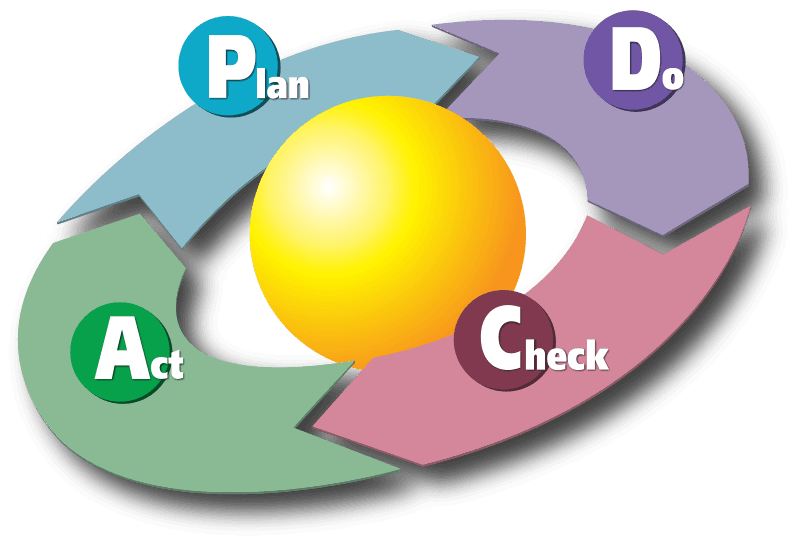
AlterEvo Ltd: RCM 2: Taxonomy and Core Principles. View original
Is this image relevant?
Free Continuous Improvement Model Template for PowerPoint Presentations View original
Is this image relevant?
To Be Productive (aka 2bProductive Blog): PDSA or PDCA Model – It is all Quality Improvement View original
Is this image relevant?
AlterEvo Ltd: RCM 2: Taxonomy and Core Principles. View original
Is this image relevant?
Core Concepts and Practices
Total Quality Management (TQM) is a management philosophy that embeds quality into every function of an organization, not just the inspection stage. Where traditional quality control catches defects after they occur, TQM aims to prevent them by making quality everyone's responsibility.
TQM rests on four core principles:
- Customer focus — Every process should ultimately serve the customer's needs and expectations.
- Continuous improvement — Quality is never "done." Organizations should always look for ways to do things better.
- Employee involvement — Everyone from the factory floor to the C-suite plays a role in maintaining and improving quality.
- Data-driven decision-making — Decisions about quality rely on measurable evidence, not gut feelings.
To put these principles into practice, TQM uses several tools and methods:
- Statistical process control (SPC) — Monitoring processes with control charts to detect variation before it causes defects.
- Quality circles — Small groups of employees who meet regularly to identify and solve quality problems in their work area.
- Benchmarking — Comparing your processes and performance against industry leaders to find gaps and opportunities.
- Plan-Do-Check-Act (PDCA) cycle — A four-step loop for structured problem-solving and iterative improvement.
A central idea in TQM is "quality at the source." Rather than relying on inspectors at the end of a production line, each employee is responsible for the quality of their own output. This shifts the emphasis from detection to prevention, building quality into products and services from the start.
TQM also takes a holistic view. Quality isn't just about what happens inside your factory or office. It extends to supplier inputs, internal handoffs between departments, and every interaction a customer has with your organization.
Benefits and Outcomes
When TQM is implemented well, the results show up across the organization:
- Customer satisfaction improves, which drives loyalty and repeat business.
- Costs drop because there's less waste, scrap, and rework.
- Productivity increases as processes become more streamlined and inefficiencies get eliminated.
- Employee morale rises when workers feel empowered and see their contributions matter.
- Competitiveness strengthens through better product/service quality and a stronger reputation.
- Supplier relationships improve because TQM encourages collaboration across the entire supply chain.
TQM Implementation Success Factors
Organizational Commitment and Strategy
TQM doesn't work as a side project. It requires genuine commitment from the top of the organization.
- Leadership commitment is the single most important success factor. Leaders must champion quality initiatives, not just approve them. That means allocating real resources: budget, people, and technology.
- Clear quality objectives should tie directly to the organization's overall strategy. Vague goals like "improve quality" aren't enough. Specific targets work better:
- Reduce defect rates by 50% within two years
- Achieve 98% on-time delivery to customers
- A formal quality management system provides the framework for standardizing processes and ensuring consistency. Common frameworks include:
- ISO 9001 certification — an international standard for quality management systems
- Malcolm Baldrige National Quality Award criteria — a U.S.-based framework that evaluates leadership, strategy, customers, measurement, workforce, operations, and results

Employee Development and Communication
You can't expect employees to drive quality improvement if they haven't been trained in how to do it.
- Training programs should cover quality concepts, tools, and techniques. This includes things like SPC methods, PDCA problem-solving, and how to facilitate quality circles.
- Communication channels need to keep quality information flowing. Regular quality meetings, shared dashboards, and intranet portals for best practices all help build a culture where improvement is ongoing.
- Cross-functional teams break down departmental silos. For example, a team with members from design, production, and customer service can tackle product reliability issues that no single department could solve alone.
Performance Measurement and Analysis
TQM depends on data. Without measurement, you can't know whether your efforts are actually working.
- Track key performance indicators (KPIs) related to quality, customer satisfaction, and process efficiency.
- Use statistical process control charts to monitor process stability over time.
- Gather customer feedback through surveys, focus groups, and complaint tracking systems.
- Conduct benchmarking studies to see how your performance compares to industry leaders.
- Monitor supplier performance metrics to make sure the quality of your inputs matches the quality you expect in your outputs.
Leadership, Employees, and Customers in TQM
Leadership Role and Responsibilities
TQM starts at the top. Leaders set the tone for how seriously an organization takes quality.
- Leaders create a vision for quality, set clear objectives, and model quality-focused behavior. This means more than signing off on a policy document. A CEO who regularly participates in improvement projects sends a much stronger signal than one who delegates everything.
- Gemba walks are a good example of leadership engagement. "Gemba" is a Japanese term meaning "the real place." Managers physically go to where work happens to observe processes, ask questions, and show that they value frontline knowledge.
- Leaders also need to allocate resources for training and improvement initiatives, and recognize quality achievements to reinforce the behaviors they want to see.
- Fostering a culture of trust and open communication is critical. Employees won't report problems or suggest improvements if they fear blame.

Employee Involvement and Empowerment
Employee involvement is a cornerstone of TQM. The people closest to the work usually have the best understanding of what's going wrong and how to fix it.
- Internal customer thinking is a powerful concept. Each department or process treats the next step in the chain as its customer. If the machining department produces parts for the assembly department, then assembly is machining's customer. This creates accountability at every handoff.
- Suggestion systems give employees a formal way to submit improvement ideas. The best systems don't just collect suggestions; they respond to them quickly and visibly.
- Autonomy matters too. Employees should have the authority to make quality-related decisions within their area of responsibility, like stopping a process when they spot a defect.
- Cross-training and job rotation help employees understand how their work fits into the bigger picture, which makes them better at spotting quality issues.
Customer Focus and Satisfaction
The customer is the ultimate judge of quality. TQM organizations systematically gather and act on customer input.
- Voice of the Customer (VOC) is the process of capturing what customers need and expect, then translating those needs into specific, measurable requirements for your product or service.
- Quality Function Deployment (QFD) is a structured tool that links VOC data directly to product design features. It helps ensure that what you're building actually matches what customers want.
- Customer relationship management (CRM) systems track interactions and help identify patterns in complaints, preferences, and satisfaction levels.
- Regular customer satisfaction surveys are only useful if the organization acts on the results. Collecting data without follow-through erodes trust.
- Building long-term relationships with both external customers and internal stakeholders sustains quality over time.
TQM Impact on Performance and Improvement
Financial and Market Performance
TQM's benefits aren't just operational; they show up on the balance sheet.
- Cost reductions from less waste and rework, combined with higher customer retention, translate into measurable financial gains. Motorola, for instance, reported saving approximately billion over 11 years through its Six Sigma quality initiatives.
- Organizations should track the return on investment (ROI) of quality improvement projects to justify continued investment.
- Market share growth and customer retention rates serve as indicators that improved quality is translating into competitive advantage.
- Customer lifetime value helps quantify the long-term financial impact of keeping customers satisfied.
Organizational Culture and Innovation
Over time, TQM reshapes how an organization thinks and operates.
- A successful TQM implementation transforms organizational culture so that quality becomes a shared mindset, not just a department's job.
- TQM also supports innovation by encouraging systematic, creative problem-solving. When employees are trained to analyze processes and propose improvements, they naturally generate new ideas.
- Track cultural change through employee engagement surveys, turnover rates, and the number of employee-generated improvement ideas that get implemented.
Continuous Improvement and Competitive Advantage
Continuous improvement is what keeps TQM alive after the initial implementation push.
- Several methodologies support continuous improvement within a TQM framework:
- Six Sigma — a data-driven approach to reducing defects and variation
- Lean — focuses on eliminating waste in all forms
- Kaizen events — short, focused improvement workshops targeting specific processes
- Toyota's production system is the most well-known example of continuous improvement in action. Their culture of relentless, incremental improvement has been a competitive advantage for decades.
- TQM also improves supply chain management by strengthening supplier relationships, reducing variability in inputs, and boosting overall supply chain efficiency.
- The long-term payoff is adaptability. Organizations with strong TQM cultures respond faster to changing market conditions because they already have the tools and habits for identifying problems and implementing solutions.
- Useful metrics include time-to-market for new products and the number and effectiveness of improvement projects completed each year.
See Fiveable more often in Google
Mark Fiveable as a preferred source and Google is more likely to show you our guides in Top Stories, with a "preferred" badge in AI Mode and AI Overviews.