9.7 Analytics and performance measurement

📣Honors Marketing Unit 9 Review
9.7 Analytics and performance measurement
📣 Honors Marketing
Types of Marketing Analytics
Marketing analytics gives you the tools to measure, analyze, and optimize your campaigns using real data instead of guesswork. Different types of analytics answer different questions, so knowing which approach to use matters when you're trying to hit specific goals.

Top images from around the web for Descriptive vs predictive analytics
The Role of Predictive Analytics in Decision Making - IABAC View original
Is this image relevant?
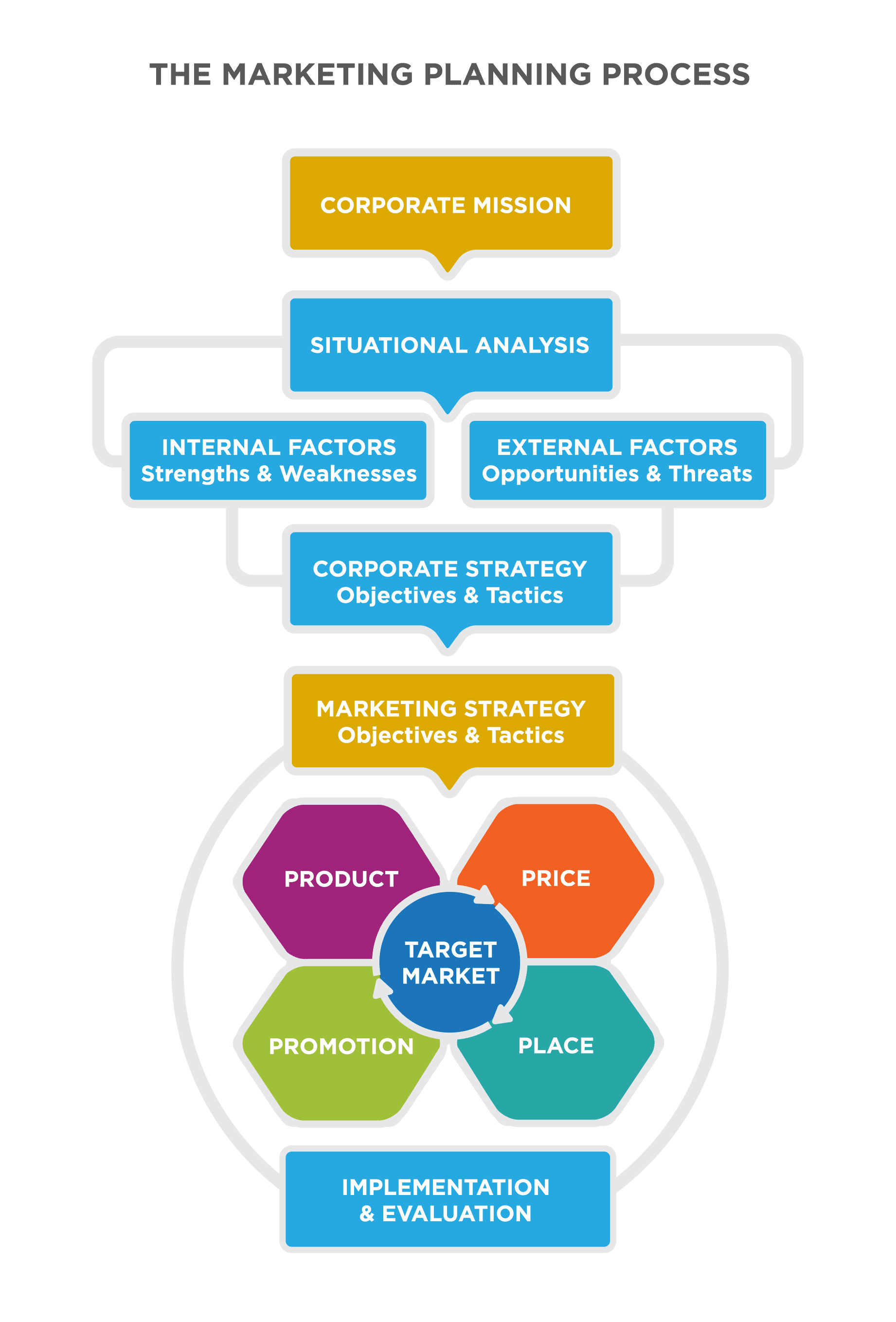
Outcome: Pricing Considerations | Introduction to Marketing View original
Is this image relevant?
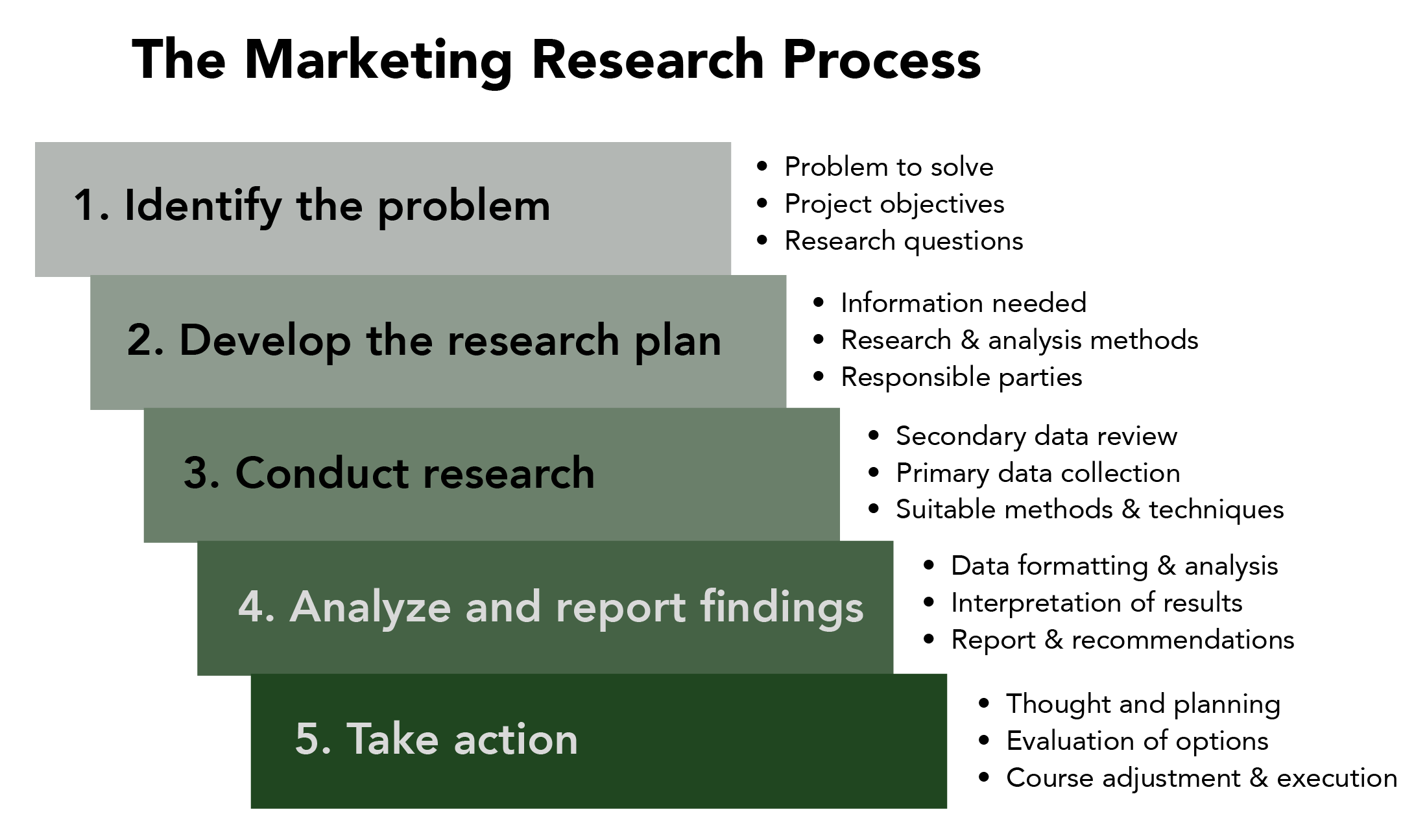
The Marketing Research Process | Introduction to Business View original
Is this image relevant?
The Role of Predictive Analytics in Decision Making - IABAC View original
Is this image relevant?
Outcome: Pricing Considerations | Introduction to Marketing View original
Is this image relevant?
Descriptive vs. Predictive Analytics
These two types form the backbone of marketing analytics, and the distinction is straightforward:
- Descriptive analytics summarizes historical data to show what already happened. Think monthly sales reports, website traffic summaries, or year-over-year revenue comparisons.
- Predictive analytics uses statistical models and machine learning to forecast what might happen next. Applications include customer churn prediction, demand forecasting, and identifying which leads are most likely to convert.
A simple way to remember it: descriptive answers "What happened?" while predictive answers "What might happen?" Most companies start with descriptive analytics and layer in predictive capabilities as they mature.
Web Analytics Tools
Web analytics tools help you understand how people interact with your website and where they drop off.
- Google Analytics tracks website traffic, user behavior, and conversion rates. It's the industry standard and free to use.
- Heat mapping tools (like Hotjar) visualize where users click, scroll, and hover on a page, showing you what grabs attention and what gets ignored.
- A/B testing platforms compare two versions of a web element (a headline, button color, page layout) to see which performs better.
- Site speed analysis tools measure page load times and flag performance bottlenecks. Even a one-second delay can reduce conversions.
- Conversion funnel analysis tracks users through each stage of their journey on your site, from landing page to checkout, so you can see exactly where people leave.
Social Media Metrics
Social media platforms generate a ton of data. These are the metrics that actually matter:
- Engagement rate measures how much your audience interacts with your content (likes, comments, shares divided by total followers or reach). This is often more meaningful than raw follower counts.
- Reach is the number of unique users who see your content.
- Impressions count the total number of times content is displayed, including repeat views by the same person. Impressions will always be equal to or greater than reach.
- Share of voice compares how often your brand is mentioned relative to competitors. A higher share of voice usually correlates with higher market share.
- Sentiment analysis evaluates the tone (positive, negative, neutral) of user comments and mentions about your brand.
Key Performance Indicators (KPIs)
KPIs are measurable values that show how effectively a company is achieving its business objectives. Picking the right KPIs keeps your marketing team focused on outcomes that actually matter, not vanity metrics that look good but don't drive results.
Sales and Revenue Metrics
- Conversion rate is the percentage of leads or visitors that become paying customers. If 1,000 people visit your site and 30 buy something, your conversion rate is 3%.
- Average order value (AOV) is the average dollar amount spent per transaction. Raising AOV (through upselling or bundling) grows revenue without needing more customers.
- Customer acquisition cost (CAC) is the total cost of acquiring a new customer, including ad spend, salaries, and tools. If you spend $10,000 on marketing and gain 200 customers, your CAC is $50.
- Return on ad spend (ROAS) measures revenue generated per dollar of advertising. A ROAS of 5:1 means every $1 in ads produces $5 in revenue.
- Sales growth rate tracks the percentage increase in revenue over a specific period.
Customer Acquisition Metrics
- Cost per lead (CPL) measures how much you spend to generate a single new lead.
- Lead-to-customer ratio shows what percentage of your leads actually convert. If you generate 500 leads and 50 become customers, that's a 10% ratio.
- Time to conversion tracks the average time from first contact to purchase. Shorter isn't always better; high-value B2B sales naturally take longer.
- Channel effectiveness compares acquisition rates across different marketing channels (social, email, paid search) so you can allocate budget wisely.
- Lead quality score assesses how likely a lead is to become a valuable customer, often based on demographic fit and engagement behavior.
Engagement and Retention Metrics
- Customer retention rate measures the percentage of customers who continue doing business with you over a given period.
- Churn rate is the flip side: the percentage of customers who leave. If your retention rate is 85%, your churn rate is 15%.
- Net Promoter Score (NPS) gauges loyalty by asking customers how likely they are to recommend your brand on a 0–10 scale. Scores of 9–10 are "promoters," 0–6 are "detractors," and NPS = % promoters minus % detractors.
- Customer Lifetime Value (CLV) predicts the total revenue a customer will generate over their entire relationship with your business.
- Repeat purchase rate tracks what percentage of customers come back to buy again.
Data Collection Methods
Data collection is the foundation of everything in analytics. The quality of your insights depends entirely on the quality of the data going in. Combining multiple collection methods gives you a more complete picture of customer behavior.
Surveys and Questionnaires
Surveys let you hear directly from customers rather than just inferring from their behavior.
- Online surveys gather feedback on customer preferences, satisfaction, and brand perception.
- NPS surveys specifically measure loyalty with a single standardized question.
- Exit surveys capture why customers are leaving or abandoning their carts.
- Product feedback questionnaires collect insights that inform product development.
- Market research surveys assess broader market trends and consumer attitudes.
Website Tracking
Website tracking captures what users actually do on your site, not just what they say they do.
- Cookies track user behavior across multiple visits, enabling personalization and retargeting.
- Page tagging uses small code snippets to capture specific user interactions (clicks, form submissions, video plays).
- Server log analysis examines raw web server data to identify traffic patterns and technical issues.
- Session recording tools replay individual user journeys so you can see exactly where people get confused or frustrated.
- Cross-device tracking follows user behavior across phones, tablets, and desktops to build a unified customer profile.
Customer Relationship Management (CRM)
A CRM system is the central hub for all customer data. Platforms like Salesforce or HubSpot combine several functions:
- Contact management stores and organizes customer information in one place.
- Interaction tracking records every touchpoint between customers and the company (emails, calls, purchases, support tickets).
- Sales pipeline management monitors leads through stages from initial contact to closed deal.
- Customer segmentation groups customers based on shared characteristics like purchase history, demographics, or engagement level.
- Marketing automation integrates with CRM data to send personalized communications at the right time.
Data Analysis Techniques
Analysis techniques transform raw data into patterns and insights you can act on. The method you choose depends on the question you're trying to answer.
Segmentation and Clustering
Segmentation divides your customers into groups so you can target each group more effectively.
- Demographic segmentation groups by age, gender, income, education, etc.
- Behavioral segmentation categorizes by actions: purchase frequency, brand loyalty, product usage.
- Psychographic segmentation divides by lifestyle, values, interests, and attitudes.
- K-means clustering is an algorithm that automatically groups data points into a predetermined number of clusters based on similarity.
- Hierarchical clustering builds a tree-like structure of nested groups, useful when you don't know how many segments exist in advance.
A/B Testing
A/B testing (also called split testing) is one of the most practical tools in a marketer's toolkit. Here's how it works:
- Create two versions of a marketing element (e.g., email subject line, landing page headline, button color). Version A is the control; Version B is the variant.
- Randomly split your audience so each group sees only one version.
- Run the test long enough to reach statistical significance, meaning the results aren't likely due to random chance.
- Compare performance on your chosen metric (click-through rate, conversion rate, etc.).
- Implement the winner and move on to testing the next element.
Multivariate testing examines multiple variables at once (e.g., headline and image and button color), but requires much larger sample sizes. Iterative testing refines elements through successive rounds of experiments.
Regression Analysis
Regression analysis helps you understand relationships between variables and make predictions.
- Linear regression predicts a continuous outcome (like sales revenue) based on one or more input variables (like ad spend).
- Logistic regression predicts binary outcomes (will this customer buy or not?).
- Multiple regression examines how several independent variables together affect a dependent variable.
- Time series regression analyzes data collected over time to identify trends and seasonal patterns.
- Stepwise regression automatically selects the most statistically significant variables for a predictive model.
Performance Measurement Frameworks
Frameworks give you a structured way to evaluate whether your marketing is actually working. Without a framework, it's easy to track dozens of metrics without understanding how they connect to business goals.
Balanced Scorecard
The balanced scorecard evaluates performance across four perspectives, preventing you from focusing too narrowly on just financial results:
- Financial: Revenue growth, profitability, ROI
- Customer: Satisfaction, retention, market share
- Internal processes: Campaign efficiency, workflow optimization
- Learning and growth: Team skill development, innovation
Strategy maps visualize cause-and-effect relationships between objectives across these four areas. Cascading scorecards align departmental goals with the organization's overall strategy. Metrics should be reviewed and adjusted regularly to stay relevant.
Marketing ROI
Return on Investment (ROI) calculates the profitability of your marketing spend:
For example, if you invest $10,000 in a campaign and generate $15,000 in net profit, your ROI is .
- Incremental ROI isolates the additional return generated by a specific marketing activity beyond what would have happened anyway.
- Attribution modeling assigns credit to different marketing touchpoints along the customer journey (first touch, last touch, multi-touch).
- Marketing mix modeling analyzes how various marketing elements (TV, digital, promotions) each contribute to sales.
Customer Lifetime Value
CLV predicts the total value a customer will bring over their entire relationship with your business:
If a customer spends an average of $50 per purchase, buys 4 times per year, and stays for 5 years, their CLV is .
- Cohort analysis groups customers by when they were acquired (or another shared characteristic) and tracks their CLV over time.
- Predictive CLV models use historical data to forecast future customer value.
- CLV-to-CAC ratio compares lifetime value to acquisition cost. A ratio of 3:1 or higher is generally considered healthy. If your CLV is lower than your CAC, you're losing money on every customer you acquire.
Reporting and Visualization
Raw data doesn't persuade anyone. Effective reporting translates complex analytics into clear visuals and narratives that stakeholders can understand and act on.
Dashboard Creation
A good dashboard puts the most important information front and center:
- KPIs are prominently displayed for quick reference.
- Interactive elements let users drill down into specific data points for more detail.
- Real-time data updates provide current information for timely decisions.
- Customizable layouts cater to different user roles (a CMO needs different views than a social media manager).
- Mobile-friendly designs ensure accessibility across devices.
Data Storytelling Techniques
Data storytelling turns numbers into a narrative that drives action:
- Narrative structure guides your audience through the data with a beginning (the problem), middle (the findings), and end (the recommendation).
- Context frames the data meaningfully. Saying "conversions increased 15%" is more powerful when you add "compared to a 3% industry average."
- Visualizations support key points and make patterns visible at a glance.
- Analogies help explain complex concepts to non-technical stakeholders.
- Call-to-action concludes the story with clear, specific next steps.

Presentation of Insights
- Executive summaries lead with key findings and recommendations so busy stakeholders get the point immediately.
- Data visualizations (charts, graphs, infographics) illustrate trends and patterns more effectively than tables of numbers.
- Benchmarking compares your performance against industry standards or competitors to provide perspective.
- Scenario analysis presents potential outcomes under different assumptions (best case, worst case, most likely).
- Action plans outline specific steps to implement the insights, with owners and timelines.
Ethical Considerations
Ethics in marketing analytics isn't optional. Responsible data use protects consumers, keeps your company out of legal trouble, and builds the kind of trust that drives long-term customer relationships.
Data Privacy and Security
- Data encryption protects sensitive information during both storage and transmission.
- Anonymization removes personally identifiable information from datasets so individual users can't be identified.
- Access controls restrict data availability to authorized personnel only.
- Data retention policies define how long information is kept and when it must be deleted.
- Regulatory compliance with laws like GDPR (European Union) and CCPA (California) is legally required, not optional. Violations can result in significant fines.
Bias in Analytics
Bias can silently distort your analysis and lead to flawed decisions. The main types to watch for:
- Selection bias occurs when your data sample doesn't represent the full population (e.g., surveying only existing customers about why people don't buy).
- Confirmation bias leads analysts to interpret data in ways that support what they already believe.
- Survivorship bias results from focusing only on successes while ignoring failures (e.g., studying only successful campaigns without examining why others failed).
- Algorithmic bias happens when automated systems perpetuate or amplify existing societal biases, often because of biased training data.
- Debiasing techniques include diversifying data sources, blind analysis, and regular audits of models and assumptions.
Transparency in Reporting
- Methodology explanations should detail how data was collected and analyzed.
- Limitations and assumptions need to be explicitly stated so stakeholders understand the boundaries of the findings.
- Error margins and confidence intervals indicate how reliable the results are.
- Data sources should be cited so others can verify findings.
- Regular audits ensure ongoing accuracy and integrity of reporting processes.
Challenges in Marketing Analytics
Even with great tools, marketing analytics comes with real obstacles. Recognizing these challenges helps you plan around them.
Data Quality Issues
- Incomplete data with missing fields makes analysis unreliable.
- Inconsistent formats across different sources (one system stores dates as MM/DD/YYYY, another as YYYY-MM-DD) make integration difficult.
- Outdated information leads to decisions based on conditions that no longer exist.
- Duplicate records inflate metrics and skew results.
- Data cleansing techniques like deduplication, standardization, and validation rules are essential for maintaining quality.
Integration of Multiple Data Sources
- Data silos occur when different departments or platforms store data separately, preventing a complete view of customer interactions.
- Incompatible data structures complicate merging information from diverse systems.
- Real-time data synchronization keeps insights current across platforms.
- Data lakes centralize storage of both structured (spreadsheets, databases) and unstructured data (social posts, images).
- ETL processes (Extract, Transform, Load) pull data from various sources, standardize it, and load it into a unified system for analysis.
Actionable Insights vs. Data Overload
- Information overload overwhelms decision-makers when they're presented with too many metrics and reports.
- Analysis paralysis happens when having too much data actually slows down decision-making instead of speeding it up.
- Prioritization frameworks help teams focus on the metrics with the highest business impact.
- Data summarization techniques condense large datasets into key takeaways.
- Automated alerts flag significant changes or anomalies so teams can respond quickly without monitoring everything manually.
Future Trends in Analytics
Marketing analytics is evolving rapidly. These trends are already reshaping how businesses collect, analyze, and act on data.
Artificial Intelligence in Marketing
- Machine learning algorithms continuously improve predictive modeling accuracy as they process more data.
- Natural language processing (NLP) enhances sentiment analysis by understanding context, sarcasm, and nuance in customer feedback.
- Computer vision analyzes visual content for brand logos, product placements, and consumer behavior in images and video.
- AI-powered chatbots provide personalized customer interactions at scale, 24/7.
- Automated content creation generates data-driven marketing copy, product descriptions, and even ad variations.
Real-Time Analytics
- Streaming analytics processes data as it flows in, enabling immediate insights rather than waiting for batch reports.
- Edge computing processes data closer to its source (like a user's device), reducing latency.
- Dynamic pricing adjusts product prices in real time based on demand, competition, and inventory levels.
- Personalized recommendations update instantly based on what a user is browsing right now.
- Instant campaign optimization allows marketers to adjust targeting, bids, and creative while a campaign is still running.
Predictive Customer Behavior Modeling
- Propensity modeling predicts the likelihood of specific customer actions, such as making a purchase or canceling a subscription.
- Next best action analysis recommends the optimal marketing move for each individual customer at a given moment.
- Customer journey mapping forecasts future touchpoints and interactions based on historical patterns.
- Predictive lifetime value estimates long-term profitability before a customer has even completed many transactions.
- Behavioral segmentation anticipates future customer needs and preferences, enabling proactive rather than reactive marketing.
See Fiveable more often in Google
Mark Fiveable as a preferred source and Google is more likely to show you our guides in Top Stories, with a "preferred" badge in AI Mode and AI Overviews.