1.4 Marketing orientations

📣Honors Marketing Unit 1 Review
1.4 Marketing orientations
📣 Honors Marketing
Marketing orientations are the underlying philosophies that guide how a business relates to its market. They answer a fundamental question: What should drive our decisions? Is it efficiency? Product quality? Sales volume? Customer needs? Social impact? Each answer leads to a different strategic approach, and understanding these orientations is essential for evaluating why companies behave the way they do.
This topic covers five orientations that have emerged over time, how they compare, and what happens when businesses try to shift from one to another.
Evolution of Marketing Orientations
Marketing orientations have shifted historically as markets matured, competition intensified, and consumers gained more power. The progression generally moves from internally focused philosophies (production, product) toward externally focused ones (marketing, societal marketing), though all five still exist in practice today.

Top images from around the web for Production orientation
Ford Model T - Wikipedia View original
Is this image relevant?
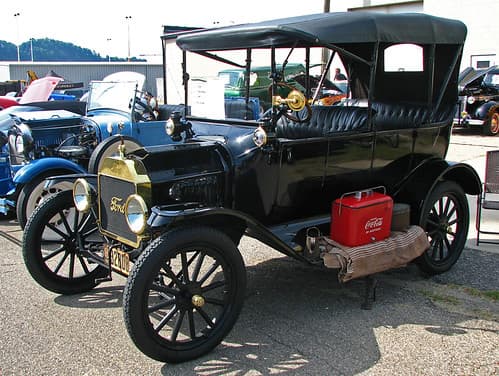
1915 Ford Model T (2) | Ford produced their first millionth … | Flickr View original
Is this image relevant?
1908 Ford Model T advertisement, 1908 | THF24058 | The Henry Ford | Flickr View original
Is this image relevant?
Ford Model T - Wikipedia View original
Is this image relevant?
1915 Ford Model T (2) | Ford produced their first millionth … | Flickr View original
Is this image relevant?
Production Orientation
This orientation assumes consumers want products that are widely available and affordable. The company's job is to maximize production efficiency and drive costs down.
- Relies on mass production, economies of scale, and streamlined operations
- Works best when demand outstrips supply or when the product is a basic commodity
- Historically dominant during the Industrial Revolution and early 20th century
Classic example: Henry Ford's Model T. Ford famously offered it in "any color so long as it is black" because standardization kept costs low and output high. The strategy worked because demand for affordable cars far exceeded supply.
The risk? If competitors start differentiating or consumer tastes shift, a pure production orientation leaves you vulnerable.
Product Orientation
Here, the assumption is that consumers will favor products offering the best quality, features, or performance. The company pours resources into R&D and continuous improvement.
- Emphasizes innovation, engineering excellence, and superior design
- Common in technology-driven and luxury industries
- Can produce genuinely groundbreaking products
Example: Apple's product-centric approach, where design and user experience drive development decisions.
The danger is what Theodore Levitt called "marketing myopia": becoming so focused on perfecting your product that you lose sight of what customers actually need. Resistance to customer feedback can mean building features nobody asked for while ignoring problems people care about.
Selling Orientation
This orientation kicks in when companies believe consumers won't buy enough on their own. The solution? Aggressive promotion and sales effort to push existing products.
- Focuses on short-term transactions rather than long-term relationships
- Often used when supply exceeds demand or products are "unsought" (insurance, encyclopedias)
- Relies heavily on advertising, personal selling, and promotional deals
The core problem: if the product doesn't genuinely meet customer needs, aggressive selling creates buyer's remorse and erodes trust. You might close the sale, but you lose the repeat customer.
Marketing Orientation
This is the orientation most modern marketing courses emphasize. Instead of starting with the product and figuring out how to sell it, a marketing-oriented company starts with the customer and works backward.
- Uses market research to identify customer needs, preferences, and behaviors
- Aligns all four Ps (product, price, place, promotion) around delivering customer value
- Aims for long-term relationships, not just one-time transactions
Example: Amazon's "customer obsession" philosophy, where decisions from product recommendations to return policies are designed around the customer experience.
This orientation requires significant investment in research and data analysis, but it tends to produce stronger customer loyalty and more sustainable competitive advantages.
Societal Marketing Orientation
This extends the marketing orientation by adding a third consideration: long-term societal welfare. A company using this approach tries to balance three things simultaneously:
- Customer satisfaction (what buyers want)
- Company profits (what the business needs)
- Society's well-being (what's good for people and the planet)
Examples: Patagonia builds durability and repairability into its products and actively discourages unnecessary consumption. TOMS Shoes built its brand around a one-for-one giving model.
This orientation has grown as consumers increasingly factor ethics and sustainability into purchasing decisions. The tension, though, is real: societal goals can conflict with short-term profitability.
Key Characteristics of Orientations
These characteristics help you distinguish between orientations on an exam and, more importantly, understand how each one shapes actual business behavior.
Focus and Priorities
- Production: Operational efficiency and cost reduction
- Product: Quality, features, and technological superiority
- Selling: Aggressive sales tactics and short-term revenue
- Marketing: Customer needs and long-term relationship building
- Societal marketing: Customer needs, profits, and social/environmental welfare
Customer Involvement
The degree to which customers shape business decisions varies dramatically:
- Production: Minimal input. The company assumes people want low prices.
- Product: Limited involvement. Internal quality standards drive decisions.
- Selling: Customers are viewed as targets to be persuaded.
- Marketing: Customers are actively consulted through research, feedback loops, and co-development.
- Societal marketing: Customers are engaged as participants in socially responsible initiatives.
Profit Generation Approach
- Production: High volume, low margins
- Product: Premium pricing justified by superior quality
- Selling: Maximizing short-term sales revenue
- Marketing: Profits flow from customer satisfaction and repeat business
- Societal marketing: Profits balanced against social and environmental costs
Product Development Strategy
- Production: Streamline processes for efficiency; the product itself changes little
- Product: Continuously improve features and performance
- Selling: Adapt existing products to fit whatever sales strategy works
- Marketing: Develop products based on identified customer needs
- Societal marketing: Incorporate sustainability and ethical sourcing into product design from the start
Comparison of Marketing Orientations
Comparing orientations side by side reveals their trade-offs and helps you evaluate which fits a given market context.
Production vs. Product Orientation
Both are internally focused, but on different things. Production orientation assumes customers are price-sensitive and prioritizes cost efficiency. Product orientation assumes customers want the best possible quality and prioritizes innovation.
- Production suits commoditized markets (generic household goods, basic building materials)
- Product fits industries where performance differences matter (luxury watches, high-end electronics)
- Both share a weakness: they can ignore shifting customer needs because they're looking inward
Selling vs. Marketing Orientation
This is one of the most important distinctions in the course. Selling starts with the existing product and asks, "How do we get people to buy this?" Marketing starts with the customer and asks, "What do people need, and how can we deliver it?"
- Selling focuses on short-term transactions; marketing focuses on long-term relationships
- Selling treats customers as targets for persuasion; marketing treats them as partners in value creation
- Marketing requires more upfront investment in research but tends to produce more sustainable results
Think of it this way: A selling-oriented car dealership pressures you into buying what's on the lot today. A marketing-oriented one surveys customers to stock the models and features people actually want.

Marketing vs. Societal Marketing Orientation
Both prioritize customer needs, but societal marketing adds a broader lens. A marketing-oriented company might give customers exactly what they want even if it's environmentally harmful. A societal marketing-oriented company weighs that broader impact.
- Marketing focuses on individual customer satisfaction; societal marketing considers collective well-being
- Societal orientation may accept lower short-term profits for long-term sustainability
- Societal orientation resonates with consumers who factor ethics into purchasing decisions
Example: A marketing-oriented fast-food chain optimizes its menu for taste and convenience. A societal marketing-oriented chain also considers nutritional impact, packaging waste, and supply chain ethics.
Impact on Business Strategy
Your orientation doesn't just affect marketing. It shapes how the entire organization allocates resources, measures success, and competes.
Resource Allocation
- Production: Heavy investment in manufacturing technology and process optimization
- Product: Resources flow to R&D and quality control
- Selling: Budget concentrates on sales force, advertising, and promotions
- Marketing: Investment in market research, CRM systems, and customer service
- Societal marketing: Additional resources toward sustainability initiatives and ethical sourcing
Market Research Importance
The role of research changes dramatically across orientations:
- Production: Minimal. Internal efficiency metrics matter most.
- Product: Focused on product performance and technical benchmarks.
- Selling: Aimed at identifying the most effective sales techniques and channels.
- Marketing: Extensive. Research on customer needs, preferences, and behaviors drives decisions.
- Societal marketing: Adds research on social trends, environmental impact, and stakeholder expectations.
Product Lifecycle Management
- Production: Extends the lifecycle through cost reductions and efficiency gains
- Product: Extends it through continuous feature improvements
- Selling: Extends it by finding new market segments or ramping up promotions
- Marketing: Adapts products based on evolving customer feedback
- Societal marketing: Considers environmental impact at every stage, from sourcing to disposal
Competitive Advantage
Each orientation creates a different basis for competing:
- Production: Price and availability
- Product: Superior quality and innovation
- Selling: Aggressive promotional tactics
- Marketing: Customer satisfaction and loyalty
- Societal marketing: Ethical reputation and social responsibility
Implementation Challenges
Shifting from one orientation to another is harder than it sounds. It's not just a strategy change; it's a cultural transformation.
Organizational Culture Shift
Moving from, say, a selling orientation to a marketing orientation requires changing how people throughout the company think about their work. Sales teams accustomed to pushing products need to start listening to customers. Engineers used to building what they think is best need to incorporate market research.
- Requires strong leadership support and clear communication about why the shift matters
- Success metrics and reward systems need to be redefined (e.g., rewarding customer retention, not just sales volume)
- Gradual implementation with change management techniques tends to work better than abrupt overhauls
Employee Training and Development
- Staff need new skills aligned with the chosen orientation (e.g., data analysis for marketing orientation, sustainability literacy for societal orientation)
- Sales teams may need retraining to focus on consultative selling rather than high-pressure tactics
- Training formats can include workshops, e-learning, and mentoring programs
Performance Metrics Alignment
This is where many orientation shifts stall. If you say you're customer-centric but still measure success purely by quarterly sales volume, nothing actually changes.
- KPIs must reflect the new orientation (customer satisfaction scores, Net Promoter Score, retention rates)
- Long-term benefits like brand loyalty and social impact are harder to quantify than short-term sales
- Balanced scorecard approaches can help capture multiple dimensions of performance
Stakeholder Communication
- Investors may worry about short-term profit impacts, especially with a societal marketing shift
- Suppliers and partners need to understand new expectations (ethical sourcing, quality standards)
- Customers should understand new value propositions through consistent messaging
- Transparent reporting builds credibility during the transition
Benefits of Marketing Orientation
Since marketing orientation is the dominant philosophy taught in modern marketing courses, it's worth understanding specifically why it works.
Customer Satisfaction and Loyalty
- Products fit the market better because they're designed around actual customer needs
- Personalized service and support enhance the overall customer experience
- Higher retention rates increase customer lifetime value (the total revenue a customer generates over the entire relationship)
- Satisfied customers generate positive word-of-mouth, which is more credible than paid advertising

Market Share Growth
- Tailored value propositions attract new customers more effectively than generic offerings
- Market research reveals unmet needs, opening doors to new segments
- Customer insights support more successful product launches
- Strong relationships enable cross-selling and upselling
Brand Equity Enhancement
Brand equity is the added value a brand name gives to a product beyond its functional benefits. Marketing orientation strengthens it by:
- Building trust through consistent delivery on customer expectations
- Differentiating the brand based on genuine customer benefits rather than just features
- Reducing price sensitivity (loyal customers are less likely to switch over small price differences)
Long-term Profitability
- Retaining existing customers costs significantly less than acquiring new ones
- Stronger relationships increase repeat purchases and lifetime value
- Focusing on high-value activities improves operational efficiency
- Customer-driven innovation reduces the risk of product failures
Criticisms of Marketing Orientations
No orientation is perfect. Understanding the criticisms helps you think critically about these frameworks rather than accepting them uncritically.
Short-term Focus Concerns
Even marketing orientation can fall into a short-term trap. If you only give customers what they say they want right now, you might miss opportunities for breakthrough innovation. Customers didn't ask for the iPhone before it existed.
- Frequent product changes driven by customer feedback can increase development costs
- Focusing exclusively on existing customers risks missing emerging market shifts
- Balancing current customer satisfaction with long-term innovation is an ongoing tension
Ethical Considerations
- Selling orientation can cross into manipulative or deceptive territory
- Marketing orientation, with its emphasis on understanding consumer psychology, can exploit vulnerabilities or manufacture artificial needs
- Product orientation may encourage planned obsolescence (designing products to fail so customers buy replacements)
- Targeted marketing raises serious data privacy concerns
Environmental Impact
- Production orientation can drive overproduction and resource depletion
- Marketing orientation may fuel overconsumption by constantly stimulating demand
- Global supply chains carry significant carbon footprints regardless of orientation
- Even societal marketing orientation faces challenges in truly measuring and reducing environmental harm
Social Responsibility Issues
- Marketing can reinforce harmful stereotypes through careless messaging
- Critics argue that marketing inherently promotes materialism and consumerism
- Corporate social responsibility initiatives are sometimes more about image than impact ("greenwashing")
- Targeted marketing practices can widen social inequalities by excluding less profitable demographics
Future Trends in Orientations
Marketing orientations continue to evolve as technology, consumer values, and global dynamics shift.
Sustainability-Driven Approaches
- Circular economy principles (designing products for reuse, repair, and recycling) are increasingly influencing product development and marketing
- Consumers and regulators are demanding transparent supply chains and ethical sourcing
- Sustainability metrics are being integrated into marketing performance evaluation alongside traditional financial measures
- New business models around the sharing economy and product longevity challenge traditional ownership-based marketing
Technology Integration
- AI and machine learning enable deeper, faster customer insights and predictive analytics
- Augmented and virtual reality are creating new ways to experience products before purchase
- IoT (Internet of Things) devices enable real-time, personalized marketing interactions
- Blockchain technology can verify marketing claims about sourcing and sustainability
Personalization and Customization
- Hyper-personalization goes beyond "Dear [First Name]" to tailoring entire product experiences to individual preferences
- Mass customization allows companies to offer personalized products at scale
- Predictive analytics can anticipate what a customer needs before they express it
- Co-creation models invite customers to participate directly in product development
Globalization Effects
- Global brands must balance consistency with local cultural adaptation
- Cultural sensitivity in marketing communications is increasingly important as brands reach diverse audiences
- Cross-border e-commerce is expanding customer bases but also complicating logistics and regulation
- Geopolitical instability affects supply chains and forces companies to build more resilient marketing strategies
See Fiveable more often in Google
Mark Fiveable as a preferred source and Google is more likely to show you our guides in Top Stories, with a "preferred" badge in AI Mode and AI Overviews.