7.3 Supply chain management

📣Honors Marketing Unit 7 Review
7.3 Supply chain management
📣 Honors Marketing
Definition of supply chain
A supply chain is the entire network of entities involved in producing and delivering a product or service to the end customer. In marketing, the supply chain matters because it determines whether products are actually available to consumers at the right time and place. A brilliant marketing campaign means nothing if the product isn't on the shelf.

Top images from around the web for Components of supply chain
Controlling the Supply Chain | Boundless Business View original
Is this image relevant?
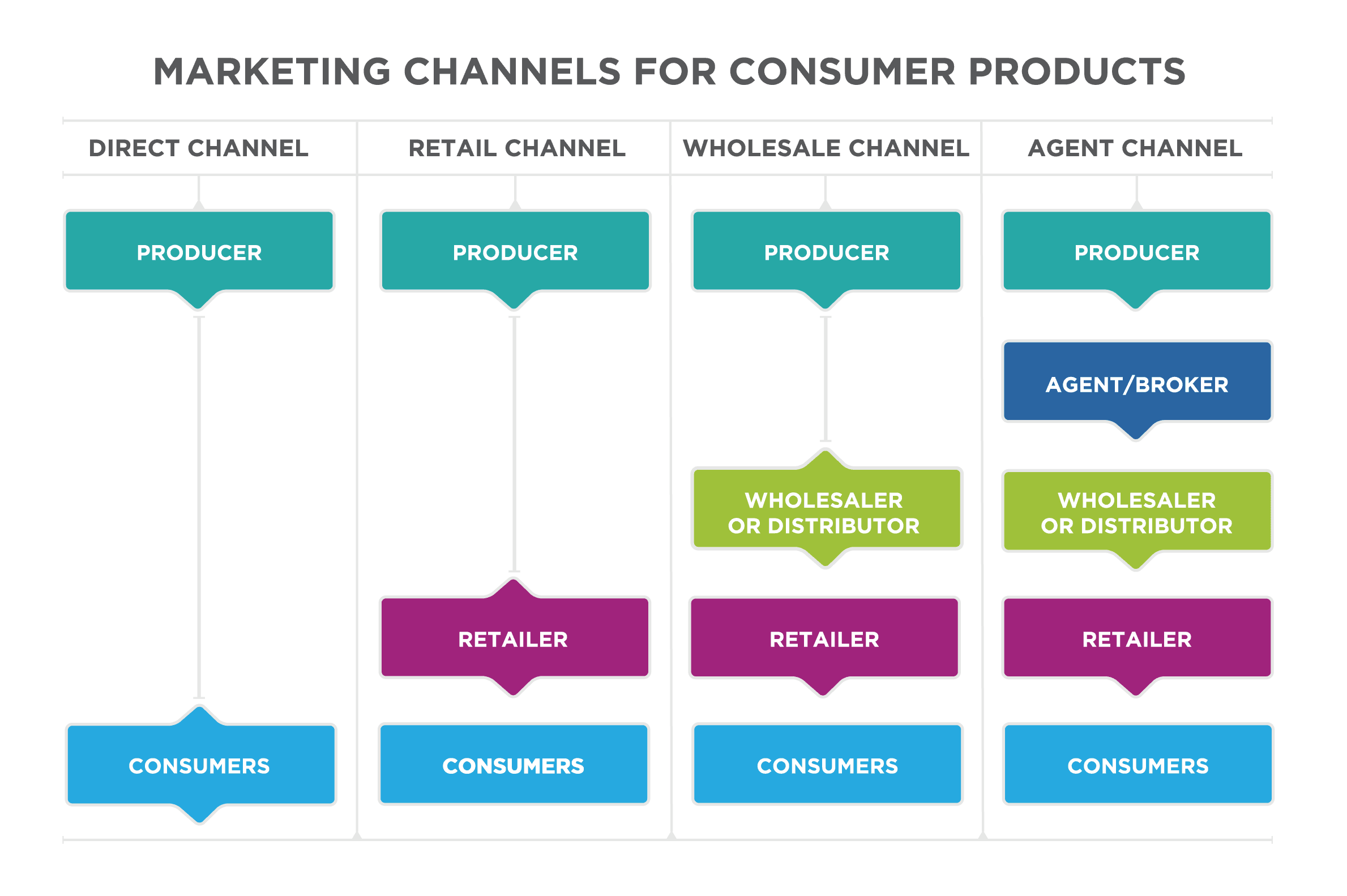
Putting It Together: Place: Distribution Channels | Principles of Marketing View original
Is this image relevant?
Controlling the Supply Chain | Boundless Business View original
Is this image relevant?
Controlling the Supply Chain | Boundless Business View original
Is this image relevant?
Putting It Together: Place: Distribution Channels | Principles of Marketing View original
Is this image relevant?
Components of supply chain
Each link in the chain handles a specific role:
- Suppliers provide raw materials and components to manufacturers
- Manufacturers transform those inputs into finished products
- Distributors move products from manufacturers to retailers (sometimes called wholesalers or intermediaries)
- Retailers sell products directly to consumers
- Customers are the end-users who purchase and consume the product
Think of it as a relay race: each participant hands off to the next, and a fumble at any stage delays the final delivery.
Supply chain vs. value chain
These two terms get confused often, but they have different focuses:
- A supply chain tracks the physical flow of goods and information from supplier to customer. The goal is operational efficiency.
- A value chain (a concept from Michael Porter) examines every activity a firm performs and asks: does this step add value for the customer? The goal is competitive advantage.
Supply chain management optimizes how products move. Value chain analysis identifies where a company can differentiate itself or cut costs.
Supply chain strategy
A supply chain strategy aligns operations with the company's broader business and marketing objectives. The choices you make here directly affect product availability, pricing, lead times, and customer satisfaction.
Push vs. pull strategies
- Push strategy: Production is based on demand forecasts. The company manufactures goods in advance and "pushes" them through the supply chain toward customers.
- Emphasizes economies of scale and inventory buildup
- Works well for products with stable, predictable demand (household staples like laundry detergent)
- Risk: overproduction and excess inventory if forecasts are wrong
- Pull strategy: Production is triggered by actual customer orders. Goods are "pulled" through the chain only when demand exists.
- Reduces inventory costs and improves responsiveness
- Effective for customized or perishable products (made-to-order furniture, fresh food)
- Risk: longer lead times if production can't keep up with sudden demand spikes
Many companies use a hybrid approach, pushing standard components to a midpoint and pulling finished products based on real orders.
Lean vs. agile supply chains
- Lean supply chains focus on eliminating waste and reducing costs at every stage. They emphasize efficiency, standardization, and continuous improvement. Best suited for products with predictable demand, like commodity items (paper towels, canned goods).
- Agile supply chains prioritize flexibility and speed. They can adapt quickly to demand fluctuations or supply disruptions. Best suited for innovative products with unpredictable demand, like fashion items or new tech products where trends shift fast.
The tradeoff: lean chains are cheaper to operate but slower to adapt; agile chains respond faster but cost more to maintain.
Supply chain integration
Integration is about how tightly supply chain partners coordinate with each other. Better integration means better information sharing, fewer delays, and faster responses to market changes.
Vertical integration
A company takes control of multiple stages of the supply chain rather than relying on outside partners.
- Forward integration expands control toward the customer. Example: a manufacturer like Apple opening its own retail stores.
- Backward integration expands control toward suppliers. Example: a coffee chain purchasing its own farms.
The benefit is greater control over quality, costs, and timing. The downside is the significant capital investment and reduced flexibility.
Horizontal integration
This occurs when a company acquires or merges with competitors at the same stage of the supply chain. A retailer buying another retailer, for instance.
The goal is increased market share and economies of scale. However, it can reduce competition in the market and potentially raise prices for consumers, which is why regulators scrutinize large horizontal mergers.
Virtual integration
Instead of owning supply chain stages, a company uses information technology to coordinate activities across independent partners. Think of how Dell historically managed its supply chain: it didn't own component factories, but it shared real-time demand data with suppliers so they could respond as if they were part of one organization.
Virtual integration provides flexibility and scalability while minimizing capital investment. It depends heavily on trust and robust IT systems.
Demand forecasting
Accurate demand forecasting is what keeps the supply chain from either drowning in excess inventory or running dry when customers want to buy. It directly informs marketing strategies, production schedules, and product availability decisions.
Forecasting methods
- Time series analysis examines historical sales data to identify patterns, trends, and seasonal cycles
- Causal methods consider external factors that influence demand, such as economic indicators, competitor actions, or weather patterns
- Qualitative techniques rely on expert opinions, sales team input, and market research, especially useful for new products with no sales history
- Machine learning algorithms process large datasets to detect complex patterns and predict future demand more accurately than traditional methods
No single method is perfect. Most companies combine several approaches.
Demand planning techniques
- CPFR (Collaborative Planning, Forecasting, and Replenishment) involves sharing demand data with supply chain partners so everyone works from the same forecast
- Scenario planning prepares for multiple potential demand outcomes (best case, worst case, most likely)
- Demand sensing uses real-time point-of-sale data and social media signals to adjust short-term forecasts
- Segmentation tailors forecasting approaches to different product categories or customer groups, since a one-size-fits-all forecast rarely works
Inventory management
Inventory management is a balancing act: hold too much and you tie up cash and risk obsolescence; hold too little and you lose sales and frustrate customers. Getting this right directly impacts both costs and marketing effectiveness.
Types of inventory
- Raw materials are inputs waiting to enter the production process
- Work-in-progress (WIP) refers to partially completed products still on the production line
- Finished goods are completed products ready for sale
- Safety stock is a buffer maintained to protect against unexpected demand spikes or supply delays

Inventory control systems
- Economic Order Quantity (EOQ) is a formula that calculates the optimal order size to minimize total ordering and holding costs
- Continuous review systems monitor inventory levels constantly and trigger a reorder when stock drops to a predetermined point
- Periodic review systems check inventory at fixed time intervals (e.g., every week) and order enough to bring stock back to a target level
- ABC analysis categorizes inventory items into three groups: A items (high value, tight control), B items (moderate value, moderate control), and C items (low value, minimal control)
Just-in-time inventory
Just-in-time (JIT) minimizes inventory levels by receiving goods only as they're needed for production. Toyota pioneered this approach.
Benefits: lower carrying costs, improved cash flow, and less warehouse space needed. The catch is that JIT requires extremely close coordination with suppliers and accurate demand forecasting. If a supplier is late or demand spikes unexpectedly, there's no buffer. The COVID-19 pandemic exposed how vulnerable JIT systems can be when global supply chains are disrupted.
Procurement and sourcing
Procurement is the process of acquiring the goods and services a business needs to operate. Strategic procurement decisions affect product quality, costs, and the reliability of the entire supply chain.
Supplier selection criteria
When evaluating potential suppliers, companies typically assess:
- Quality of products or services provided
- Price and total cost of ownership (not just the sticker price, but shipping, storage, defect rates, etc.)
- Reliability and on-time delivery performance
- Financial stability and long-term viability
- Technological capabilities and innovation potential
- Sustainability practices and ethical standards
Strategic sourcing
Strategic sourcing goes beyond finding the cheapest supplier. It involves:
- Analyzing spending patterns to identify where cost savings are possible
- Developing long-term relationships with key suppliers rather than constantly switching
- Leveraging purchase volume to negotiate better terms and pricing
- Evaluating total cost of ownership, which includes factors like quality defects, shipping delays, and administrative costs on top of the purchase price
Outsourcing vs. insourcing
- Outsourcing means contracting external parties to perform certain functions (e.g., a clothing brand hiring a factory in Vietnam to manufacture its products). It allows the company to focus on core competencies and access specialized expertise, but it reduces direct control.
- Insourcing keeps functions within the organization. It maintains greater control over processes and protects proprietary knowledge, but it requires more capital investment and internal capability.
Logistics and distribution
Logistics covers the physical movement and storage of goods throughout the supply chain. This is where supply chain strategy becomes tangible: the trucks, warehouses, and delivery routes that get products to customers.
Transportation modes
Each mode has distinct strengths:
- Road transport offers door-to-door flexibility for short to medium distances
- Rail transport is cost-effective for large, heavy volumes over long distances
- Air freight enables rapid delivery for time-sensitive or high-value goods (expensive per unit)
- Sea freight is the most economical option for large international shipments (slow but cheap)
- Intermodal transportation combines multiple modes for optimal efficiency, such as shipping containers that move from ship to rail to truck
Warehousing and storage
- Centralized warehouses consolidate inventory in one or a few locations for efficient distribution
- Cross-docking facilities minimize storage time by transferring goods directly from inbound to outbound vehicles, with little or no time in storage
- Automated storage and retrieval systems (AS/RS) use robotics to improve space utilization and picking speed
- Temperature-controlled storage preserves perishable goods like food and pharmaceuticals
Last-mile delivery
The last mile is the final leg of delivery from a distribution center to the customer's door. It's often the most expensive and complex part of the entire supply chain.
Options include home delivery, click-and-collect (buy online, pick up in-store), and parcel lockers. Companies use route optimization software to reduce costs and delivery times. For marketing, last-mile delivery matters because it's the touchpoint customers actually experience and remember.
Supply chain technology
Technology is what makes modern supply chains fast, visible, and responsive. These tools enable better coordination between marketing and operations.
Enterprise resource planning (ERP)
ERP systems integrate various business functions (sales, production, procurement, finance) into a single platform. They provide real-time visibility into inventory levels and order status, improve data accuracy, and reduce the errors that come from manually transferring information between departments. SAP and Oracle are two of the most widely used ERP systems.
Radio frequency identification (RFID)
RFID uses radio waves to automatically identify and track tagged items. Unlike barcodes, RFID tags don't need line-of-sight scanning, and multiple tags can be read simultaneously.
Benefits include improved inventory accuracy, reduced manual counting, better product traceability, and real-time monitoring of stock levels. Walmart was an early adopter, requiring major suppliers to use RFID tags.
Blockchain in supply chain
Blockchain creates a decentralized, tamper-proof record of transactions that every participant can verify. In supply chains, it enhances transparency and traceability (you can track a product from raw material to store shelf), reduces fraud and counterfeiting, and facilitates faster, more secure payments between partners. It's particularly valuable in industries where provenance matters, like food safety and luxury goods.

Supply chain risk management
Supply chains are vulnerable to disruption, and a single failure can cascade through the entire network. Risk management is about identifying threats before they materialize and having plans ready when they do.
Types of supply chain risks
- Supply risks: supplier bankruptcy, quality failures, or capacity shortages
- Demand risks: unexpected surges or drops in customer orders
- Process risks: equipment failures, production errors, or labor shortages
- Environmental risks: natural disasters, pandemics, or geopolitical instability
- Cyber risks: data breaches, ransomware attacks, or system failures
Risk mitigation strategies
- Diversify the supplier base so you're not dependent on a single source (or a single country)
- Build buffer inventory for critical components that would halt production if unavailable
- Develop contingency plans that outline specific responses to likely disruption scenarios
- Implement cybersecurity measures to protect supply chain data and systems
- Use financial instruments like insurance to transfer certain risks
The goal isn't to eliminate all risk (that's impossible) but to reduce vulnerability and improve recovery speed.
Sustainability in supply chains
Consumers and regulators increasingly expect companies to manage the environmental and social impacts of their supply chains. For marketing, sustainability practices can become a genuine source of brand differentiation.
Green supply chain practices
- Reducing carbon emissions through optimized transportation routes and fuel-efficient vehicles
- Implementing energy-efficient manufacturing processes
- Using sustainable or recyclable packaging materials
- Minimizing waste generation and increasing recycling efforts
- Sourcing raw materials from environmentally responsible suppliers
Circular supply chains
A circular supply chain moves away from the traditional "make, use, dispose" model toward keeping materials in use as long as possible:
- Designing products for easy disassembly and recycling
- Implementing reverse logistics to recover used products from customers
- Refurbishing or remanufacturing products to extend their lifecycle
- Using waste from one process as input for another (known as industrial symbiosis)
- Shifting from selling products to providing services (product-as-a-service models, like leasing instead of buying)
Patagonia's Worn Wear program, which resells used clothing, is a well-known example of circular supply chain thinking.
Performance measurement
You can't improve what you don't measure. Performance metrics connect supply chain operations to marketing goals by revealing what's working and what needs attention.
Key performance indicators
- On-time delivery rate: percentage of orders delivered by the promised date
- Inventory turnover ratio: how many times inventory is sold and replaced over a period (higher is generally better)
- Order fulfillment cycle time: total time from when a customer places an order to when they receive it
- Perfect order rate: percentage of orders delivered complete, on time, undamaged, and with correct documentation
- Supply chain costs as a percentage of revenue: measures overall cost efficiency
Balanced scorecard approach
The balanced scorecard evaluates supply chain performance across four dimensions rather than focusing on cost alone:
- Financial perspective: cost reduction, return on assets, cash-to-cash cycle time
- Customer perspective: order fulfillment rates, customer satisfaction scores
- Internal process perspective: operational efficiency, defect rates, process cycle times
- Learning and growth perspective: employee training, technology adoption, innovation
This holistic view prevents companies from optimizing one metric (like cost) at the expense of others (like quality or responsiveness).
Global supply chain management
Operating across international borders adds layers of complexity to every supply chain decision, from sourcing to distribution to marketing strategy.
International trade considerations
- Tariffs and trade barriers affect the cost and feasibility of cross-border transactions
- Exchange rate fluctuations impact pricing and profitability, sometimes unpredictably
- Longer lead times require more careful planning and larger safety stock levels
- Regulatory compliance varies by country and can include product standards, labeling requirements, and import/export restrictions
- Customs procedures and multiple transportation modes add administrative complexity
Cultural factors in supply chains
Cultural differences affect how supply chain partnerships function across borders:
- Communication styles influence negotiations and day-to-day relationship management
- Decision-making processes vary (some cultures favor consensus, others defer to hierarchy)
- Time orientation impacts expectations for delivery schedules and planning horizons
- Power distance affects how hierarchical structures and management approaches work
- Uncertainty avoidance influences risk tolerance and how detailed contracts need to be
Understanding these factors isn't just a "nice to have." Misreading cultural norms can derail supplier relationships and cause costly delays.
Supply chain trends
These developments are reshaping how supply chains operate and how they connect to marketing strategy.
Digitalization of supply chains
- Internet of Things (IoT) sensors enable real-time tracking of goods in transit and monitoring of warehouse conditions
- Artificial intelligence and machine learning optimize demand forecasting, route planning, and automated decision-making
- Cloud computing facilitates data sharing and collaboration across geographically dispersed supply chain partners
- Digital twins create virtual replicas of physical supply chains, allowing companies to simulate disruptions and test responses before they happen
- Robotic process automation (RPA) streamlines repetitive tasks like invoice processing and order entry
Omnichannel supply chains
As companies sell through physical stores, websites, mobile apps, and marketplaces simultaneously, the supply chain must support all of these channels seamlessly.
- Requires unified inventory visibility so a customer can see real stock levels regardless of channel
- Enables flexible fulfillment options like ship-from-store, buy online pick up in-store (BOPIS), and curbside pickup
- Demands agile supply chain capabilities to meet the different speed and cost expectations of each channel
- Leverages data analytics to optimize inventory allocation, ensuring the right products are in the right locations across all channels
See Fiveable more often in Google
Mark Fiveable as a preferred source and Google is more likely to show you our guides in Top Stories, with a "preferred" badge in AI Mode and AI Overviews.