1.1 Definition of marketing

📣Honors Marketing Unit 1 Review
1.1 Definition of marketing
📣 Honors Marketing
Marketing is the process of creating, communicating, and delivering value to customers while building profitable relationships. For an honors-level course, you need to understand not just what marketing does, but why each concept exists and how the pieces connect. This guide covers the definition, core elements, orientations, scope, environment, and ethics of marketing.
Nature of marketing
Marketing forms the backbone of modern business strategy. It goes well beyond advertising or selling. It's the entire system a business uses to understand what customers need, develop offerings that meet those needs, and deliver them in a way that creates value for both sides.
The field evolves constantly. Consumer behaviors shift, new technologies emerge, and market dynamics change. Marketing adapts to all of it, which is why the discipline looks so different today than it did even twenty years ago.

Top images from around the web for Concept of marketing
Marketing Mix Introduction | Introduction to Business View original
Is this image relevant?
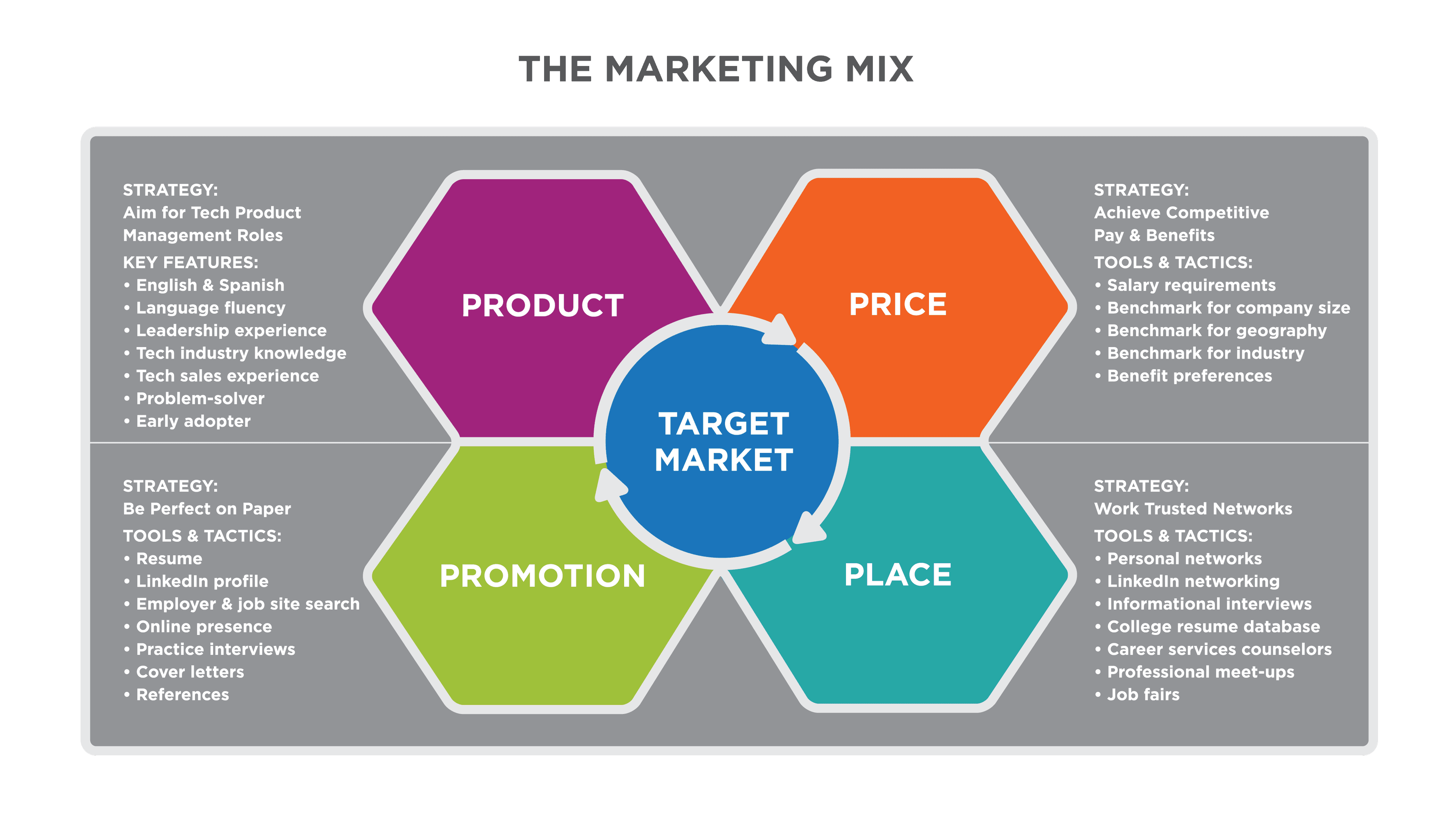
Putting It Together: Marketing Function | Principles of Marketing View original
Is this image relevant?
Reading: Defining Your Target Market | Principles of Marketing View original
Is this image relevant?
Marketing Mix Introduction | Introduction to Business View original
Is this image relevant?
Putting It Together: Marketing Function | Principles of Marketing View original
Is this image relevant?
Concept of marketing
Marketing is a holistic business philosophy centered on creating, communicating, and delivering value to customers. Rather than starting with a product and figuring out how to sell it, marketing starts with the customer and works backward.
Key characteristics of the marketing concept:
- Identifies target markets and tailors offerings to meet specific needs and preferences
- Emphasizes long-term customer relationships over one-time transactions
- Integrates multiple elements: product design, pricing, promotion, and distribution
- Treats customer satisfaction as a strategic priority, not an afterthought
Marketing vs. selling
This distinction comes up frequently on exams, and it's more than a surface-level difference. Marketing and selling represent fundamentally different business philosophies.
- Starting point: Marketing starts with customer needs; selling starts with the existing product.
- Approach: Marketing is customer-centric (build what people want); selling is product-centric (convince people to want what you've built).
- Research: Marketing relies on comprehensive market research and product development; selling relies on persuasion and closing techniques.
- Time horizon: Marketing builds long-term relationships; selling often prioritizes short-term transactions.
- Alignment: Marketing aligns products with customer demands; selling tries to align customers with existing products.
Think of it this way: selling asks "How do we move this inventory?" Marketing asks "What does the customer actually need, and how do we deliver it?"
Evolution of marketing
Marketing philosophy has shifted dramatically over time, progressing through distinct eras:
- Production era: Focus on manufacturing efficiency. "If we build it, they'll buy it." Worked when demand exceeded supply.
- Sales era: Supply caught up with demand, so companies turned to aggressive selling techniques to push products.
- Marketing concept era: Businesses realized it was more effective to research what customers wanted first, then produce it.
- Societal marketing era: Companies began considering not just customer wants but broader social and environmental impact.
Alongside these philosophical shifts, marketing has incorporated major practical changes: the move from traditional media to digital and social platforms, the rise of data-driven decision-making and personalization, and expansion from local to global markets with all the cultural adaptation that requires.
Core elements of marketing
Three foundational concepts underpin everything in marketing: understanding what customers need, creating value to meet those needs, and building exchange relationships that benefit both parties.
Customer needs and wants
Customer needs and wants are the fundamental drivers of all market demand. Understanding the difference matters: needs are basic requirements (food, safety, belonging), while wants are the specific forms those needs take, shaped by culture and personality.
- Maslow's hierarchy provides a useful framework, categorizing needs from physiological (food, shelter) up through safety, social, esteem, and self-actualization
- Needs can be latent (unexpressed, where customers don't yet realize they have them) or explicit (clearly stated). Each requires a different marketing approach. Apple's iPhone addressed latent needs most people couldn't have articulated before 2007.
- Cultural background, social status, and personal preferences all shape how needs translate into wants
- Continuous market research and feedback analysis keep businesses aligned with shifting customer expectations
Value creation and delivery
Value creation is the process of developing products or services that solve real problems or deliver meaningful benefits to customers. It spans the entire value chain, from initial product design through after-sales service.
- Starts with identifying customer pain points and providing effective solutions
- Requires aligning organizational resources and capabilities with what customers actually expect
- Measured through customer satisfaction scores, loyalty rates, and perceived value (what the customer believes they're getting relative to what they're paying)
A product can be technically excellent and still fail if customers don't perceive sufficient value. That perception gap is what marketing works to close.
Exchange relationships
At its most fundamental level, marketing facilitates exchange: mutually beneficial interactions where both parties receive something of value. But modern marketing recognizes that exchange goes beyond a simple transaction.
- Based on reciprocity: the customer gets a product or service; the business gets revenue, data, or advocacy
- Involves monetary transactions, but also information sharing and emotional connections
- Requires trust-building and consistent delivery on promises
- The goal extends beyond individual purchases to long-term loyalty and customer advocacy (where satisfied customers actively recommend you to others)
Marketing objectives
Marketing objectives give direction to strategy and provide benchmarks for measuring performance. They need to be clearly defined, measurable, and aligned with both available resources and broader business goals.
Profit generation
Profit is the primary financial objective for marketing in for-profit organizations. Marketing contributes to profit through two main levers: increasing sales volume and improving profit margins (or both).
- Requires balancing short-term revenue with long-term sustainable growth
- Influenced by pricing strategies, cost management, and market positioning
- Measured using metrics like Return on Investment (ROI), profit margin percentage, and revenue growth rate
Customer satisfaction
Customer satisfaction indicates whether you're meeting or exceeding expectations, and it's one of the strongest predictors of long-term business performance.
- Monitored through surveys (like Net Promoter Score), feedback analysis, and customer service data
- High satisfaction leads to increased loyalty, positive word-of-mouth, and repeat purchases
- Has a compounding effect: satisfied customers cost less to retain than new customers cost to acquire, which feeds back into profit generation and market share growth
Market share growth
Market share is a company's sales expressed as a percentage of total industry sales. Growing it means you're outpacing competitors.
- Achieved through product innovation, market penetration (selling more in existing markets), or market development (entering new markets)
- Requires competitive analysis and clear differentiation from rivals
- Influenced by brand strength, pricing, and distribution reach
Marketing process
The marketing process is a systematic, iterative approach to identifying and satisfying customer needs profitably. Each stage feeds into the next, and market feedback loops back to refine earlier decisions.

Market research and analysis
This is where everything starts. Market research is the systematic gathering and interpretation of data about target markets, customers, and competitors.
- Primary research (surveys, interviews, focus groups) collects new data directly from sources
- Secondary research (industry reports, government data, academic studies) analyzes existing information
- Analytical tools include SWOT analysis (Strengths, Weaknesses, Opportunities, Threats), Porter's Five Forces, and customer segmentation techniques
- Also encompasses competitor analysis, consumer behavior studies, and market trend forecasting
- Findings inform every subsequent stage of the marketing process
Target market selection
Not every customer segment is worth pursuing. Target market selection is the process of identifying which specific segments to serve.
Steps in target market selection:
- Segment the market using demographic, psychographic, geographic, and behavioral criteria
- Evaluate each segment's attractiveness: market size, growth potential, competition level, and alignment with company strengths
- Select the segment(s) that offer the best fit and feasibility
- Develop positioning strategies tailored to the chosen segments
These decisions directly shape the marketing mix and how resources get allocated.
Marketing mix development
The marketing mix is the set of tactical tools a company uses to implement its strategy. The classic framework is the 4Ps:
- Product: Features, quality level, branding, packaging, and design decisions
- Price: Strategies that account for costs, competitor pricing, and perceived value (e.g., premium pricing vs. penetration pricing)
- Place (Distribution): Selecting the right channels to make products accessible to target customers (retail stores, e-commerce, wholesalers)
- Promotion: The communication mix, including advertising, public relations, sales promotions, and personal selling
All four elements must work together coherently. A luxury product with premium pricing distributed through discount retailers sends a contradictory message.
Marketing orientations
Marketing orientations are the philosophical approaches that guide how a company thinks about its market. They reflect the historical evolution of marketing thought, and understanding them helps you recognize why companies make the strategic choices they do.
Production orientation
A production-oriented company focuses on manufacturing efficiency and wide distribution. The underlying assumption is that consumers prefer products that are available and affordable.
- Emphasizes cost reduction, economies of scale, and streamlined operations
- Works in markets where demand exceeds supply or where cost is the dominant purchase factor
- Classic example: Henry Ford's Model T, offered in one color to maximize production efficiency
- Limitation: tends to produce a narrow product range with little customer input, which becomes a problem as markets mature and competition increases
Product orientation
A product-oriented company believes customers will choose whatever product offers the best quality, performance, or features. The focus is on continuous improvement and innovation.
- Emphasizes engineering excellence and feature development
- Risk: can lead to the "better mousetrap" fallacy, where a technically superior product fails because it doesn't match what customers actually want or because the company neglects marketing communication
- Cautionary example: Kodak's intense focus on perfecting film camera technology while digital photography was reshaping the market
Sales orientation
A sales-oriented company assumes customers won't buy enough on their own and need to be persuaded through aggressive selling and promotion.
- Focuses on short-term sales volume rather than long-term relationships
- Associated with high-pressure tactics and push marketing
- Can generate quick revenue but often damages brand reputation and customer trust over time
- Common in industries with excess inventory or undifferentiated products
Market orientation
A market-oriented company puts customer needs at the center of every decision. This is the orientation most aligned with modern marketing philosophy.
- Emphasizes continuous market research and rapid adaptation to changing preferences
- Integrates marketing thinking across all organizational functions (not just the marketing department)
- Fosters long-term relationships and brand loyalty
- Requires organizational flexibility and genuine responsiveness to feedback
- Most sustainable orientation for competitive, mature markets
Scope of marketing
Marketing applies far beyond traditional consumer products. Its principles extend across industries, business models, and geographic boundaries.
Products and services
Marketing strategies differ significantly depending on whether you're marketing tangible goods or intangible services.
- Product marketing focuses on features, benefits, and differentiation. Think smartphones or automobiles, where you can compare specs side by side.
- Service marketing must address unique challenges: services are intangible (you can't hold a healthcare consultation), variable (quality can differ each time), and perishable (an empty hotel room tonight can't be sold tomorrow). Customer experience becomes the central focus.
- Both require decisions about lifecycle management, brand positioning, and quality standards
B2B vs. B2C marketing
- B2B (Business-to-Business) targets organizational buyers. Sales cycles are longer, transaction values are higher, and purchasing decisions often involve multiple stakeholders. Relationship-building and demonstrating ROI are critical.
- B2C (Business-to-Consumer) targets individual end-users. Decision processes are shorter, emotional appeals play a larger role, and mass marketing techniques are more common.
- Content strategy, sales channels, and relationship management all look different depending on which model you're operating in.
Domestic vs. international marketing
- Domestic marketing operates within one country's borders, dealing with a single legal system and relatively uniform cultural context.
- International marketing extends into foreign markets, requiring adaptation to different legal frameworks, economic conditions, and cultural norms.
- Key decisions include market entry strategy (exporting, licensing, joint ventures, direct investment) and the degree of localization vs. standardization of the marketing mix.
- Challenges include currency fluctuations, trade barriers, and cross-cultural communication differences. A campaign that works in one country can fail or even offend in another.

Marketing environment
The marketing environment includes all internal and external factors that influence marketing decisions. Continuous monitoring is essential to spot opportunities and threats early.
Internal factors
These are the factors within the organization that shape marketing capability:
- Financial resources, human capital, and technological infrastructure
- Organizational structure, culture, and interdepartmental coordination
- The degree of alignment between marketing objectives and overall business strategy
- Internal factors determine what's feasible, not just what's desirable
Micro-environmental factors
These are external forces that directly affect the company's ability to serve customers:
- Suppliers affect product quality, costs, and input availability
- Intermediaries (distributors, retailers) influence market reach and the customer experience
- Competitors require constant monitoring and strategic response
- Customers are the central focus, and shifts in their behavior ripple through everything
- Publics (media, government bodies, interest groups) can shape brand perception and regulatory conditions
Macro-environmental factors
These are the broad forces that shape the entire marketing landscape. A common framework for analyzing them is PESTEL (Political, Economic, Social, Technological, Environmental, Legal):
- Demographic changes (aging populations, urbanization) shift market size and composition
- Economic conditions affect consumer spending power and business investment levels
- Natural/environmental factors include resource scarcity and growing sustainability expectations
- Technological advancements create new marketing channels and disrupt existing industries
- Political and legal factors determine regulations, trade policies, and market access
No single company controls these forces, but successful marketers anticipate and adapt to them.
Importance of marketing
Business success
Marketing drives business performance across multiple dimensions:
- Generates revenue through effective customer acquisition and retention
- Builds brand equity, which is the added value a recognized brand name gives a product
- Identifies opportunities for new product development and market expansion
- Increases customer lifetime value through relationship marketing
- Provides market intelligence that supports strategic decision-making and risk management
Economic development
Marketing contributes to the broader economy in ways that go beyond individual firms:
- Stimulates demand and consumption, which drives economic growth
- Facilitates efficient resource allocation by connecting supply with demand
- Encourages innovation as companies compete to meet evolving needs
- Creates employment across research, advertising, sales, digital marketing, and related fields
- Supports international trade through cross-border marketing activity
Consumer welfare
Marketing benefits consumers, not just businesses:
- Provides information and choices that enable informed purchasing decisions
- Drives competition, which tends to improve product quality and push prices down
- Addresses diverse needs through segmentation and product differentiation
- Enhances experiences through service quality and customer relationship management
- Raises awareness of social and environmental issues through cause-related marketing
Ethical considerations
Marketing decisions carry real ethical weight. The choices companies make about how they communicate, price, and distribute products affect consumer trust, brand reputation, and society at large.
Social responsibility
Social responsibility means integrating social and environmental concerns into marketing strategy, not treating them as an afterthought.
- Includes cause-related marketing (partnering with nonprofits), corporate philanthropy, and community investment
- Addresses issues like fair labor practices, public health, and community development
- Requires transparency and accountability in all marketing communications
- The triple bottom line framework (people, planet, profit) captures this balance between stakeholder interests and business objectives
Sustainability in marketing
Sustainability focuses specifically on reducing environmental impact throughout the product lifecycle.
- Involves green product development, sustainable packaging, and responsible sourcing
- Requires honest communication about environmental claims. Exaggerating or fabricating green credentials is called greenwashing, and it erodes consumer trust quickly.
- Aligns with growing consumer demand: surveys consistently show that a significant share of consumers prefer brands with genuine environmental commitments
Ethical marketing practices
Ethical marketing means adhering to moral principles across all marketing activities:
- Truthful advertising: No misleading claims or deceptive imagery
- Fair pricing: Avoiding price gouging or predatory pricing practices
- Consumer privacy: Respecting data collection boundaries and being transparent about how customer information is used
- Protecting vulnerable groups: Not exploiting children, elderly consumers, or other populations with targeted manipulation
- Companies that take ethics seriously develop and enforce formal codes of conduct, recognizing that short-term gains from unethical practices rarely outweigh the long-term damage to reputation and trust
See Fiveable more often in Google
Mark Fiveable as a preferred source and Google is more likely to show you our guides in Top Stories, with a "preferred" badge in AI Mode and AI Overviews.