7.4 Retail marketing

📣Honors Marketing Unit 7 Review
7.4 Retail marketing
📣 Honors Marketing
Overview of retail marketing
Retail marketing covers the strategies and tactics retailers use to attract customers and drive sales. It focuses on creating a seamless shopping experience across channels, integrating product management, pricing, promotion, and customer service to meet consumer needs at every touchpoint.

Top images from around the web for Brick-and-mortar stores
The Retail Mix | Retail Management View original
Is this image relevant?
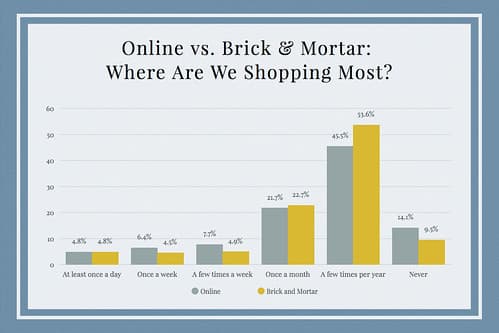
Where Americans Shop- Online vs. Brick & Mortar | From a rec… | Flickr View original
Is this image relevant?
Retail Theatre: The Magic of Brick and Mortar Shops View original
Is this image relevant?
The Retail Mix | Retail Management View original
Is this image relevant?
Where Americans Shop- Online vs. Brick & Mortar | From a rec… | Flickr View original
Is this image relevant?
Types of retail formats
Brick-and-mortar stores
These are physical retail locations where customers interact directly with products and staff. Department stores, specialty shops, and convenience stores all fall into this category. The big advantage is the tactile experience: customers can try on clothes, test out furniture, or walk out with a product immediately. E-commerce has put pressure on physical retail, but for categories where touch and fit matter, brick-and-mortar remains hard to replace.
E-commerce platforms
Online retail channels let customers purchase through websites or mobile apps. The appeal is convenience, 24/7 access, and often a wider product selection than any single store could stock. E-commerce retailers rely heavily on digital marketing techniques like SEO, social media advertising, and email campaigns to drive traffic. This category includes pure-play online retailers like Amazon as well as traditional retailers that have built out an online presence.
Multichannel retailing
This is the strategy of selling through multiple channels simultaneously: physical stores, e-commerce sites, mobile apps, and social media platforms. The goal is a consistent brand experience no matter how the customer shops. A customer might browse products on their phone, compare prices on a laptop, and pick up the item in-store. Click-and-collect (buy online, pick up in-store) is one of the most visible examples of multichannel retailing in action.
Retail marketing mix
Product assortment
Product assortment refers to the range of products a retailer offers. Decisions here involve three dimensions:
- Variety (how many different product categories)
- Depth (how many options within each category)
- Breadth (the overall scope of inventory)
These decisions depend on the target market, store size, and competitive positioning. A specialty retailer like Sephora goes deep within beauty products, while a department store like Nordstrom goes wide across many categories. Retailers also balance popular, high-demand items with unique offerings that differentiate them from competitors.
Pricing strategies
Pricing in retail goes well beyond slapping a markup on wholesale cost. Common approaches include:
- Keystone pricing: Doubling the wholesale cost to set the retail price. Simple but doesn't account for market conditions.
- Loss leader pricing: Selling select items below cost to draw customers into the store, hoping they'll buy higher-margin products too.
- Dynamic pricing: Adjusting prices in real time based on demand, competition, or time of day. Common in e-commerce.
Pricing may also vary across channels or seasons. Think holiday discounts, online-only deals, or app-exclusive promotions. The key tension is always between attracting customers with low prices and maintaining healthy margins.
Store layout and design
Store layout is the physical arrangement of retail space, designed to optimize customer flow and maximize sales. Key elements include floor plans, product placement, and signage. A grocery store, for example, typically places essentials like milk and bread at the back, forcing customers to walk past other products.
Common layout types include grid layouts (aisles in parallel rows, typical of grocery stores), free-flow layouts (open floor plans common in boutiques), and racetrack layouts (a defined loop guiding customers through the entire store). The goal is always to create an inviting atmosphere that keeps customers browsing longer.
Customer service
Customer service spans the entire purchase journey: before, during, and after the sale. In-store, this means knowledgeable staff who can answer questions and make recommendations. Online, it includes live chat support, clear return policies, and responsive email follow-up.
Strong customer service builds loyalty and reduces returns. Retailers increasingly use technology like chatbots for quick answers and self-service kiosks for checkout, but the human element still matters for complex purchases or service recovery when something goes wrong.
Consumer behavior in retail
Shopping motivations
Not every shopping trip is the same. Consumer motivations generally fall into two categories:
- Utilitarian motivations: The customer needs something specific. They want to get in, find it, and get out. Convenience and efficiency drive the experience.
- Hedonic motivations: Shopping as an enjoyable activity. The customer browses for pleasure, social interaction, or the thrill of finding something new.
Understanding which motivation drives your target customer shapes everything from store design to marketing messaging. A warehouse club like Costco caters to utilitarian shoppers; a lifestyle brand like Anthropologie leans into hedonic appeal.
Decision-making process
Consumers typically move through five stages when making a purchase:
- Problem recognition: The customer realizes they need or want something.
- Information search: They research options through reviews, social media, or in-store browsing.
- Evaluation of alternatives: They compare products on factors like price, quality, and brand reputation.
- Purchase decision: They commit to a product and complete the transaction.
- Post-purchase behavior: They evaluate whether the product met expectations, which influences future loyalty.
Retailers try to influence each stage. Advertising triggers problem recognition, in-store displays shape evaluation, and follow-up emails reinforce post-purchase satisfaction. Brand loyalty and peer recommendations can shortcut the entire process, pushing customers straight to purchase.
Impulse buying
Impulse purchases are unplanned buys made spontaneously, often triggered by visual cues, promotions, or emotional states. Retailers actively encourage this through strategic product placement near checkout lines, eye-catching point-of-purchase displays, and limited-time offers that create urgency.
Impulse buying can significantly boost sales, but there's a tradeoff: customers who regret impulse purchases are more likely to return items or develop negative associations with the store.
Visual merchandising
Window displays
Window displays are a brick-and-mortar retailer's first impression. They're exterior presentations designed to stop passersby and pull them inside. Effective displays showcase key products, current promotions, or seasonal themes in a visually compelling way. They change regularly to reflect new arrivals, holidays, or trends. For physical retailers competing with online convenience, a strong window display is one of the most powerful tools available.

In-store displays
Once customers are inside, in-store displays guide their attention toward specific products or collections. Common formats include:
- End-caps: Displays at the end of aisles, prime real estate for featured products
- Freestanding displays: Standalone fixtures placed in high-traffic areas
- Mannequin setups: Styled outfits that show customers how pieces work together
These displays get rotated frequently to maintain interest and highlight new arrivals. The goal is to increase product visibility and encourage purchases customers hadn't planned on making.
Product placement
Where a product sits in the store directly affects how well it sells. Eye-level placement consistently outperforms top or bottom shelves. Power walls, the high-visibility areas customers see first when entering, showcase the retailer's strongest products. Cross-merchandising places complementary items near each other (chips next to salsa, phone cases next to phones) to encourage additional purchases.
Product placement decisions factor in customer flow patterns, profit margins, and brand partnerships. Manufacturers often pay slotting fees for premium shelf positions.
Retail branding
Brand identity
Brand identity is the unique set of associations that define what a retailer stands for. It includes tangible elements like the logo, color scheme, tagline, and visual style, plus intangible elements like the brand's values and personality. Target's red bullseye and clean, design-forward aesthetic communicate something very different from Walmart's blue and yellow value messaging.
Consistency matters. Brand identity should be applied uniformly across every touchpoint: store signage, website, packaging, social media, and employee uniforms.
Store atmosphere
Store atmosphere is the overall ambiance of a retail environment, created through lighting, music, scent, temperature, and décor. These sensory elements are carefully chosen to reflect the brand identity and appeal to the target market.
Abercrombie & Fitch became famous (and controversial) for its dim lighting, loud music, and heavy cologne. Apple stores use bright, open spaces with minimal clutter to communicate simplicity and innovation. The right atmosphere creates a positive emotional response and encourages customers to stay longer, which correlates directly with higher spending.
Brand loyalty
Brand loyalty is a customer's commitment to repeatedly purchase from a specific retailer. It develops through consistently positive experiences, quality products, and effective relationship-building. Retailers measure loyalty through metrics like repeat purchase rate and customer lifetime value (the total revenue a customer generates over their entire relationship with the brand).
Building loyalty requires more than good products. Personalized experiences, responsive service, and rewards programs all contribute. Loyal customers are also more forgiving of occasional mistakes and more likely to recommend the brand to others.
Retail promotions
Sales and discounts
Temporary price reductions stimulate demand and move inventory. Common formats include seasonal sales, clearance events, and flash sales (short-duration, deep discounts). Each serves a different purpose: seasonal sales capitalize on predictable demand spikes, clearance events move aging inventory, and flash sales create urgency and excitement.
The risk with frequent discounting is brand devaluation. If customers learn to expect sales, they stop buying at full price. Retailers need to plan promotions carefully to protect both margins and brand perception.
Loyalty programs
Loyalty programs are structured systems that reward repeat purchases. Most use one of these models:
- Point systems: Customers earn points per dollar spent, redeemable for discounts or products (Sephora's Beauty Insider)
- Tiered rewards: Spending thresholds unlock progressively better benefits (airline frequent flyer programs)
- Exclusive benefits: Members-only access to sales, early product launches, or free shipping
Beyond driving repeat purchases, loyalty programs generate valuable customer data. Retailers can track purchase patterns, preferences, and frequency to inform inventory and marketing decisions. The best programs work seamlessly across in-store, online, and mobile channels.
In-store events
In-store events create experiences that online retail can't replicate. Product launches, workshops, demonstrations, and celebrity appearances all drive foot traffic and generate buzz. A cooking demonstration at Williams-Sonoma or a book signing at a local bookstore gives customers a reason to visit that goes beyond a transaction.
These events also strengthen community connections and provide content for social media marketing, extending their impact beyond the people who physically attend.
Technology in retail marketing
Point-of-sale systems
Point-of-sale (POS) systems process transactions and manage sales data. Modern POS systems go far beyond the cash register. They integrate barcode scanners, inventory tracking software, and customer relationship management (CRM) tools into a single platform. This gives retailers real-time data on what's selling, what's running low, and which promotions are working.
POS data feeds directly into inventory management and sales forecasting, making it a foundational piece of retail technology infrastructure.
Mobile apps
Retailer-developed mobile apps serve as a direct channel to the customer's pocket. Features typically include product browsing, in-app purchasing, personalized recommendations based on purchase history, and loyalty program integration. Location-based services can push targeted promotions when a customer is near or inside a store.
Starbucks is a standout example: its app handles mobile ordering, payment, and loyalty rewards, and it now accounts for a significant share of the company's total transactions.
Augmented reality
Augmented reality (AR) overlays digital information onto the physical world through a smartphone camera or headset. In retail, AR applications include virtual try-ons for clothing and makeup (Warby Parker's glasses, Sephora's Virtual Artist), and furniture visualization tools that let customers see how a couch would look in their living room (IKEA Place).
AR helps bridge the gap between online and in-store shopping by reducing the uncertainty that often prevents online purchases. When customers can "try before they buy" digitally, conversion rates tend to increase and return rates drop.
Supply chain management

Inventory control
Inventory control is about having the right products in the right quantities at the right time. Too much stock ties up capital and increases carrying costs (storage, insurance, spoilage). Too little stock means lost sales and frustrated customers.
Key techniques include:
- Just-in-time (JIT) inventory: Ordering stock to arrive as close to the point of sale as possible, minimizing holding costs
- Safety stock: Maintaining a buffer of extra inventory to protect against unexpected demand spikes or supply delays
Retailers increasingly use data analytics and AI-driven demand forecasting to optimize these decisions, predicting what customers will want before they walk through the door.
Distribution channels
Distribution channels are the routes products take from manufacturer to consumer. Options include selling direct-to-consumer, going through wholesalers or distributors, or using retail intermediaries. Each choice involves tradeoffs between cost, speed, control, and reach.
This topic connects directly to the broader unit on distribution channels. In a retail context, the key development is omnichannel distribution, where retailers integrate warehouses, stores, and fulfillment centers so that inventory can be shipped from wherever is most efficient, whether that's a distribution center or the nearest store location.
Reverse logistics
Reverse logistics handles the flow of products back from the customer: returns, repairs, recycling, and disposal. With e-commerce return rates averaging 20-30% for some categories, this is a major operational and financial challenge.
The process typically involves return authorization, shipping, inspection, refurbishment (if possible), and either restocking or disposal. Efficient reverse logistics protects profitability and customer satisfaction. A hassle-free return policy can actually increase purchase confidence and long-term loyalty, even though individual returns cost money.
Retail analytics
Customer data analysis
Retailers collect enormous amounts of customer data: purchase history, browsing behavior, demographics, location data, and more. Analyzing this data reveals patterns in customer preferences, helps predict trends, and enables personalized marketing.
For example, a retailer might identify that customers who buy running shoes frequently purchase athletic socks within 30 days, then trigger a targeted email with a sock promotion. The power of customer data analysis comes with responsibility. Data privacy regulations like GDPR (in Europe) and CCPA (in California) set strict rules about how customer information can be collected, stored, and used.
Sales forecasting
Sales forecasting predicts future sales volumes using historical data, market trends, and statistical models. Accurate forecasts drive better decisions across the business:
- Inventory management: Order the right quantities to avoid stockouts or overstock
- Staffing: Schedule enough employees for busy periods without overspending on labor
- Promotional planning: Time campaigns to maximize impact
Modern forecasting increasingly uses machine learning algorithms that can identify complex patterns in data that traditional statistical methods might miss. Even small improvements in forecast accuracy can have outsized effects on profitability.
Performance metrics
Retail performance metrics help managers evaluate what's working and what needs attention. The most important ones include:
- Sales per square foot: Revenue generated relative to store size. Useful for comparing locations and justifying real estate costs.
- Conversion rate: The percentage of store visitors who make a purchase. A low conversion rate might signal problems with product assortment, pricing, or customer service.
- Average transaction value: The average dollar amount per purchase. Increasing this through upselling or cross-selling can boost revenue without increasing foot traffic.
As retail becomes more omnichannel, metrics are evolving to capture cross-channel behavior, like customers who research online but buy in-store.
Ethical considerations
Sustainability practices
Sustainability in retail means minimizing environmental impact across operations. This includes reducing packaging waste, using renewable energy in stores and warehouses, and sourcing materials responsibly. Patagonia's commitment to recycled materials and supply chain transparency is a frequently cited example.
Consumer demand for eco-friendly products and transparent supply chains continues to grow, particularly among younger demographics. Sustainability practices can strengthen brand reputation, but they need to be genuine. "Greenwashing" (making misleading environmental claims) can backfire badly when customers or media investigate.
Fair trade
Fair trade ensures that producers in developing countries receive fair compensation and work under safe conditions. Retailers that carry fair trade-certified products (coffee, chocolate, clothing) commit to ethical sourcing standards verified by third-party certification programs.
Fair trade appeals to socially conscious consumers and can differentiate a retailer in a crowded market. However, fair trade products typically carry higher price points, so retailers need to understand whether their target market values ethical sourcing enough to pay a premium.
Privacy concerns
The same customer data that powers personalization and analytics raises serious privacy questions. How much data should retailers collect? How should it be stored and protected? When does personalized marketing cross the line into surveillance?
Regulations are tightening. GDPR requires explicit consent for data collection in Europe, and CCPA gives California consumers the right to know what data companies hold on them and to request its deletion. Retailers must balance the business value of personalization with legal compliance and customer trust. A data breach or perceived misuse of information can destroy brand loyalty overnight.
Future trends in retail
Omnichannel integration
Omnichannel goes beyond multichannel by fully integrating all retail channels into a single, seamless experience. The customer doesn't think in terms of "channels." They just want to browse, buy, and return however is most convenient. Buy online, pick up in-store (BOPIS). Start a return online, drop it off at a store. Check in-store inventory from a phone before driving over.
Achieving true omnichannel integration requires significant investment in technology infrastructure, unified inventory systems, and data management. But it's increasingly what customers expect.
Personalization
Personalization uses data analytics and AI to tailor products, services, and marketing messages to individual customers. Netflix-style recommendation engines are now common in retail: "customers who bought this also bought..." But personalization extends further, into customized pricing, individualized email content, and even personalized store experiences for loyalty members.
The goal is to make every customer feel like the retailer understands their needs. Done well, personalization increases engagement, loyalty, and customer lifetime value. Done poorly (irrelevant recommendations, creepy levels of data use), it alienates customers.
Experiential retail
Experiential retail focuses on creating memorable, immersive shopping experiences that go beyond the transaction. Nike's flagship stores feature basketball courts and treadmills where customers can test products. Glossier's stores are designed as Instagram-worthy spaces that encourage social sharing.
This trend is partly a response to e-commerce competition. If customers can buy anything online, physical stores need to offer something they can't get from a screen: hands-on interaction, community, entertainment, and discovery. Experiential retail taps into the growing consumer preference for experiences over possessions.
See Fiveable more often in Google
Mark Fiveable as a preferred source and Google is more likely to show you our guides in Top Stories, with a "preferred" badge in AI Mode and AI Overviews.