11.2 Corporate social responsibility

📣Honors Marketing Unit 11 Review
11.2 Corporate social responsibility
📣 Honors Marketing
Corporate social responsibility (CSR) is the practice of integrating social and environmental concerns into how a business operates. Rather than treating profit as the only goal, CSR asks companies to consider their impact on people, communities, and the planet. For marketing, CSR matters because it shapes brand perception, drives consumer loyalty, and provides authentic content for campaigns.
Definition of CSR
CSR goes beyond charity. It's a framework where companies voluntarily weave social and environmental goals into their everyday business decisions. Marketing teams are central to this process because they communicate CSR efforts to stakeholders and translate those efforts into brand value.

Top images from around the web for Evolution of CSR concept
Corporate Social Responsibility | Boundless Management View original
Is this image relevant?
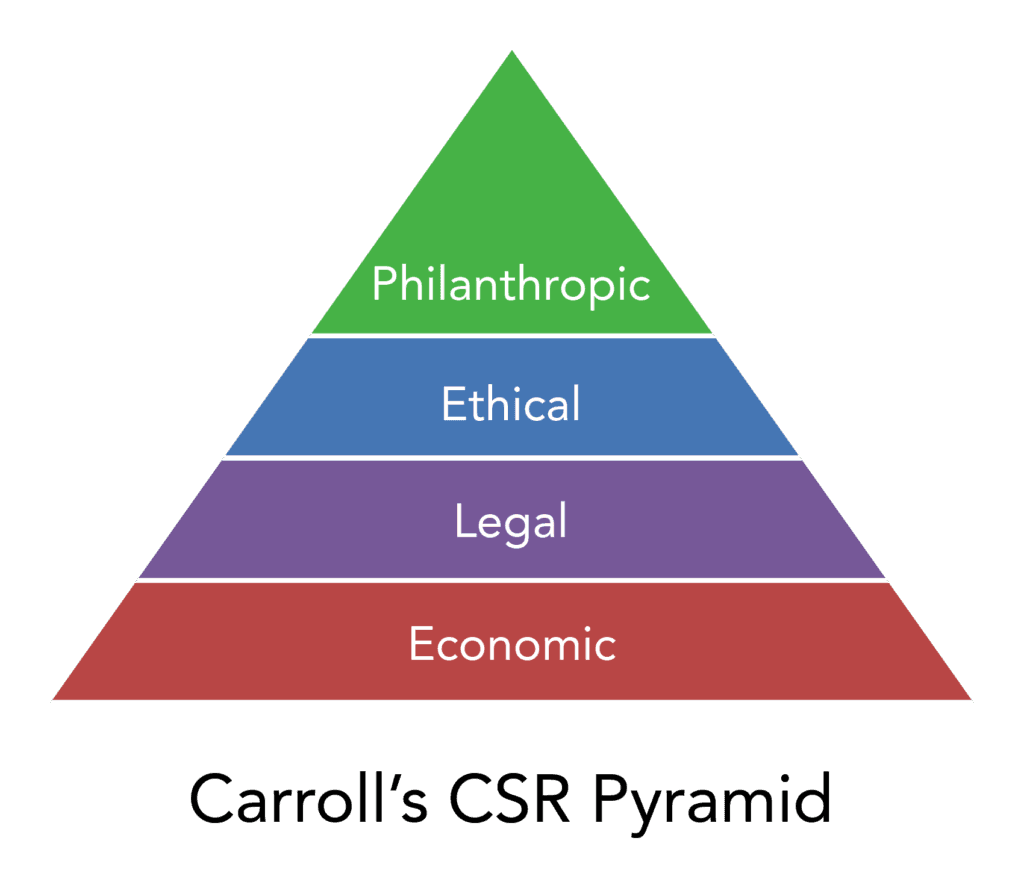
What is Corporate Social Responsibility? | Human Resources Management View original
Is this image relevant?
Corporate Social Responsibility (CSR) – Business Ethics View original
Is this image relevant?
Corporate Social Responsibility | Boundless Management View original
Is this image relevant?
What is Corporate Social Responsibility? | Human Resources Management View original
Is this image relevant?
Evolution of CSR concept
The concept first emerged in the 1950s, when business leaders began acknowledging responsibilities beyond shareholders. For decades, CSR mostly meant writing checks to charities. That changed in the 1990s as globalization and environmental awareness pushed companies to think more strategically. Today, CSR is embedded in operations: sustainable sourcing, reduced emissions, ethical labor practices, and community partnerships are all standard parts of the conversation.
Key elements of CSR
- Voluntariness: Companies go beyond what the law requires. If a regulation forces the behavior, that's compliance, not CSR.
- Stakeholder focus: Decisions consider the impact on employees, customers, communities, suppliers, and the environment, not just shareholders.
- Integration: Social, environmental, and economic concerns are built into business strategy rather than treated as side projects.
- Values alignment: CSR reflects the company's actual culture and decision-making, not just a PR statement.
- Transparency and accountability: Companies report progress openly, including setbacks, through regular sustainability disclosures.
Importance in marketing
CSR gives marketers something meaningful to talk about. Instead of competing on price or features alone, brands can differentiate through purpose. But the marketing has to reflect real action. Consumers can tell the difference between a company that lives its values and one that just talks about them.
Brand image and CSR
Strong CSR programs build positive brand associations over time. A company known for environmental leadership or fair labor practices earns trust that competitors can't easily replicate. This trust also acts as a buffer: when a crisis hits, brands with genuine CSR track records recover faster because they've built goodwill with their audience.
Consumer perceptions of CSR
Consumer expectations around CSR have shifted significantly. Millennials and Gen Z in particular show strong preference for socially responsible brands, and research consistently shows many consumers are willing to pay a premium for products from companies with credible CSR records. However, skepticism is high. Greenwashing (making misleading environmental claims) is a real concern, and social media means consumers can quickly call out companies whose actions don't match their messaging. Transparent, genuine communication is non-negotiable.
Types of CSR initiatives
Environmental responsibility
- Reducing carbon footprint through energy-efficient operations and renewable energy adoption
- Implementing sustainable packaging and waste reduction programs
- Conservation and biodiversity efforts, such as corporate-funded reforestation projects
- Water management and pollution prevention strategies
- Applying circular economy principles, where products are designed to be reused, repaired, or recycled rather than discarded
Social responsibility
- Diversity and inclusion programs across the workplace and supply chain
- Community development projects like funding local education or healthcare access
- Fair labor practices and ethical sourcing policies throughout global supply chains
- Human rights protections in international operations
- Disaster relief and humanitarian aid contributions
Economic responsibility
- Fair trade practices that support producers in developing economies
- Responsible investment strategies that weigh environmental and social factors alongside returns
- Transparency in financial reporting and tax practices
- Job creation and skills development in local communities
- Supporting small businesses and entrepreneurs through mentorship or procurement programs
CSR implementation strategies
Stakeholder engagement
Effective CSR starts with understanding who your stakeholders are and what they care about. The process typically follows these steps:
- Identify and prioritize key stakeholders (employees, customers, suppliers, local communities, investors).
- Conduct dialogues through surveys, town halls, or advisory panels to understand their expectations.
- Co-develop initiatives so CSR programs reflect genuine stakeholder input, not just executive assumptions.
- Build feedback loops to assess program impact and adjust over time.
- Partner with NGOs or community organizations that bring expertise and credibility to implementation.

CSR reporting and transparency
Companies demonstrate accountability by publishing annual sustainability reports, typically following frameworks like the Global Reporting Initiative (GRI) or the Sustainability Accounting Standards Board (SASB). These reports should clearly state goals, progress, and challenges. Third-party audits and certifications (such as B Corp certification or Fair Trade labels) add credibility. Many companies now integrate CSR metrics directly into their financial reporting and use digital platforms for real-time updates on initiatives.
Benefits of CSR
Competitive advantage
- Differentiation through unique, authentic CSR initiatives that competitors can't easily copy
- Enhanced reputation leading to stronger customer preference
- Access to new market segments that prioritize sustainability
- Improved risk management, since companies attuned to social and environmental issues are better prepared for regulatory changes
- Attraction of socially responsible investors and more favorable financing terms
Employee satisfaction and retention
CSR programs boost employee morale because people want to work for companies they're proud of. This is especially true for younger workers entering the job market. Companies with strong CSR records see lower turnover, reduced recruitment costs, and higher engagement. Giving employees opportunities to participate directly in CSR activities (volunteer days, skills-based projects) deepens their connection to the company's mission.
Customer loyalty
When customers feel an emotional connection to a brand's values, they buy more often and advocate for the brand to others. This translates to higher customer lifetime value and organic word-of-mouth marketing. Cause-related marketing campaigns, where a portion of each sale supports a social cause, give customers a direct way to participate and strengthen that bond.
Challenges in CSR
Greenwashing vs. authentic CSR
Greenwashing is the biggest credibility risk in CSR marketing. If a company promotes environmental initiatives while its core operations cause significant harm, the backlash can be severe. Authenticity requires that CSR initiatives align with what the company actually does. A few strategies for building credibility:
- Pursue third-party verification (certifications, independent audits)
- Set measurable goals and report on them honestly, including failures
- Ensure CSR messaging is proportional to actual impact
- Align initiatives with core business competencies rather than chasing trends
Measuring CSR impact
Quantifying social and environmental outcomes in financial terms is genuinely difficult. Many CSR benefits (community trust, environmental restoration) unfold over years, which complicates short-term reporting cycles. Companies address this by developing specific key performance indicators (KPIs) for each initiative, balancing quantitative metrics (tons of carbon reduced, dollars donated) with qualitative ones (stakeholder satisfaction, community feedback), and integrating CSR metrics alongside traditional business performance measures.
CSR and marketing communications
CSR in advertising
Incorporating CSR into advertising requires a careful balance. The message should educate and inform, not just promote. Storytelling techniques that highlight real impact on real people tend to resonate most. The critical rule: never overstate claims. Factual accuracy in CSR advertising protects both brand credibility and consumer trust. Cause-related marketing, where product purchases are tied to donations or social impact, is one of the most direct ways to connect CSR with sales.
Social media and CSR campaigns
Social media is a powerful amplifier for CSR, but it cuts both ways. Platforms allow companies to share real-time updates, encourage user-generated content around CSR efforts, and engage stakeholders in two-way conversations. At the same time, any gap between messaging and reality will surface quickly. Responding promptly and honestly to CSR-related criticism on social platforms is just as important as sharing success stories. Influencer partnerships can extend reach, but only when the influencer's values genuinely align with the initiative.

Case studies in CSR
Successful CSR campaigns
- Patagonia built its entire brand around environmental activism, famously running a "Don't Buy This Jacket" ad encouraging reduced consumption. Its commitment to sustainable materials and supply chain transparency is deeply integrated into operations.
- TOMS Shoes pioneered the "One for One" model, donating a pair of shoes for every pair purchased. (TOMS has since evolved this model toward broader community investment programs.)
- Unilever's Sustainable Living Plan set ambitious targets to reduce environmental impact while growing the business, making sustainability a core part of corporate strategy.
- Microsoft's AI for Earth program provides cloud computing resources and AI tools to organizations working on environmental challenges worldwide.
- Ben & Jerry's consistently advocates for social justice issues (climate action, racial equity) in ways that align with its brand identity and customer base.
CSR failures and lessons
- BP rebranded as "Beyond Petroleum" with a green logo and sustainability messaging, but the 2010 Deepwater Horizon oil spill exposed a massive gap between marketing and operations.
- Volkswagen's emissions scandal revealed that the company had installed software to cheat on emissions tests while marketing its cars as environmentally friendly. Trust in VW's environmental claims collapsed.
- Nike initially denied reports of sweatshop labor in its supply chain during the 1990s. After sustained public pressure, Nike overhauled its sourcing practices and became more transparent, but the early denial caused lasting reputational damage.
- Nestlé's aggressive marketing of infant formula in developing countries, where clean water for mixing was scarce, led to widespread criticism and boycotts.
The common thread: authenticity, transparency, and alignment between what you say and what you do are non-negotiable. CSR failures almost always stem from a disconnect between marketing claims and actual business practices.
Future trends in CSR
Sustainable development goals
The UN Sustainable Development Goals (SDGs) provide a shared framework of 17 global targets covering poverty, inequality, climate change, and more. Companies increasingly align their CSR strategies with specific SDGs to demonstrate measurable contributions to global priorities. This alignment also makes it easier to benchmark progress and communicate impact to stakeholders. Climate action and biodiversity conservation are receiving particular emphasis as environmental urgency grows.
Technology and CSR
- Blockchain enables supply chain transparency by creating tamper-proof records of where materials come from and how they were sourced.
- AI and big data help companies measure CSR impact more precisely and identify where resources will have the greatest effect.
- IoT (Internet of Things) sensors allow real-time environmental monitoring, tracking energy use, emissions, and resource efficiency across operations.
- Digital platforms make it easier to coordinate employee volunteering, track participation, and connect with community partners at scale.
CSR vs. corporate philanthropy
Long-term vs. short-term impact
This distinction matters for exams. CSR is strategic and ongoing: it's woven into how the business operates and aims to create lasting benefits for both the company and society. Corporate philanthropy typically involves one-time or periodic charitable donations. Philanthropy can address immediate needs (disaster relief, scholarship funds), but it doesn't fundamentally change how the business runs. CSR initiatives tend to produce more measurable, sustained outcomes because they're tied to business operations.
Strategic alignment
CSR: Aligns social/environmental initiatives with core business competencies. Involves stakeholder input. Contributes to business objectives while addressing societal needs.
Corporate philanthropy: May not connect to the company's products or expertise. Often decided by top management alone. Addresses needs but lacks strategic integration.
A tech company funding computer science education in underserved schools is CSR (it aligns with the business). That same company writing a check to a random charity is philanthropy. Both have value, but CSR creates shared value that reinforces the business while making a social impact.
Global perspectives on CSR
Cultural differences in CSR
CSR priorities vary significantly across regions. Western companies tend to emphasize environmental sustainability, while companies in developing countries often focus more on social issues like poverty reduction and access to education. Religious and philosophical traditions also shape expectations: Confucian values in East Asia, for instance, emphasize community harmony and long-term relationships. Multinational corporations need to adapt their CSR strategies to local contexts rather than applying a one-size-fits-all approach.
International CSR standards
Several frameworks guide CSR practice globally:
- Global Reporting Initiative (GRI): The most widely used sustainability reporting standard, providing guidelines for disclosing environmental, social, and governance performance.
- ISO 26000: Offers voluntary guidance on social responsibility for organizations of all types and sizes.
- UN Global Compact: A voluntary initiative where companies commit to principles on human rights, labor, environment, and anti-corruption.
- OECD Guidelines for Multinational Enterprises: Recommendations from governments to businesses on responsible conduct in areas like employment, environment, and consumer interests.
Emerging markets are also developing region-specific standards that address unique local challenges, from informal labor practices to resource scarcity.
See Fiveable more often in Google
Mark Fiveable as a preferred source and Google is more likely to show you our guides in Top Stories, with a "preferred" badge in AI Mode and AI Overviews.