1.6 Value creation and delivery

📣Honors Marketing Unit 1 Review
1.6 Value creation and delivery
📣 Honors Marketing
Definition of value creation
Value creation is the core reason any business exists: generate real benefits for customers by understanding what they need and delivering something that meets (or exceeds) those expectations. Every marketing strategy you study in this course traces back to this idea. If the value isn't there, nothing else works.

Top images from around the web for Components of value creation
Value-Based Marketing | Boundless Marketing View original
Is this image relevant?
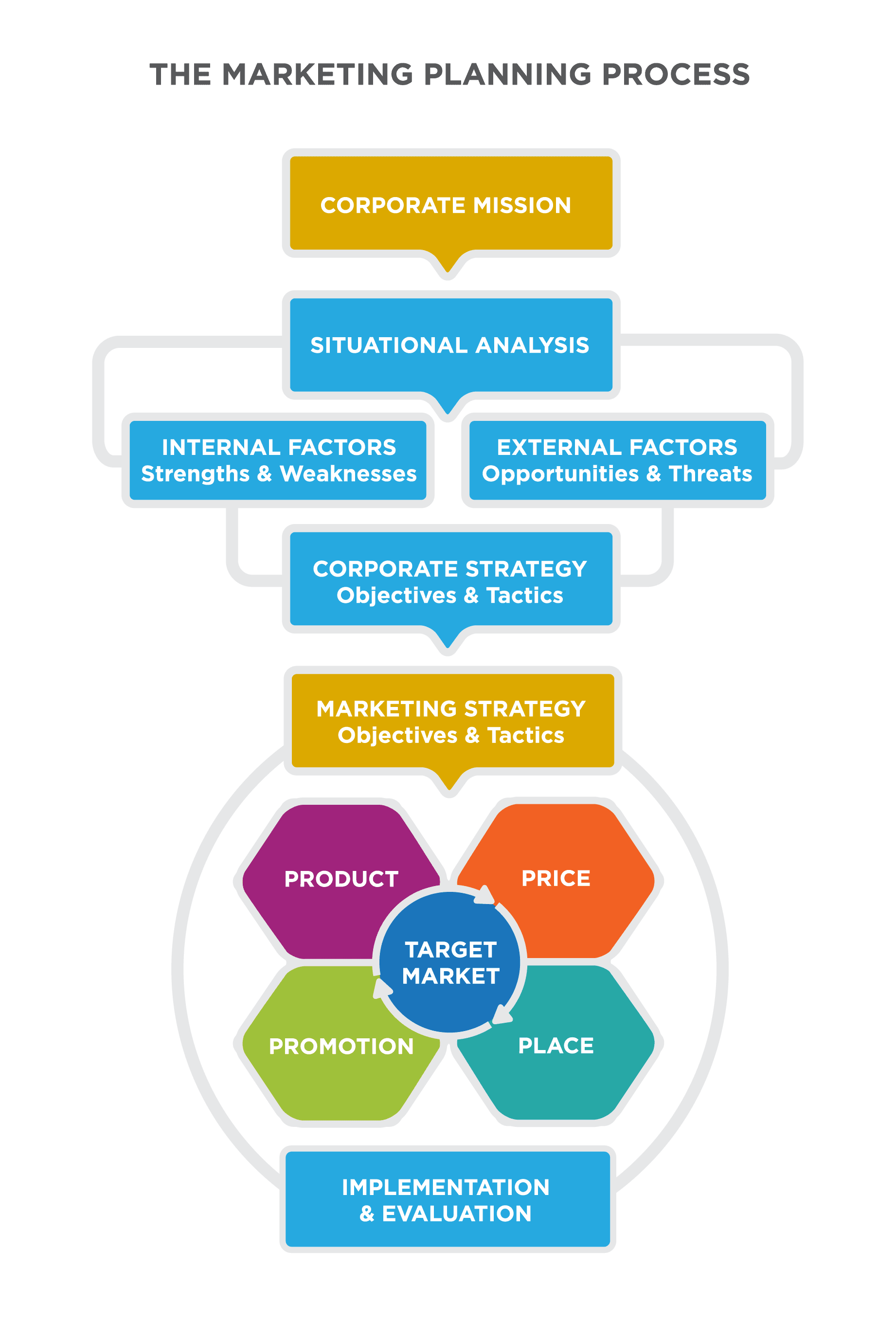
Outcome: Pricing Considerations | Introduction to Marketing View original
Is this image relevant?
The Marketing Mix | Introduction to Business MC View original
Is this image relevant?
Value-Based Marketing | Boundless Marketing View original
Is this image relevant?
Outcome: Pricing Considerations | Introduction to Marketing View original
Is this image relevant?
Components of value creation
Five components work together to create value:
- Customer insights drive understanding of needs, preferences, and pain points. Without these, you're guessing.
- Product or service development addresses the needs you've identified through research.
- Pricing strategy ensures the customer's perceived value exceeds what they pay. A $5 coffee works because the experience feels worth more than $5.
- Distribution channels make the product conveniently accessible. Even a great product fails if customers can't find it.
- Marketing communications convey the value proposition to target audiences so they understand why they should care.
Value creation process
This follows a sequential flow:
- Market research identifies customer needs and market opportunities.
- Ideation and concept development generates potential solutions to those needs.
- Prototyping and testing refines and validates the product or service.
- Production or service delivery optimization ensures quality and efficiency at scale.
- Launch and continuous improvement puts the product in market and iterates based on real customer feedback.
The process doesn't end at launch. Feedback loops keep the cycle going.
Customer value proposition
A customer value proposition (CVP) articulates the unique benefits a company's offering provides. It answers the customer's question: "Why should I choose you over everyone else?" The CVP differentiates you from competitors and serves as a cornerstone for every marketing decision.
Elements of a value proposition
- Relevance addresses a specific customer need or problem
- Quantified value demonstrates tangible benefits (e.g., "saves 10 hours per month" or "reduces costs by 30%")
- Unique differentiation highlights what competitors can't easily replicate
- Proof points provide evidence supporting your claims, such as testimonials, case studies, or data
- Emotional appeal connects with customers on a personal level, beyond just rational benefits
Developing effective propositions
- Conduct thorough market research to understand customer needs and preferences.
- Analyze the competitive landscape to identify gaps and opportunities.
- Define clear target segments so you can tailor propositions to specific audiences.
- Test and refine propositions through customer feedback and A/B testing.
- Align internal operations to deliver on the promised value consistently.
That last step matters more than people think. A great proposition that the company can't actually deliver on will backfire fast.
Value chain analysis
Michael Porter's value chain framework examines the sequence of activities a company performs to create and deliver value. By mapping out each activity, you can spot where to cut costs, where to differentiate, and where resources are being wasted. It's a tool for building competitive advantage from the inside out.
Primary activities
These are the activities directly involved in creating and getting the product to the customer:
- Inbound logistics manage receiving and storing raw materials
- Operations transform inputs into finished products or services
- Outbound logistics coordinate distribution of finished goods to customers
- Marketing and sales promote and sell to target markets
- Service provides post-sale support and maintenance to enhance satisfaction
Support activities
These enable the primary activities to function effectively:
- Firm infrastructure includes general management, planning, finance, and quality control
- Human resource management involves recruiting, training, and compensating employees
- Technology development encompasses R&D, process automation, and IT systems
- Procurement focuses on sourcing and acquiring necessary inputs
The competitive advantage often comes from how well support activities strengthen primary ones. A company with superior technology development, for instance, can run more efficient operations than competitors.
Product development
Product development means creating new products or improving existing ones to meet customer needs. It drives innovation and helps companies stay competitive. This requires cross-functional collaboration across marketing, engineering, finance, and operations.
New product development process
- Idea generation brainstorms potential product concepts from internal and external sources.
- Screening evaluates ideas based on feasibility, alignment with strategy, and market potential.
- Concept development creates detailed product specifications and positioning.
- Business analysis assesses financial viability, projected costs, and market demand.
- Prototyping builds working models for testing and refinement.
- Test marketing gathers real-world feedback from target customers in a limited market.
- Commercialization launches the product at full scale.
Most ideas get eliminated early. That's by design. It's far cheaper to kill a weak concept at the screening stage than after prototyping.
Product lifecycle management
Products move through predictable stages, and marketing strategy shifts at each one:
- Introduction focuses on creating awareness and establishing market presence. Sales are low; costs are high.
- Growth emphasizes expanding market share and optimizing production as demand increases.
- Maturity involves defending market position, competing on price, and seeking new applications.
- Decline requires decisions on revitalizing the product, harvesting remaining profits, or discontinuing it.
Continuous innovation can extend a product's lifecycle. Think about how many times a product like the iPhone has been refreshed to stay in the growth/maturity zone.
Pricing strategies
Pricing determines how companies set prices for their products or services. It directly impacts perceived value, market positioning, and profitability. Three factors always matter: your costs, your competition, and what customers are willing to pay.
Value-based pricing
Value-based pricing sets prices based on the perceived value to the customer rather than on production costs. This approach:
- Requires deep understanding of customer needs and willingness to pay
- Allows for price differentiation across segments or use cases
- Maximizes profitability by capturing a fair share of the value created
- Demands effective communication of the value proposition to justify the price
A pharmaceutical company pricing a drug that saves lives can charge far more than its production cost because the perceived value is enormous.

Cost-plus vs. value-based pricing
Cost-plus pricing adds a fixed markup to the cost of goods (e.g., if it costs $10 to make, add 50% markup and sell for $15).
Value-based pricing considers the total economic value to the customer (e.g., if your software saves a business $100,000/year, pricing it at $20,000 captures value regardless of your development costs).
Cost-plus is simpler but can lead to underpricing (leaving money on the table) or overpricing (if customers don't see the value). Value-based aligns pricing with customer perceptions and the competitive landscape. Many companies use hybrid approaches that combine cost floors with value-based ceilings.
Distribution channels
Distribution channels move products or services from producers to end consumers. They affect product availability, customer convenience, market reach, and even pricing strategy.
Channel types
- Direct channels sell straight to consumers (company-owned stores, e-commerce websites)
- Indirect channels use intermediaries like wholesalers, retailers, or agents
- Multichannel distribution combines multiple channel types to reach diverse segments
- Omnichannel strategies integrate channels so customers get a seamless experience whether they're online, in-store, or on mobile
- Digital channels leverage online platforms and marketplaces (Amazon, Shopify stores)
Channel selection criteria
Choosing the right channel depends on several factors:
- Target market characteristics and shopping preferences
- Product attributes (perishability, complexity, customization needs)
- Company resources and capabilities
- Competitive landscape and industry norms
- Channel profitability and cost-effectiveness
- How much control you need over brand image and customer experience
A luxury brand, for example, might avoid third-party discount retailers to protect its brand image, even though those retailers offer massive reach.
Service delivery
Service delivery covers the processes and interactions involved in providing services to customers. Unlike physical products, services are intangible, produced and consumed simultaneously, and harder to standardize. That makes design and management of service encounters critical.
Service quality dimensions
The SERVQUAL model identifies five dimensions customers use to evaluate service quality:
- Reliability means delivering the service consistently and accurately
- Responsiveness means addressing customer needs promptly and willingly
- Assurance means demonstrating knowledge, courtesy, and trustworthiness
- Empathy means providing individualized attention and understanding
- Tangibles include physical facilities, equipment, and personnel appearance
Service recovery strategies
When service fails, recovery can actually increase loyalty if handled well (this is called the service recovery paradox):
- Acknowledge the problem and apologize sincerely.
- Listen actively to understand the customer's perspective.
- Take ownership of the issue and commit to finding a resolution.
- Offer fair compensation or a solution that addresses the failure.
- Follow up to ensure satisfaction and prevent recurrence.
Customer experience management
Customer experience management (CEM) involves designing and optimizing every interaction between a company and its customers. The goal is to create positive, consistent experiences that drive loyalty and advocacy across all touchpoints and channels.
Touchpoint optimization
- Identify all customer interactions across the entire journey (website, store, call center, social media, packaging, etc.).
- Analyze each touchpoint for its impact on overall experience.
- Prioritize high-impact touchpoints for improvement.
- Ensure consistency and coherence across all touchpoints.
- Leverage technology like chatbots and personalization engines to enhance effectiveness.
Customer journey mapping
A customer journey map visualizes the end-to-end experience from awareness through post-purchase. It identifies pain points and opportunities at each stage, aligns internal processes with customer expectations, and facilitates cross-functional collaboration. Journey maps also enable personalization based on where a customer is in their decision process.
Value co-creation
Value co-creation is a shift from the traditional model where companies create value and customers consume it. Instead, companies and customers collaborate to create value together. This increases engagement, improves product-market fit, and builds stronger loyalty.
Customer involvement in creation
- Idea generation solicits customer input for new concepts (e.g., LEGO Ideas, where fans submit and vote on designs)
- Product design incorporates customer feedback and preferences during development
- Beta testing engages customers in refining offerings before full launch
- Customization allows customers to tailor products to their needs (Nike By You, for example)
- User-generated content leverages customer creativity for marketing (reviews, social posts, videos)
Benefits of co-creation
- Improved product-market fit by aligning offerings with actual customer needs
- Enhanced loyalty through increased engagement and sense of ownership
- Reduced development costs and risks by leveraging customer insights early
- Accelerated innovation cycles through collaborative problem-solving
- Strengthened brand communities and customer advocacy

Measuring value delivery
You can't improve what you don't measure. Tracking value delivery provides insights for continuous improvement and data-driven decision-making.
Key performance indicators
- Customer lifetime value (CLV) measures the total long-term profitability of a customer relationship
- Net promoter score (NPS) gauges loyalty by asking how likely customers are to recommend you (scored -100 to +100)
- Customer acquisition cost (CAC) evaluates how much you spend to gain each new customer
- Retention rate tracks the percentage of customers who continue purchasing over time
- Market share indicates competitive position within the industry
Customer satisfaction metrics
- CSAT (Customer Satisfaction Score) measures overall satisfaction, typically on a 1-5 or 1-10 scale
- CES (Customer Effort Score) assesses how easy it is to do business with the company
- Churn rate tracks the percentage of customers who stop doing business with you
- Customer feedback analysis identifies trends and sentiment in customer comments
- Repeat purchase rate indicates loyalty and satisfaction over time
CLV and CAC are especially important together. If your CAC is higher than your CLV, you're losing money on every customer you acquire.
Digital value creation
Digital technologies have transformed how companies create and deliver value. They enable new business models, new revenue streams, and fundamentally different customer expectations around speed, personalization, and convenience.
E-commerce value proposition
- Convenience offers 24/7 access and eliminates geographical barriers
- Personalization tailors offerings and experiences to individual preferences using data
- Price transparency enables easy comparison shopping and competitive pricing
- Product variety provides access to a wider range of options, including niche products
- Information richness offers detailed product info, customer reviews, and comparison tools
Digital customer experience
- Omnichannel integration ensures seamless experiences across devices and platforms
- AI-powered chatbots provide instant support and personalized recommendations
- Virtual and augmented reality enhance product visualization (e.g., trying on glasses virtually)
- Social commerce integrates shopping directly into social media platforms
- Data analytics enable hyper-personalization of content and offers
Sustainability in value delivery
Sustainability has moved from a "nice to have" to a core part of value creation. Consumers increasingly expect responsible business practices, and companies that ignore this face reputational and financial risk.
Sustainable business practices
- Circular economy principles minimize waste and maximize resource reuse
- Renewable energy adoption reduces carbon footprint and can lower long-term operational costs
- Ethical sourcing ensures fair labor practices and responsible material procurement
- Product lifecycle management considers environmental impact from production through disposal
- Corporate social responsibility (CSR) initiatives address broader societal and environmental challenges
Green value chain
- Sustainable sourcing prioritizes eco-friendly and ethically produced materials
- Energy-efficient manufacturing reduces environmental impact and costs
- Green logistics optimize transportation and packaging for minimal emissions
- Eco-friendly product design incorporates recyclable or biodegradable materials
- End-of-life management implements take-back and recycling programs (e.g., Patagonia's Worn Wear program)
Value innovation
Value innovation focuses on creating new market space rather than competing in existing ones. The idea is to simultaneously pursue differentiation and low cost, making competition irrelevant.
Blue ocean strategy
Developed by W. Chan Kim and Renée Mauborgne, blue ocean strategy provides a framework for value innovation:
- Blue oceans are uncontested market spaces, as opposed to "red oceans" where competitors fight over existing demand
- The four actions framework asks what factors to eliminate, reduce, raise, and create to reshape the value curve
- A strategy canvas visualizes how your offering compares to competitors across key factors
- Noncustomer analysis identifies people not currently buying in your industry and asks why
Cirque du Soleil is the classic example: they eliminated animal acts and star performers (reducing costs) while raising artistic and theatrical elements (increasing differentiation), creating an entirely new entertainment category.
Disruptive innovation
Clayton Christensen's concept of disruptive innovation describes how new entrants can overtake established firms:
- Disruptors often start in low-end or entirely new market segments that incumbents ignore
- Their offerings improve over time until they meet mainstream needs
- Incumbents struggle to respond because the disruption challenges their existing business models
- Disruption requires different resources, processes, and profit formulas than sustaining innovation
Netflix disrupting Blockbuster is a textbook case: it started with a less convenient mail-order model, then improved through streaming until it made the incumbent's model obsolete.
Challenges in value delivery
Even strong strategies face obstacles in execution. Recognizing common challenges helps you anticipate and address them.
Value perception gaps
- Misalignment between what the company thinks it's delivering and what customers actually experience
- Ineffective communication of the value proposition
- Overemphasis on product features rather than customer benefits (a common mistake)
- Failure to track evolving customer needs and preferences
- Inconsistent delivery of promised value across different touchpoints
Overcoming delivery obstacles
- Conduct continuous market research to stay attuned to shifting customer expectations
- Align cross-functional teams so every department delivers consistent value
- Invest in employee training and empowerment to enhance service quality
- Leverage technology to streamline processes and improve efficiency
- Implement feedback loops for rapid identification and resolution of issues
See Fiveable more often in Google
Mark Fiveable as a preferred source and Google is more likely to show you our guides in Top Stories, with a "preferred" badge in AI Mode and AI Overviews.