7.1 Channel structures and types

📣Honors Marketing Unit 7 Review
7.1 Channel structures and types
📣 Honors Marketing
Types of Marketing Channels
Marketing channels are the pathways products take from manufacturer to consumer. The channel structure a company chooses affects everything from pricing and profit margins to brand image and customer experience. This section covers the main channel types, how they're structured, and the strategic decisions behind choosing one over another.

Top images from around the web for Direct vs indirect channels
Digital Marketing Channels by Brand Lifecycle Stage (Infographic) View original
Is this image relevant?
Putting It Together: Place: Distribution Channels | Principles of Marketing View original
Is this image relevant?
9.5 Placing a Product – Foundations of Business View original
Is this image relevant?
Digital Marketing Channels by Brand Lifecycle Stage (Infographic) View original
Is this image relevant?
Putting It Together: Place: Distribution Channels | Principles of Marketing View original
Is this image relevant?
Direct vs. Indirect Channels
Direct channels cut out the middlemen entirely. The manufacturer sells straight to the consumer. Apple Stores are a classic example: Apple makes the product and sells it in its own retail locations. Dell.com works the same way online. Direct channels give the manufacturer more control over the customer experience and let them keep a larger share of the profit since there's no intermediary taking a cut.
Indirect channels use one or more intermediaries (retailers, wholesalers, distributors) to get products to consumers. When you buy a Tide detergent at Walmart, that's an indirect channel: Procter & Gamble manufactured it, but Walmart is the intermediary selling it to you. Indirect channels sacrifice some control and margin, but they provide much broader market reach by tapping into established distribution networks.
Single vs. Multi-Channel Distribution
- Single-channel distribution relies on just one type of channel. A brand that sells only through its own physical stores is using a single channel. This lets the company focus all its resources on optimizing that one path to the customer.
- Multi-channel distribution uses several channels at once, such as retail stores, an e-commerce site, and a product catalog. This increases the number of places customers can find and buy the product.
The tradeoff with multi-channel is complexity. You need to keep pricing, messaging, and inventory consistent across every channel, which takes real coordination.
Conventional vs. Vertical Marketing Systems
In a conventional marketing system, each level of the channel (manufacturer, wholesaler, retailer) operates independently. Each entity pursues its own goals, which can lead to inefficiency and conflict.
A vertical marketing system (VMS) coordinates the efforts of multiple channel levels so they function as a unified system. There are three types:
- Corporate VMS: One company owns multiple levels of the channel (e.g., a manufacturer that owns its own retail stores).
- Contractual VMS: Independent firms at different levels cooperate through contracts. Franchises like McDonald's are the go-to example.
- Administered VMS: One dominant channel member uses its size or market power to coordinate the others, without formal ownership or contracts. Think of how a major retailer like Walmart can dictate terms to its suppliers.
Vertical systems reduce channel conflict and improve efficiency because everyone is working toward shared objectives.
Channel Structures
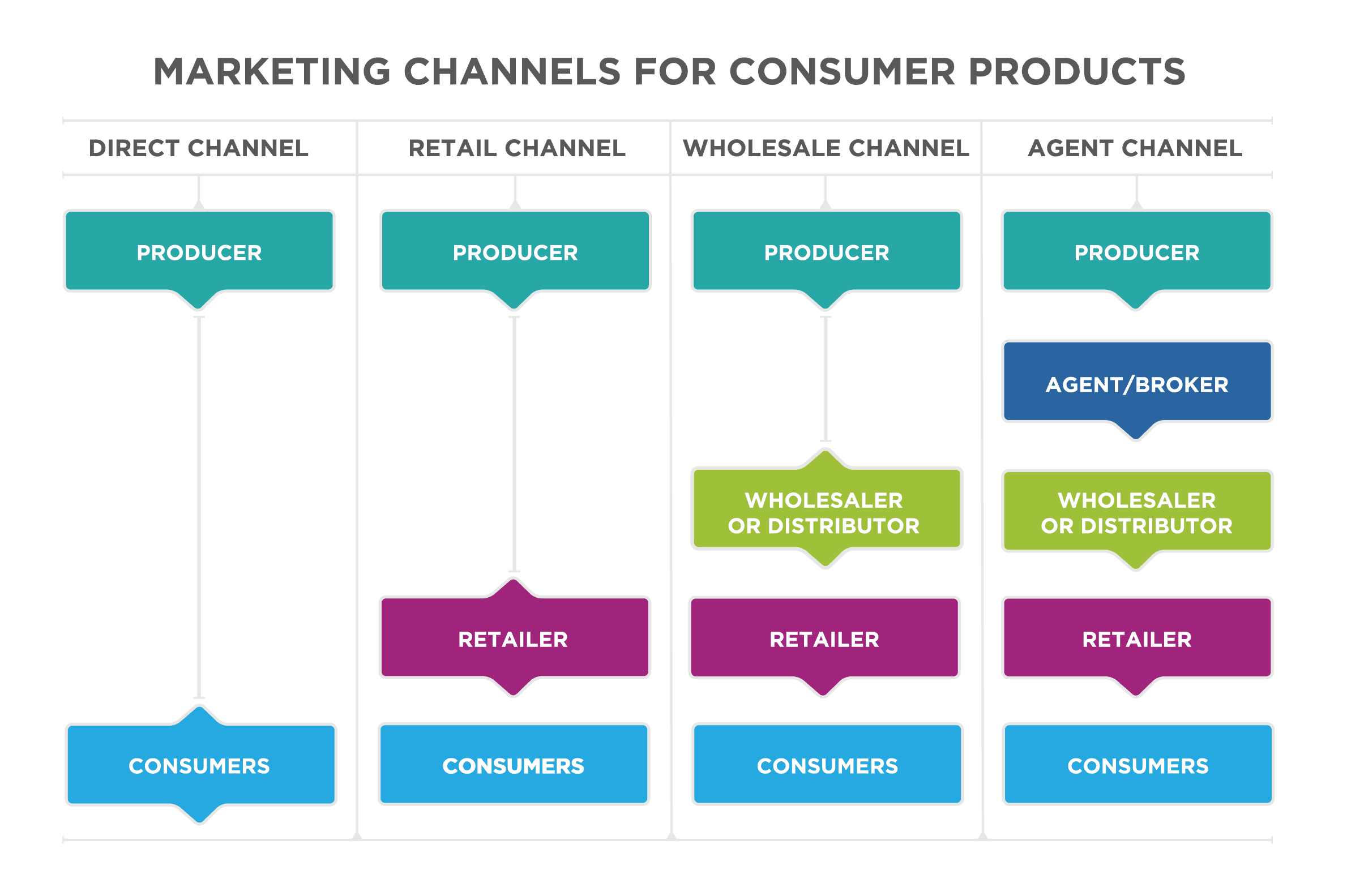
Channel structures describe the specific path a product takes from manufacturer to end consumer. Longer channels involve more intermediaries, which adds cost but can extend reach.
Manufacturer to Consumer
This is the shortest possible channel. No intermediaries, no markups from middlemen. Tesla uses this model with company-owned showrooms, and many D2C brands sell exclusively through their own websites. The manufacturer controls the entire experience but has to handle all the logistics and customer service internally.
Manufacturer to Retailer to Consumer
Here, the manufacturer sells directly to retailers, skipping the wholesaler. This is common for high-volume consumer goods where large retailers buy in quantities big enough to deal directly with manufacturers. Procter & Gamble selling to Target is a typical example. It's more cost-efficient than using a wholesaler, but the manufacturer needs retailers large enough to justify the direct relationship.
Manufacturer to Wholesaler to Retailer to Consumer
This is the traditional channel structure. Wholesalers buy in bulk from manufacturers and break those shipments into smaller quantities for retailers. It's especially efficient when a product needs to reach many small, independent retailers that can't buy directly from the manufacturer. Grocery and pharmaceutical industries rely heavily on this structure.
Manufacturer to Agent to Wholesaler to Retailer to Consumer
The longest common channel. Agents (or brokers) act as intermediaries who facilitate transactions between manufacturers and wholesalers without ever taking ownership of the goods. This structure is useful when a manufacturer is entering a new or foreign market and lacks the connections or expertise to navigate distribution on its own. It's frequently seen in international trade and niche product categories.
Channel Intensity
Channel intensity refers to how many outlets carry a product within a given market. The right level of intensity depends on the type of product being sold.
Intensive Distribution
The goal is maximum availability: get the product into as many outlets as possible. This strategy fits convenience goods that consumers buy frequently and with minimal effort. Coca-Cola and Lay's chips use intensive distribution. You can find them at grocery stores, gas stations, vending machines, and movie theaters. The downside is that managing relationships with that many channel partners requires significant resources.

Selective Distribution
With selective distribution, a company chooses a limited number of retailers to carry its products. This works well for shopping goods where consumers compare features and prices before buying, like appliances or mid-range clothing brands. The manufacturer gets better control over how the product is presented and sold, and can build stronger relationships with fewer retail partners.
Exclusive Distribution
Only one retailer or distributor gets the right to sell the product in a given geographic area. This is reserved for specialty goods like luxury cars, high-end watches, or designer fashion. Exclusive distribution creates scarcity and prestige, giving the manufacturer tight control over pricing and presentation. Rolex dealerships and luxury auto brands like Lamborghini operate this way.
Quick framework: Convenience goods → intensive. Shopping goods → selective. Specialty/luxury goods → exclusive.
Channel Conflict
Whenever multiple parties are involved in distribution, their interests can clash. Channel conflict comes in three forms.
Vertical Channel Conflict
This occurs between members at different levels of the channel. A common scenario: a manufacturer starts selling directly to consumers through its own website, undercutting the retailers who also carry the product. Retailers feel bypassed and may reduce their support for that brand. Managing this requires clear communication, well-defined roles, and incentive structures that keep all levels motivated.
Horizontal Channel Conflict
This happens between members at the same level. Two franchisees of the same brand operating too close together and competing for the same customers is a textbook example. Companies manage this through clearly defined territories and performance-based incentive programs.
Multi-Channel Conflict
When a company uses multiple channels simultaneously, those channels can end up competing with each other. A retailer's in-store sales might drop because the same products are cheaper on the company's website. This is called cannibalization. The fix involves careful channel integration, consistent pricing across channels, and sometimes offering channel-specific products or bundles so each channel has a distinct value proposition.
Channel Design Decisions
Designing a distribution channel isn't a one-time choice. It's a strategic process with several key steps.
Target Market Analysis
Everything starts with the customer. You need to understand:
- Where and how your target customers prefer to shop
- How much service or guidance they expect during the purchase
- How complex the product is (complex products often need shorter channels with more support)
- Geographic spread of your target market
These insights determine which channel types and structures will actually reach your audience effectively.
Channel Objectives
Before selecting channels, define what you want the distribution strategy to accomplish. Common objectives include:
- Maximum market coverage (getting the product everywhere)
- Cost efficiency (minimizing distribution expenses)
- Brand control (maintaining a premium image)
- Customer service levels (ensuring a high-quality buying experience)
These objectives should align with the company's broader marketing strategy. A luxury brand prioritizing brand control will make very different channel choices than a snack company prioritizing market coverage.
Channel Member Selection
Choosing the right partners at each level is critical. Evaluate potential channel members on:
- Financial stability and creditworthiness
- Market coverage and geographic reach
- Reputation and alignment with your brand values
- Expertise with your product category
- Existing relationships with other brands (complementary or competing)
A poorly chosen channel partner can damage brand perception and limit sales, so this step deserves serious attention.

Channel Management Strategies
Once the channel is built, it needs ongoing management. This includes setting clear policies for pricing, promotions, and inventory levels. Many companies invest in training programs for channel partners so they can represent the product effectively. Regular performance reviews help identify what's working and what needs adjustment as market conditions change.
Emerging Channel Trends
Omnichannel Marketing
Omnichannel goes beyond multi-channel by fully integrating every touchpoint into one seamless experience. A customer might browse products on a mobile app, check inventory at a nearby store, buy online, and pick up in-store. The key difference from multi-channel is that all channels share data and work together rather than operating in silos. This requires unified inventory systems, consistent pricing, and coordinated messaging across every platform.
Direct-to-Consumer (D2C) Models
D2C brands bypass traditional retail entirely, selling through their own e-commerce sites and social media. Warby Parker (eyewear) and Dollar Shave Club (grooming) built their businesses this way. The advantages are significant: the brand controls the entire customer experience, collects first-party customer data, and captures the full margin that would otherwise go to retailers. D2C has grown rapidly with the rise of e-commerce and social media advertising.
Digital Marketplaces
Platforms like Amazon, eBay, and Etsy connect many sellers with large consumer audiences. For smaller brands, these marketplaces provide instant access to millions of potential customers without the cost of building their own distribution infrastructure. The tradeoff is less control over the customer experience and the fees these platforms charge.
Social Commerce Platforms
Social commerce lets users discover and purchase products without ever leaving a social media app. Instagram Shopping and TikTok Shop are leading examples. These platforms blur the line between content consumption and shopping, leveraging influencer marketing and user-generated content to drive purchases. For brands targeting younger demographics especially, social commerce is becoming an increasingly important channel.
Channel Performance Metrics
You can't manage what you don't measure. Four key metrics help evaluate how well your channels are performing.
- Sales volume: Total quantity or dollar value of products sold through each channel. Compare channels against each other and track trends over time to spot which are growing and which are underperforming.
- Market coverage: How well your products reach the target market. Measured through metrics like distribution penetration (percentage of relevant outlets carrying your product) and geographic reach.
- Customer satisfaction: How well each channel meets customer expectations. Tracked through surveys, online reviews, and Net Promoter Scores. A channel with strong sales but poor satisfaction is a long-term problem.
- Cost-effectiveness: The ratio of channel costs (inventory, transportation, partner support) to the revenue that channel generates. This helps you figure out where to invest more and where to cut back.
Legal and Ethical Considerations
Antitrust Regulations
U.S. antitrust laws like the Sherman Act and Clayton Act exist to prevent monopolistic behavior and promote fair competition. These laws directly affect channel decisions. Exclusive dealing arrangements, tying agreements (forcing a buyer to purchase one product to get another), and price fixing between channel members can all trigger antitrust scrutiny. Any exclusive distribution or vertical integration strategy needs to be reviewed for legal compliance.
Contractual Agreements
Formal contracts between channel partners spell out the terms of the relationship: pricing, performance expectations, territory rights, and how disputes get resolved. These include distribution agreements, franchise contracts, and agency agreements. Contracts must comply with applicable local, state, and federal laws, and they protect both parties when disagreements arise.
Fair Trade Practices
Beyond legal requirements, ethical channel management means treating all partners equitably. This covers fair pricing policies, reasonable payment terms, and transparent return policies. Some industries have voluntary certification programs or codes of conduct that set standards for how channel members should interact. Discriminatory practices, like offering one retailer significantly better terms than another without justification, can damage relationships and invite legal trouble.
See Fiveable more often in Google
Mark Fiveable as a preferred source and Google is more likely to show you our guides in Top Stories, with a "preferred" badge in AI Mode and AI Overviews.