11.1 Ethical issues in marketing

📣Honors Marketing Unit 11 Review
11.1 Ethical issues in marketing
📣 Honors Marketing
Marketing ethics is about the moral dilemmas marketers face every day: How much data should you collect? What counts as "misleading"? When does targeting a specific group cross the line into exploitation? These questions sit at the intersection of business strategy and social responsibility, and they show up constantly on exams. This guide covers the major ethical frameworks, the specific issues that arise across different marketing functions, and how companies try to do right by both their shareholders and society.
Ethical frameworks in marketing
Before diving into specific issues, you need a set of lenses for analyzing them. Ethical frameworks give you structured ways to evaluate whether a marketing decision is "right," and different frameworks can lead to different conclusions about the same situation.

Top images from around the web for Utilitarianism vs deontology
The three moral codes of behaviour | Clamor World View original
Is this image relevant?
Corporate Social Responsibility (CSR) – Business Ethics View original
Is this image relevant?
Advertising Ethics - Free of Charge Creative Commons Clipboard image View original
Is this image relevant?
The three moral codes of behaviour | Clamor World View original
Is this image relevant?
Corporate Social Responsibility (CSR) – Business Ethics View original
Is this image relevant?
Utilitarianism vs deontology
These two frameworks often pull in opposite directions, which is what makes them useful for exam analysis.
Utilitarianism judges actions by their outcomes. The "right" choice is whatever produces the greatest good for the greatest number of people. A utilitarian marketer might justify a campaign that slightly exaggerates a product benefit if it leads millions of consumers to a genuinely useful product. The calculus is about net benefit.
Deontology judges actions by whether they follow moral rules, regardless of outcomes. A deontological marketer would say that misleading advertising is wrong even if the product actually helps people, because honesty is a duty. Philosopher Immanuel Kant is the big name here: his categorical imperative says you should only act in ways you'd want to become universal rules.
Exam tip: When a question asks you to "evaluate using two ethical frameworks," utilitarianism vs. deontology is almost always a strong pairing because they focus on different things (outcomes vs. duties) and often reach different conclusions.
Virtue ethics approach
Virtue ethics shifts the focus from actions to character. Instead of asking "Does this action maximize good?" or "Does this follow a rule?", it asks: "What would a person of good character do?"
This framework emphasizes traits like honesty, integrity, fairness, and compassion. For a company, it means building an organizational culture where ethical behavior is the default, not just a compliance checklist. The focus is long-term reputation over short-term gains. A virtue ethics approach would push a marketer to ask whether a tactic reflects the kind of company they want to be, not just whether it's technically legal.
Social responsibility theory
Social responsibility theory argues that businesses owe obligations to society that go beyond making money. This framework broadens the lens from customers and shareholders to include all stakeholders: employees, communities, the environment, and future generations.
In practice, this means incorporating social and environmental considerations into marketing strategy. Cause-related marketing (like TOMS Shoes' one-for-one model) is a direct application. The core idea is that companies benefit from healthy communities and a stable environment, so investing in those things isn't charity; it's smart long-term strategy.
Consumer privacy concerns
Data is the fuel of modern marketing, but collecting and using it raises serious ethical questions. The tension between personalization and privacy is one of the defining ethical challenges in the field right now.
Data collection practices
Marketers gather personal information through websites, apps, loyalty programs, social media tracking, and purchase histories. The ethical issues center on how much data is collected and how it's obtained.
- Data minimization is the principle that companies should collect only the data they actually need for a stated purpose, not vacuum up everything they can.
- Many consumers don't realize the extent of data being collected about them, which raises questions about whether their "consent" is meaningful.
- Third-party data sharing (selling consumer data to other companies) is especially controversial because consumers often have no idea it's happening.
Informed consent issues
Informed consent means consumers genuinely understand and agree to how their data will be used. In theory, privacy policies provide this. In practice, most are written in dense legal language that almost nobody reads.
Ethical best practices include:
- Writing privacy policies in plain, understandable language
- Providing clear opt-in mechanisms (where the default is not sharing data) rather than burying opt-out options
- Giving consumers granular control over what data is collected and how it's used
- Making it easy to withdraw consent at any time
The EU's GDPR (General Data Protection Regulation) has set a global benchmark by requiring explicit consent and giving consumers the right to access, correct, and delete their data.
Personalization vs intrusion
Personalization uses consumer data to tailor messages, recommendations, and offers. Done well, it adds genuine value: you see products you actually want instead of irrelevant ads. Done poorly, it feels invasive.
The line between helpful and creepy is real. When a retailer sends you a coupon for something you just searched for on a different website, that can feel like surveillance rather than service. Ethical personalization respects boundaries, provides clear value to the consumer, and doesn't exploit personal information (like health data or financial struggles) to manipulate purchasing decisions.
Deceptive advertising practices
Deceptive advertising erodes consumer trust and violates the basic ethical principle that people deserve accurate information to make purchasing decisions. The Federal Trade Commission (FTC) is the primary U.S. regulator here, and it defines deception as any practice likely to mislead a reasonable consumer.
False claims and exaggeration
This includes making statements about a product that are untrue or can't be backed up with evidence. Common forms:
- Unsubstantiated performance claims (e.g., "clinically proven" without actual clinical trials)
- Fake testimonials or paid endorsements presented as organic reviews
- False superiority claims (e.g., "#1 rated" without a legitimate basis)
There's a legal distinction between outright false claims and puffery, which is subjective exaggeration no reasonable consumer would take literally ("Best coffee in the world"). Puffery is generally legal, but the line between puffery and a false claim can be blurry.
Omission of important information
Sometimes what you don't say is just as deceptive as what you do say. Omission occurs when marketers withhold details that would affect a consumer's purchasing decision:
- Hidden fees revealed only at checkout
- Subscription terms buried in fine print
- Side effects or limitations of a product downplayed or absent
- "Limited time offer" promotions that actually run indefinitely
Ethical practice requires full disclosure of material information, meaning anything a reasonable consumer would want to know before buying.
Misleading visuals and imagery
Visual deception includes digitally altered before/after photos, food photography that uses inedible props to make products look better, and packaging designed to make products appear larger than they are. The FTC requires that visual representations be accurate, and disclaimers must be clear and conspicuous (not tiny text at the bottom of the screen).
Targeting vulnerable populations
Some groups are more susceptible to marketing influence due to age, cognitive ability, or economic circumstances. Ethical marketing considers the power imbalance between the marketer and these audiences.
Marketing to children
Children, especially those under 8, often can't distinguish between advertising and entertainment content. This makes them uniquely vulnerable to marketing influence.
- Pester power is a real strategy: ads designed to make children pressure their parents into purchases.
- The Children's Online Privacy Protection Act (COPPA) restricts data collection from children under 13 in the U.S.
- Many countries restrict advertising of unhealthy food and beverages to children. Sweden and Norway ban all advertising directed at children under 12.
- Ethical marketers avoid exploiting children's developmental limitations and instead create content that's age-appropriate and honest.

Exploitation of elderly consumers
Older adults can be targeted by high-pressure sales tactics, confusing subscription models, and outright scams. Ethical concerns include:
- Using urgency tactics ("Act now or lose this offer forever") that exploit anxiety
- Marketing complex financial products without clear, simple explanations
- Taking advantage of potential cognitive decline or social isolation
- Failing to provide accessible communication formats (larger text, clear language)
Predatory practices for low-income groups
Low-income consumers are disproportionately targeted by products and services that can worsen their financial situation. Payday loans are a textbook example: marketed as quick financial relief, they often carry annual interest rates exceeding 400%, trapping borrowers in cycles of debt.
Other examples include rent-to-own schemes where consumers end up paying two to three times the retail price, and subprime credit cards with excessive fees. Ethical marketing to economically disadvantaged groups focuses on providing genuine value rather than extracting maximum revenue from people with limited options.
Environmental impact of marketing
Consumer demand for sustainability is growing, and marketing plays a major role in shaping perceptions about a company's environmental commitment. The ethical issues here center on honesty and genuine action versus superficial claims.
Greenwashing concerns
Greenwashing is when a company exaggerates or fabricates its environmental credentials to appear more sustainable than it actually is. Examples include:
- Vague claims like "eco-friendly" or "natural" with no specific evidence
- Highlighting one small green initiative while ignoring major environmental harms (e.g., an oil company advertising a tree-planting program)
- Using green-colored packaging or nature imagery to create a false impression of sustainability
- Claiming a product is "chemical-free" (everything is made of chemicals)
The FTC's Green Guides provide standards for environmental marketing claims, requiring that they be specific, substantiated, and not misleading.
Sustainable marketing practices
Genuine sustainable marketing goes beyond messaging. It incorporates environmental considerations into the entire marketing mix:
- Reducing waste in packaging and promotional materials
- Promoting products designed for durability rather than planned obsolescence
- Educating consumers about sustainable usage and disposal
- Using digital marketing to reduce the environmental footprint of advertising itself
Product lifecycle considerations
Ethical marketers think about environmental impact across the entire product lifecycle: raw material sourcing, manufacturing, distribution, consumer use, and end-of-life disposal. This means promoting products designed for longevity and repairability, providing clear recycling or disposal instructions, and being transparent about the environmental costs embedded in the products they sell.
Cultural sensitivity in marketing
As companies market across diverse audiences and global markets, cultural sensitivity becomes both an ethical obligation and a practical necessity. Getting it wrong can cause real harm and serious brand damage.
Cultural appropriation issues
Cultural appropriation in marketing occurs when a brand borrows elements from a marginalized culture in a way that's disrespectful, trivializing, or commercially exploitative. Examples include using sacred religious symbols as fashion accessories or adopting cultural dress as a "costume" for advertising.
Ethical practice involves collaboration with and compensation for the communities whose cultural elements are being used. There's a meaningful difference between cultural appreciation (respectful engagement that credits and benefits the source community) and cultural appropriation (taking elements for profit without understanding or respect).
Stereotyping in advertisements
Stereotyping uses oversimplified, often harmful representations of groups based on race, gender, age, nationality, or other characteristics. Even when not intentionally malicious, stereotypes in advertising reinforce biases and can alienate the very consumers a brand is trying to reach.
Ethical marketing promotes diverse, authentic representation. Many companies now conduct cultural sensitivity reviews before launching campaigns, using diverse focus groups and advisory panels to catch unintended stereotyping.
Global marketing ethics
Marketing across borders means navigating different legal standards, cultural norms, and ethical expectations. A campaign that's perfectly acceptable in one country might be offensive or even illegal in another.
The core ethical question is whether to apply a single global standard (usually the strictest one) or adapt to local norms. Most ethical frameworks favor maintaining core principles like honesty and respect universally, while adapting execution to local cultural contexts. This is the "think global, act local" approach applied to ethics.
Pricing ethics
Pricing decisions carry significant ethical weight because they directly affect consumers' financial well-being and access to goods and services.
Price discrimination concerns
Price discrimination means charging different prices to different customers for the same product. It's not always unethical:
- Ethical examples: Student discounts, senior pricing, volume discounts based on real cost savings
- Unethical examples: Charging higher prices in low-income neighborhoods with fewer retail options, surge pricing that exploits emergencies, or using personal data to charge each consumer the maximum they'd be willing to pay
The key ethical test is whether the price differences are based on legitimate factors (cost to serve, value provided) or on exploiting consumers' lack of alternatives or information.
Predatory pricing practices
Predatory pricing means setting prices artificially low to drive competitors out of the market, then raising prices once competition is eliminated. This harms consumers in the long run even though it benefits them in the short term. It's particularly damaging to small businesses and local economies that can't absorb losses the way large corporations can. Predatory pricing is illegal under antitrust law, but proving it requires showing that the company priced below cost with the intent to monopolize.

Transparency in pricing
Transparent pricing means consumers know the full cost before they commit to a purchase. Drip pricing is a common violation: advertising a low base price, then adding mandatory fees incrementally through the checkout process (think concert tickets or airline bookings where the final price is far higher than the advertised one).
Ethical pricing practices include:
- Displaying all-in prices upfront
- Clearly explaining any conditions that affect the final price
- Avoiding misleading "sale" prices based on inflated original prices
- Using straightforward language in pricing communications
Product safety and liability
Marketers have a fundamental ethical responsibility to ensure that the products they promote are safe for consumer use. This obligation exists regardless of legal requirements.
Disclosure of potential risks
Consumers deserve clear information about any risks associated with a product. This includes side effects, proper usage instructions, age restrictions, and contraindications (situations where the product shouldn't be used). Risk information should be prominent and understandable, not buried in fine print or obscured by marketing language. Pharmaceutical advertising, for example, is required to disclose side effects, but the way those disclosures are presented (speed, font size, placement) raises its own ethical questions.
Ethical product testing
Products must be thoroughly tested for safety and efficacy before being marketed. Ethical considerations in testing include:
- Honest reporting of all test results, not just favorable ones
- Ethical treatment of human and animal test subjects
- Transparency about testing methodologies and their limitations
- Not marketing products based on incomplete or preliminary test data
Recall responsibilities
When a product defect or safety issue is discovered, companies have an ethical obligation to act quickly. Ethical recall practices involve:
- Issuing recalls proactively rather than waiting for regulatory pressure or lawsuits
- Communicating clearly and broadly about the nature of the defect and the risk
- Making the recall process easy for consumers (free returns, refunds, replacements)
- Investigating the root cause and implementing changes to prevent recurrence
Companies that handle recalls transparently often recover consumer trust faster than those that delay or minimize the issue.
Ethical issues in market research
Market research depends on collecting data from real people, which creates ethical obligations around consent, privacy, and honest reporting of findings.
Participant consent and privacy
Research participants must give informed consent, meaning they understand what the study involves, how their data will be used, and that they can withdraw at any time without penalty. Their responses should be kept confidential, and personally identifiable information should be protected. This applies to formal studies, focus groups, surveys, and even observational research in public spaces.
Misrepresentation of data
Ethical research requires presenting findings honestly, even when the results aren't what the company hoped for. Common forms of data misrepresentation include:
- Cherry-picking: Reporting only the data points that support a desired conclusion
- Misleading visualizations: Using manipulated chart scales or selective time frames to distort trends
- Suppressing unfavorable results: Conducting multiple studies and only publishing the ones with positive outcomes
- Ethical practice means acknowledging limitations, presenting the full picture, and being transparent about methodology.
Bias in research design
Bias can enter research at every stage: question wording, sample selection, data analysis, and interpretation. For example, surveying only existing customers about satisfaction will produce more positive results than surveying a representative sample of the target market.
Ethical research design aims for objectivity and inclusivity by using representative samples, neutral question wording, diverse research teams, and peer review of methodology. Recognizing that some bias is inevitable, ethical researchers disclose potential sources of bias rather than pretending their findings are perfectly objective.
Corporate social responsibility
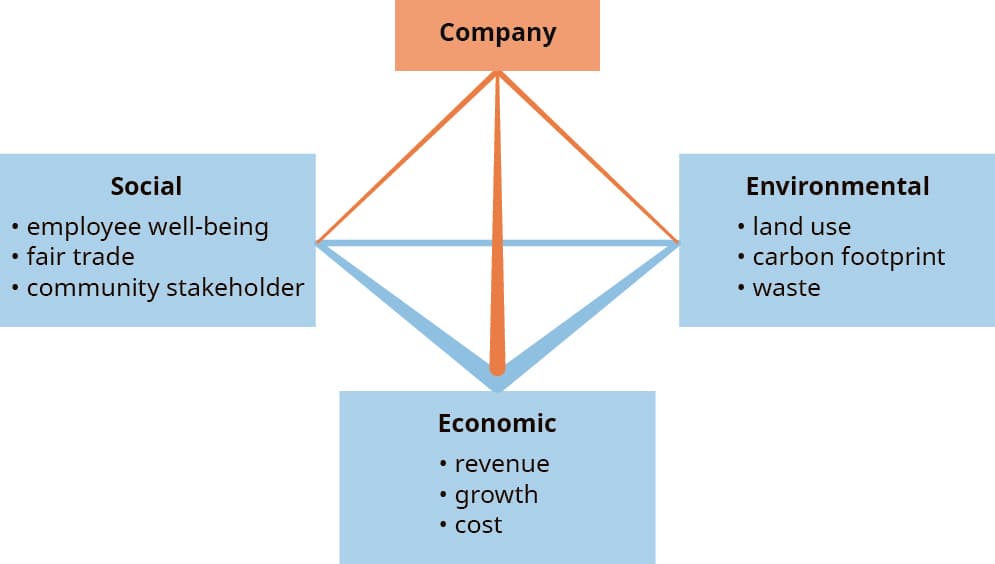
Corporate social responsibility (CSR) is the broader framework that connects marketing ethics to overall business strategy. It holds that companies should create value not just for shareholders but for all stakeholders, including employees, communities, and the environment.
Ethical branding strategies
A brand's identity should reflect its actual practices. When there's a gap between what a company says and what it does, consumers eventually notice, and the backlash can be severe. Ethical branding means aligning marketing messages with genuine corporate behavior. If you market yourself as a sustainability leader, your supply chain and operations need to back that up.
Cause-related marketing
Cause-related marketing ties a brand to a social cause, often through donations linked to purchases. Done well, it generates real support for important issues while building brand loyalty. Done poorly, it exploits serious causes for commercial gain.
Ethical cause-related marketing requires:
- Genuine, sustained commitment to the cause (not just a one-time campaign)
- Transparency about how much money actually goes to the cause
- Choosing causes that align authentically with the brand's values and operations
- Avoiding causes that are chosen purely for PR value
Balancing profit vs social good
This is the central tension of CSR. Purely profit-driven decisions can harm society; purely altruistic decisions can bankrupt a company. The concept of shared value, developed by Michael Porter, argues that the most sustainable approach is finding strategies where business success and social benefit reinforce each other.
For example, a company that invests in employee well-being may see higher productivity and lower turnover. A company that reduces packaging waste saves money and reduces environmental impact. The goal isn't choosing between profit and social good but finding where they overlap.
See Fiveable more often in Google
Mark Fiveable as a preferred source and Google is more likely to show you our guides in Top Stories, with a "preferred" badge in AI Mode and AI Overviews.