Visual Analysis of Unknown Works

🖼AP Art History Review
Visual Analysis of Unknown Works
🖼 AP Art History
Overview
AP Art History Visual Analysis is the skill of looking closely at a work of art and describing what you actually see, then explaining why those visual choices matter. Under Skill 1, you identify a work, describe its visual elements (form, style, materials, technique, content), and explain how the artist's decisions shape the work. This is the foundation skill that supports almost everything else you do in the course.
Visual Analysis (Skill 1) appears across all ten units and shows up on both the multiple-choice and free-response sections. The MCQ section draws roughly 15 to 19 percent of its questions from this skill group, so it is worth real practice time.
What Visual Analysis of Unknown Works Means
In Skill 1, the work in front of you usually comes from the 250 required works in the image set. You are working with art you have studied, using close looking to identify it, describe it, and explain the choices behind it.
Two things to keep straight:
- Visual elements are what you can see: shapes, lines, color, texture, scale, composition, materials, and the way it was made.
- Content is the subject matter and meaning carried by those visual elements.
Skill 1 stays focused on the object itself. You are not yet pulling in outside context like patron, function, or reception. That is Skill 2 territory.
What This Skill Requires
To do Visual Analysis well, you need to move through three steps in order:
- Identify the work (title, artist or culture, date, materials, period).
- Describe specific visual elements using accurate vocabulary.
- Explain how those choices create an effect, a meaning, or a particular look.
The jump from describing to explaining is where points are won or lost. Describing tells what you see. Explaining tells why it matters.
A quick model:
</>CodeDESCRIBE: Giotto used fresco in the Arena (Scrovegni) Chapel. EXPLAIN: Working pigment into damp plaster bonded the color into the wall, creating durable, matte scenes that read clearly across the chapel.
Subskills You Need
1.A: Identify a work of art (or group of related works). You name the work and give relevant identifying details. On the FRQ section, Questions 1 and 2 require you to fully identify works, which usually means title, artist or culture of origin, date or period, and materials.
1.B: Describe visual elements, including form, style, materials, technique, and content. You use precise language for what you observe. For example, a sample question asks how imagery in an Egyptian stele is organized, and the answer is composite figures placed in registers. That is description vocabulary in action.
Know these five categories:
- Form: the visual components like line, shape, color, scale, space, composition.
- Style: the characteristic way a culture, period, or artist makes things look.
- Materials: what the work is physically made of.
- Technique: the process used to make it, such as fresco, glazing, casting, or incising.
- Content: the subject matter and what it depicts.
1.C: Explain how artistic decisions shape a work. You connect a visual choice to its effect. A sample MCQ asks why Lapita potters mixed sand with clay, with the answer being durability during firing. The decision (adding sand) shapes the outcome (a stronger vessel). That cause-and-effect link is exactly what 1.C asks for.
How It Shows Up on the AP Exam
Multiple choice: Skill 1 questions make up about 15 to 19 percent of the MCQ section. Expect prompts that ask you to identify the artist, name a technique, describe how a composition is organized, or explain the effect of a specific choice.
Sample MCQ patterns from the course:
- Identification (1.A): "The work shown was created by..." with artist options like Mary Cassatt or Francisco de Goya.
- Description (1.B): "In the Arena (Scrovegni) Chapel, Giotto used..." with fresco as the correct technique.
- Explanation (1.C): "Sand was mixed with clay most likely to..." with durability during firing as the answer.
Free response: Identification (1.A) is required on the Long Essay questions, Questions 1 and 2. Several FRQs across the section also call for description and explanation of visual elements. On the comparison essay, for instance, you identify a second work and then use specific visual evidence to discuss similarities and differences.
Practical tip: on FRQs, always give your visual evidence first, then explain its effect. Graders look for both, not just one.
Examples Across the Course
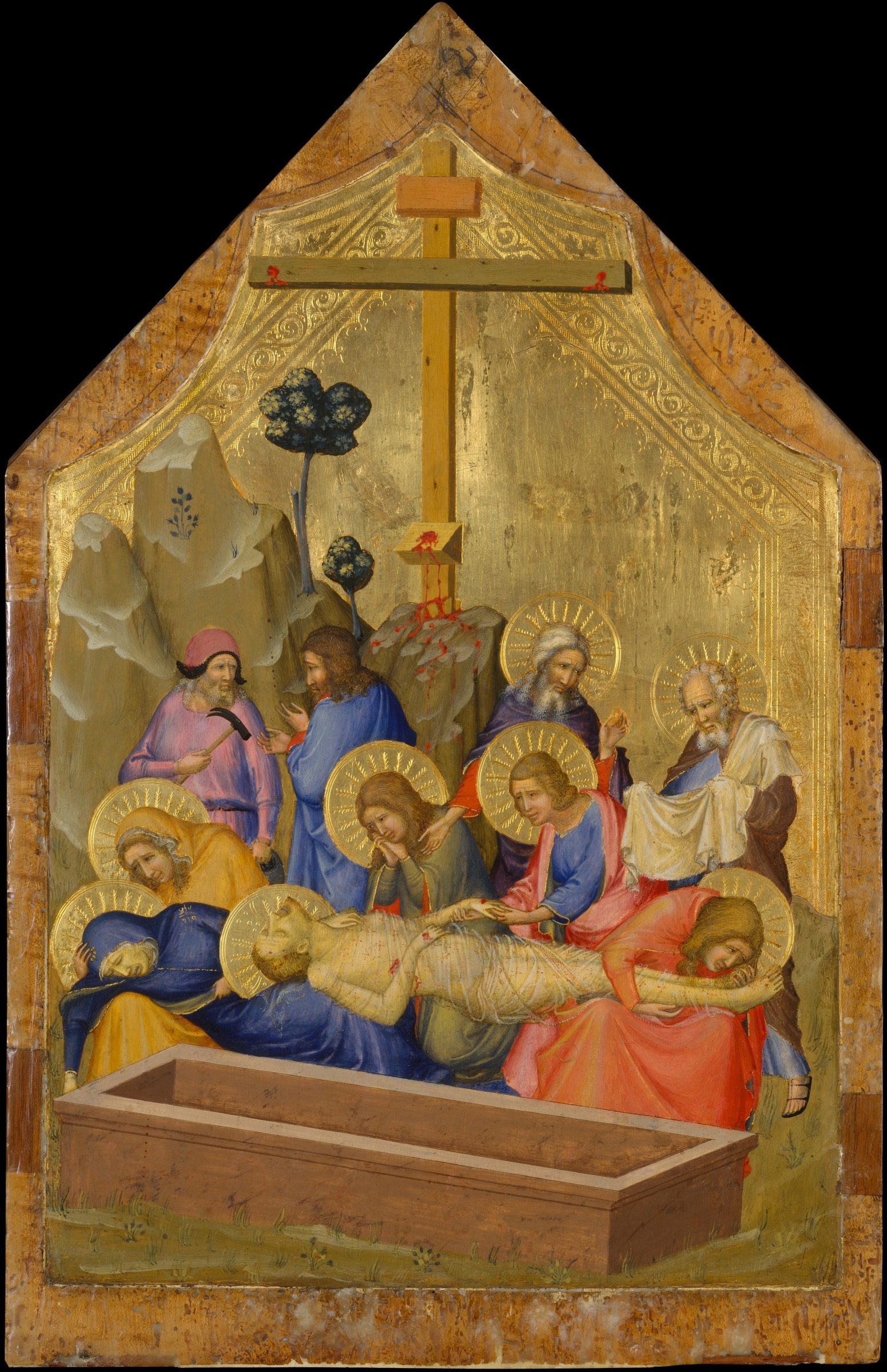
Visual Analysis applies everywhere. Here are varied examples from different units and media:
- Unit 2, Ancient Mediterranean: Composite figures placed in registers organize the imagery on an Egyptian stele. Describing this register system is pure 1.B.
- Unit 3, Early Europe and Colonial Americas: Giotto's use of fresco in the Arena (Scrovegni) Chapel is a technique question. Explaining how damp-plaster pigment produces durable wall scenes moves you into 1.C.
- Unit 4, Later Europe and Americas: Identifying a print as the work of Mary Cassatt is 1.A. You could then describe her flattened shapes and patterns, which reflect the influence of Japanese ukiyo-e prints.
- Unit 5, Indigenous Americas: This unit ranges from the wood-carved Kwakwaka'wakw Transformation mask to the stone complex at Yaxchilán, giving you very different materials to describe and very different artistic decisions to explain.
- Global Prehistory: Lapita potters mixed sand into clay to strengthen vessels during firing. The material choice (1.B) and its effect (1.C) sit side by side.
Notice the range: painting, printmaking, sculpture, ceramics, architecture, across multiple continents and time periods. The same three steps work for all of them.
How to Practice Visual Analysis of Unknown Works
- Build a vocabulary bank. Keep a running list of terms for form (composition, scale, register), style (naturalistic, abstract, idealized), and technique (fresco, glazing, casting, incising, impasto).
- Drill identification. For each required work, practice stating title, artist or culture, date, and materials from memory.
- Write describe-then-explain pairs. Pick any work, name one visual element, then write a sentence explaining its effect. Repeat with three different elements.
- Sort techniques. Quiz yourself on definitions. For example, glazing is thin transparent layers of paint, while impasto is thick textured paint. Mixing these up loses easy points.
- Use full sentences on practice FRQs. Always pair evidence with effect, since a description alone rarely earns the explanation point.
Common Mistakes
- Listing without explaining. Naming the materials is only half the answer. You need to say how that choice shapes the work.
- Confusing technique terms. Fresco, mosaic, glazing, and impasto are distinct. Match the definition to the visual result.
- Vague identification. "A Renaissance painting" is not enough on an FRQ. Give title, artist or culture, date, and materials when the question asks for full identification.
- Importing context too early. Skill 1 stays on the object. Patron, function, and reception belong to Skill 2.
- Describing content but ignoring form. Saying what is depicted is not the same as analyzing how line, color, scale, or composition present it.
Quick Review
- Skill 1 = look, describe, explain. Identify the work, describe its visual elements, explain how the choices shape it.
- The five elements: form, style, materials, technique, content.
- 1.A identifies. 1.B describes. 1.C explains the effect of artistic decisions.
- On the exam: about 15 to 19 percent of MCQs, plus required identification on Long Essay Questions 1 and 2 and description and explanation across several FRQs.
- Winning move: always pair visual evidence with its effect.
See Fiveable more often in Google
Mark Fiveable as a preferred source and Google is more likely to show you our guides in Top Stories, with a "preferred" badge in AI Mode and AI Overviews.