Artistic Traditions

🖼AP Art History Review
Artistic Traditions
🖼 AP Art History
Overview
AP Art History Artistic Traditions is Skill 4 in the course, and it asks you to analyze the relationships between a work of art and a related artistic tradition, style, or practice. In plain terms, you look at how a work fits into a bigger story of art over time, where it follows earlier conventions (continuity), where it breaks from them (change), and how it shapes later art.
This skill appears across every unit because traditions develop, spread, and shift everywhere. On the exam, Skill 4 carries roughly 20 to 25 percent of the multiple-choice section, and it is the focus of FRQ 6 (Short Essay: Continuity and Change), with possible appearances in FRQ 3.
What Artistic Traditions Means
An artistic tradition is a shared set of conventions that connects works across time, place, or culture. This can include a style (like Classical Greek), a practice (like fresco painting or feather work), or a recognizable approach to subject matter and form.
When you work with Skill 4, you are tracking three movements:
- Continuity: the work keeps using older conventions, forms, materials, or meanings.
- Change: the work alters, rejects, or updates earlier conventions.
- Influence: the work shapes other artistic production, sometimes across cultures.
A single work usually shows both continuity and change at the same time, so you rarely have to pick just one.
What This Skill Requires
To do Skill 4 well, you need to connect a specific work to something outside itself: an earlier work, a style, or a practice. You are not just describing one object. You are explaining a relationship.
Strong Skill 4 responses do four things:
- Name the tradition, style, or practice clearly.
- Point to specific visual or contextual evidence in the work.
- State whether that evidence shows continuity, change, or both.
- Explain the meaning or significance of that continuity or change.
The word "explain" matters. Identifying a similarity is a start, but the skill asks you to say how and why it connects, and what that connection means.
Subskills You Need
Skill 4 has four subskills. Each one shifts the question slightly.
4.A: Explain HOW a work demonstrates continuity and/or change. You describe the specific ways a work keeps or breaks from a tradition. Focus on observable evidence: form, style, materials, technique, content.
- Example question pattern: A work shows the influence of Japanese ukiyo-e prints through its depiction of daily life using flattened shapes and patterns. You explain how the flattening and patterning connect the work to that tradition.
4.B: Explain WHY a work demonstrates continuity and/or change. You give reasons behind the continuity or change. This often involves cultural context, patron goals, available materials, or interactions with other cultures.
- Example angle: Why does a work adopt a new technique? Maybe new technology, a new audience, or contact with another culture pushed the artist in that direction.
4.C: Explain the INFLUENCE of a work on other artistic production within or across cultures. You trace how a work or group of works shaped later art, either in the same culture or a different one.
- This is where cross-cultural transfer comes in, like Hellenistic forms appearing in Buddhist sculpture, or one cathedral influencing the architecture that followed.
4.D: Explain the MEANING or SIGNIFICANCE of continuity and/or change. You go past noticing the change to saying why it matters. What does the continuity or change reveal about values, beliefs, or power?
- Example angle: In ancient Hawaii, nobles wore feather garments such as the 'ahu 'ula in battle because red feathers signaled the wearer was protected by the gods. The continuity of feather use carries meaning about status and divine protection.
How It Shows Up on the AP Exam
Multiple choice (about 20 to 25 percent of the MCQ section): Skill 4 questions ask you to identify continuity, change, influence, or significance. Some give you a work and ask what tradition it draws from. Others ask why a convention carries a certain meaning.
Examples of the kinds of prompts you will see:
- A work demonstrates the influence of Japanese ukiyo-e prints through its depiction of daily life using flattened shapes and patterns (Skill 4.A).
- Male nobles wore feather garments in battle because the red feathers indicated divine protection (Skill 4.D).
Free response:
- FRQ 6 (Short Essay: Continuity and Change, 5 points) primarily assesses Skills 4.A, 4.B, and 4.D. You explain how and why a work shows continuity and/or change and what that means.
- FRQ 3 (Short Essay: Visual Analysis, 5 points) may assess influence (Skill 4.C).
Recommended timing for the short essays is 15 minutes each. That timing is practical advice based on the published exam structure, so use it to pace yourself.
Examples Across the Course
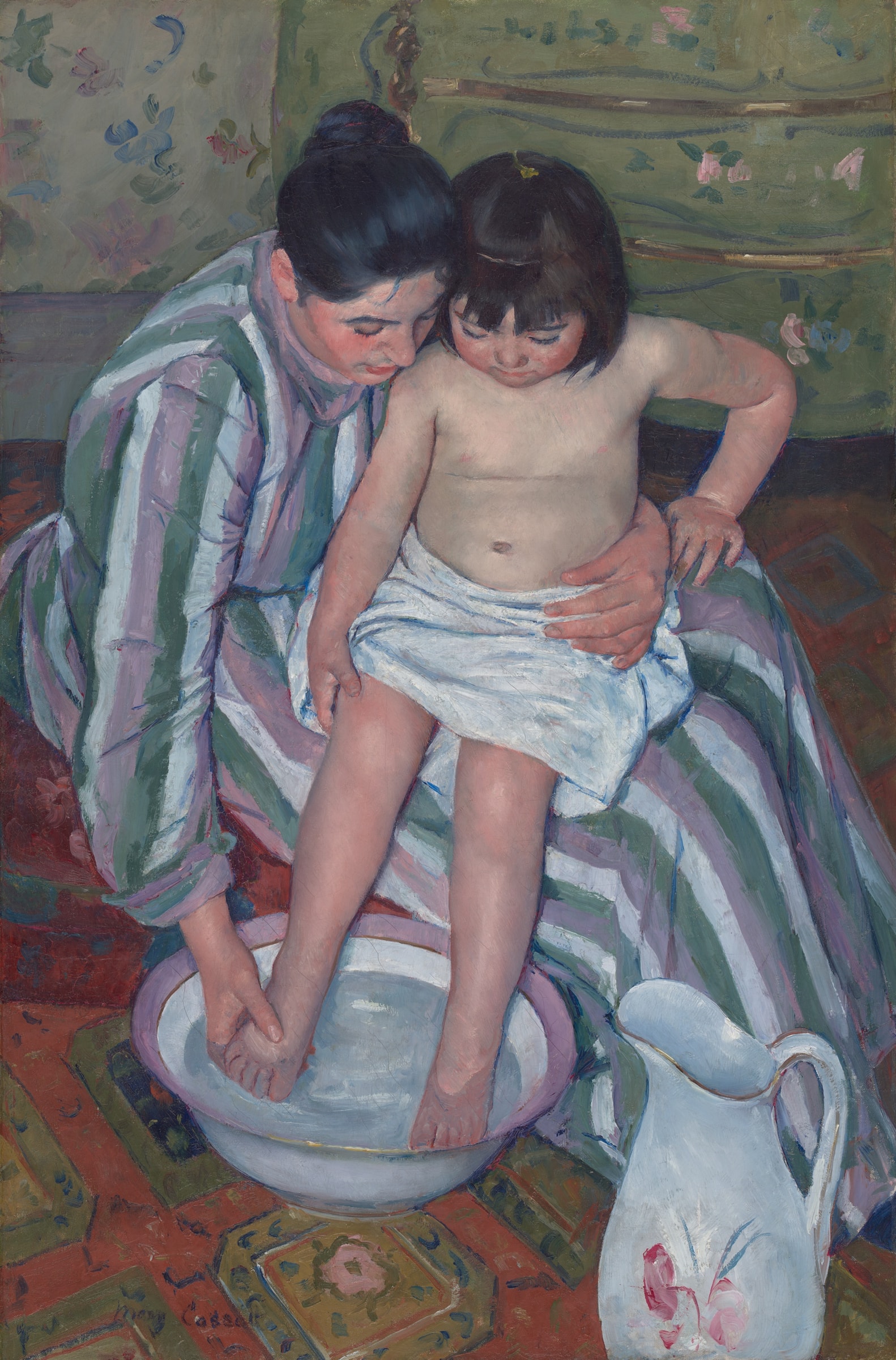
Skill 4 lives in every unit. Here are varied examples from different course areas.
| Course area | Tradition or practice | Continuity, change, or influence |
|---|---|---|
| Ancient Mediterranean | Classical Greek style and Egyptian register format | Continuity of conventions like figures in registers; the unit is where the course formally introduces artistic traditions |
| West and Central Asia | Hellenistic architecture and Buddhist sculpture spreading outside their origins | Influence across cultures through trade and cultural transfer (Skill 4.C) |
| Later Europe and Americas | Japanese ukiyo-e prints influencing European painting | Change in style shown through flattened shapes and patterns (Skill 4.A) |
| Indigenous Americas | Pueblo pottery by Maria Martinez and other potters | Change driven by a tourist market, including signing individual names to attract collectors |
| The Pacific | Hawaiian feather garments such as the 'ahu 'ula | Continuity of materials and meaning, with red feathers signaling divine protection (Skill 4.D) |
| Early Europe and Colonial Americas | Cathedral architecture building on earlier models | Influence within a culture, like Chartres shaping later cathedral design |
Notice how each example pairs a specific work or practice with a tradition and a movement (continuity, change, or influence). That pairing is the core of every Skill 4 answer.
How to Practice Artistic Traditions
Try these practical strategies as you study.
- Build before-and-after pairs. For each required work, find one earlier work it continues and one later work it influenced. This trains both 4.A and 4.C.
- Use a two-column note system. For each work, list what stays the same as the tradition (continuity) and what is new (change). Then add a why and a so what.
- Force the "why." After every observation, ask why the artist made that choice. Tie it to culture, patron, materials, technology, or cross-cultural contact for 4.B.
- End with significance. Write one sentence that explains what the continuity or change reveals about values or power. That habit answers 4.D.
- Practice cross-cultural transfer. Pick works where a form moved across cultures, like Hellenistic to Buddhist, and explain the path of influence.
- Rehearse FRQ 6 format. Take a required work and write a short response that names the tradition, gives specific evidence, labels continuity or change, and explains significance, all in about 15 minutes.
Common Mistakes
- Describing instead of explaining. Listing visual features is Skill 1. Skill 4 needs you to connect those features to a tradition and explain the relationship.
- Naming a tradition without evidence. Saying a work is "influenced by Classical art" with no specific visual proof will not earn the point.
- Forgetting the "why" and "so what." Many students stop at noticing change. Subskills 4.B and 4.D want reasons and meaning.
- Treating continuity and change as opposites you must choose between. Most works show both at once. Say so when it applies.
- Vague influence claims. For 4.C, you need a clear direction: this work or practice shaped that later production, here is how.
- Ignoring cross-cultural cases. Influence often crosses borders. Be ready to trace transfer between cultures, not just within one.
Quick Review
- Skill 4 analyzes how a work relates to a tradition, style, or practice through continuity, change, and influence.
- It carries about 20 to 25 percent of the MCQ section and is the focus of FRQ 6, with possible appearances in FRQ 3.
- 4.A = how a work shows continuity and/or change.
- 4.B = why a work shows continuity and/or change.
- 4.C = how a work influences other artistic production within or across cultures.
- 4.D = what the continuity and/or change means or signifies.
- Always pair a specific work with a named tradition, give concrete evidence, label the movement, and explain its significance.
- Works usually show continuity and change together, so do not force an either-or answer.
See Fiveable more often in Google
Mark Fiveable as a preferred source and Google is more likely to show you our guides in Top Stories, with a "preferred" badge in AI Mode and AI Overviews.