10.2 Purpose and Audience in Global Contemporary Art

🖼AP Art History Unit 10 Review
10.2 Purpose and Audience in Global Contemporary Art
🖼 AP Art History
TLDR
In AP Art History, purpose and audience in Global Contemporary art means looking at why a work was made, who it was made for, and how it was meant to be seen. Artists since 1980 use memorials, museums, installations, appropriation, and computer-aided architecture to make existential statements, sociopolitical critiques, and reflections on nature, history, and culture. To explain these works well, connect form and content to artistic intent and the venue or audience the work was built for.
How Do Purpose and Audience Shape Global Contemporary Art?
Purpose and audience shape global contemporary art by affecting what a work looks like, where it is shown, who experiences it, and what response it asks from viewers. A public memorial, a museum building, a site-specific crack in a gallery floor, and an appropriation photograph all use different forms because they are made for different audiences and purposes.
For AP Art History, the useful move is to connect the work's purpose to evidence. Explain how material, scale, venue, text, or audience participation supports the intended effect.
Why This Matters for the AP Art History Exam
This topic builds the skill of explaining how purpose, intended audience, or patron shapes a work of art. On the AP Art History exam, that thinking shows up when you analyze a single work in depth or compare two works.
For free-response questions, you are expected to connect visual or contextual evidence to a larger meaning. A common move is comparing similarities and differences between works using specific points of comparison, and explaining continuity and change within an artistic tradition. The works in this topic give you strong material for that: memorials, iconic buildings, museums, installations, and appropriation pieces all show how purpose and audience drive artistic choices.
The key habit to build here is specificity. Avoid vague claims like "this shows feelings." Instead, name the visual element, the context, and the intended effect, then connect them with words like "because" or "through."
Key Takeaways
- Contemporary works are grouped by shared form, content, and artistic intent across broad themes: existential questions, sociopolitical critique, reflections on nature, art history, popular and traditional culture, and technology.
- Iconic buildings become trademarks for cities, and computer-aided design lets architects push toward visionary, aspirational forms.
- The spread of contemporary art museums, galleries, biennials, triennials, exhibitions, and print and digital publications created many new venues for showing and judging art.
- Artists often use appropriation and "mash-ups" to devalue or revalue culturally sacred objects and to play with regional, cultural, and chronological expectations.
- When you write, link specific evidence to your claim instead of relying on generalizations.
Required Works in This Topic
These are the works most useful for studying purpose and audience. Keep the identifying details precise, and frame debated interpretations as one reading rather than fact.
Vietnam Veterans Memorial


Maya Lin. Washington, D.C., U.S. 1982 ce. Granite.
- A long, low wall of polished black granite set into the ground on the National Mall.
- The names of service members lost in the Vietnam War are inscribed across the surface.
- Purpose and audience: the memorial was designed for public mourning and reflection. The reflective granite lets visitors see themselves among the names, which shapes a personal, emotional experience.
- The minimal design generated public debate, which makes it a strong example of how intended audience and reception affect a work's meaning.
Summer Trees
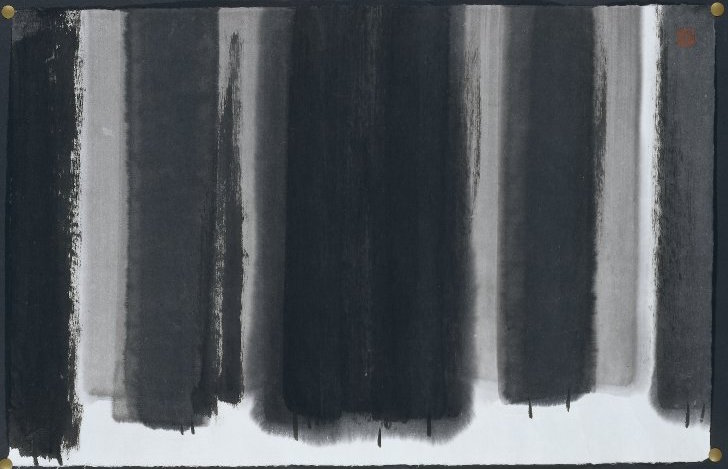
Song Su-nam. 1983 ce. Ink on paper. (British Museum)
- An abstract composition built from layered vertical ink strokes in varied tones.
- Song was a leader of the Sumukhwa (ink painting) movement in Korea, which revived East Asian ink traditions in a modern, abstract form.
- Purpose and audience: the work shows continuity with traditional ink painting while engaging modern abstraction, blending heritage with contemporary practice.
A Book from the Sky

Xu Bing. 1987-1991 ce. Mixed-media installation.
- A room-filling installation of printed books and hanging scrolls covered in characters.
- The characters look like real Chinese script but are invented and meaningless.
- Purpose and audience: the work asks viewers to question language, communication, and cultural authority. Readers who expect to understand the text are left unable to read it, which is the point.
Untitled (#228), from the History Portraits series
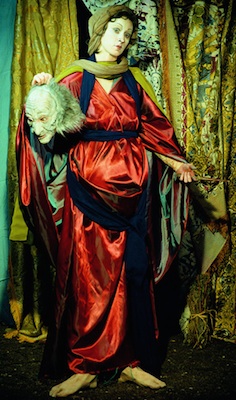
Cindy Sherman. 1990 ce. Chromogenic color print. (The Museum of Modern Art)
- A large color photograph in which Sherman stages herself as a figure that recalls earlier European portrait and history painting.
- This piece is part of her History Portraits series, in which she appropriates the look of Renaissance and Baroque painting.
- Purpose and audience: by playing a constructed character, Sherman explores identity, gender, and representation. One common reading connects it to the biblical Judith subject through cues like red drapery and a staged background, but treat that specific connection as one interpretation.
Earth's Creation
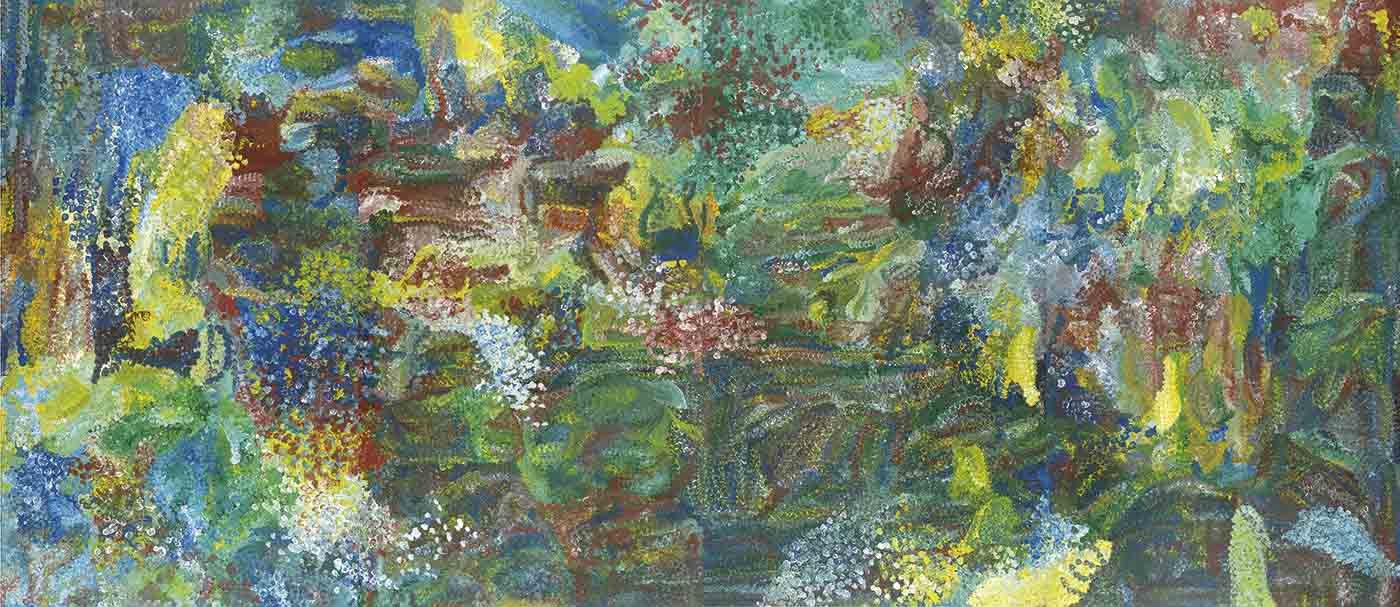
Emily Kame Kngwarreye. 1994 ce. Synthetic polymer paint on canvas.
- A large-scale painting built from dense, layered dabs of color across the surface.
- Kngwarreye was an Aboriginal Australian artist from the Utopia community whose work draws on her cultural connection to land.
- Purpose and audience: the painting reflects on the natural world and her relationship to Country. It also moved Aboriginal art into the global contemporary art market, an example of how audience and venue expand.
Guggenheim Museum Bilbao
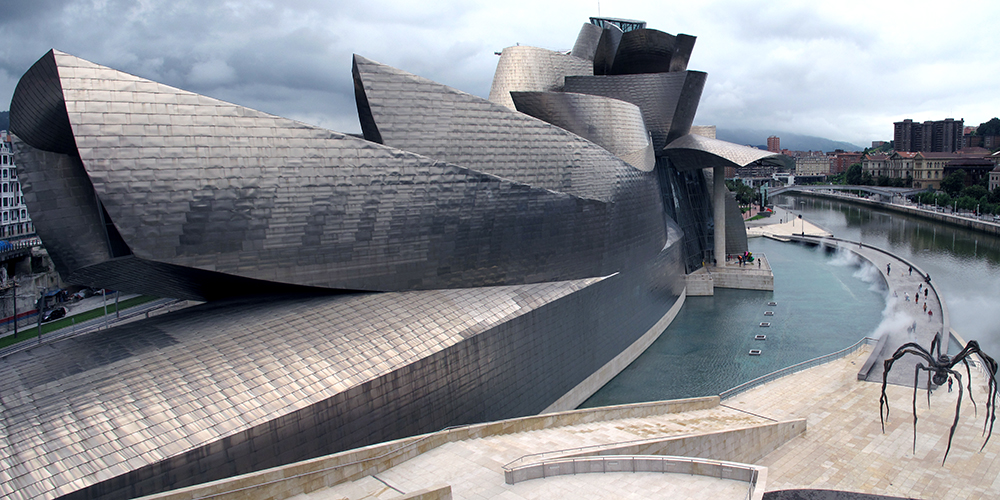
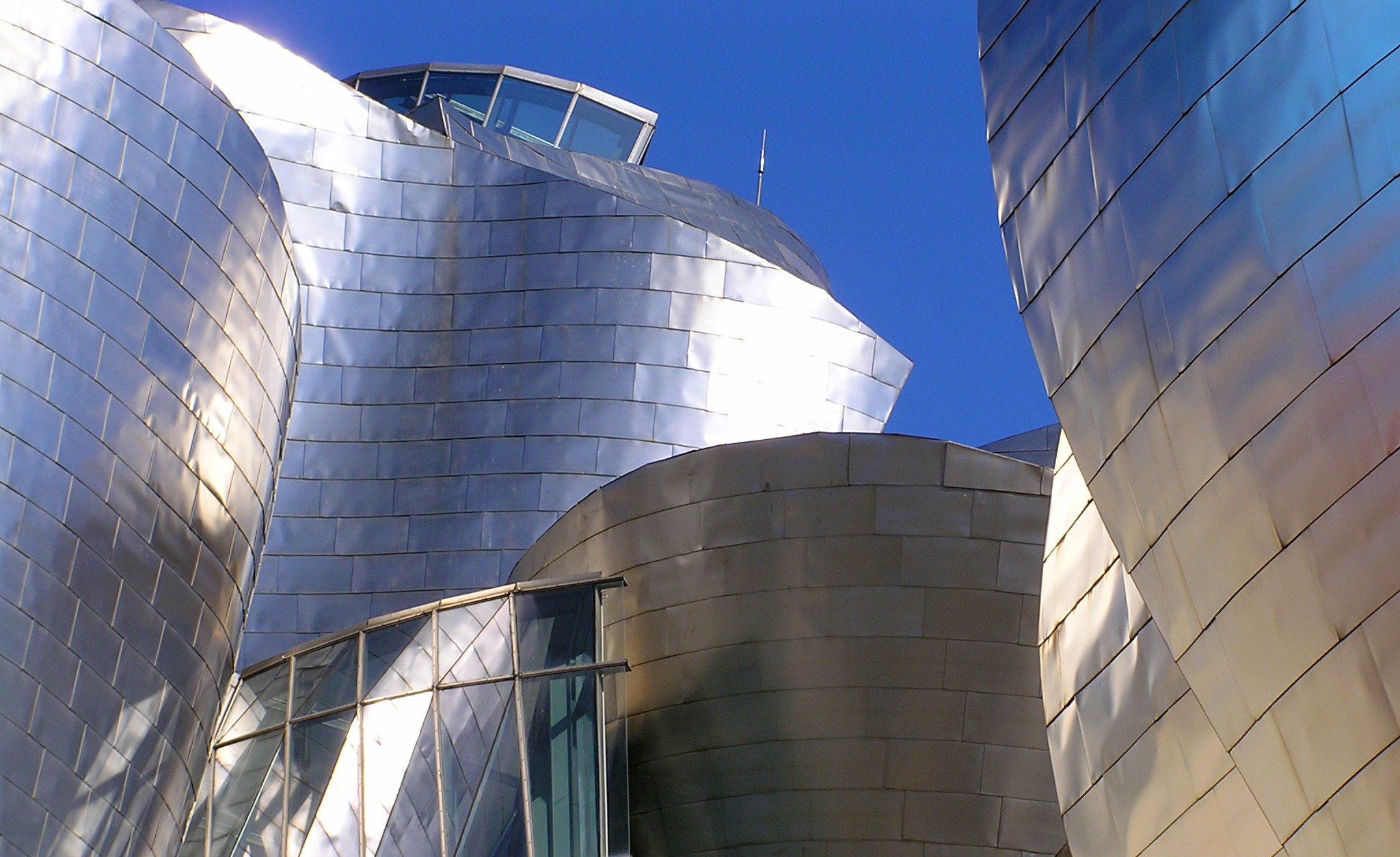
Frank Gehry (architect). Spain. 1997 ce. Titanium, glass, and limestone.
- A museum of curving, sculptural titanium-clad forms made possible by computer-aided design.
- Purpose and audience: this is a clear example of the iconic building as a city trademark. Its design helped draw tourism and reshape the city's identity, often called the "Bilbao effect."
Pure Land
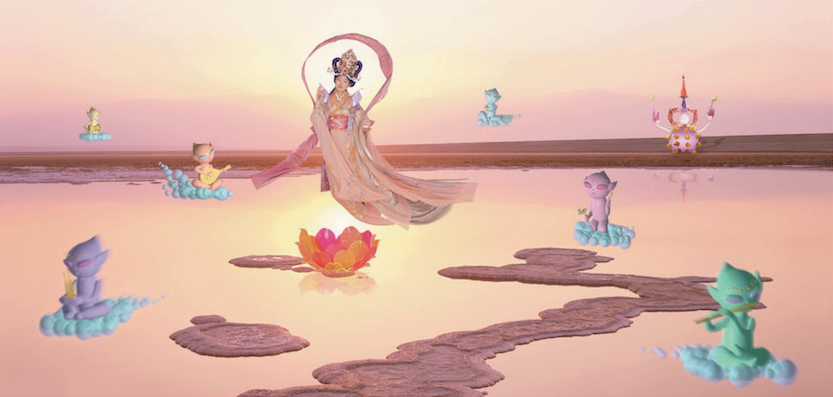
Mariko Mori. 1998 ce. Color photograph on glass.
- A large photographic work on glass in which Mori appears as a serene, otherworldly figure in a glowing, dreamlike setting.
- Purpose and audience: the work blends spiritual and technological imagery to imagine a peaceful, futuristic vision. Treat specific religious or staging readings as one interpretation rather than fixed fact.
Darkytown Rebellion

Kara Walker. 2001 ce. Cut paper and projection on wall.
- A wall-sized installation of black cut-paper silhouettes combined with colored light projection.
- The viewer's shadow can fall into the scene, pulling them into the imagery.
- Purpose and audience: Walker uses the silhouette to confront the history of slavery, race, and power in the United States. The work is built to unsettle viewers and force them to react.
Shibboleth

Doris Salcedo. 2007-2008 ce. Installation.
- A long crack running through the concrete floor of the Tate Modern's Turbine Hall.
- Purpose and audience: the crack works as a metaphor for division, exclusion, and the experience of migrants and outsiders. As a site-specific installation in a major museum, its meaning depends on its location and the crowds who encounter it.
MAXXI National Museum of XXI Century Arts

Zaha Hadid (architect). Rome, Italy. 2009 ce. Glass, steel, and cement.
- A contemporary art and architecture museum with flowing, curving forms that blur inside and outside space.
- Purpose and audience: like Bilbao, MAXXI shows the iconic building as a draw for a city, and computer-aided design shaping bold architectural forms. It also reflects the worldwide spread of contemporary art venues.
Kui Hua Zi (Sunflower Seeds)

Ai Weiwei. 2010-2011 ce. Sculpted and painted porcelain.
- A vast field of individually hand-crafted porcelain sunflower seeds spread across a gallery floor.
- Each seed was made and painted by hand in Jingdezhen, China, a center of porcelain production.
- Purpose and audience: the work plays with the tension between the individual and the mass, and comments on production, labor, and freedom of expression. Its scale and museum setting are central to its impact.
How to Use This on the AP Art History Exam
Free Response
When a prompt asks about purpose, audience, or patron, name three things and connect them: the visual evidence, the context, and the intended effect. Use linking words like "because" or "through."
Example move: Guggenheim Museum Bilbao serves as a city trademark because its computer-aided titanium forms create an unmistakable silhouette that draws tourism.
Comparison
For comparison questions, pick clear points of comparison such as venue, audience, or use of appropriation. Bilbao and MAXXI both work well together as iconic buildings shaped by computer-aided design and meant to brand a city. A Book from the Sky and Untitled (#228) both use appropriation or constructed language to challenge viewer expectations.
Continuity and Change
For continuity and change prompts, Summer Trees is a strong choice. It continues the East Asian ink tradition while changing it through modern abstraction. Earth's Creation can show how an older cultural connection to land enters a new global art market.
Common Trap
If you only describe what a work looks like, you will not support a stronger score. Always push from description to purpose. State why the choice was made and who it was made for.
Common Misconceptions
- Misconception: Untitled (#228) is part of the earlier Untitled Film Stills series.Actually: Untitled (#228) is part of Sherman's History Portraits series, not the earlier Untitled Film Stills series. Keep those series straight.
- Misconception: "Purpose and audience" is only about memorials.Actually: "Purpose and audience" is not only about memorials. It includes museums, iconic buildings, installations, appropriation, and how a venue shapes meaning.
- Misconception: An iconic museum building cannot be both a work of art and a piece of city branding at the same time.Actually: An iconic museum building can be a work of art and a piece of city branding at the same time. Both ideas can be true.
- Misconception: Appropriation is the same as copying.Actually: Appropriation is not the same as copying. Artists reuse images or styles to revalue or devalue them and to play with expectations.
- Misconception: A specific religious, political, or iconographic reading is the only correct answer for a contemporary work.Actually: Many contemporary works have open-ended meanings. When you give a specific religious, political, or iconographic reading, present it as one interpretation, not the only correct answer.
- Misconception: Summer Trees is a bright, colorful oil painting.Actually: Summer Trees is ink on paper in an abstract ink-painting tradition, not a bright, colorful oil painting. Describe its materials and tones accurately.
Related AP Art History Guides
Practice Questions for 10.2
1 of 10
Song Su-nam's 1983 painting Summer Trees utilizes traditional ink on paper while adopting the visual language of abstract expressionism. This change within the Korean literati painting tradition primarily reflects which purpose?
A.
Abandoning abstract forms to create easily recognizable political propaganda for local viewers.
B.
Revitalizing a traditional medium to assert national identity for a contemporary global audience.
C.
Replicating historical landscapes to satisfy conservative patrons demanding strict traditionalism.
D.
Rejecting traditional mediums to align exclusively with Western avant-garde artistic practices.
Vocabulary
The following words are mentioned explicitly in the AP® course framework for this topic.Term | Definition |
|---|---|
appropriation | An artistic technique in which artists incorporate existing objects, images, or cultural materials into new works to recontextualize or revalue them. |
artistic intent | The artist's purpose or goal in creating a work, which may include exploring existential questions, making sociopolitical critiques, or reflecting on other themes. |
biennials | Major international art exhibitions held every two years that present and evaluate contemporary art. |
computer-aided design | The use of digital technology and software to create architectural and artistic designs, enabling innovative and visionary forms. |
contemporary art museums | Institutions dedicated to collecting, preserving, and exhibiting art from the present era. |
existential investigations | Artistic explorations of fundamental questions about human existence, meaning, and the nature of being. |
gallery | Spaces where artworks are displayed and sold, serving as venues for the presentation and evaluation of art. |
intended audience | The specific group of people for whom an artwork is created, which influences the artist's choices in form, content, and presentation. |
mash-ups | Artworks created by combining or blending elements from different sources, styles, or cultural contexts to create new meanings. |
patron | A person or institution that commissions, funds, or supports the creation of an artwork, thereby influencing its purpose and content. |
purpose | The intended function or reason for which a work of art was created, such as religious worship, commemoration, or display of power. |
sociopolitical critiques | Artistic commentary that examines and challenges social and political systems, structures, or issues. |
triennials | Major international art exhibitions held every three years that present and evaluate contemporary art. |
Frequently Asked Questions
How do purpose and audience shape global contemporary art?
Purpose and audience shape where a work appears, who encounters it, and what response it asks from viewers. In AP Art History, connect the work’s form, material, scale, venue, or participation to its intended effect.
What is the political function of art in global contemporary works?
Many global contemporary works use public sites, appropriation, installation, or memorial forms to critique power, identity, exclusion, labor, war, or nationalism. The political function should be supported with specific visual and contextual evidence.
Why is Vietnam Veterans Memorial important for purpose and audience?
Maya Lin’s memorial was designed for public mourning and reflection. The inscribed names, low black granite wall, and reflective surface invite visitors to see themselves in relation to the people being remembered.
How does appropriation affect purpose in contemporary art?
Appropriation reuses existing images, styles, or sacred objects to challenge viewer expectations, revalue or devalue cultural symbols, or question who controls meaning.
What does iconic architecture mean in AP Art History 10.2?
Iconic architecture refers to buildings that become recognizable symbols for cities or institutions. Works like Guggenheim Museum Bilbao and MAXXI use bold forms and contemporary design to attract audiences and shape civic identity.
How is purpose and audience tested on the AP Art History exam?
AP questions may ask you to explain how purpose, patron, intended audience, or venue shaped a work. Strong answers name the purpose and connect it to specific evidence from the work.
See Fiveable more often in Google
Mark Fiveable as a preferred source and Google is more likely to show you our guides in Top Stories, with a "preferred" badge in AI Mode and AI Overviews.