9.2 Landscape

✏️Drawing I Unit 9 Review
9.2 Landscape
✏️ Drawing I
Elements of Landscape Drawing
Landscape drawing is about translating the depth and complexity of outdoor scenes onto a flat surface. Whether you're sketching a mountain range or a city park, the core challenge is the same: creating a convincing sense of space, light, and atmosphere.

Top images from around the web for Natural vs man-made features
20 Mystical Bridges That Will Take You To Another World View original
Is this image relevant?
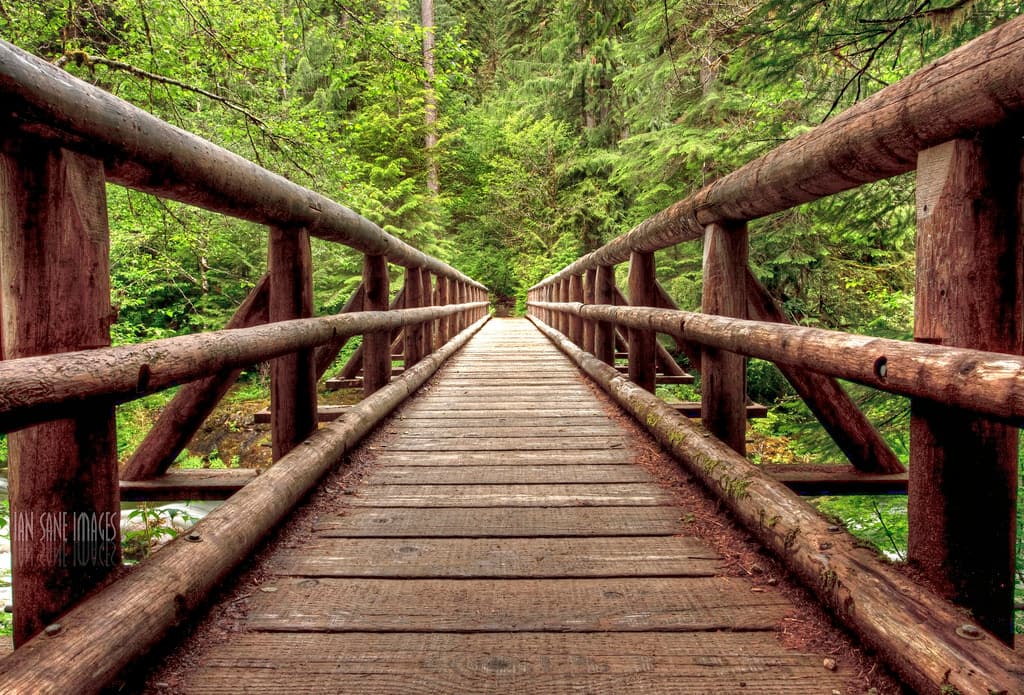
38 Bridges Surrounded by Forests – Infinite World Wonders View original
Is this image relevant?
38 Bridges Surrounded by Forests – Infinite World Wonders View original
Is this image relevant?
20 Mystical Bridges That Will Take You To Another World View original
Is this image relevant?
38 Bridges Surrounded by Forests – Infinite World Wonders View original
Is this image relevant?
Natural vs. Man-Made Features
Most landscapes contain a mix of natural and man-made elements. Natural features include mountains, rivers, forests, and rock formations. Man-made features are things like buildings, bridges, roads, and fences.
Including both types in a single drawing creates a richer composition. A winding road cutting through a forest, or a barn sitting in an open field, immediately suggests a relationship between people and the environment. When you're choosing what to include, think about how these elements interact and what story they tell together.
Foreground, Middle Ground, Background
Every landscape can be broken into three spatial zones:
- Foreground: The area closest to you. This is where you put the most detail and the largest elements. A clump of wildflowers, a fence post, or textured rocks work well here.
- Middle ground: The transitional zone that connects front to back. It bridges the detailed foreground and the simplified background, and it's often where your main subject sits.
- Background: The farthest area. Elements here are smaller, lighter in value, and have less detail, which creates the illusion of distance.
Balancing these three zones is what makes a landscape feel immersive rather than flat. If you load all the detail into one zone and neglect the others, the drawing won't hold together.
Atmospheric Perspective in Landscapes
Atmospheric perspective is the visual effect caused by air, moisture, and dust between you and distant objects. The farther something is, the more atmosphere sits between you and it.
In practice, this means distant objects appear:
- Lighter in value (closer to the tone of the sky)
- Lower in contrast (darks aren't as dark, lights aren't as light)
- Less detailed (edges soften, textures disappear)
- Cooler or more muted in color (if working in color)
This is one of the most powerful tools for creating depth. Even in a simple graphite drawing, gradually lightening your values as forms recede will make the space feel real.
Composition in Landscape Drawing
Rule of Thirds for Landscapes
The rule of thirds divides your drawing surface into a 3×3 grid using two horizontal and two vertical lines. Placing your horizon line, a dominant tree, or another focal point along one of these lines (or at an intersection) tends to produce a more dynamic composition than centering everything.
A common approach: place the horizon on the upper third line to emphasize the land, or on the lower third line to feature a dramatic sky. Avoid splitting the composition exactly in half unless you have a specific reason.
Leading Lines and Focal Points
Leading lines are elements that naturally guide the viewer's eye through the drawing. Roads, rivers, fence lines, rows of trees, and even shadows can all serve as leading lines.
A focal point is the area you want the viewer's attention to land. It's often placed at or near an intersection on the rule-of-thirds grid. The most effective compositions use leading lines to direct the eye toward the focal point, creating a sense of movement and purpose in the drawing.
Framing the Landscape Scene
Framing means using elements within the scene to create a natural border around your subject. Overhanging tree branches, an archway, or a window can all frame the view beyond them.
This technique does two things at once: it focuses the viewer's attention on the central area, and it adds depth by establishing a clear foreground layer. Framing can also suggest a specific vantage point, giving the viewer the feeling of looking through something into the landscape.
Drawing Landscape Textures
Techniques for Rendering Trees
Trees are one of the most common landscape elements, and each species has a distinct silhouette and texture. Here's a general approach:
- Block in the overall shape of the tree first. Is it round, conical, spreading, or columnar? Get the big silhouette right before adding any detail.
- Draw the trunk and major branches, paying attention to how they taper and divide. Branches generally get thinner as they extend outward.
- Suggest the foliage using mark-making that matches the leaf type. Scribbling works for dense deciduous canopies, stippling for sparse or fine-textured trees, and directional strokes for conifers.
- Add light and shadow across the whole tree form. The canopy has a light side and a shadow side, just like a sphere. Don't forget the cast shadow on the ground.
Avoid drawing every individual leaf. The goal is to suggest foliage through varied marks and value changes.
Depicting Grass, Rocks, and Water
- Grass: Use vertical and diagonal strokes of varying height and spacing. Vary your pressure to create clumps and movement. Grass in the foreground gets individual blades; grass in the distance becomes a simplified tone.
- Rocks: Focus on the planes and angles of each rock face. Use value contrast to show where light hits and where shadows fall. Add surface details like cracks and texture last, and only where needed.
- Water: Observe carefully before drawing. Still water shows reflections (rendered with vertical strokes), while moving water has ripples and highlights (often horizontal marks). The key is capturing the contrast between reflected darks and bright highlights on the surface.
Capturing Sky and Cloud Textures
The sky sets the mood for the entire landscape. A few principles to keep in mind:
- The sky is generally lighter near the horizon and darker toward the top (the zenith). Smooth, graduated tones create this effect.
- Clouds have volume. They have a sunlit side and a shadow side, just like any other form. Use soft blending for the lit areas and slightly harder edges where shadows meet light.
- Cloud shapes vary enormously. Observe the specific type you're drawing rather than defaulting to generic cotton-ball shapes. Flat-bottomed cumulus clouds look very different from wispy cirrus or heavy stratus layers.
- The position of the sun affects everything: long shadows on clouds at sunrise/sunset, bright tops and dark bottoms at midday.
Light and Shadow in Landscapes
Directional Lighting Effects
Before you start drawing, identify where the light is coming from. In most outdoor scenes, the sun is the primary light source, and its position determines where every shadow falls.
Keep your light direction consistent throughout the entire drawing. Shadows should all fall in the same general direction. Inconsistent lighting is one of the fastest ways to make a landscape look wrong, even if the viewer can't pinpoint why.
The angle of light also affects texture. Low-angle light (early morning or late afternoon) rakes across surfaces and reveals texture dramatically. High, overhead light flattens textures and creates shorter shadows.

Cast Shadows and Form Shadows
These are two different types of shadow, and distinguishing between them strengthens your drawings:
- Form shadows occur on the object itself, on the side facing away from the light. They reveal the object's three-dimensional shape. Form shadows typically have softer, more gradual edges.
- Cast shadows are projected by an object onto another surface. They follow the shape of the casting object and the surface they fall on. Cast shadows tend to have harder, more defined edges near the object and softer edges farther away.
In landscapes, cast shadows are everywhere: trees casting shadows on the ground, buildings casting shadows on streets, clouds casting shadows across fields. They're essential for grounding objects in space.
Conveying Time of Day
Light quality changes throughout the day, and you can use this to set a specific mood:
- Sunrise/sunset: Low-angle light, long shadows, warm color temperature. High contrast between lit and shadowed areas.
- Midday: Overhead light, short shadows, even illumination. Colors appear more saturated but the light can feel flat.
- Overcast: Diffused light, minimal shadows, soft edges everywhere. Values compress into a narrower range.
Atmospheric effects like mist or haze are strongest in early morning and can add a sense of mystery or calm to a drawing.
Linear Perspective in Landscapes
One-Point Perspective for Roads
One-point perspective applies when you're looking straight down a road, path, or corridor. All parallel lines running away from you converge toward a single vanishing point on the horizon line.
To draw a road in one-point perspective:
- Mark your horizon line and place a vanishing point on it.
- Draw the edges of the road as lines converging toward that vanishing point.
- Objects along the road (telephone poles, trees, fences) also diminish in size as they approach the vanishing point.
- The spacing between repeated elements (like fence posts) compresses as they recede.
This creates a strong sense of depth and is one of the most straightforward ways to pull the viewer's eye into the scene.
Two-Point Perspective for Buildings
Two-point perspective is used when you're viewing a building or structure at an angle, so you can see two of its faces. Each set of horizontal edges converges toward its own vanishing point on the horizon line.
- Establish the horizon line and place two vanishing points, one to the left and one to the right. They're often far apart, sometimes off the edge of your paper.
- Draw the nearest vertical edge of the building first.
- From the top and bottom of that edge, draw lines converging to each vanishing point. These define the two visible faces of the building.
- Vertical lines always stay vertical in two-point perspective.
- Add details like windows and doors using the same converging lines to keep everything consistent.
Aerial Perspective and Depth
Aerial perspective (another name for atmospheric perspective) works alongside linear perspective to create depth. While linear perspective uses converging lines and size changes, aerial perspective uses value and detail changes.
To apply both in a single drawing:
- Foreground: Strong contrast, dark darks, sharp detail, full texture.
- Middle ground: Moderate contrast, slightly lighter values, less detail.
- Background: Low contrast, lightest values, minimal detail, simplified shapes.
Using linear and aerial perspective together produces the most convincing sense of space.
Color in Landscape Drawing
Limited vs. Full Color Palettes
A limited palette uses just a few colors, maybe three to five. This forces color harmony because everything in the drawing shares the same base colors. Limited palettes are great for studies, mood pieces, and learning color mixing.
A full palette uses a wide range of colors for greater realism and variety. It gives you more options but also more chances for colors to clash or feel disconnected.
For beginners, starting with a limited palette is often more effective. You'll learn more about color relationships than you would by reaching for every color in the box.
Warm and Cool Color Schemes
- Warm colors (yellows, oranges, reds) suggest sunlight, heat, and energy. They tend to advance visually, making objects feel closer.
- Cool colors (blues, greens, purples) suggest shade, water, and distance. They tend to recede visually.
This warm/cool relationship is directly useful in landscapes. Foreground elements often lean warmer, while background elements shift cooler. Even in a monochrome drawing, understanding this principle helps you make better value decisions.
Seasonal Color Variations
Each season has a distinct color character:
- Spring: Fresh greens, soft pastels, high-key values
- Summer: Saturated, vibrant hues, strong contrasts
- Autumn: Warm earth tones, oranges, deep reds, golden yellows
- Winter: Cool, muted tones, grays, low saturation
Capturing these shifts convincingly comes down to observation. Pay attention to how the actual colors in front of you differ from what you expect them to be.
Plein Air Landscape Drawing
Benefits of Drawing on Location
Drawing outdoors (en plein air) puts you directly in the environment you're trying to capture. You can observe changing light in real time, respond to the full depth of the scene, and pick up on details you'd never notice in a photograph.
Plein air work also builds speed and decision-making skills. Conditions change fast, so you learn to identify what matters most and commit to it quickly. This kind of practice sharpens your observational drawing across all subjects, not just landscapes.
Essential Plein Air Supplies
- A portable drawing board or lightweight easel
- Drawing media suited to your goals: graphite pencils, charcoal, pastels, or colored pencils
- A sketchbook or paper appropriate for your medium (heavier paper for pastels, smoother for graphite)
- Practical gear: hat, sunscreen, water, snacks, and clips or tape to secure your paper in wind
Keep your setup simple. The more gear you bring, the harder it is to stay mobile and responsive.

Adapting to Changing Conditions
Outdoor conditions shift constantly. The light moves, clouds roll in, wind picks up. A few strategies help:
- Work quickly on the initial value structure. Lock in your light and shadow pattern early, because that's what changes fastest.
- Accept that the scene will change. Commit to the lighting you started with rather than chasing every shift.
- Have a backup plan. If rain or wind makes your spot unworkable, know where you can relocate or switch to a smaller, faster study.
- Bring fixative if you're working in charcoal or soft pastel, so wind doesn't smear your work.
Landscape Composition Studies
Thumbnail Sketches for Planning
Thumbnails are small, quick sketches (often just 2-3 inches across) used to test compositions before committing to a full drawing. They take only a few minutes each and can save you hours of frustration.
In a thumbnail, you're not drawing details. You're working out:
- Where the horizon sits
- How the major shapes are arranged
- Where the darkest darks and lightest lights fall
- Whether the composition feels balanced or lopsided
Do three to five thumbnails of the same scene from different angles or with different cropping before choosing one to develop further.
Simplifying Complex Scenes
Real landscapes are visually overwhelming. Hundreds of trees, countless blades of grass, complex cloud formations. Your job isn't to copy every detail. It's to identify what makes the scene compelling and emphasize that.
Strategies for simplifying:
- Squint at the scene. This reduces detail and reveals the big shapes and value patterns.
- Group similar elements. A forest becomes one large shape, not fifty individual trees.
- Omit what doesn't serve the composition. If a telephone pole or parked car distracts from your focal point, leave it out.
- Use a limited palette to unify areas that might otherwise feel chaotic.
Identifying Value Patterns
Value patterns are the arrangement of lights, midtones, and darks across your composition. Strong value patterns create visual impact even before the viewer reads any specific details.
To find the value pattern in a scene, squint until you can only see two or three distinct tones. Then sketch a quick notan study: a small drawing using only black and white (or black, white, and one middle gray) to map out where the major value masses fall.
A good value pattern has a clear dominant value (mostly light, mostly dark, or mostly midtone) with smaller areas of contrasting value for interest. If your notan looks muddled or evenly split, the composition probably needs rethinking.
Landscape Drawing Media
Graphite and Charcoal Techniques
Graphite pencils range from hard (H grades, for light, precise lines) to soft (B grades, for rich darks and broad shading). Graphite excels at fine detail and controlled gradations, making it ideal for careful observational work.
Charcoal (vine, compressed, or charcoal pencil) covers large areas quickly and produces deep, velvety darks that graphite can't match. It blends easily for atmospheric effects but smudges readily, so it requires fixative.
You can combine both in a single drawing: charcoal for bold, expressive passages and large value areas, graphite for precise details and finer textures.
Pen and Ink for Landscapes
Pen and ink forces you to think in terms of line and pattern rather than smooth tonal blending. Value is built through mark density:
- Hatching: Parallel lines, closer together for darker values
- Cross-hatching: Overlapping sets of parallel lines at different angles
- Stippling: Dots, denser for darks, sparser for lights
- Scribbling: Loose, overlapping marks for organic textures
Adding ink washes or light watercolor over pen work introduces tone and atmosphere while preserving the graphic quality of the line work.
Pastel and Colored Pencil Approaches
Pastels (soft or oil) allow bold, direct color application. You can blend them with your fingers or a blending stump for smooth transitions, or leave visible strokes for energy and texture. Pastels are well-suited to capturing atmospheric effects and broad color relationships quickly.
Colored pencils offer more control and precision. Building color through layering, blending, and burnishing (pressing hard with a light color to smooth the surface) allows for detailed, refined work. They're less messy than pastels and easier to transport for plein air sessions.
Both media handle landscape subjects well. Pastels tend to favor expressive, atmospheric work; colored pencils favor detailed, controlled rendering.
Developing a Landscape Series
Exploring a Theme or Location
A landscape series is a group of related drawings that investigate a single subject from multiple angles. You might draw the same location across different seasons, explore a theme like "urban edges" or "waterways," or document a place that's personally meaningful to you.
Working in a series pushes you past surface-level observation. By returning to the same subject repeatedly, you notice subtleties you missed the first time and develop a deeper visual understanding of the place or idea.
Variations in Format and Media
Within a series, varying your approach keeps the work fresh and reveals different qualities of your subject:
- Try different sizes and orientations (horizontal, vertical, square)
- Switch between media (a charcoal study, a colored pencil piece, a pen and ink drawing of the same scene)
- Experiment with different times of day, weather conditions, or viewpoints
These variations show range and help you discover which combinations of format and media best communicate your intentions.
Presentation and Critique Strategies
How you present a series matters. Consider the sequence and grouping of your drawings. Do they tell a story? Do they build in complexity? Does the arrangement on the wall create visual rhythm?
Consistent framing or mounting helps unify a series visually, even when individual pieces vary in size or media.
Seeking critique from peers and instructors is valuable at every stage. Ask specific questions: Does the series feel cohesive? Is the focal point clear in each piece? Which drawing is the weakest, and why? Specific questions get more useful feedback than "what do you think?"
Documenting your process through notes, progress photos, or a brief artist statement also strengthens the work. It helps viewers understand your intentions and gives you a record of your growth to look back on.
See Fiveable more often in Google
Mark Fiveable as a preferred source and Google is more likely to show you our guides in Top Stories, with a "preferred" badge in AI Mode and AI Overviews.