3.6 Erasers

✏️Drawing I Unit 3 Review
3.6 Erasers
✏️ Drawing I
Erasers serve as both corrective and creative tools in drawing. Understanding the different types and how to use them properly gives you much more control over your work, whether you're fixing a mistake, pulling out highlights, or building an entire image through subtractive methods.
Types of erasers
Each eraser type is made from different materials, which affects how it interacts with your drawing medium and paper. Picking the right one for the job saves you frustration and protects your paper.

Top images from around the web for Rubber erasers
File:Pink-eraser.svg - Wikimedia Commons View original
Is this image relevant?
File:Office-pink-erasers.jpg - Wikipedia View original
Is this image relevant?
File:Faber-Castell pencil and eraser.jpg - Wikimedia Commons View original
Is this image relevant?
File:Pink-eraser.svg - Wikimedia Commons View original
Is this image relevant?
File:Office-pink-erasers.jpg - Wikipedia View original
Is this image relevant?
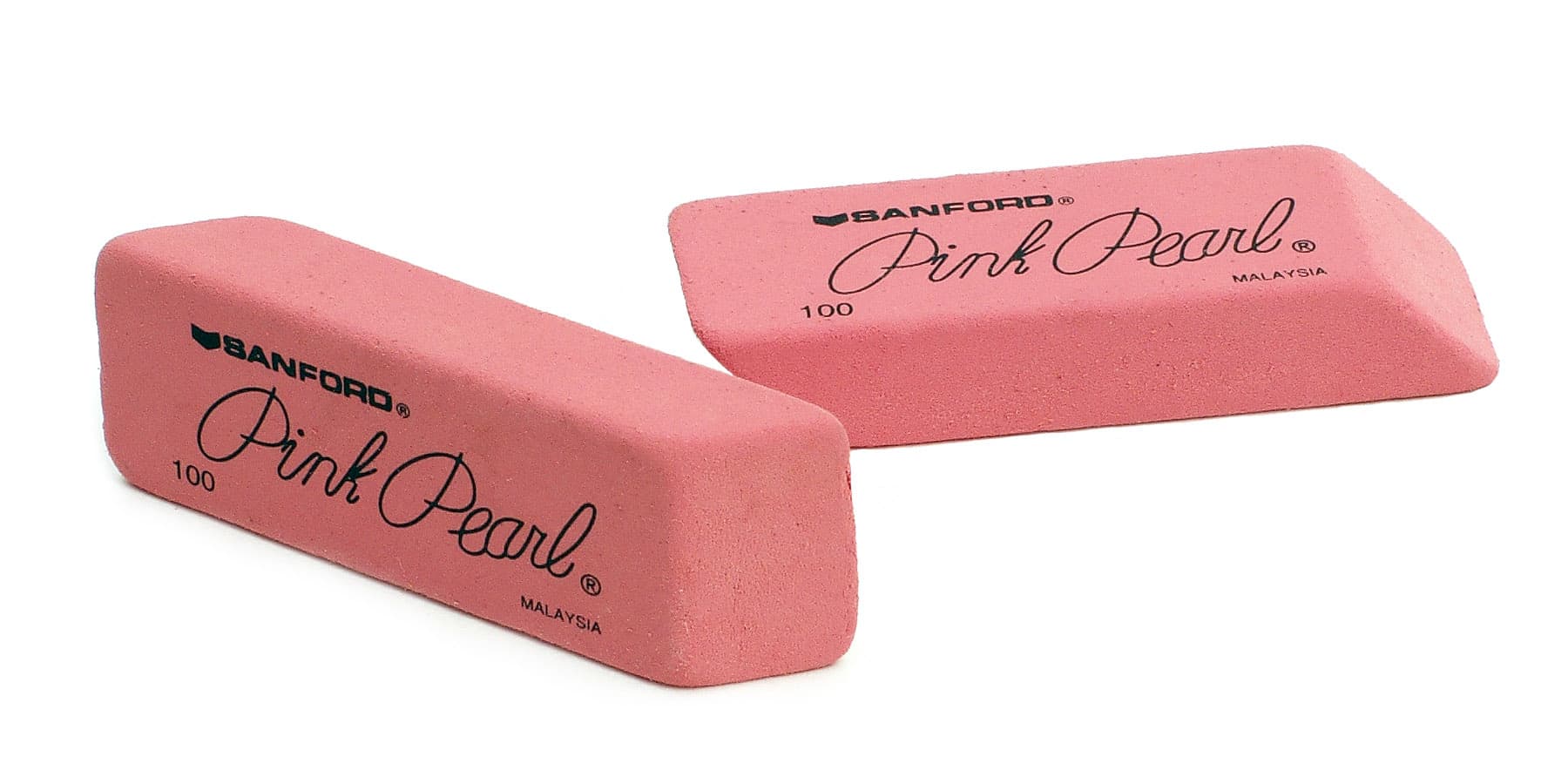
Rubber erasers
These are the standard erasers most people already own. Made from natural or synthetic rubber, they work well for general-purpose erasing of graphite and charcoal. They're gentle enough that they won't damage most paper surfaces. You'll find them in block, wedge, and pencil-top forms.
Vinyl erasers
Vinyl erasers are made from PVC (polyvinyl chloride) and are noticeably harder than rubber erasers. That firmness makes them better at precise, clean erasing. They leave less residue and are less likely to smudge the area around what you're erasing. Reach for these when you need to erase fine details or work in tight spaces.
Kneaded erasers
These soft, putty-like erasers can be shaped and molded by hand into any form you need. Instead of scrubbing marks away, they absorb graphite and charcoal when pressed against the paper. This means they don't leave crumbs or residue. You can dab or press them lightly to gradually lighten an area, which makes them ideal for creating highlights, blending tones, and adjusting values without disturbing the paper surface.
Electric erasers
Battery-powered or plug-in devices that spin a small eraser tip at high speed. They remove marks quickly and precisely, which is especially useful for intricate work or pulling out fine highlights. Many models accept interchangeable tips (vinyl, rubber) so you can switch based on the task.
Choosing the right eraser
Using the wrong eraser can smudge your work, chew up your paper, or simply not remove the marks you need gone. Three factors guide your choice: eraser hardness, paper texture, and drawing medium.
Eraser hardness
- Soft erasers (rubber, kneaded) are gentler on paper and better for light erasing, blending, or lifting tone gradually.
- Hard erasers (vinyl) are better for precise erasing and removing stubborn or heavy marks.
Match the eraser's firmness to how aggressively you need to erase.
Paper tooth considerations
Paper tooth is the surface texture of the paper, ranging from smooth to rough.
- Smooth paper (Bristol, vellum) is more delicate. Use softer erasers to avoid scuffing or burnishing the surface.
- Rough or textured paper (charcoal paper, pastel paper) can handle harder erasers without damage because the texture is more resilient.
Graphite vs. charcoal
- Graphite erases relatively easily. Most eraser types (rubber, vinyl, kneaded) will remove it effectively.
- Charcoal sits on and within the paper tooth differently and is harder to erase completely. Kneaded erasers and soft rubber erasers tend to work best because they lift the charcoal particles rather than grinding them deeper into the surface.
Proper erasing techniques
Good technique protects your paper and gives you cleaner results. Poor habits lead to smudging, torn paper, and uneven marks.

Eraser pressure
Apply gentle, even pressure. Pressing too hard can thin the paper, create indentations, or tear the surface. You can always make another pass, but you can't undo paper damage.
Erasing strokes
Use short, light strokes rather than scrubbing back and forth. Back-and-forth rubbing tends to smudge the surrounding area and can rough up the paper. For precise erasing, use the edge or corner of the eraser and make deliberate, controlled movements.
Lifting vs. rubbing
These are two distinct approaches:
- Lifting: Press the eraser gently onto the surface, then pull it straight away. This removes marks gradually and preserves the paper's texture. Best for delicate areas and tonal adjustments.
- Rubbing: Move the eraser across the surface to remove marks more quickly. Works for clearing larger areas of graphite or charcoal, but overdoing it risks smudging and paper damage.
Use lifting when precision matters. Use rubbing when you need to clear broader areas.
Caring for erasers
A dirty or dried-out eraser won't perform well and can actually make your drawings worse by depositing old graphite back onto the paper.
Cleaning kneaded erasers
Kneaded erasers absorb graphite and charcoal as you use them, gradually turning dark.
- Knead the eraser by pulling and folding it to distribute the absorbed particles throughout the material.
- Stretch it apart to expose cleaner interior areas.
- Continue kneading until the eraser lightens in color.
- If it's heavily saturated, slice off the dirty outer layer with a clean blade to reveal fresh material underneath.
Eventually a kneaded eraser absorbs so much material that it stops lifting marks effectively. At that point, replace it.
Preventing eraser deterioration
- Store erasers in a cool, dry place away from direct sunlight and heat.
- Don't leave erasers sitting on your paper for long periods; they can harden or stick to the surface.
- Keep rubber and vinyl erasers in a sealed container or plastic wrap to prevent drying and cracking.
- Replace any eraser that has become too dirty, hard, or crumbly to work properly.
Eraser alternatives
Several specialized tools give you more control or different effects than a standard eraser.
Eraser pencils
These are pencil-shaped tools with a thin, pointed vinyl or plastic eraser tip. The narrow point makes them perfect for erasing small details, cleaning up edges, or pulling out fine highlights. Some have a brush on the opposite end for sweeping away eraser debris.
Eraser shields
Thin, flexible templates (usually metal) with various shaped cutouts. You lay the shield over your drawing so only the area you want to erase is exposed through the opening. This lets you erase with sharp, clean edges without touching the surrounding work. They're great for creating crisp highlights or correcting small areas in detailed drawings.

Masking fluids
Liquid latex or rubber-based solutions you brush onto areas of your drawing before you work over them. Once dry, the masking fluid forms a removable barrier that resists graphite, charcoal, and other media. After you finish drawing, you peel the dried fluid off to reveal the protected white paper underneath. This is useful for preserving highlights, maintaining sharp edges, or achieving complex textures in areas that would be difficult to erase cleanly later.
Common erasing mistakes
Over-erasing
Erasing the same spot repeatedly breaks down the paper surface, causing it to thin, pill, or develop a rough texture that won't accept new marks smoothly. Work gradually with gentle pressure and stop as soon as you've achieved the effect you want.
Damaging paper surface
This usually results from using too hard an eraser for the paper type, pressing too firmly, or erasing too aggressively. The damage shows up as thinning, tearing, indentations, or a fuzzy texture. Prevent it by matching your eraser to your paper and using controlled, light strokes.
Smudging graphite
Erasing can push graphite or charcoal particles across the paper instead of removing them, creating unwanted shadows or blurred edges. To reduce smudging:
- Use short, light strokes instead of long sweeping motions.
- Brush away eraser debris frequently (use a drafting brush or soft cloth, not your hand).
- Clean your eraser regularly so built-up particles don't transfer back onto the paper.
Erasers in drawing techniques
Beyond fixing mistakes, erasers function as drawing tools in their own right. Working subtractively (removing media to create lighter values) opens up techniques that are difficult or impossible to achieve by adding marks alone.
Subtractive drawing with erasers
In subtractive drawing, you start by covering your paper with a layer of graphite or charcoal, then use erasers to remove material and reveal lighter tones and shapes. This approach is especially effective for developing form, adding dramatic highlights, and creating strong light-to-dark contrasts. Kneaded erasers work particularly well here because you can shape them into points, edges, or flat surfaces to create a wide variety of marks.
Highlighting with erasers
You can add highlights to any drawing by selectively erasing media from areas where light would hit the subject. These erased highlights create a sense of depth, dimension, and contrast that makes the drawing feel more three-dimensional. Eraser pencils and eraser shields give you the most control for sharp, detailed highlights.
Creating texture with erasers
Erasers can produce a range of textures depending on how you use them:
- Stippling: Dab the eraser in a dotted pattern to create a speckled texture.
- Hatching: Drag the eraser in parallel lines to suggest directional texture.
- Irregular marks: Press a shaped kneaded eraser onto the surface for organic, varied textures.
Experimenting with different eraser types and techniques builds your range. Try shaping a kneaded eraser into a fine point, a flat edge, or a rough ball to see what kinds of marks each produces.
See Fiveable more often in Google
Mark Fiveable as a preferred source and Google is more likely to show you our guides in Top Stories, with a "preferred" badge in AI Mode and AI Overviews.