5.1 Geometric shapes

✏️Drawing I Unit 5 Review
5.1 Geometric shapes
✏️ Drawing I
Types of geometric shapes
Geometric shapes are defined by specific mathematical properties. They fall into two main categories: two-dimensional (2D) and three-dimensional (3D). Knowing the difference between them is the first step toward drawing them well.
Two-dimensional shapes
Two-dimensional shapes are flat. They have only length and width. Common 2D shapes include circles, squares, triangles, rectangles, and polygons (any closed shape with straight sides).
- 2D shapes are classified by their number of sides, angles, and properties like symmetry
- A triangle has 3 sides, a pentagon has 5, a hexagon has 6, and so on
- When drawing 2D shapes, pay close attention to proportions, angles, and the relationships between sides. A rectangle where the sides look equal will read as a square.
Three-dimensional shapes
Three-dimensional shapes have length, width, and depth. They occupy space and feel solid. Common 3D shapes include cubes, spheres, cylinders, cones, and pyramids.
Every 3D shape has three key features:
- Faces: the flat surfaces (a cube has 6)
- Edges: the lines where two faces meet (a cube has 12)
- Vertices: the corner points where edges meet (a cube has 8)
Drawing 3D shapes on a flat page means creating the illusion of depth and volume. That requires perspective, shading, and an understanding of how light falls on surfaces.
Properties of geometric shapes
Recognizing the properties of geometric shapes helps you draw them accurately and use them effectively in compositions.
Angles and sides
An angle forms where two sides of a shape meet, measured in degrees. The number and type of angles depend on how many sides a shape has and how they're arranged.
- A square has four equal sides and four angles
- A triangle can have acute angles (less than ), right angles (exactly ), or obtuse angles (greater than )
- An equilateral triangle has three angles and three equal sides
Getting angles and side lengths right is what keeps your shapes looking accurate rather than wobbly or distorted.
Symmetry and regularity
Symmetry means the parts of a shape are balanced across an imaginary line (called an axis of symmetry) or around a central point.
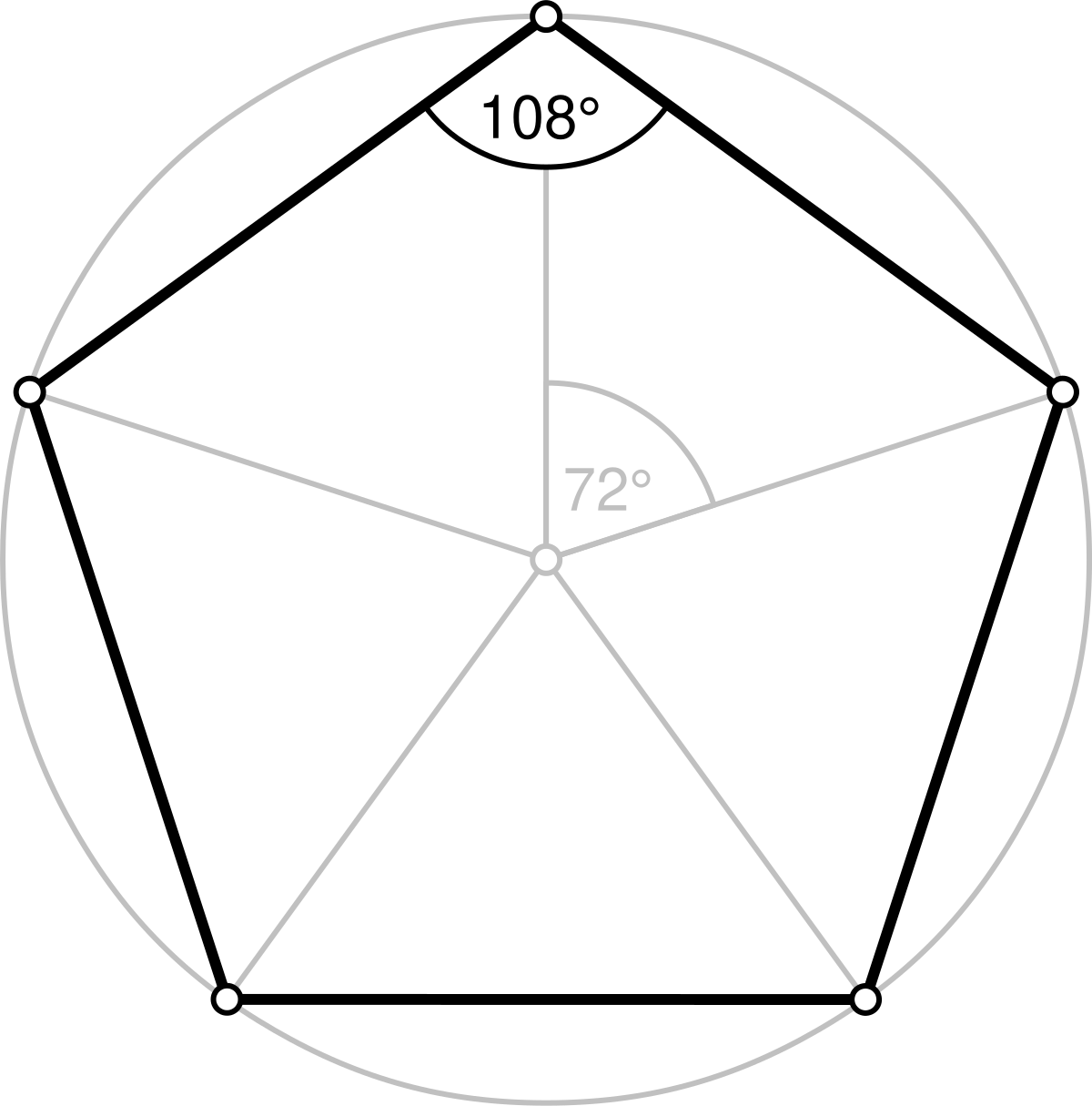
- Regular shapes have equal sides and equal angles. A regular pentagon, for example, has five equal sides and five equal angles of each.
- Irregular shapes have sides and angles that vary.
Using symmetry and regularity in your drawings creates a sense of harmony and order. Asymmetry and irregularity, on the other hand, can add tension and visual interest.
Drawing techniques for geometric shapes
There are several approaches to drawing geometric shapes, from loose sketching to precise tool-based methods.
Freehand sketching
Freehand sketching means drawing without rulers or guides, relying on your hand-eye coordination.
- Start with basic shapes: squares, circles, and triangles
- Draw each shape repeatedly, focusing on keeping proportions and angles consistent
- Work lightly at first so you can correct mistakes easily
- Gradually move to more complex forms like hexagons and 3D shapes
Freehand sketching builds your drawing instincts and is great for quick ideation. Even if your lines aren't perfectly straight, the goal is training your hand to approximate geometric precision.
Using drawing tools
Tools like rulers, compasses, and protractors help you achieve clean, precise shapes.
- Rulers draw straight lines and measure distances
- Compasses draw circles and arcs of a specific radius
- Protractors measure and construct specific angles
Keep a light touch when using tools so you don't leave indentations in the paper. Always double-check your measurements before committing to darker lines.
Perspective drawing of 3D shapes
Perspective drawing creates the illusion of depth on a flat surface using vanishing points.
- Draw a horizon line across your page (this represents eye level)
- Place one or more vanishing points on the horizon line
- Use light guidelines from the vanishing points to construct the edges and faces of your shape
- Darken the final edges and erase the guidelines
The three main types are:
- One-point perspective: one vanishing point, good for shapes viewed straight-on (like looking down a hallway)
- Two-point perspective: two vanishing points, useful for shapes seen at an angle (like the corner of a building)
- Three-point perspective: three vanishing points, used for dramatic views looking up or down
Practicing perspective drawing regularly will make your 3D shapes look convincing and spatially accurate.
Combining geometric shapes
Once you can draw individual shapes, combining them opens up far more complex and interesting compositions.
Overlapping and intersecting shapes
Overlapping places one shape partially in front of another, which instantly creates a sense of depth and layering. Intersecting means two shapes share a common area, forming new shapes where they cross.
- Think about transparency and opacity: will the front shape completely block the one behind it, or will you see through it?
- Experiment with different arrangements. Even simple squares and circles become visually engaging when layered thoughtfully.
Tessellations and patterns
A tessellation is a pattern of shapes that fit together perfectly with no gaps and no overlaps, covering an entire surface.
- Regular tessellations use just one shape. Only three regular polygons tessellate on their own: equilateral triangles, squares, and regular hexagons.
- Semi-regular tessellations combine two or more different regular shapes.
Patterns can also be created by repeating, rotating, or reflecting shapes in a consistent arrangement. Adding tessellations and patterns to your drawings brings rhythm, texture, and visual richness.
Geometric shapes in composition
Geometric shapes do more than just sit on a page. How you arrange them determines whether a composition feels balanced, dynamic, or chaotic.
Balance and visual weight
Balance is the distribution of visual weight across a composition.
- Larger, darker, or more complex shapes carry greater visual weight
- Smaller, lighter, or simpler shapes carry less
- Symmetrical balance: shapes are evenly distributed on either side of a central axis, creating stability
- Asymmetrical balance: shapes with unequal visual weight are arranged so the composition still feels settled. For example, one large dark triangle on the left might be balanced by several small circles on the right.
Contrast and emphasis
Contrast is the difference between elements, whether in size, value, color, or texture. High contrast grabs attention. If you place a tiny black circle in a field of large white squares, the eye goes straight to the circle.
Emphasis is the focal point you create in a composition. You can emphasize a shape by making it a different size, color, or position from everything around it.
Repetition and rhythm
Repetition means using similar or identical shapes throughout a composition, which creates unity.
Rhythm comes from the regular or alternating repetition of shapes, guiding the viewer's eye through the piece. Think of it like a visual beat.
- Repeating circles in a row at equal intervals creates a steady rhythm
- Varying the size or spacing of those circles creates a more complex, syncopated rhythm
- Changing orientation or color of repeated shapes adds another layer of interest

Geometric shapes vs organic shapes
Shapes in art generally fall into two camps: geometric and organic. Understanding both helps you make deliberate choices in your work.
Characteristics of geometric shapes
- Based on mathematical principles with regular, precise lines and angles
- Often symmetrical, conveying order, stability, and structure
- Can feel rational or even artificial
- Examples: squares, circles, triangles, polygons
Characteristics of organic shapes
- Inspired by natural forms with irregular, curved, or flowing lines
- Often asymmetrical, conveying growth, movement, and spontaneity
- Can feel natural and alive
- Examples: the outline of a leaf, the shape of a cloud, an abstract curved form
Combining geometric and organic shapes
Pairing geometric and organic shapes in the same composition creates contrast and visual tension. The geometric shapes provide structure and stability while the organic shapes add fluidity and life. Experiment with different proportions: a composition dominated by geometric shapes with a few organic accents will feel very different from the reverse.
Geometric shapes in art and design
Geometric shapes appear across every area of visual culture. Looking at how other artists and designers use them can sharpen your own work.
Geometric shapes in architecture
Architecture relies heavily on geometric shapes for both structure and decoration. Squares, rectangles, and triangles form the basis of floor plans, walls, and roofs. Circles and arches appear in domes, windows, and doorways. These shapes convey stability, order, and harmony in built spaces.
Geometric shapes in graphic design
In graphic design, geometric shapes build logos, icons, and page layouts. The Target logo is built from concentric circles. The Microsoft Windows logo uses a grid of squares. Simple shapes combine to create recognizable symbols, establish visual hierarchy, and guide the viewer's eye across a design.
Geometric shapes in famous artworks
Several major artists have made geometric shapes central to their work:
- Piet Mondrian used grids of rectangles filled with primary colors in paintings like Composition with Red, Blue, and Yellow
- Pablo Picasso fragmented figures into angular geometric planes in Cubist works like Les Demoiselles d'Avignon, showing multiple viewpoints at once
- Wassily Kandinsky combined circles, triangles, and lines in abstract compositions like Composition VIII to create dynamic visual rhythms
Studying how these artists used geometric shapes can give you ideas for incorporating them into your own drawings and designs.
See Fiveable more often in Google
Mark Fiveable as a preferred source and Google is more likely to show you our guides in Top Stories, with a "preferred" badge in AI Mode and AI Overviews.