3.3 Ink

✏️Drawing I Unit 3 Review
3.3 Ink
✏️ Drawing I
Types of ink
Ink is a liquid or paste containing pigments or dyes used to color a surface. Different types of ink have distinct properties that affect appearance, permanence, and how they interact with your drawing surface. Choosing the right ink matters because it determines what techniques you can use and how long your work will last.

Top images from around the web for Dye-based vs pigment-based
New pigments | These pigment colors have been created using … | Flickr View original
Is this image relevant?
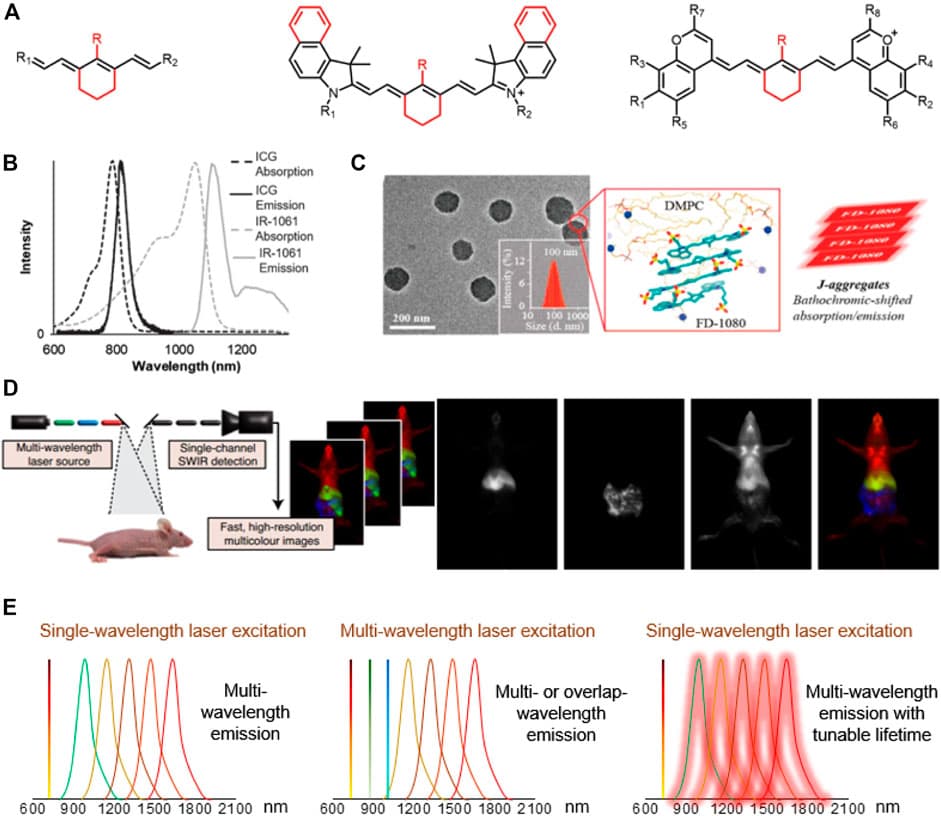
Frontiers | Near-Infrared-II Cyanine/Polymethine Dyes, Current State and Perspective View original
Is this image relevant?
Pickering emulsions stabilized by coloured organic pigment particles - Chemical Science (RSC ... View original
Is this image relevant?
New pigments | These pigment colors have been created using … | Flickr View original
Is this image relevant?
Frontiers | Near-Infrared-II Cyanine/Polymethine Dyes, Current State and Perspective View original
Is this image relevant?
Dye-based vs pigment-based
- Dye-based inks use colored dyes dissolved in a liquid carrier. They produce vivid, intense colors but tend to fade over time because they have low lightfastness.
- Pigment-based inks contain finely ground colored particles suspended in a liquid medium. They offer greater permanence, water resistance, and lightfastness, making them the better choice for archival or long-lasting artwork.
Waterproof vs water-soluble
- Waterproof inks resist water and moisture once dry. This makes them ideal for mixed media work where you might layer watercolor or gouache on top. Common examples: India ink, acrylic ink, and some pigment-based inks.
- Water-soluble inks can be re-wetted and manipulated after drying. This property lets you create wash effects, gradients, and soft blending. Common examples: fountain pen inks, some dye-based inks, and diluted ink washes.
Acrylic vs India
- Acrylic inks are water-resistant, fast-drying, and dry to a glossy finish. They adhere well to a variety of surfaces (paper, canvas, wood) and can be thinned with water or applied opaquely.
- India ink is traditionally made from carbon black pigment suspended in water with a binding agent like shellac. It produces deep, rich blacks and becomes waterproof when dry. It's a go-to ink for drafting, illustration, and calligraphy.
Fountain pen vs dip pen
- Fountain pens have an internal reservoir that holds ink and feeds it to the nib continuously. They're convenient for sustained drawing sessions since you don't need to re-dip. They use water-based inks and come in various nib sizes.
- Dip pens consist of a handle and interchangeable nibs that you dip into an ink well. They offer more flexibility in ink choices (you can use waterproof inks that would clog a fountain pen) and produce greater line variation. The tradeoff is frequent re-dipping and careful cleaning.
Calligraphy vs drawing
- Calligraphy inks are formulated for smooth, consistent flow. They tend to be slightly thicker to prevent bleeding and feathering on paper. Examples include sumi ink and specially formulated calligraphy inks.
- Drawing inks cover a wider range of properties. They can be thin or thick, transparent or opaque, matte or glossy. You select them based on the visual effect you want, the surface you're working on, and how permanent you need the result to be.
Properties of ink
Understanding ink properties helps you choose the right type for your technique and desired outcome. The key properties to consider are viscosity, opacity, drying time, lightfastness, and how the ink interacts with your paper.
Viscosity and flow
Viscosity refers to how thick an ink is and how much it resists flowing.
- Low viscosity inks are thin and free-flowing, good for smooth lines and even coverage.
- High viscosity inks are thicker, giving you more control and the ability to build texture.
Flow describes how easily ink moves from your pen or brush to the surface. It's affected by the ink formulation, the tool you're using, and the paper's absorbency. Well-balanced flow gives you smooth, uninterrupted lines.
Opacity vs translucency
- Opaque inks block the surface beneath them, providing solid coverage. They work well for bold, graphic styles. Examples: gouache, acrylic ink, and heavily pigmented inks.
- Translucent inks let some light pass through, revealing the surface or layers underneath. They're great for building depth through layering. Examples: ink washes, diluted inks, and some dye-based inks.
Drying time and permanence
Drying time depends on ink type, paper absorbency, and environmental conditions like humidity and temperature.
- Fast-drying inks (acrylic, alcohol-based) are ideal for quick layering and minimizing smudging.
- Slow-drying inks (oil-based, some pigment-based) give you more working time for blending.
Permanence is an ink's resistance to fading and deterioration over time. Archival-quality inks have high permanence ratings and hold up better against UV light and humidity. Pigment-based inks generally offer greater permanence than dye-based inks.
Lightfastness and archival quality
Lightfastness measures how well an ink resists fading when exposed to light. Inks with high lightfastness ratings maintain their original color over extended periods. Pigment-based inks, especially those with mineral or synthetic pigments, tend to have superior lightfastness.
Archival quality refers to an ink's overall long-term stability. Archival inks are acid-free and pH-neutral, designed to minimize the chemical reactions that cause degradation. If you're creating work meant to last for generations, archival quality matters.
Interaction with paper surfaces
The pairing of ink and paper has a big impact on your final result.
- Absorbent papers (watercolor paper, printmaking paper) allow greater ink penetration and diffusion, which is useful for wash techniques but can cause lines to spread.
- Smooth, coated papers (Bristol, vellum) produce sharper lines with less bleeding and feathering.
Paper choice also affects drying time and smudge resistance. Some inks perform best on specific paper types, so testing a small area before committing to a full drawing is a good habit.

Ink application techniques
Ink drawing uses a wide range of application techniques to create different visual effects and textures. Each technique calls for a specific combination of tools, inks, and paper surfaces.
Hatching and cross-hatching
Hatching means drawing a series of parallel lines to create shading and texture. You control tonal value by varying line thickness, spacing, and angle. Lines closer together read as darker; lines farther apart read as lighter.
Cross-hatching builds on hatching by adding a second layer of lines that intersect the first at an angle. This creates denser, more complex shading and can convey volume and depth. It's widely used in pen and ink illustration, comics, and printmaking.
Stippling and pointillism
Stippling creates shading and texture using small dots or short strokes. You vary the density, size, and placement of dots to produce a range of tonal values. It's time-consuming but offers very precise control over gradual tonal transitions.
Pointillism is a related painting technique that uses distinct dots of color to form an image. Viewed from a distance, the dots optically blend into a cohesive composition. You can adapt this to ink drawing by using different colored inks or layering to build color and depth.
Wash and gradient effects
Ink wash involves diluting ink with water to create translucent, painterly effects. You build depth and soft transitions by applying washes in layers, letting each layer dry before adding the next. This technique is common in landscape, still life, and figure drawing.
Gradient effects are achieved by gradually transitioning from one ink value to another. You can create these using wet-on-wet techniques (applying wet ink onto a still-wet surface), blending, or layering successive washes. Gradients add dimension and visual interest to ink drawings.
Resist and masking methods
Resist techniques involve applying a water-resistant substance (wax, masking fluid) to areas of the paper before inking. The resist prevents ink from adhering to those areas, preserving highlights or creating negative space. This is commonly used in watercolor and mixed media work.
Masking methods use removable materials (tape, stencils, frisket film) to block out areas of the composition. This gives you crisp, clean edges and shapes when applying ink or washes. Masking works well for geometric patterns, lettering, or complex designs.
Splatter and drip techniques
Splatter techniques involve flicking or splattering ink onto the paper using a brush, toothbrush, or other tool. The results are dynamic and spontaneous. You can control the effect by adjusting ink consistency, brush size, and how much force you use.
Drip techniques let ink drip or run down the paper surface, creating organic, fluid patterns. Gravity, paper tilt, and ink viscosity all influence the appearance. These techniques add a sense of movement and unpredictability to ink drawings.
Ink drawing tools
Ink drawing uses a diverse range of tools, each producing different line qualities and effects. The tool you choose depends on the effect you want, the ink you're using, and your personal preference.
Dip pens and nibs
Dip pens consist of a holder and interchangeable nibs that you dip into ink. They offer great flexibility in line variation, ink flow, and nib shape. Nibs come in various sizes and styles: round, pointed, flat, and italic, each producing a different line quality.
The tradeoff is that dip pens require frequent re-dipping and careful cleaning. They're well suited for calligraphy, illustration, and detailed line work.
Brush pens and markers
Brush pens have a flexible, brush-like tip that produces expressive, variable-width strokes. Some have a self-contained ink reservoir; others require dipping. They're ideal for calligraphic styles, sketching, and adding fluid, organic elements to drawings.
Markers are self-contained tools with a felt or fiber tip and internal ink supply. They come in various sizes, shapes, and ink types (water-based, alcohol-based, pigment-based). Markers deliver consistent, even coverage and work well for bold, graphic styles.
Technical pens and liners
Technical pens have a precise, tubular nib that produces consistent, uniform lines. They're available in different line widths (typically 0.1mm to 1.0mm) and are ideal for drafting, architectural drawing, and intricate detail work.
Liners (also called fineliners) are fine-tipped pens designed for outlining, detailing, and controlled line work. They often use water-resistant, pigment-based inks, which makes them compatible with watercolors or markers applied on top. They're essential for comic book inking, illustration, and precision drawing.
Bamboo and quill pens
Bamboo pens are traditional tools made from sharpened bamboo sticks. They produce a unique, expressive line quality that changes with the cut of the nib and the pressure of your hand. They're commonly used in Asian calligraphy and sumi-e (ink wash) painting.
Quill pens are made from the flight feathers of large birds, such as geese or swans. The hollow shaft acts as an ink reservoir, while the pointed nib allows for variable line widths. Quills were the primary writing and drawing tool in Europe before metal nibs were developed.

Improvised and unconventional tools
Improvised tools like twigs, feathers, or found objects create distinctive, unpredictable marks. They encourage experimentation and work well for abstract or expressive drawing styles.
Unconventional tools like toothbrushes, sponges, or stencils expand the range of textures and effects available to you. A toothbrush dipped in ink and flicked with your thumb creates fine splatter; a sponge dipped in ink produces irregular, textured marks. These tools push the boundaries of traditional ink techniques.
Ink and mixed media
Combining ink with other media adds depth, texture, and visual interest to your work. Mixed media approaches let you layer and integrate various materials and techniques.
Combining with graphite and charcoal
Graphite works well for initial sketching and establishing composition before inking. Soft graphite (6B-9B) creates smooth, blendable tones for shading, while harder grades (HB-4H) produce crisp, precise lines for underdrawing.
Charcoal adds drama and atmospheric depth to ink drawings. It can be used for bold, expressive marks and rich, velvety blacks. Charcoal combines well with ink washes and can be manipulated with erasers or blending tools for softer transitions.
Layering with watercolor and gouache
Watercolor can be applied before or after ink work to add translucent, luminous color. Layering watercolor washes over dried ink creates depth and soft transitions. Using watercolor as an underpainting provides a tonal foundation for subsequent ink details.
Gouache is an opaque watercolor medium useful for adding bold, flat colors or bright highlights. You can apply it over dried ink to create contrast, correct mistakes, or add emphasis. The interplay between opaque gouache and transparent ink creates dynamic visual contrast.
Incorporating collage and transfers
Collage involves assembling and gluing various materials (paper, fabric, photographs) onto the artwork surface. It adds physical texture and visual complexity to ink drawings and can serve as backgrounds, patterns, or focal points.
Transfers move images or patterns from one surface to another using heat, solvents, or pressure. They let you incorporate found imagery, text, or graphics into ink drawings, creating layered compositions with diverse visual elements.
Digital manipulation and enhancement
Digital tools (scanners, graphic tablets, software) can refine or enhance ink drawings after they're created. Scanning your work allows for digital color correction, resizing, and manipulation without altering the original piece.
Graphic tablets let you create digital ink drawings or add digital elements to scanned artwork. Digital coloring and compositing expand the possibilities of traditional ink drawing and facilitate the creation of prints, animations, or interactive media.
Experimental and multimedia approaches
Experimental approaches push ink drawing beyond its traditional boundaries. This might mean working on non-traditional surfaces (metal, wood, fabric), using alternative inks (coffee, tea, walnut ink), or applying ink with unconventional methods (airbrush, stamps, stencils).
Multimedia approaches combine ink with other art forms and disciplines. Artists integrate ink drawing with printmaking, sculpture, installation, or performance art, creating interdisciplinary projects that explore what ink can do beyond the page.
Ink drawing styles
Ink drawing encompasses a wide range of styles, each with distinct characteristics and visual language. These styles are shaped by historical and cultural contexts, artistic movements, and personal expression.
Traditional and classical
Traditional ink drawing styles are rooted in historical techniques and conventions. They're often characterized by precise, detailed line work and a focus on realistic representation. Examples include classical Chinese and Japanese ink painting, Renaissance draftsmanship, and Victorian illustration.
Classical styles emphasize technical skill, proportion, perspective, and the accurate depiction of form and light. They rely on mastery of line weight, shading, and composition to create a convincing sense of depth and realism. These styles are well suited for portraits, landscapes, still lifes, and narrative illustrations.
Graphic and illustrative
Graphic styles use bold, simplified shapes and high-contrast imagery. They typically feature a limited color palette, flat shading, and strong outlines for visual impact. You'll see these styles in comic books, graphic novels, posters, and editorial illustrations.
Illustrative styles focus on visual storytelling, conveying information, or evoking a specific mood. They range from realistic to highly stylized depending on the audience and purpose. Common applications include children's books, advertising, product packaging, and educational materials.
Abstract and expressive
Abstract ink drawing prioritizes emotion, energy, and spontaneity over realistic representation. It emphasizes the inherent qualities of the medium: fluidity, gesture, and mark-making. This approach draws on the aesthetic principles of abstract expressionism, calligraphy, and gestural drawing.
Expressive styles use ink to convey personal experiences, feelings, or ideas in a subjective, intuitive way. They rely on the artist's individual touch, pressure, and movement to create unique, emotive marks. These styles are well suited for exploring themes of identity, memory, and personal narrative.
See Fiveable more often in Google
Mark Fiveable as a preferred source and Google is more likely to show you our guides in Top Stories, with a "preferred" badge in AI Mode and AI Overviews.