11.1 Abstract drawing

✏️Drawing I Unit 11 Review
11.1 Abstract drawing
✏️ Drawing I
Defining Abstract Drawing
Abstract drawing moves away from depicting recognizable objects. Instead, it uses line, shape, color, and composition to express ideas, emotions, or purely visual concerns. This non-representational approach opens up a huge range of possibilities, from fast, gestural marks to carefully planned geometric compositions.
Understanding abstraction matters in a Drawing I course because it pushes you to think about why you make marks, not just what you're drawing. You shift from observing the world to organizing visual elements on their own terms.
Techniques of Abstraction
These are the core strategies for moving from representation toward abstraction. You'll likely use all three in your studio work.
Simplification of Forms
Simplification means reducing complex subjects to their essential shapes and lines, stripping away unnecessary detail. A landscape might become a few overlapping rectangles and curves. A figure might become a single flowing gesture line. The goal is to distill a subject down to what matters most visually.
Exaggeration and Distortion
Here you intentionally alter proportions, scale, or perspective to create tension or emphasis. Stretching a figure's limbs can suggest grace or vulnerability. Compressing and warping facial features can express anguish or intensity. The key is that the distortion serves a purpose: it communicates something that accurate proportions wouldn't.
Fragmentation and Deconstruction
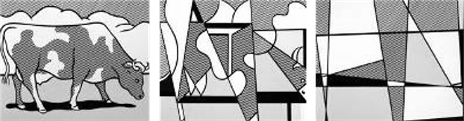
This technique breaks forms into smaller, disconnected parts or planes, then rearranges or layers them into new compositions. Think of Cubist-inspired drawings that show multiple viewpoints at once, or collage-based work that juxtaposes unrelated elements. Fragmentation challenges traditional ideas about space and perspective.
Elements in Abstract Drawing
Line vs. Shape
Lines carry enormous expressive range in abstract work. A thin, delicate line feels different from a thick, aggressive one. Lines can define edges, build texture, or imply movement and direction. Contrasting linear marks against solid shapes or flat areas of color creates visual interest and helps balance a composition.
Color and Value
Color sets mood. Vibrant, saturated hues feel energetic; muted tones feel contemplative. Value (the lightness or darkness of a color) creates depth, volume, and contrast. A monochromatic drawing can explore subtle tonal shifts, while a high-contrast composition that juxtaposes light and dark areas creates drama and visual punch.
Texture and Pattern
Texture in abstract drawing comes from the marks themselves: dense layered scribbles, controlled dot patterns, cross-hatching, or loose washes. Repetition and variation of marks build rhythm and unity across a composition. A field of tight, energetic scribbles feels very different from a grid of evenly spaced dots, even though both are "texture."
Composition Strategies
Balance and Asymmetry
You can arrange elements for equilibrium (symmetrical or near-symmetrical layouts) or for intentional imbalance. A strong central focal point balanced by smaller peripheral elements feels stable. An asymmetrical arrangement, where visual weight clusters to one side, creates tension and energy. Both are valid choices depending on what you want the drawing to do.
Rhythm and Movement
Repetition, gradation, and directional lines create visual flow. Undulating curves can suggest waves or wind. A progressive buildup of marks across the page can create a sense of acceleration. Gestural marks and implied motion convey energy and keep the viewer's eye moving through the composition.
Unity and Variety
A cohesive abstract drawing needs a consistent visual language: a limited color palette, a recurring type of mark, or repeating motifs that tie the piece together. But too much consistency becomes monotonous. Introducing surprise elements or deliberate deviations keeps the viewer engaged. The balance between unity and variety is one of the trickiest things to get right.
Emotional Expression
Mood and Atmosphere
Color, line quality, and composition work together to evoke emotional states. A somber, monochromatic charcoal drawing with heavy, slow marks conveys melancholy. A bright composition with quick, scattered strokes can express joy or restlessness. Pay attention to how your material choices and mark-making speed affect the feeling of the piece.
Intuition and Spontaneity
Not every abstract drawing needs a plan. Some of the most compelling work comes from letting instinct guide the process, responding to each mark as it appears. Accidents, unintended smudges, and unexpected outcomes can become the strongest parts of a drawing. This approach captures the kinetic energy of your gestures and can produce results that feel alive in ways that planned work sometimes doesn't.
Personal Symbolism
Over time, you may develop a personal vocabulary of shapes, colors, and motifs that carry specific meaning for you. These symbols can communicate ideas, memories, or beliefs in ways that invite interpretation without dictating a single reading. Childhood references, cultural imagery, or recurring abstract forms can all become part of this visual language.
Abstract Drawing Media
Traditional vs. Digital
Traditional media like pencil, charcoal, ink, and pastel each have distinct physical qualities: the drag of charcoal on rough paper, the flow of ink from a nib, the dusty layering of pastel. Digital tools offer flexibility and easy editing through stylus input, vector graphics, and digital collage. Neither is better; they're different. Traditional media reward commitment to each mark, while digital platforms let you experiment and revise freely.
Mixed Media Approaches
Combining multiple media in one drawing creates rich, layered surfaces. Ink bleeds differently over graphite than over bare paper. Oil pastel resists watercolor washes. These material interactions become part of the drawing's visual texture. A piece might blend pencil, watercolor, and collage, or juxtapose printed digital elements with hand-drawn marks.
Unconventional Materials
Abstract drawing doesn't have to mean pencil on paper. Thread, wire, sand, torn fabric, or found objects can all function as drawing materials. The substrate can be metal, wood, or layered paper. Expanding your definition of "drawing" this way opens up new mark-making possibilities and challenges you to think about what drawing fundamentally is.

Abstract Drawing Process
Ideation and Planning
- Start by developing a concept, theme, or compositional idea through quick sketches and studies.
- Gather visual references: photographs, textures, color swatches, or other artworks that relate to your concept.
- Create thumbnail sketches (small, rough compositions) to explore different arrangements and color schemes.
- Select the strongest thumbnail and use it as a roadmap for the final drawing.
Even spontaneous abstract work benefits from some initial thinking about scale, media, and general direction.
Layering and Building Up
Most abstract drawings develop through successive layers. You might start with a loose, gestural underpainting, then progressively refine shapes, add detail, and adjust relationships between elements. Transparency, opacity, and blending techniques help create depth and smooth transitions. Masking (covering areas to protect them) lets you build intricate, multi-dimensional spaces.
Editing and Refining
Step back from the drawing regularly to evaluate it. Ask yourself:
- Where does the composition feel weak or cluttered?
- What needs more emphasis? What should be toned down or removed?
- Does the drawing communicate what you intended?
Significant revision is normal. Erasing, covering, or reworking sections to strengthen the overall impact is part of the process, not a sign of failure.
Historical Context
Abstract Expressionism
This post-World War II movement emphasized spontaneous, gestural mark-making and direct emotional expression. Key figures include Jackson Pollock (drip paintings and allover composition), Willem de Kooning (aggressive, figurative-abstract hybrids), and Franz Kline (bold black-and-white gestural work). These artists redefined what drawing and painting could be, and their influence on abstract practice remains enormous.
Minimalism and Post-Minimalism
Minimalism moved in the opposite direction: reductive, geometric, and focused on simplicity and repetition. Sol LeWitt used drawing as conceptual exploration, creating instruction-based wall drawings. Agnes Martin made delicate grids and lines that hover between geometry and meditation. Richard Serra explored drawing through large-scale material processes. Post-Minimalism expanded these ideas by incorporating process, performance, and site-specificity.
Contemporary Abstract Drawing
Contemporary artists working in abstraction use an enormous range of approaches. Some use drawing to map or visualize complex data. Others create immersive, installation-scale drawing environments. New technologies, interdisciplinary methods, and socio-political themes continue to push the boundaries of what abstract drawing can be and do.
Critique and Analysis
Formal vs. Conceptual Analysis
Formal analysis looks at the visual elements: How does the drawing use color, line, shape, value, and composition? Conceptual analysis considers the ideas, themes, and context behind the work. Both matter. You might critique a drawing's balance and rhythm (formal) while also interpreting it as a response to environmental destruction (conceptual). Strong abstract work tends to succeed on both levels.
Interpretation and Meaning
Abstract drawings are open to multiple readings. Different viewers bring different associations and emotional responses. When interpreting abstract work, consider the artist's intent and context, but also trust your own reactions. A particular arrangement of forms might suggest narrative, symbolism, or pure visual sensation depending on who's looking.
Evaluating Success
When assessing an abstract drawing, consider:
- Originality: Does it offer a fresh approach or perspective?
- Technical skill: Is the mark-making controlled and intentional (even when it looks spontaneous)?
- Visual impact: Does the composition hold your attention?
- Conceptual depth: Is there an idea or emotional core driving the work?
No single factor determines success. A technically simple drawing with a powerful concept can be just as effective as a virtuosic one with formal ambitions.
See Fiveable more often in Google
Mark Fiveable as a preferred source and Google is more likely to show you our guides in Top Stories, with a "preferred" badge in AI Mode and AI Overviews.