12.5 Artist statements

✏️Drawing I Unit 12 Review
12.5 Artist statements
✏️ Drawing I
Purpose of Artist Statements
An artist statement is a short written explanation that communicates your creative vision and the intentions behind your work. For a Drawing I course, learning to write one is just as important as learning to draw, because it's how you give viewers access to the thinking behind what they're seeing.
Artist statements bridge the gap between what you meant and what someone else perceives. Without that context, viewers are left guessing. A strong statement invites them to engage with your work on a deeper level and understand the ideas driving it.

Top images from around the web for Communicating artistic vision
Paintings Demonstrate Artist's Unique Vision - North Carolina Health News View original
Is this image relevant?
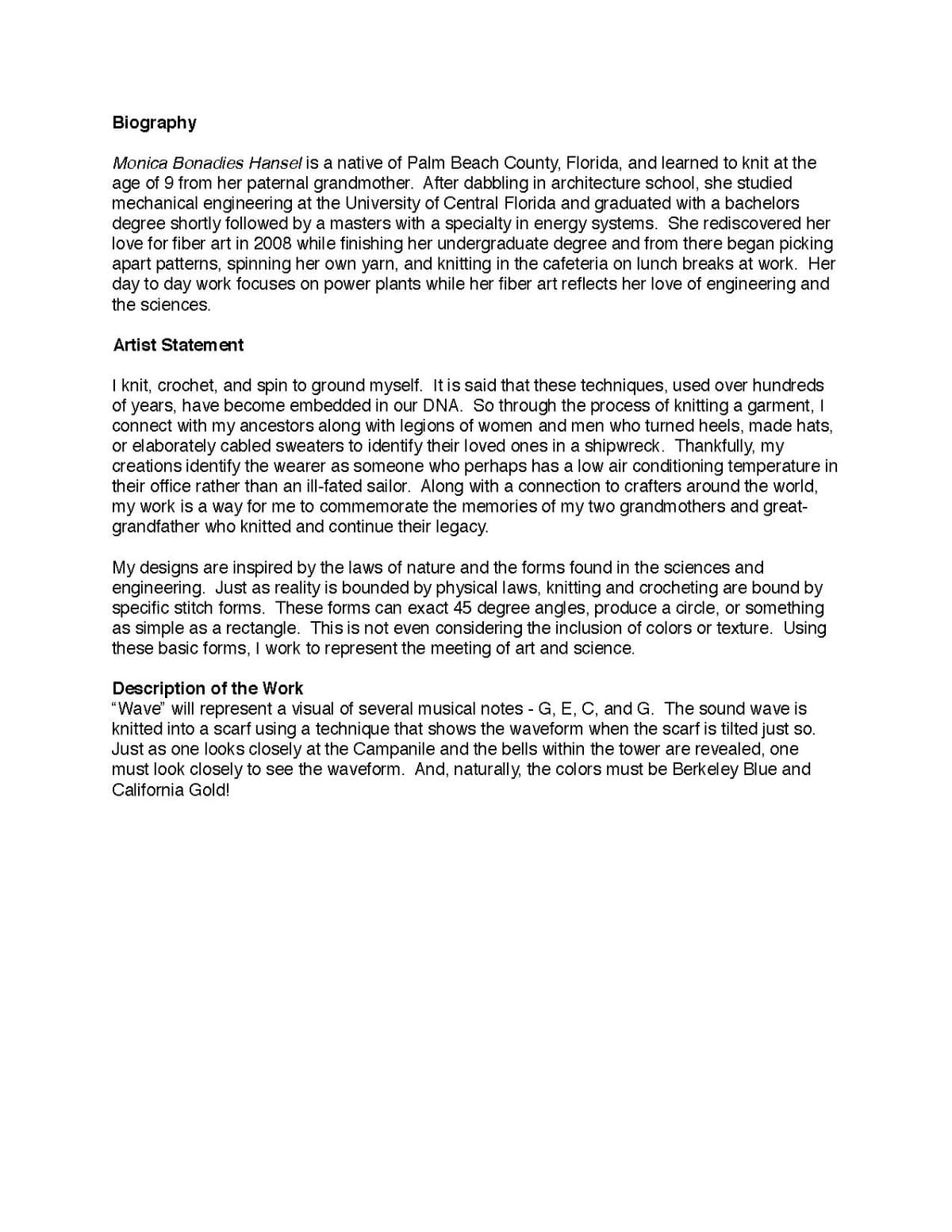
Artist's statement - Wikipedia View original
Is this image relevant?
Paintings Demonstrate Artist's Unique Vision - North Carolina Health News View original
Is this image relevant?
Paintings Demonstrate Artist's Unique Vision - North Carolina Health News View original
Is this image relevant?
Artist's statement - Wikipedia View original
Is this image relevant?
Communicating Artistic Vision
Your artist statement is where you articulate your perspective, philosophy, and goals as a creator. It conveys the overarching themes, concepts, and ideas behind your creative practice.
Think of it this way: your drawings show what you made, but your statement explains why you made it. That "why" is what transforms a viewer from a passive observer into someone genuinely connecting with your work.
Providing Context for Artwork
Beyond vision, artist statements supply background information that shapes how people read your work. This might include:
- Personal history or formative experiences that influence your subject matter
- Artistic training and how it shaped your approach to drawing
- Cultural heritage or community connections reflected in your themes
- Social or political circumstances that prompted a particular piece or series
This context helps viewers understand the broader framework your artwork exists within. A drawing of an empty chair means something different when you know the artist's statement discusses themes of loss and memory.
Key Components of Artist Statements
Most artist statements share a few core components, though the length and style will vary. Together, these parts create a cohesive narrative about who you are as an artist and what your work is about.
Artist Background and Influences
Statements often open by introducing you and your relevant background. This section covers things like your education, training, and the artists or movements that have shaped your perspective.
You don't need a full autobiography. Focus on the details that connect directly to your current work. If your grandmother taught you to observe nature closely, and that shows up in your drawings, that's worth mentioning. A summer job at a grocery store probably isn't, unless it genuinely shaped your art.
Central Themes and Concepts
This is the heart of your statement. Here you explore the deeper meaning behind your work: the recurring ideas, motifs, symbols, or subjects that tie your pieces together.
For example, if your drawings consistently explore the tension between urban spaces and natural environments, this section is where you name that theme and explain why it matters to you. You're giving viewers a framework for interpreting what they see.
Artistic Process and Techniques
This section covers how you work: your materials, techniques, and methods. In a drawing course, you might discuss:
- Your preferred media (charcoal, graphite, ink, mixed media)
- Your approach to composition or mark-making
- How you develop a piece from initial concept to finished drawing
- Any experimentation with unconventional tools or surfaces
Sharing process details helps viewers appreciate the craftsmanship and decision-making behind the finished piece.

Intended Impact on the Viewer
What do you want someone to feel or think when they look at your work? This section addresses the emotional, intellectual, or sensory response you're aiming for.
Maybe you want viewers to feel unsettled by the distortion in your figure drawings, or you want them to slow down and notice small details they'd normally overlook. Being specific here encourages more active, engaged viewing.
Writing Effective Artist Statements
Getting the content right is one thing. Communicating it well is another. These guidelines will help you write a statement that actually lands with your reader.
Clarity and Conciseness
- Use straightforward language. If a sentence requires rereading, rewrite it.
- Keep paragraphs short and focused, with each one building on the last.
- Aim for one to two pages at most. For a Drawing I portfolio, a single strong paragraph or a few short paragraphs is often enough.
- Read your draft and cut anything that doesn't add real information. If a sentence sounds impressive but says nothing specific, it's filler.
Avoiding Jargon and Clichés
Some art-specific terms are necessary, but don't load your statement with language your reader won't understand. If you use a term like chiaroscuro or negative space, make sure the context makes the meaning clear.
Equally important: avoid phrases so overused they've lost all meaning. Statements like "my work explores the human condition" or "I seek to push boundaries" tell the reader almost nothing. Replace vague claims with specific descriptions of what your work actually does.
Weak: "My art explores the relationship between light and dark."
Stronger: "I use high-contrast charcoal drawings to isolate single light sources, forcing the viewer to adjust to near-darkness the way eyes adjust in a dim room."
Tailoring to Target Audience
Your statement should shift depending on who's reading it:
- Classroom critique: Your classmates and instructor already share a vocabulary with you, so you can be more direct about technique.
- Gallery visitors: Assume less familiarity with art terms. Keep language accessible.
- Grant committees or applications: These readers want to see clear artistic intent and may expect a more formal tone.
Adjust length, vocabulary, and emphasis based on the context where your statement will appear.
Proofreading and Editing
A polished statement signals professionalism. Before you finalize:
- Read it aloud. Awkward phrasing and repetition become obvious when you hear them.
- Cut ruthlessly. If two sentences say the same thing, keep the better one.
- Check grammar and spelling. Errors undermine your credibility.
- Get outside feedback. Ask a classmate, mentor, or friend to read it. If they can't summarize your main idea back to you, the statement needs revision.

Examples of Artist Statements
Looking at how other artists have written their statements can sharpen your own writing. Pay attention not just to what they say, but how they say it.
Contemporary Artists vs. Historical Figures
Contemporary artists like Ai Weiwei, Yayoi Kusama, and Banksy often use their statements to address social and political issues, sometimes with provocative or unconventional language. Historical figures like Leonardo da Vinci, Vincent van Gogh, and Georgia O'Keeffe tended to focus more on artistic philosophy, technical innovation, and the beauty they aimed to capture.
Comparing the two reveals how the purpose of artist statements has shifted over time, reflecting changing cultural priorities. Both approaches are valid; what matters is that the statement authentically represents the artist's work.
Across Various Media and Styles
Artist statements exist across every medium. A few examples worth studying:
- Cindy Sherman (photography) discusses her exploration of identity and gender roles through staged self-portraits.
- Louise Bourgeois (sculpture) writes about the psychological and emotional themes driving her abstract, biomorphic forms.
- Mark Rothko (painting) addresses his use of color and form to evoke deep emotional and transcendental experiences.
Even though you're focused on drawing, reading statements from artists in other media can reveal effective strategies for talking about visual work.
Analyzing Strengths and Weaknesses
When you read example statements, evaluate them critically:
- Strong statements have a clear structure where each section builds on the last. They use specific, vivid language and avoid generic phrasing.
- Weak statements tend to jump between unrelated ideas, rely on clichés, or use so much jargon that the actual message gets buried.
Practice this analysis with published statements you find online. Identifying what works and what doesn't in someone else's writing will directly improve your own.
Integrating Artist Statements in Portfolios
Your statement is a key part of your portfolio. How you present it matters almost as much as what it says.
Placement and Presentation
- Place your statement prominently, typically at the beginning or end of your portfolio.
- Label it clearly and make it visually distinct from your CV, artwork images, or other sections.
- Whether it's a separate page or integrated into your portfolio's design, make sure it's easy to find and read.
Consistency with Artwork
Your statement and your artwork need to tell the same story. If your statement discusses themes of isolation and stillness, but your portfolio is full of energetic, crowded compositions, something's off.
Check that the themes, concepts, and techniques you describe in your statement are clearly visible in the work you've selected. The tone of your writing should also match the visual feel of your art. A playful, experimental body of work pairs oddly with a stiff, formal statement.
Updating as Artistic Style Evolves
Your artist statement isn't a permanent document. As your work changes, your statement should change with it.
- Review your statement at least once a semester or whenever you complete a significant new body of work.
- Keep your voice consistent, but update the themes, techniques, and influences to reflect where you are now.
- Save older versions. They're useful for tracking your growth and can be adapted if you revisit earlier themes.
Keeping your statement current shows that you're actively thinking about your practice, not just producing work on autopilot.
See Fiveable more often in Google
Mark Fiveable as a preferred source and Google is more likely to show you our guides in Top Stories, with a "preferred" badge in AI Mode and AI Overviews.