5.5 Combining forms

✏️Drawing I Unit 5 Review
5.5 Combining forms
✏️ Drawing I
Combining forms
Combining forms is how you build complex drawings from simpler building blocks. Instead of drawing a complicated object all at once, you break it down into basic shapes and volumes, then bring those pieces together into a unified whole. This skill bridges the gap between drawing isolated shapes (which you've already practiced) and creating full compositions with depth, structure, and visual interest.
Principles of combining forms
A few core principles guide how forms work together in a composition:
- Balance distributes visual weight across the composition so it doesn't feel lopsided. A large dark form on one side might be balanced by several smaller forms on the other.
- Contrast creates interest through differences in size, shape, texture, or value. A small circle next to a large angular form draws the eye more than two similar shapes side by side.
- Unity ties everything together through repetition of similar shapes, values, or patterns. Without unity, a drawing feels like a collection of unrelated parts.
- Proportion and scale establish hierarchy. Making one form larger signals that it's more important, while smaller forms recede or play supporting roles.
- Negative space (the empty areas between and around forms) is just as active as the forms themselves. Treat it as a shape you're designing, not just leftover background.
Techniques for combining forms
These are the main ways you can physically bring forms together on the page:
- Overlapping places one form in front of another, instantly creating depth. The front form reads as closer; the partially hidden form reads as farther away. Varying how much overlap you use controls how much depth the viewer perceives.
- Intersecting has forms cross through or cut into each other, generating new shapes at the meeting points. The angle and abruptness of the intersection affects the mood: a gentle curve crossing another feels harmonious, while sharp angles colliding feels tense.
- Interlocking fits forms together like puzzle pieces, sharing edges or contours. This blurs boundaries between forms and creates a strong sense of connection. Think of how fingers lace together versus just touching at the tips.
- Repetition and variation work as a pair. Repeating a form (or echoing its shape, size, or orientation) creates rhythm and coherence. Varying those repeated forms prevents the composition from going flat. A row of circles that gradually shrink, for example, creates both unity and movement.
Organic vs. geometric forms
Organic forms are irregular and fluid, inspired by natural shapes like leaves, rocks, bones, or clouds. Geometric forms are regular and structured, based on mathematical shapes like spheres, cubes, and cylinders.
Combining both types in a single drawing creates dynamic contrast. A rounded, organic figure placed against a rigid geometric background immediately suggests a tension between the natural and the constructed. You can use this contrast intentionally to reinforce your subject matter, or you can blend the two to soften that tension.
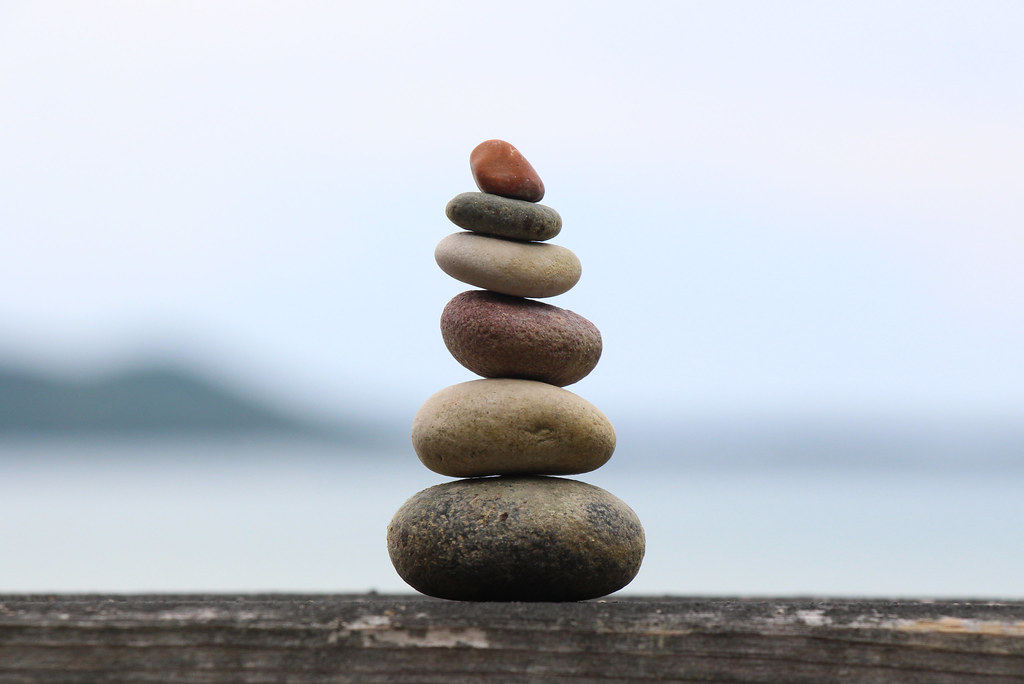
Simplification and abstraction
These two related techniques help you control how much detail your combined forms carry:
- Simplification reduces forms to their most basic shapes. A human torso becomes a tapered cylinder; a tree canopy becomes an oval. This clarifies relationships between forms and makes the overall composition easier to read.
- Abstraction goes further by distorting, exaggerating, or rearranging forms to emphasize qualities like movement, weight, or emotion rather than accurate representation.
Both exist on a spectrum. You might simplify just slightly to clean up a still life, or abstract dramatically until the original subject is unrecognizable. The degree you choose depends on what you want the drawing to communicate.
Composition principles for combined forms
Once you're working with multiple forms, composition becomes critical. Several principles help you organize them effectively:
- Emphasis creates a focal point through contrast, isolation, placement, or scale. If everything competes for attention equally, nothing stands out.
- Rhythm comes from the regular or varied repetition of forms across the composition. Regular rhythm (evenly spaced forms) feels calm and orderly. Progressive rhythm (forms that gradually change size or spacing) creates a sense of movement.
- Balance can be symmetrical (mirrored on both sides), asymmetrical (uneven but visually stable), or radial (arranged around a center point). Asymmetrical balance is the most common in dynamic compositions because it feels natural without being static.
Compositional frameworks like the rule of thirds or the golden ratio can help you place forms, but they're starting points, not rules. The arrangement should serve the drawing's meaning and mood.
Lighting and shading combined forms
When forms overlap, intersect, or sit near each other, their lighting interactions become more complex than when drawn in isolation.
Lighting direction determines where highlights and shadows fall across your combined forms. A single consistent light source unifies the drawing; conflicting light directions can make forms feel disconnected. Pay attention to how one form might cast a shadow onto another, since cast shadows reinforce spatial relationships and make overlapping forms feel grounded.
Shading techniques for rendering volume include hatching, cross-hatching, stippling, and blending. Where forms meet or overlap, you'll often need to increase value contrast at the edges to keep them visually distinct. A common mistake is shading each form in isolation without considering how neighboring forms affect each other's values.

Texture and color in combined forms
Texture describes the surface quality of forms, whether actual (physical mark-making you can feel) or implied (visually suggested through technique). Combining forms with contrasting textures, like a smooth sphere resting on a rough block, creates visual interest and helps distinguish one form from another.
Color (when working in color media) adds another layer of interaction. Analogous colors (neighbors on the color wheel) create harmony between forms. Complementary colors (opposites on the wheel) create strong contrast. Even in a monochromatic drawing, value relationships between forms function similarly to color relationships.
Expressive and narrative qualities
Combined forms don't just describe objects; they can tell stories and convey emotions.
- Narrative emerges when forms are arranged to suggest a sequence, event, or relationship. Two overlapping figures leaning toward each other imply connection; the same figures pulling apart imply separation.
- Symbolism uses forms to represent ideas beyond their literal appearance. Cultural symbols (like a circle suggesting wholeness) or personal symbols can add layers of meaning.
- Expressive qualities come from how you handle the forms: aggressive, angular intersections feel different from soft, flowing interlocking shapes. The energy of your marks, the weight of your values, and the tension between forms all contribute to the emotional register of the drawing.
Representational vs. abstract approaches
Your combined forms can land anywhere on the spectrum between realistic depiction and pure abstraction:
- Representational work aims for recognizable subjects. Combined forms build up a scene the viewer can identify, like a still life or figure study.
- Abstract work uses forms for their visual and emotional qualities rather than to depict specific objects. The same principles of balance, contrast, and unity still apply, but the viewer responds to the relationships between forms rather than to what they "look like."
Most drawings in this course will fall somewhere in between. You might start with observed forms and simplify them, or begin with abstract shapes and develop them toward something recognizable. Either direction is valid as long as you're making intentional decisions about how your forms relate to each other.
See Fiveable more often in Google
Mark Fiveable as a preferred source and Google is more likely to show you our guides in Top Stories, with a "preferred" badge in AI Mode and AI Overviews.