1.10 Ovid Fasti Book 3 Arion Study Guide

🏛AP Latin Unit 1 Review
1.10 Ovid Fasti Book 3 Arion Study Guide
🏛 AP Latin
1.1
Catullus Love Poems
1.2
Catullus Social Personal Poems Study Guide
1.3
Catullus 64 Wedding Peleus Thetis Study Guide
1.4
Horace Life Philosophy Odes Study Guide
1.5
Horace Sermones 1.9 Boor Study Guide
1.6
Horace Odes 4.14 Praising Augustus Study Guide
1.7
Martial Epigrams Collection Study Guide
1.8
Ovid Amores 1.9, 3.1 Study Guide
1.9
Ovid Exile Poetry Study Guide
1.10
Ovid Fasti Book 3 Arion Study Guide
1.11
Ovid Heroides 1 and 7 Study Guide
1.12
Ovid Metamorphoses 1 452-546 Daphne Study Guide
1.13
Ovid Metamorphoses 3 402-510 Narcissus Study Guide
1.14
Ovid Metamorphoses 7 183-235 Daedalus Icarus Study Guide
1.15
Ovid Metamorphoses 8 611-724 Philemon Baucis Study Guide
1.16
Ovid Metamorphoses 11 85-145 King Midas Study Guide
1.17
Ovid Metamorphoses 14 101-157 Aeneas Underworld Study Guide
1.18
Ovid Metamorphoses 15.745-879 Celebration Caesars Study Guide
1.19
Propertius Elegies 2.12, 4.1.1-70 Study Guide
1.20
Vergil Aeneid Storm Divine Intervention Study Guide
1.21
Vergil Aeneid Trojan War Study Guide
1.22
Vergil Aeneid Epic Elements Study Guide
1.23
Vergil Aeneid War Scenes Study Guide
1.24
Vergil Georgics 4.485-503 Orpheus Eurydice Study Guide
1.25
Vergil Eclogues 4 Study Guide
1.26
Sulpicia Six Poems Study Guide
1.27
Tibullus Books 2.4 Study Guide
1.28
Medieval Later Authors Various Study Guide
1.29
Early American Latin Leo Kaiser Study Guide
1.30
Late Antique Medieval Collections Study Guide
TLDR
Ovid's Arion episode in Fasti Book 3 tells how the musician Arion, robbed by pirates and forced to play one last song, leaps overboard and is rescued by dolphins drawn to his music. As a Teacher's Choice poetry passage in AP Latin, it gives you practice reading Ovid's elegiac storytelling, building vocabulary in context, and explaining how grammar shapes meaning. The story is an aetiology: it explains the origin of the Delphinus constellation while celebrating art's power over greed.
Why This Matters for the AP Latin Exam
This is a Teacher's Choice passage, not a required text, so you will not be tested on the exact lines. What you build here transfers directly to the skills the exam rewards. Reading authentic Ovid trains you to handle poetry word order, recognize verb forms quickly, and use context to figure out unfamiliar vocabulary.
The core habits matter on every part of the exam:
- Reading and comprehending Latin closely supports the multiple-choice section.
- Producing accurate, literal translations and explaining the grammar behind them prepares you for the translation free-response questions.
- Finding specific Latin evidence and connecting it to an interpretation builds toward the analysis free-response questions.
Treat passages like this as training reps for the required Vergil and Pliny readings later in the course.
Key Takeaways
- Arion is an aetiology: a story that explains an origin, here the Delphinus constellation, while making a point about art and justice.
- Ovid contrasts music words like cithara and carmen with violence words like ferrum and crimen to drive the conflict.
- Watch for the historic present, where past action is told in present tense to make scenes feel immediate.
- Instrumental ablatives such as cithara and carmine show Arion using art as his means of survival.
- This is Teacher's Choice practice, so focus on transferable reading, translation, and analysis skills rather than memorizing the passage.
- Keep learning the required core vocabulary; recognizing it fast helps everywhere on the exam.
Vocabulary
The vocabulary clusters around three main areas. Once you see the pattern, you can predict what kind of word is coming next, since Ovid pulls from specific word groups for each part of the story.
Musical and Performance Terms
- cithara, -ae (f.) - lyre (Arion's instrument)
- carmen, -inis (n.) - song, poem
- cano, -ere, cecini, cantum - to sing, play
- vates, -is (m.) - poet, prophet, singer
- modulus, -i (m.) - melody, rhythm
- sonus, -i (m.) - sound
In this context, carmen is not just "song." Arion's carmen actually summons dolphins, so treat it as performance with supernatural effect.
Maritime Vocabulary
- navis, -is (f.) - ship
- navita, -ae (m.) - sailor (the pirate crew)
- pontus, -i (m.) - sea, deep
- aequor, -oris (n.) - level surface, sea
- fluctus, -us (m.) - wave
- delphinus, -i (m.) - dolphin
Ovid uses several words for "sea." Each carries a slightly different tone: pontus suggests the deep, threatening sea, while aequor suggests the flat, crossable surface. The word choice tracks the mood of each moment.
Greed and Violence Terms
- aurum, -i (n.) - gold
- praeda, -ae (f.) - booty, plunder
- avarus, -a, -um - greedy
- ferrum, -i (n.) - iron, sword
- nex, necis (f.) - death, murder
- crimen, -inis (n.) - crime
Notice how Ovid sets violence words against music words. When ferrum sits near cithara, the contrast carries the narrative: brutal greed versus divine art.
Grammar and Syntax
Purpose Clauses with Quo
This story uses purpose clauses built on quo plus a comparative. The construction specifically introduces a purpose involving "more" or "less" of something, which is more pointed than a plain ut clause. When you see quo plus a subjunctive verb, look for a comparative adverb or adjective nearby and translate accordingly.
Historic Present for Drama
Ovid switches to present tense at high-tension moments, for example iacit (he throws) and excipiunt (they catch). The shift makes the action feel like it is happening in front of you, so let it flag the key turns in the plot. In your own translation you can render these as English past or present, but stay consistent and know why the tense changed.
Instrumental Ablatives
Tools and means take the ablative throughout:
- cithara (with his lyre)
- carmine (by means of his song)
- sono (with the sound)
These ablatives show how Arion uses art as his instrument against violence. Identifying the ablative case and its function is exactly the kind of grammar explanation the translation questions reward.
How to Use This on the AP Latin Exam
Translation
- Translate literally first, then smooth the English. Account for every word and ending.
- Name the grammar that justifies your choice. For an ablative like carmine, say it is ablative of means, "by means of his song."
- Handle the historic present deliberately. Pick a tense and stay consistent.
Reading and Comprehension
- Use the word clusters. If you are in a sea passage and hit an unknown word, the maritime group narrows the likely meaning.
- Lean on cognates and word formation. Avarus connects to "avarice," crimen to "crime."
- Track who is acting. Latin word order spreads subjects and verbs apart, so confirm endings before you commit.
Analysis
- Build interpretations from specific Latin, not from the English summary. Quote the Latin word or phrase, then explain it.
- Use the music-versus-violence contrast as evidence. Pairing cithara with ferrum supports a claim about art opposing greed.
- Connect form to meaning. Explain how a tense shift or an ablative of means changes the effect of a line.
Common Trap
Do not flatten the tone. The passage moves from calm success to danger to grim irony to rescue. A translation that keeps one flat register loses the shifts that good analysis depends on.
Literary and Cultural Context
Aetiology in the Fasti
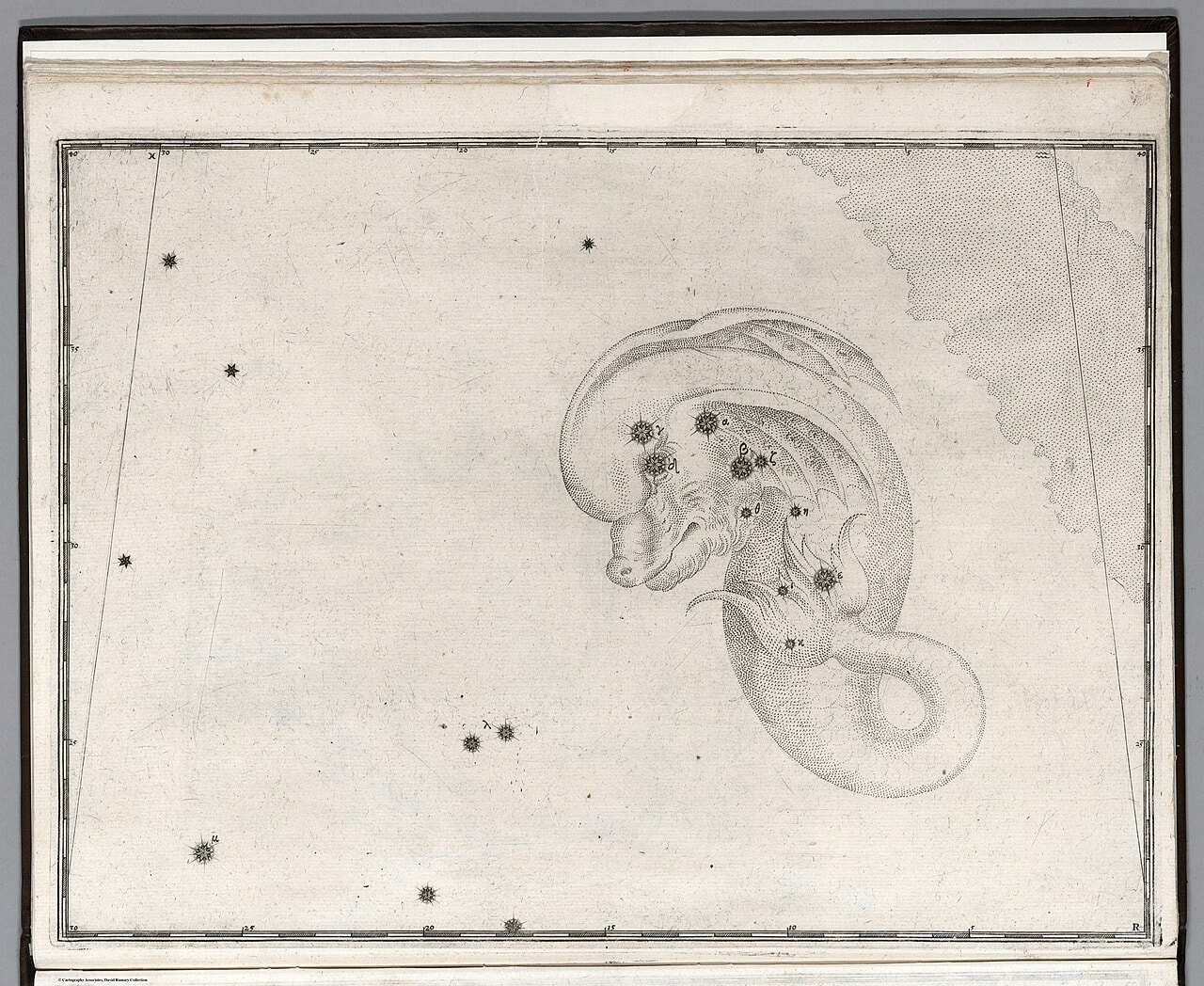
The Arion story is an aetiology, a tale that explains an origin. Here it accounts for the Delphinus constellation while suggesting that art and virtue earn divine reward. This fits the larger project of the Fasti, which ties myths to the Roman calendar and explains customs and the night sky through human stories.
Arion and Roman Attitudes Toward Artists
Arion is tied to a legendary Greek musician associated with Corinth. Romans held mixed views of performers, admiring real skill while keeping social distance from professional entertainers. In this story, Arion stands for the ideal artist whose virtue matches his talent, which is part of why the gods reward him.
Literary Features
Ring Composition
The story opens and closes with divine favor: Arion enjoys success and protection at the start, and the dolphin earns a place among the stars at the end. The frame suggests order and cosmic justice.
Sensory Detail
Ovid engages several senses at once, from the sound of the music and the waves to the sight of gold and the starry sky. That richness makes the miraculous feel concrete.
Dark Humor and Irony
The pirates think they are being merciful by allowing a final song. The irony is that this "mercy" enables Arion's rescue and their failure. Greed ends with empty hands.
Key Themes
Art Versus Violence
The central conflict pairs opposites: cithara against ferrum, carmen against crimen, creation against destruction. Art wins through divine help, which implies a cosmic preference for beauty over brutality.
Performance Under Pressure
Arion's greatest performance comes at the threat of death, reflecting the value placed on grace under pressure and dignity in crisis. His final song is literally life-saving.
Divine Justice
The outcome rewards virtue and punishes greed: Arion survives with his gold, the dolphin gains eternal honor in the stars, and the pirates gain nothing. The pattern satisfies a desire for cosmic order.
Reading Strategies
- Track the transformations. Arion moves from wealthy artist to victim to transcendent performer to survivor; the dolphins move from sea creatures to audience to rescuers to constellation.
- Note the ironies. The pirates spare Arion to hear the very music that defeats them, and apparent mercy enables justice.
- Connect to the larger work. Like the rest of the Fasti, this passage explains a natural phenomenon through a human story and shows divine involvement in everyday life.
Common Misconceptions
- Misconception: This passage is a required AP Latin text.Actually: This passage is not a required AP Latin text. It is Teacher's Choice practice, so you will not be asked to translate these exact lines on the exam. The skills, not the specific lines, are what transfer.
- Misconception: An aetiology is just any myth.Actually: An aetiology is not just any myth. It specifically explains an origin, such as how the Delphinus constellation came to be, so identify the origin it accounts for.
- Misconception: The historic present is a translation error in the Latin.Actually: The historic present is not a translation error in the Latin. Ovid uses present-tense verbs for past events on purpose to heighten drama, so recognize it rather than "correcting" it.
- Misconception: An ablative like carmine is random.Actually: An ablative like carmine is not random. It is an ablative of means, and naming that function is part of explaining your translation.
- Misconception: Ancient instruments should be over-explained in a translation.Actually: Do not over-explain ancient instruments in a translation. Rendering cithara as "lyre" is enough; save deeper cultural notes for analysis, not the literal translation.
Related AP Latin Guides
- 1.18 Ovid Metamorphoses 15.745-879 Celebration Caesars Study Guide
- 1.2 Catullus Social Personal Poems Study Guide
- 1.14 Ovid Metamorphoses 7 183-235 Daedalus Icarus Study Guide
- 1.17 Ovid Metamorphoses 14 101-157 Aeneas Underworld Study Guide
- 1.20 Vergil Aeneid Storm Divine Intervention Study Guide
- 1.13 Ovid Metamorphoses 3 402-510 Narcissus Study Guide
Practice Questions for 1.10
1 of 10
Ovid, Metamorphoses 1.16-20
Sic erat instabilis tellus, innabilis unda, lucis egens aer: nulli sua forma manebat, obstabatque aliis aliud, quia corpore in uno frigida pugnabant calidis, umentia siccis, mollia cum duris, sine pondere habentia pondus.
The series of contradictory pairs ('frigida...calidis, umentia siccis, mollia cum duris') most effectively demonstrates which aspect of primordial chaos?
A.
Divine punishment for primordial transgression
B.
Cyclical alternation between different seasonal states
C.
Gradual evolution from simple to complex natural forms
D.
Fundamental incompatibility of opposing elements within unified matter
Frequently Asked Questions
What is Ovid Fasti Book 3 Arion about?
Ovid’s Arion episode tells how the musician Arion is saved by dolphins after sailors take his wealth and force him toward death at sea. The story explains the Delphinus constellation and shows Ovid’s interest in art, justice, and divine recognition.
Is Ovid Fasti Book 3 Arion a required AP Latin passage?
This guide treats the Arion episode as Teacher’s Choice practice, not as a required AP Latin text. You should use it to practice vocabulary, grammar in context, translation habits, and literary analysis skills that transfer to required readings.
What grammar should I watch for in the Arion passage?
Watch for case usage, especially ablatives of means such as cithara or carmine, verb tense shifts like the historic present, and clauses where word order shapes emphasis. The AP Latin skill target is explaining how grammar contributes to meaning.
What does aetiology mean in Ovid?
An aetiology is a story that explains the origin of something. In the Arion episode, the myth explains the origin of the Delphinus constellation while also making a point about music’s power and moral order.
How should I study vocabulary for this Ovid passage?
Group words by function: music and performance terms, sea and travel terms, and conflict terms. Then use context, roots, endings, and cognates to identify meanings instead of memorizing the passage in isolation.
How can this passage help on the AP Latin exam?
It builds transferable skills: close reading, literal translation, identifying word forms, and connecting Latin evidence to interpretation. Those habits matter more than memorizing this specific Teacher’s Choice passage.
See Fiveable more often in Google
Mark Fiveable as a preferred source and Google is more likely to show you our guides in Top Stories, with a "preferred" badge in AI Mode and AI Overviews.