6.9 Ovid Metamorphoses: Philemon and Baucis Study Guide

🏛AP Latin Unit 6 Review
6.9 Ovid Metamorphoses: Philemon and Baucis Study Guide
🏛 AP Latin
6.1
Catullus Selected Poems Study Guide
6.2
Horace Sermones 1.9 Boor Study Guide
6.3
Horace Odes Study Guide
6.3
Horace Odes 4.14 Praising Augustus Study Guide
6.4
Ovid Amores 1.9, 3.1 Study Guide
6.5
Ovid Fasti Book 3 Arion Study Guide
6.6
Ovid Tristia Study Guide
6.7
Ovid Epistulae Ex Ponto Study Guide
6.8
Ovid Heroides 1 and 7 Study Guide
6.9
Ovid Metamorphoses: Narcissus Study Guide
6.9
Ovid Metamorphoses: Daedalus and Icarus Study Guide
6.9
Ovid Metamorphoses: Philemon and Baucis Study Guide
6.9
Ovid Metamorphoses: King Midas Study Guide
6.9
Ovid Metamorphoses: Aeneas in the Underworld Study Guide
6.9
Ovid Metamorphoses: Celebration of the Caesars Study Guide
6.9
Ovid Metamorphoses Similes and Metaphors Study Guide
6.9
Ovid Metamorphoses: Daphne and Phoebus Study Guide
6.10
Martial Epigrams Study Guide
6.11
Propertius Elegies Study Guide
6.12
Tibullus Elegiac Poetry Study Guide
6.13
Sulpicia Six Poems Study Guide
6.14
Vergil Additional Aeneid: Trojan War Study Guide
6.14
Vergil Additional Aeneid: Epic Elements Study Guide
6.15
Vergil Eclogues Study Guide
6.16
Vergil Georgics: Orpheus and Eurydice Study Guide
6.17
Faltonia Betinia Proba Cento Vergilianus Study Guide
6.18
Juan Latino De natali serenissimi Study Guide
6.19
Martha Marchina Musa Posthuma Study Guide
6.20
Luisa Sigea de Velasco Syntra Study Guide
6.21
Rafael Landivar Rusticatio Mexicana Study Guide
6.22
Leo Kaiser Early American Latin Verse Study Guide
6.23
Carmina Burana Medieval Songs Study Guide
6.24
Medieval Latin Poetry Study Guide
6.25
Renaissance Latin Poetry Study Guide
6.26
Neo-Latin Poetry Study Guide
6.27
Christian Latin Poetry Study Guide
6.28
Epitaphs and Inscriptions Study Guide
6.29
Carmina Epigraphica Study Guide
6.30
Modern Latin Poetry Study Guide
6.31
Contemporary Latin Poetry Study Guide
6.32
Student Choice Poetry Study Guide
Ovid's tale of Philemon and Baucis (Metamorphoses 8.611-724) tells how an elderly, poor couple welcome disguised gods into their cottage and are rewarded for their hospitality. To work with this passage you need solid control of religious and household vocabulary, correlative constructions, ablative absolutes, and the theme of transformation as reward rather than punishment.
Why This Matters for the AP Latin Exam
This is one of the suggested practice poetry passages, not required reading, so it shows up as a model for the skills the AP Latin exam actually tests. Working through it builds the same abilities you use on any unseen poetry: literal translation, identifying grammatical forms and syntax, recognizing stylistic features, and reading cultural references in context.
The passage is especially good practice for genre awareness. Ovid's Metamorphoses is epic poetry written in dactylic hexameter, and this episode reads like a moral exemplum about hospitality and piety. Getting comfortable with how Ovid balances his sentences and uses transformation will help you analyze and translate Latin poetry you have never seen before.
Key Takeaways
- The passage covers Book 8, lines 611-724, the story of an old couple, Philemon and Baucis, who unknowingly host Jupiter and Mercury.
- Hospitality (a form of pietas) and divine justice drive the story; the couple's reward is transformation into trees, a positive change rather than a punishment.
- Correlatives like et...et and nec...nec mark the balance and equality in the couple's relationship and are common test points.
- Ablative absolutes push the narrative forward and usually translate cleanly as "when" or "after" clauses.
- Religious and household vocabulary (hospes, pius, sacrum, casa, focus) carries cultural weight and shows up in comprehension and context questions.
- Watch the shift to present tense during the transformation; Ovid uses it for vividness, so keep it present in your translation.
Vocabulary
Hospitality and Religious Terms
hospes, hospitis (m/f) - host, guest, stranger
tectum, -i (n) - roof, house, home
limen, liminis (n) - threshold, doorway
mensa, -ae (f) - table
pius, -a, -um - dutiful, devout, righteous
sacrum, -i (n) - sacred thing, rite
precor, -ari, -atus sum - to pray, entreat
Know these cold. Questions often focus on the cultural weight of hospes (it means both host AND guest) and how pius connects to Roman values.
Household and Poverty Vocabulary
casa, -ae (f) - cottage, hut
paupertas, -atis (f) - poverty
anser, -eris (m) - goose
focus, -i (m) - hearth, fireplace
culmen, -inis (n) - roof, peak
palus, -udis (f) - swamp, marsh
Ovid contrasts humble items with divine power. When he writes casa instead of domus, he is emphasizing their poverty. These distinctions matter for comprehension.
Transformation Terms
verto, vertere, verti, versum - to turn, change
fio, fieri, factus sum - to become, be made
cresco, crescere, crevi, cretum - to grow, increase
frondeo, frondere - to be leafy, put forth leaves
cortex, -icis (m) - bark, rind
Standard Metamorphoses vocabulary, but notice that these transformations are positive. That is unusual and significant.
Grammar and Syntax
The biggest challenge is Ovid's use of correlatives, especially et...et (both...and) and nec...nec (neither...nor). He uses them to show the balance in the couple's relationship: et annis et amore pares (equal both in years and in love).
When you see these, translate both parts before trying to understand the whole. Mark them in your text so you do not miss either half of the correlation.
The passage is full of ablative absolutes that move the narrative forward. Each one works like a mini scene change. Turn them into "when" or "after" clauses in English; it will sound more natural than forcing the Latin word order.
Literary Features
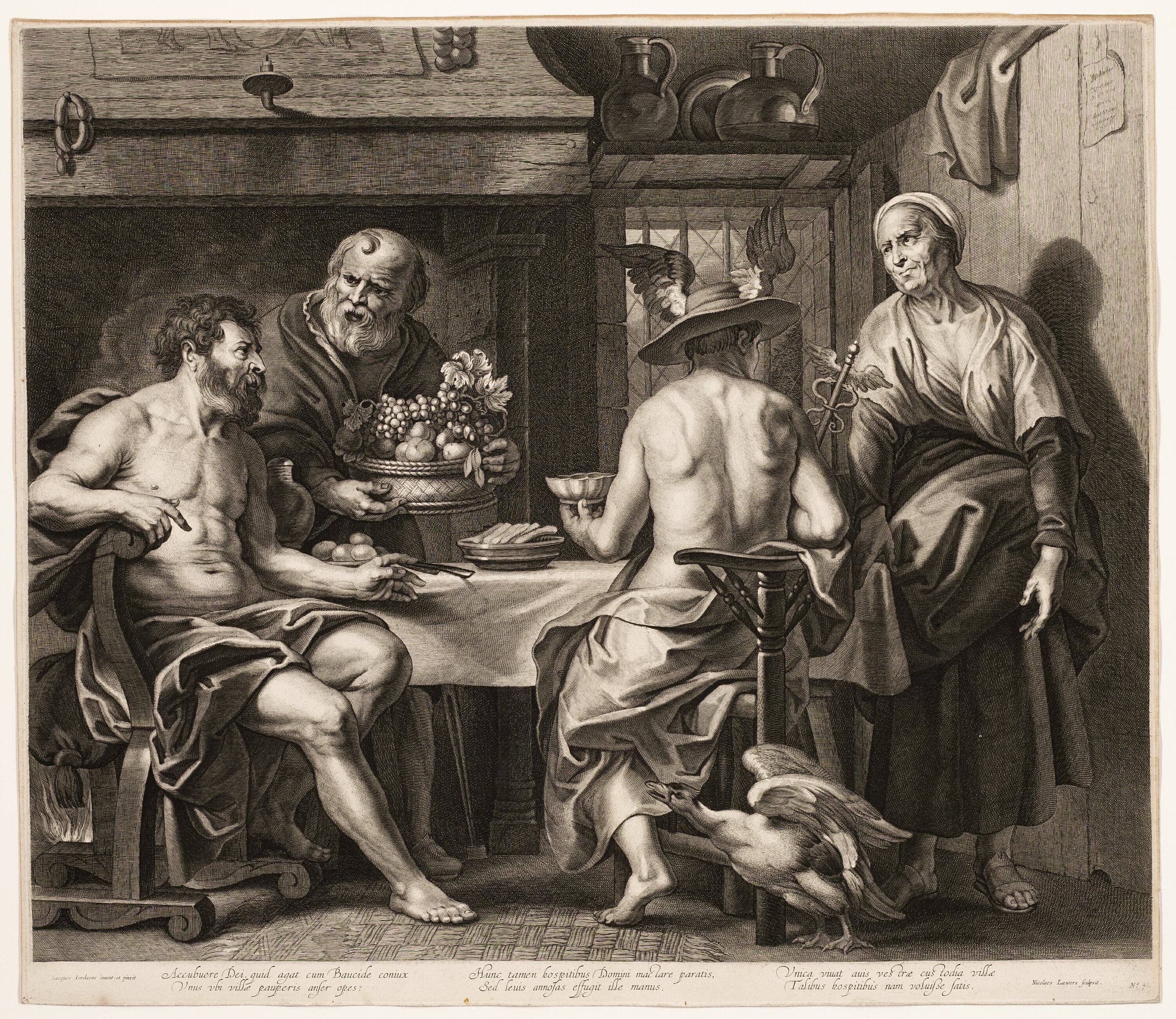
Ovid builds tension through dramatic irony. The reader recognizes the visitors as gods, but Philemon and Baucis do not. Every humble gesture becomes significant. When they apologize for their meager meal, Jupiter and Mercury are paying attention.
The symbolism is everywhere. The goose they try to catch is their most valuable possession, and they are willing to sacrifice it for strangers. When it runs to the gods for protection, that is Ovid working out divine justice.
Watch for ring composition. The story begins and ends with transformation: first the cottage becomes a temple, then the couple becomes trees. The structure itself mirrors the theme of metamorphosis.
How to Use This on the AP Latin Exam
Translation
For household descriptions, keep it simple and literal. A line like Parva mora est, epulasque foci misere calentes does not need fancy English: "There was a short delay, and the hearth sent out warm food" works.
The religious language needs more care. When they pray di, precor, augurium firmate (gods, I pray, confirm the omen), the formal register matters. "I beseech" or "I entreat" fits better than just "I ask."
During the transformation, Ovid switches to the present tense for vividness: frondere videt Baucida Philemon. Keep it present in English ("Philemon sees Baucis putting forth leaves") to preserve his immediacy.
Using Sources Effectively
Mark all the religious and hospitality vocabulary as you read. Questions often ask you to point to specific lines that show pietas or Roman values, so being able to locate that evidence quickly saves time.
Track who is doing what. The elderly couple often moves as a unit, so notice when Ovid separates them and when he joins them again. That choice is deliberate and worth citing in analysis.
Be ready to explain structure. Why does Ovid spend so long on the meal preparation? How does becoming trees fit the couple's character and wishes? Strong answers connect a specific detail back to the theme.
Common Trap
Do not overthink the metamorphosis. When a question asks why they become trees, the answer is usually direct: it is a reward that reflects their own wishes to die together and keep serving the gods.
Cultural Context
Roman hospitality was not just politeness; it was close to a religious duty, with Jupiter seen as a protector of guests and strangers. Turning away a guest could invite divine punishment, which is exactly what happens to the couple's neighbors in this story.
The poverty matters too. Philemon and Baucis have almost nothing, yet they share what they have. That simple virtue would resonate with Romans who idealized the modest lives of their ancestors over current luxury.
Their final transformation into trees that guard a temple is a kind of eternal service to the gods, a fitting reward that matches the values the whole episode praises.
Common Misconceptions
- Misconception: The transformation is a punishment.Actually: The transformation is not a punishment. Unlike many tales in the Metamorphoses, this change rewards the couple and grants them what they wished for.
- Misconception: casa and domus are interchangeable here.Actually: casa and domus are not interchangeable here. Ovid chooses casa to stress the couple's poverty, and that word choice is part of the meaning.
- Misconception: hospes has one fixed meaning.Actually: hospes does not have one fixed meaning. It can mean host, guest, or stranger depending on context, so check who is being described before you translate.
- Misconception: This passage is required syllabus reading, and the exam will test these exact lines.Actually: This passage is suggested practice, not required syllabus reading, so do not assume the exam will test these exact lines. Treat it as training for unseen poetry.
- Misconception: Ovid's present-tense transformation should be flattened into the past.Actually: The present tense is a deliberate stylistic choice for vividness.
Related AP Latin Guides
- 6.17 Ovid Metamorphoses 14 101-157 Aeneas Underworld Study Guide
- 6.19 Propertius Elegies 2.12, 4.1.1-70 Study Guide
- 6.13 Ovid Metamorphoses 3 402-510 Narcissus Study Guide
- 6.16 Ovid Metamorphoses 11 85-145 King Midas Study Guide
- 6.2 Catullus Social Personal Poems Study Guide
- 6.12 Ovid Metamorphoses 1 452-546 Daphne Study Guide
Practice Questions for 6.9
1 of 10
Tibullus 1.1.59-60
Tē spectem, suprēma mihī cum vēnerit hōra, / tē teneam moriēns dēficiente manū.
The metrical pattern of these elegiac lines creates which specific emotional effect through its structural contrast?
A.
The equal length of both lines creates a sense of balanced harmony reflecting the speaker's acceptance of death
B.
The pentameter's extra foot extends the emotional plea beyond the hexameter's natural conclusion
C.
The identical metrical stress patterns in both lines emphasize the repetitive nature of the speaker's devotion
D.
The longer hexameter line builds emotional intensity while the shorter pentameter provides resolution and closure
Vocabulary
The following words are mentioned explicitly in the AP® course framework for this topic.Term | Definition |
|---|---|
dactylic pentameter | A metrical line consisting of five dactylic feet, where each dactyl contains one long syllable followed by two short syllables. |
elegiac couplet | A pair of lines consisting of a dactylic hexameter followed by a dactylic pentameter, commonly used in Latin elegiac poetry. |
Frequently Asked Questions
What happens in Ovid’s Philemon and Baucis episode?
An elderly couple welcomes disguised Jupiter and Mercury into their poor home. Their hospitality is rewarded when their cottage becomes a temple and they are later transformed into trees.
What is the main theme of Philemon and Baucis?
The main theme is hospitality as pietas. The couple’s humble generosity contrasts with the surrounding community’s refusal to welcome strangers.
What grammar should I watch for in this passage?
Watch for correlatives like et...et and nec...nec, ablative absolutes, religious vocabulary, and transformation verbs.
Why are Jupiter and Mercury disguised?
Their disguise tests human hospitality. Because Philemon and Baucis welcome strangers without knowing they are gods, their piety appears sincere.
How is this transformation different from many Metamorphoses stories?
This transformation is a reward, not a punishment or escape. Becoming paired trees preserves the couple’s unity and honors their piety.
Is Philemon and Baucis a required AP Latin passage?
No. It is a suggested practice passage, not a required syllabus text. Use it for translation, cultural context, and literary analysis practice.
See Fiveable more often in Google
Mark Fiveable as a preferred source and Google is more likely to show you our guides in Top Stories, with a "preferred" badge in AI Mode and AI Overviews.