2.4 Pliny Letter 6.20.11-20 Study Guide

🏛AP Latin Unit 2 Review
2.4 Pliny Letter 6.20.11-20 Study Guide
🏛 AP Latin
Letter 6.20.11-20 is the second half of Pliny the Younger's eyewitness account to Tacitus about escaping the 79 CE eruption of Mt. Vesuvius from Misenum.
Why This Matters for the AP Latin Exam
This is required syllabus reading, so the Latin here can show up on both the multiple-choice and free-response parts of the AP Latin exam. The translation free-response question asks for an accurate, literal English version that accounts for the sense of every Latin word, and Pliny's eyewitness narrative gives you packed sentences to practice that on. Beyond translation, this passage is strong material for analysis questions where you develop an interpretation about a main idea, effect, purpose, or point of view, then cite and explain specific Latin as evidence. Because it sits in the epistolary genre and describes Pliny's own choices during a disaster, it also sets up later comparisons with how heroism is portrayed in Vergil's Aeneid.
Key Takeaways
- This section finishes Pliny the Younger's part of the Vesuvius story (Letter 6.20), addressed to the historian Tacitus.
- Translate literally and account for every word's sense; the translation question does not allow you to skip small words like adjectives and conjunctions.
- Watch the genitive of description (a quality of someone or something) and the ablative of respect ("in respect to" something).
- Some verbs govern dative, ablative, or genitive nouns even though English translates those nouns like direct objects.
- A subjunctive in a main clause can be translated as "may," "might," "would," "should," or "let," depending on context.
- Be ready to back up any interpretation of Pliny's purpose or attitude with specific Latin you can quote and explain.
Passage Snapshot
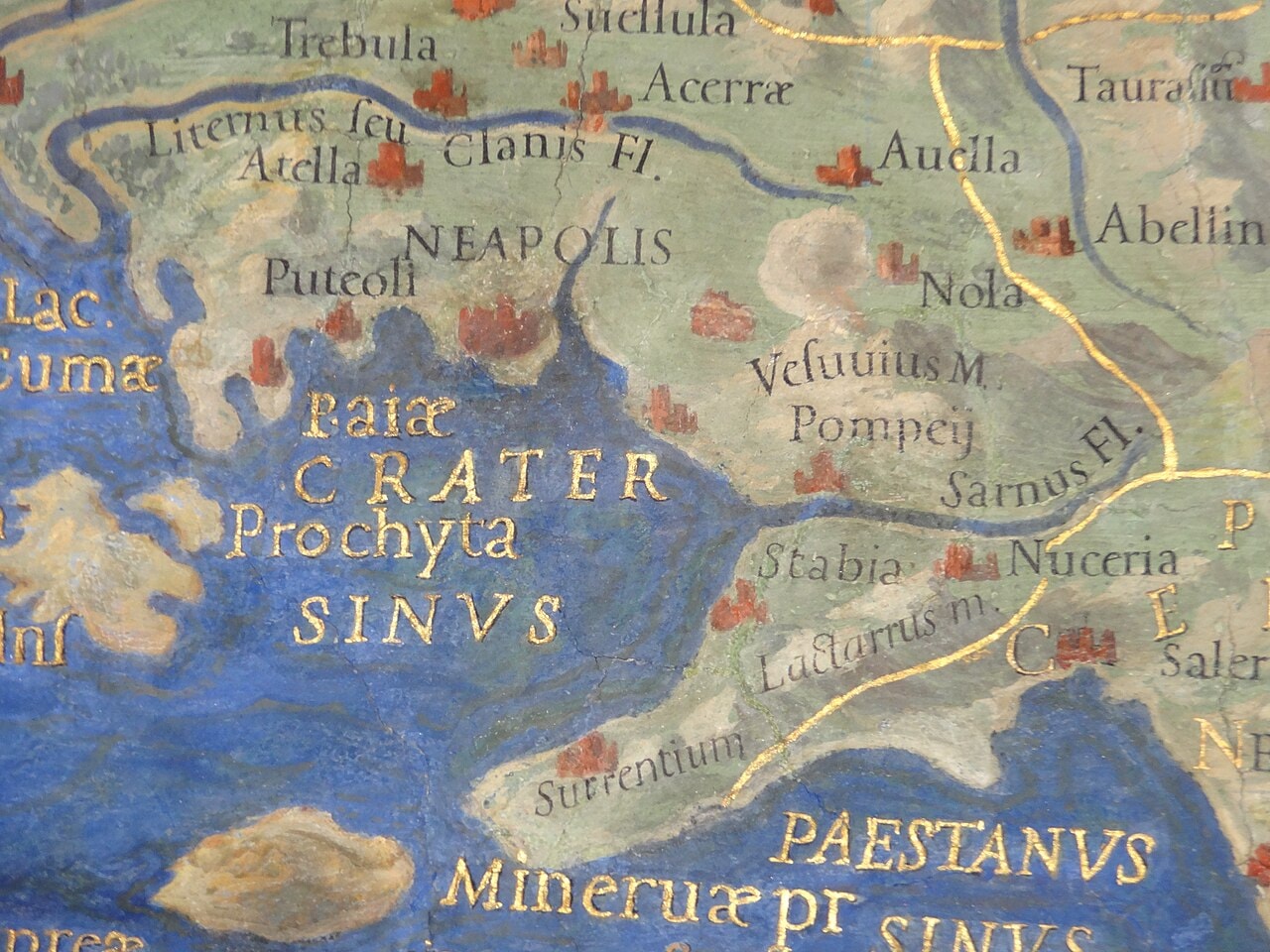
- Author and work: Pliny the Younger, Letter 6.20 to Tacitus
- Text type: Epistolary narrative, a letter that contains an eyewitness historical account
- Setting: Misenum, at the northern end of the Bay of Naples, during the 79 CE eruption of Mt. Vesuvius
- Themes to track: natural disaster, family loyalty, human behavior in a crisis, and how people explain catastrophe
- Grammar focus: genitive of description, accusative direct objects, ablative of respect, special verbs with non-accusative objects, and subjunctives in main clauses
Vocabulary by Theme
The required vocabulary for this topic is large, so grouping it makes review faster. These groupings are study aids, not official categories. Always confirm meaning in context.
Movement and Crowds
- proficiscor, -i, -fectus sum - to set out, depart (deponent: passive forms, active meaning)
- sequor, -i, secutus sum - to follow (deponent)
- discedo, -ere, -cessi, -cessum - to go off, depart, withdraw
- descendo, -ere, -i, descensum - to descend, go down
- gradus, -us (m.) - step, pace, walk
- agmen, -inis (n.) - column, crowd, throng
- turba, -ae (f.) - crowd, multitude, disturbance
- vestigium, -i (n.) - footstep, track, trace
Disaster and Setting
- nubila, -orum (n. pl.) - clouds, rainclouds
- ater, atra, atrum - black, dark, gloomy
- arena (harena), -ae (f.) - sand
- campus, -i (m.) - plain, open country
- oppidum, -i (n.) - town
- ingens, -entis - vast, huge, enormous
Fear and Reaction
- attonitus, -a, -um - astonished, stunned, dazed
- horrendus, -a, -um - dreadful, terrible
- horreo, -ere, -ui - to shudder, bristle
- clamor, -is (m.) - shout, cry, roar
- gemitus, -us (m.) - groan, sigh, lamentation
- miser, -era, -erum - wretched, pitiable
Life, Death, and Hope
- pereo, -ire, -ii, -itum - to perish, die, vanish
- morior, -iri, mortuus sum - to die (deponent)
- exstinguo, -ere, -nxi, -nctum - to extinguish, harm
- spes, spei (f.) - hope
- precor, -ari, -atus - to pray, beg, entreat (deponent)
- futurus, -a, -um - going to be, future
Decision and Speech
- consulo, -ere, -ui, -tum - to consult, deliberate, be mindful
- debeo, -ere, -ui, -itum - to owe; ought, should
- aio - to say, assert (defective verb)
- nuntio, -are, -avi, -atum - to announce, report
- voco, -are, -avi, -atum - to call, summon
Use the full required vocabulary table in the course materials for complete principal parts and every listed meaning. The groups above are a starting point, not the whole list.
Grammar and Syntax
Genitive of Description
The genitive can show a quality or descriptive property of a noun. Think of the pattern noun + genitive that tells you what kind of person or thing you have. The textbook model is femina magnae sapientiae, "a woman of great wisdom." The same genitive can also show the whole that a noun is part of (plus vini, "more wine") or a quasi-object of a noun that implies action (cupiditas regni, "desire for a kingdom"). When you see a genitive, ask whether it is describing, partitioning, or pointing to an implied action.
Ablative of Respect
An ablative of respect tells you in what way a statement is true. Translate it as "in," "in respect to," or "in regard to." For example, an ablative like corpore with an adjective can mean "in respect to the body," which you would smooth out as "physically." This is Pliny's way of being precise about how someone is affected. When an adjective seems too broad, check for an ablative that narrows it down.
Accusative as Direct Object
This is the basic one to keep straight while you sort out the trickier cases below: a noun in the accusative is usually the direct object, the thing receiving the action of the verb. Lock this in first, then test whether a verb actually wants a different case.
Special Verbs with Dative, Ablative, or Genitive Objects
Some verbs take objects in the dative, ablative, or genitive even though English makes those nouns sound like ordinary direct objects.
- Dative: persuadeo (persuade), impero (command), propinquo (approach), credo (trust, believe)
- Ablative: potior (gain control of), utor (use)
- Genitive: obliviscor (forget), potior (gain control of)
So persuadet mihi means "he persuades me," not "he persuades to me." When you meet one of these verbs, do not automatically hunt for an accusative object. Look for the case that verb actually governs. This pattern is easy to miss on a sight passage, so train your eye for it now.
Subjunctive in a Main Clause
A subjunctive verb can appear in a main clause, not just a subordinate one. Depending on context, translate it as "may," "might," "would," "should," or "let." It can express a command, a wish, or a possibility. When the main verb is subjunctive, decide which of these senses fits the moment in the narrative.
How to Use This on the AP Latin Exam
Translation
The translation free-response question wants a literal English version that accounts for the sense of every Latin word. That does not mean one English word per Latin word, but you cannot drop adjectives, conjunctions, or small connectors. After you finish a sentence, reread your English against the Latin and confirm nothing was skipped.
Work in this order:
- Find the main verb and its subject.
- Attach the direct object, but pause at any special verb that takes dative, ablative, or genitive.
- Translate participles, relative clauses, and other phrases as their own units.
- Reassemble into smooth but faithful English.
Watch the deponent verbs in this passage (like proficiscor, sequor, morior, precor). They look passive but translate active. Translating them as passives is a common way to lose points.
Analysis and Evidence
For analysis questions, develop a clear interpretation about a main idea, an effect or purpose, or Pliny's point of view, then support it with specific Latin you quote and explain. Do not just label a feature. Explain how or why the Latin creates the meaning you claim. For example, if you argue Pliny shows the crowd's terror, point to concrete words like attonitus, clamor, or gemitus and explain how they build that effect.
Context
Use what you know about Pliny and his world as evidence, not decoration. Pliny the Younger wrote these letters under the emperor Trajan and addressed the Vesuvius letters to the historian Tacitus. Pliny the Elder, his uncle and the author of the Natural History, has already died earlier in the wider account, which shapes the family dynamics in the flight from Misenum. Tie these facts to the text only when they actually support your reading.
Common Trap
Long Pliny sentences look scarier than they are. They are logically built, so resist translating left to right word by word. Anchor on the main verb first, then add each phrase or clause in place. A sentence that runs several lines is just a few smaller units stacked together.
Common Misconceptions
- Misconception: I can skip small words in the translation.Actually: The translation question expects the sense of every word, including adjectives and conjunctions, so dropping them costs you.
- Misconception: Accounting for every word means one English word per Latin word.Actually: It does not. You translate the full sense, and sometimes a phrase like inter medius becomes a single English word like "between."
- Misconception: persuadeo and impero take accusative objects.Actually: They govern the dative. The noun translates like a direct object in English but is dative in Latin.
- Misconception: Deponent verbs are passive because they look passive.Actually: Forms like proficiscor, morior, and precor are passive in form but active in meaning.
- Misconception: A subjunctive always belongs to a subordinate clause.Actually: A subjunctive can stand in a main clause and be translated as "may," "might," "would," "should," or "let."
- Misconception: Naming a literary feature is enough for analysis.Actually: You earn credit by explaining how the cited Latin creates the meaning, effect, or point of view you claim, not just by labeling it.
Related AP Latin Guides
Vocabulary
The following words are mentioned explicitly in the AP® course framework for this topic.Term | Definition |
|---|---|
dependent clause | A clause that cannot stand alone as a complete sentence and depends on a main clause for its meaning. |
main clause | An independent clause that can stand alone as a complete sentence, as opposed to a dependent clause. |
Frequently Asked Questions
What is Pliny Letter 6.20.11-20 about?
Pliny Letter 6.20.11-20 continues Pliny the Younger's eyewitness account of the 79 CE eruption of Mt. Vesuvius. In this section, Pliny describes the escape from Misenum, the crowd's fear, and his choices during the disaster.
Is Pliny Letter 6.20.11-20 required for AP Latin?
Yes. This passage is required syllabus reading for AP Latin, so the Latin can appear in multiple-choice questions and free-response tasks, including literal translation and analysis with evidence.
What grammar should I review for Pliny Letter 6.20.11-20?
Focus on the genitive of description, ablative of respect, accusative direct objects, special verbs that govern dative, ablative, or genitive nouns, and subjunctives in main clauses. Deponent verbs such as proficiscor, sequor, morior, and precor are also important.
How should I translate Pliny Letter 6.20.11-20 on the AP exam?
Start with the main verb and subject, then attach objects and clauses carefully. Translate literally enough to account for every Latin word, but use readable English. Watch small connectors, adjectives, deponent verbs, and verbs that take non-accusative objects.
What themes matter in Pliny Letter 6.20.11-20?
The most useful themes are natural disaster, family loyalty, human fear in a crisis, eyewitness authority, and how people explain catastrophe. For analysis, connect those themes to specific Latin words and phrases instead of summarizing the story generally.
How can I use this passage in AP Latin analysis?
Make a claim about Pliny's purpose, attitude, or point of view, then support it with short Latin evidence. For example, words connected to fear, crowd noise, or darkness can help explain how Pliny builds the experience of crisis.
See Fiveable more often in Google
Mark Fiveable as a preferred source and Google is more likely to show you our guides in Top Stories, with a "preferred" badge in AI Mode and AI Overviews.