1.6 Horace Odes 4.14 Praising Augustus Study Guide

🏛AP Latin Unit 1 Review
1.6 Horace Odes 4.14 Praising Augustus Study Guide
🏛 AP Latin
1.1
Catullus Love Poems
1.2
Catullus Social Personal Poems Study Guide
1.3
Catullus 64 Wedding Peleus Thetis Study Guide
1.4
Horace Life Philosophy Odes Study Guide
1.5
Horace Sermones 1.9 Boor Study Guide
1.6
Horace Odes 4.14 Praising Augustus Study Guide
1.7
Martial Epigrams Collection Study Guide
1.8
Ovid Amores 1.9, 3.1 Study Guide
1.9
Ovid Exile Poetry Study Guide
1.10
Ovid Fasti Book 3 Arion Study Guide
1.11
Ovid Heroides 1 and 7 Study Guide
1.12
Ovid Metamorphoses 1 452-546 Daphne Study Guide
1.13
Ovid Metamorphoses 3 402-510 Narcissus Study Guide
1.14
Ovid Metamorphoses 7 183-235 Daedalus Icarus Study Guide
1.15
Ovid Metamorphoses 8 611-724 Philemon Baucis Study Guide
1.16
Ovid Metamorphoses 11 85-145 King Midas Study Guide
1.17
Ovid Metamorphoses 14 101-157 Aeneas Underworld Study Guide
1.18
Ovid Metamorphoses 15.745-879 Celebration Caesars Study Guide
1.19
Propertius Elegies 2.12, 4.1.1-70 Study Guide
1.20
Vergil Aeneid Storm Divine Intervention Study Guide
1.21
Vergil Aeneid Trojan War Study Guide
1.22
Vergil Aeneid Epic Elements Study Guide
1.23
Vergil Aeneid War Scenes Study Guide
1.24
Vergil Georgics 4.485-503 Orpheus Eurydice Study Guide
1.25
Vergil Eclogues 4 Study Guide
1.26
Sulpicia Six Poems Study Guide
1.27
Tibullus Books 2.4 Study Guide
1.28
Medieval Later Authors Various Study Guide
1.29
Early American Latin Leo Kaiser Study Guide
1.30
Late Antique Medieval Collections Study Guide
TLDR
Horace's Odes 4.14 praises Augustus by spotlighting the Alpine military victories of his stepsons Tiberius and Drusus, letting their success reflect glory onto Augustus himself. As a Teacher's Choice poetry option in AP Latin, this ode gives you practice reading dense poetic word order, military and geographical vocabulary, and grammar like ablative absolutes and subjunctives, all while seeing how a poet handles political praise without turning into pure propaganda.
What Is Horace Odes 4.14 About?
Horace Odes 4.14 praises Augustus by presenting the achievements of Tiberius and Drusus as evidence of Roman strength, training, and leadership. For AP Latin, the ode is useful for practicing poetic word order, proper-name endings, ablative absolutes, subjunctives, and analysis of how praise works in Latin poetry.
Why This Matters for the AP Latin Exam
Odes 4.14 is one of the suggested practice texts your teacher may choose, not a required reading. That means you will not be tested on this exact poem, but the skills you build here transfer directly to the required Vergil and Pliny passages and to any sight passage you face.
This ode is good training because it pushes you to:
- Read poetic word order where words that belong together get separated across a line.
- Work out unfamiliar vocabulary (especially proper names and military terms) using context, prefixes, and roots.
- Explain how case endings and verb forms control meaning, which is exactly the kind of grammar reasoning that supports accurate translation.
Build fluency with these moves now and you will read faster and translate more precisely on every part of the AP Latin exam.
Key Takeaways
- Horace praises Augustus indirectly by celebrating the victories of his stepsons Tiberius and Drusus in the Alpine campaigns.
- Ablative absolutes like "dēvictīs Vindelicīs" pack multiple military victories into compact phrases.
- The poem's central idea, "fortes creāntur fortibus et bonīs," argues that bravery passes through good lineage and example.
- Geographical and tribal names map Roman expansion and need ending-checks, since the same name shifts case (Vindelicī vs. Vindelicīs).
- An extended eagle simile compares young Drusus to Jupiter's eagle, raising human achievement to cosmic scale.
- The praise stays artful rather than slavish: Horace credits the stepsons and Rome's destiny more than Augustus's personal action.
Grammar and Syntax
Ablative Absolutes for Military Narrative
Military accomplishments pile up in ablative absolutes:
- "dēvictīs Vindelicīs" (with the Vindelici took control of)
- "Rhaetīs subāctīs" (with the Rhaetians subdued)
These constructions let Horace list victories efficiently. Each ablative absolute is another military expansion added to the record, and together they create a sense of steady Roman success.
Patronymics and Family Terms
- "Nerōnibus" (to the Neros, meaning Tiberius and Drusus)
- "prīvignīs" (stepsons)
- "Augustī prōlēs" (offspring of Augustus)
The family relationships are layered. Tiberius and Drusus were Augustus's stepsons through Livia. Horace handles this carefully, framing them as worthy heirs through virtue rather than blood.
Potential Subjunctive in Praise
- "quid Marte possēs... mīlite tē duce" (what you could do in war... with the soldiery under your leadership)
Horace uses the potential subjunctive. He is not describing what Augustus did in person, but what Augustus could accomplish. That is praise once removed, and it shows how a verb's mood shapes the whole claim.
Vocabulary
Military Operations
- subigere - to subdue, take control of
- domare - to tame, break
- dēvincere - to completely take control of
- premere - to press, oppress
- fugāre - to put to flight
- sternere - to lay low
- cōnficere - to finish off
- triumphus - triumph
Latin has many words for taking control of. Each verb carries a slightly different shade of control or force, so notice which one Horace picks.
Geographical Terminology
- Vindelicī - Alpine tribe
- Rhaetī - another Alpine tribe
- Genaunus - Alpine people/region
- Breunus - Alpine people near the Brenner Pass
- Alpēs - Alps
- Dānuvius - Danube
- barbarus - foreign, non-Roman
These names map Roman expansion. Augustus's stepsons were securing the Alpine approaches to Italy, which protected the homeland.
Family and Lineage
- prōlēs, -is (f.) - offspring
- prīvignus - stepson
- paternus - paternal, fatherly
- genus, -eris (n.) - birth, lineage
- stirps, -is (f.) - stock, family line
- hērēs, -ēdis - heir
- alumnus - foster child, protégé
This vocabulary reflects concern about succession. Augustus had no biological sons, so Horace works to make stepsons read as real heirs.
Divine and Praise Language
- dīvus - divine, deified
- caelestis - heavenly
- augustus - venerable, majestic
- clārus - bright, famous
- praeclārus - very famous
- insignis - distinguished
- ēgregius - outstanding
Horace stacks praise vocabulary so Augustus reads as divinely and exceptionally good.
Literary Features
Extended Eagle Simile
Young Drusus is compared to an eagle:
- "qualem... āles... Iovis armiger" (like the winged armor-bearer of Jupiter)
This is more than "brave as an eagle." The simile runs across multiple stanzas and works on several levels:
- Eagle leaving the nest stands for youth entering war.
- Jupiter's favor stands for divine approval.
- The eagle's natural power stands for Roman destiny.
The comparison lifts human achievement to cosmic significance.
Catalogue of subject peoples
- "Vindelicī... Rhaetī... Genaunus... Breunus"
Lists of took control of tribes were standard in Roman victory poetry. Horace turns the list into poetry through sound patterns in the harsh tribal names, a geographical progression through the Alpine passes, and rhythmic variety that breaks expected patterns.
Inherited Virtue Theme
- "fortes creāntur fortibus et bonīs" (brave men are born from the brave and good)
This is the ode's central claim: virtue passes through bloodlines. Since Tiberius and Drusus are not blood relations of Augustus, Horace shifts toward education and example mattering as much as genetics.
Historical and Cultural Context
The Alpine Campaigns
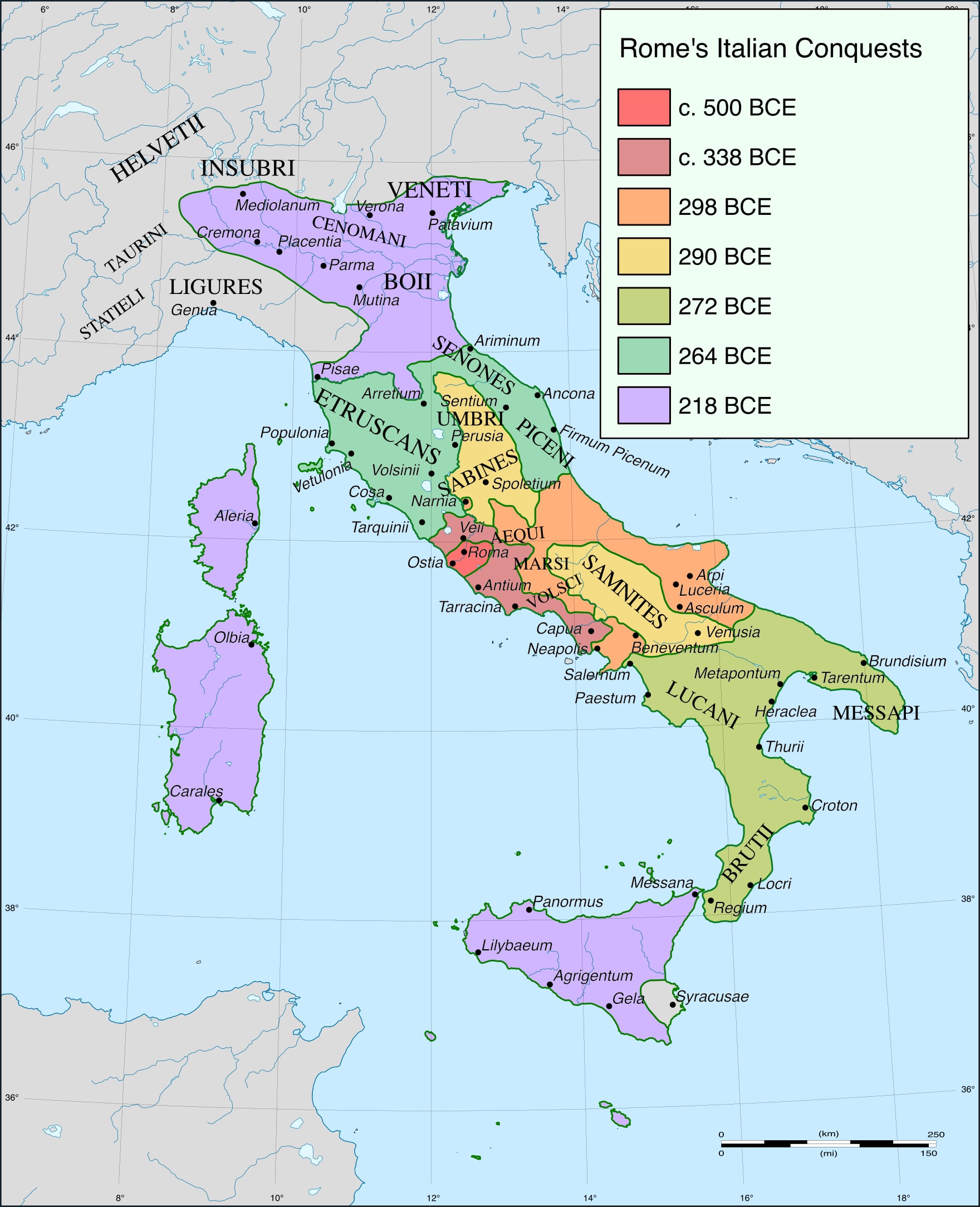
Tiberius and Drusus led campaigns to bring Alpine tribes under Roman control. This secured the northern Italian borders, the routes toward Gaul and Germania, and control of crucial passes. Horace writes soon after their return, when the victory was fresh, so the specific geography would resonate with readers at the time.
The Succession Problem
Augustus had no sons, only his daughter Julia, and his grandsons were still children. The stepsons Tiberius and Drusus represented hope for continuity. Horace's praise serves a political purpose: presenting these young men as worthy successors. The emphasis on inherited virtue matters precisely because literal inheritance was uncertain.
Poetic Independence and Patronage
Horace balanced gratitude and credibility. He owed praise to Augustus, but heavy flattery would undercut his standing as a poet. Notice how he praises the stepsons more than Augustus directly and celebrates Roman victory rather than personal glory. Those choices keep some artistic distance.
How to Use This on the AP Latin Exam
Translation
Keep proper names from derailing you:
- "Vindelicīs... Rhaetīs... Genaunō... Breunōque"
You can translate the sense broadly while you decode endings:
- "Alpine tribes... mountain peoples... northern regions... and the Breuni"
The specific names matter less than recognizing the impression of widespread military expansion, but always check the ending to get case and number right.
Aim for elevated but natural English:
- "quae cūra patrum quaeve Quirītium" (what care of senators or of citizens)
Avoid stiff, government-document phrasing. "What thanks from Senate or People" reads better than "What solicitude of the patricians or citizens" while staying accurate.
Using Sources Effectively
When you analyze a passage like this, support every claim with specific Latin. For example, if you argue that Horace makes the stepsons seem like true heirs, cite "fortes creāntur fortibus et bonīs" and explain how the line links bravery to lineage. Accurate, relevant, specific evidence is what analytical reasoning rewards.
Code Tracing the Eagle Simile
Track the extended comparison so it stays coherent:
- "ut Iovis āles... exercet... dēmīsit... vīdit..."
Follow the eagle through its actions while remembering it stands for Drusus. A clarifying paraphrase helps: "Like Jupiter's eagle, first learning flight, then striking prey, so Drusus..."
Common Trap
Watch the same proper name shift case between lines. "Vindelicī" is nominative plural, while "Vindelicīs" is ablative. One ending change moves the word from subject to an ablative absolute, which changes the whole clause.
Common Misconceptions
- Misconception: Horace is being sarcastic here.Actually: Horace is not being sarcastic here. Modern readers expect irony in political poetry, but he seems genuinely grateful for peace, even as he is careful about how he expresses it.
- Misconception: Augustus is the father, Livia is the mother, and Tiberius and Drusus are their sons celebrated in the poem.Actually: Augustus is the stepfather, Livia is the mother, and Tiberius and Drusus are the stepsons celebrated in the poem.
- Misconception: Praising military victory while valuing peace is a contradiction in Roman thinking.Actually: Praising military victory while valuing peace is not a contradiction in Roman thinking. The ideology is peace through strength and security through control.
- Misconception: Geographic names are fixed labels.Actually: Geographic names follow regular declension rules, so do not treat them as fixed labels. Check the ending to find case and number.
- Misconception: Book 4 is early Horace.Actually: This is late Horace. His earlier poetry was more personal, while Book 4 shows him taking on public themes while keeping his artistic standards.
Related AP Latin Guides
- 1.17 Ovid Metamorphoses 14 101-157 Aeneas Underworld Study Guide
- 1.19 Propertius Elegies 2.12, 4.1.1-70 Study Guide
- 1.13 Ovid Metamorphoses 3 402-510 Narcissus Study Guide
- 1.16 Ovid Metamorphoses 11 85-145 King Midas Study Guide
- 1.2 Catullus Social Personal Poems Study Guide
- 1.12 Ovid Metamorphoses 1 452-546 Daphne Study Guide
Frequently Asked Questions
What is Horace Odes 4.14 about?
Horace Odes 4.14 praises Augustus indirectly through the achievements of Tiberius and Drusus in the Alpine campaigns. The poem connects political praise, family succession, Roman security, and poetic artistry.
Is Horace Odes 4.14 required on the AP Latin exam?
This guide treats Odes 4.14 as suggested or teacher-choice practice. It helps you build AP Latin skills with poetic word order, proper-name endings, grammar in context, and evidence-based analysis.
What grammar should I watch in Horace Odes 4.14?
Watch ablative absolutes, subjunctives, proper names that shift case, and compact poetic phrases. The endings are especially important because geographical and tribal names can change function by case.
Why are Tiberius and Drusus important in this ode?
Horace uses their victories to reflect honor onto Augustus and to present the stepsons as worthy figures in Rome's future. The family and succession language is part of the praise.
What is the eagle simile in Horace Odes 4.14?
The eagle simile compares young Drusus to Jupiter's eagle, raising a human military achievement into a larger poetic and divine frame. Track the comparison carefully across the lines.
How do I analyze praise poetry in AP Latin?
Identify the claim of praise, cite specific Latin, and explain how grammar, imagery, word order, or allusion supports that praise. Avoid general statements that are not tied to the text.
See Fiveable more often in Google
Mark Fiveable as a preferred source and Google is more likely to show you our guides in Top Stories, with a "preferred" badge in AI Mode and AI Overviews.