6.3 Pacing Techniques: Scene and Summary

📓Intro to Creative Writing Unit 6 Review
6.3 Pacing Techniques: Scene and Summary
📓 Intro to Creative Writing
Narrative Time Manipulation
Pacing controls how fast or slow a story unfolds. Two core tools manage this rhythm: scenes zoom in on specific moments with vivid detail, while summaries speed things up to cover longer stretches quickly. But pacing isn't just about speed. Writers also rearrange when events appear in the narrative to shape how readers experience the story.
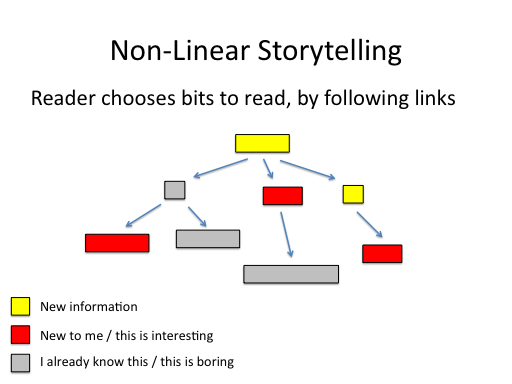
Nonlinear Storytelling Techniques
Most stories don't move in a straight line from beginning to end. Writers break chronological order to create suspense, reveal backstory, or hook readers from the first paragraph.
- Flashback interrupts the present narrative to show something that happened in the past. It's useful for revealing backstory or explaining why a character behaves a certain way. For example, a character freezing during an argument might trigger a flashback to a childhood trauma that explains the reaction.
- Flash-forward jumps ahead in the timeline to show a future event or outcome. This builds anticipation or dread. A story might open with a character standing in a courtroom, then jump back to show how they got there.
- In medias res drops the reader into the middle of the action, then fills in earlier events later. Instead of starting with "Once upon a time," the story might open mid-chase or mid-argument, pulling the reader in immediately.
Effects on Reader Engagement
These techniques do more than just rearrange events. They shape how readers feel:
- Withholding information through nonlinear structure creates mystery and suspense. Readers keep going because they want answers.
- Flashbacks and flash-forwards can deepen character development by revealing motivations or relationships that aren't visible in the present timeline.
- Starting in medias res generates immediate momentum. The reader is already inside the story before they've had a chance to lose interest.
Pacing Techniques
Balancing Scene and Summary
Scene and summary are the two fundamental modes of narration, and knowing when to use each one is what gives a story its rhythm.
A scene depicts events moment by moment, using dialogue, action, and sensory details to make the reader feel like they're watching it happen in real time. Think of a tense confrontation between two characters where every word and gesture matters. Scenes slow the narrative down and signal to the reader: this moment is important.
A summary condenses time and events into a quick overview. "The next three years passed in a blur of late shifts and cold dinners" covers a huge span in one sentence. Summaries move the story forward without lingering on stretches where nothing crucial happens.
Effective pacing alternates between the two. Too many scenes in a row and the story feels bogged down. Too much summary and the reader never gets to experience anything. The general principle: use scenes for the moments that matter most, and summary to bridge the gaps between them.

Manipulating Narrative Time
Beyond choosing scene or summary, you can adjust how fast time moves within a passage:
- Real-time narration unfolds at the same pace as the events themselves. A character defusing a bomb with ten seconds on the timer gets narrated second by second. This creates intense immediacy and tension.
- Time compression accelerates the pace by condensing or skipping less important events. A training montage in film works this way: months of effort reduced to a few key images. In prose, you might write "She spent the summer learning to sail" and move on.
- Varying speed within a single passage is where pacing gets interesting. You might summarize a character's entire morning in two sentences, then slow to real-time narration the instant they open a mysterious letter. That shift in speed tells the reader exactly where to pay attention.
Narrative Information
Delivering Exposition Effectively
Exposition is the background information readers need to understand the story: the setting, the characters' histories, the rules of the world. Every story requires some, but how you deliver it matters enormously for pacing.
The biggest pitfall is the info-dump, where the narrative stops cold to explain three paragraphs of backstory. This kills momentum. Instead, effective exposition gets woven in naturally:
- Through dialogue, where characters reveal information in conversation without it feeling forced
- Through a character's thoughts or observations as they move through a scene
- Through brief narrative interludes that slip in context without overstaying their welcome
Techniques like in medias res actually help with exposition. Because the reader enters the story mid-action, background details can be parceled out gradually as the story progresses, keeping curiosity alive rather than front-loading everything.
Understanding Narrative Time
Narrative time refers to the way events are arranged and paced within a story, which often differs from the chronological order in which those events actually occurred. A story might cover thirty years but spend half its pages on a single afternoon.
Everything covered in this unit connects back to narrative time. Nonlinear techniques (flashbacks, flash-forwards, in medias res) rearrange when information reaches the reader. Pacing methods (scene, summary, time compression) control how quickly the reader moves through events. Exposition delivery determines what the reader knows and when they learn it. Together, these tools let you shape the reader's emotional experience from start to finish.
See Fiveable more often in Google
Mark Fiveable as a preferred source and Google is more likely to show you our guides in Top Stories, with a "preferred" badge in AI Mode and AI Overviews.