5.2 Sensory Details and Atmosphere

📓Intro to Creative Writing Unit 5 Review
5.2 Sensory Details and Atmosphere
📓 Intro to Creative Writing
Sensory Details
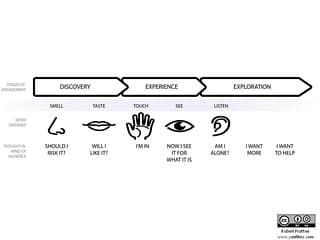
Good fiction doesn't just tell readers what a place looks like. It makes them feel like they're standing in it. Sensory details are the specific, concrete descriptions that engage a reader's five senses: sight, sound, smell, taste, and touch. When you layer multiple senses into a scene, you create an immersive experience that pulls readers into your story world.

Top images from around the web for Engaging the Reader's Senses
vpclil-five-senses - 03-CLASSROOM SCENARY View original
Is this image relevant?
Engaging the Five Senses | Engaging the Five Senses | Flickr View original
Is this image relevant?
Engaging The Five Senses - Expanded | Engaging The Five Sens… | Flickr View original
Is this image relevant?
vpclil-five-senses - 03-CLASSROOM SCENARY View original
Is this image relevant?
Engaging the Five Senses | Engaging the Five Senses | Flickr View original
Is this image relevant?
Engaging the Reader's Senses
Most beginning writers default to visual description. That's natural, but it leaves a lot on the table. Think about walking down a busy city street. You don't just see it. You hear car horns and conversation, smell exhaust mixed with food from a nearby cart, feel the grit of the sidewalk under your shoes. A scene that captures all of that feels real in a way that visual-only description can't.
A few principles for working with sensory details:
- Be specific, not generic. "The room smelled bad" tells us almost nothing. "The room smelled like burnt coffee and wet carpet" puts us there.
- Choose details that matter. You don't need to catalog every sensation. Pick the two or three details that best establish the place, the mood, or the character's state of mind.
- Vary which senses you use. If every paragraph describes what things look like, try leading with sound or smell instead. Non-visual senses often feel more surprising and immediate to readers.
Crafting Powerful Imagery
Imagery is descriptive language that creates mental pictures (and sounds, textures, etc.) in the reader's mind. Strong imagery is specific and concrete. Weak imagery is vague or relies on clichés.
Compare these two descriptions:
Weak: "Her eyes sparkled like diamonds in the sunlight."
Stronger: "Sunlight caught her eyes and they went pale green, almost translucent, like sea glass."
The first version uses a cliché comparison that doesn't help readers see anything new. The second gives us a specific color and a fresh comparison that actually creates a visual.
Figurative language tools like similes (comparisons using "like" or "as"), metaphors (direct comparisons without "like" or "as"), and personification (giving human qualities to non-human things) can all sharpen your imagery. But the technique only works if the comparison is fresh and relevant to the scene. A metaphor that doesn't fit your story's world or tone will feel forced.

Synesthesia and Unconventional Descriptions
Synesthesia is a literary device where you describe one sense using the language of another. For example: "The sound of her laughter was a bright yellow" blends hearing and sight. "His voice tasted like copper" blends hearing and taste.
This technique works because it jars readers out of their expectations. It forces them to process a sensation in a new way, which can make a description feel vivid and original.
You can also use paradoxical descriptions for a similar effect. "The silence was deafening" is technically a contradiction, but readers instantly understand the feeling it captures. These unconventional choices, used sparingly, help you develop a distinctive voice and keep your prose from feeling predictable.
The key word is sparingly. If every sentence uses synesthesia or paradox, the effect wears off fast. Save these techniques for moments where you want the reader to really stop and notice.
Atmosphere and Emotion
Sensory details are the raw materials. Atmosphere is what you build with them. It's the overall emotional feeling a scene creates in the reader: dread, warmth, unease, wonder. Getting atmosphere right is what makes a reader feel something, not just picture something.

Establishing Tone and Mood
Tone and mood are related but distinct:
- Tone is the writer's attitude toward the subject. It comes through in word choice, sentence rhythm, and what the narrator chooses to notice. A scene described with clipped, dry sentences has a different tone than one described with long, flowing ones, even if the events are identical.
- Mood is the emotional atmosphere the reader experiences. A story can create a mood of foreboding, joy, claustrophobia, nostalgia, or anything else.
Tone is something you control as the writer. Mood is what the reader feels as a result. They usually align, but not always. A narrator with a darkly humorous tone can create a mood that's unsettling and funny at the same time.
You build mood through:
- Word choice. "The house sat at the end of the lane" vs. "The house crouched at the end of the lane." Same house, very different feeling.
- Sensory detail selection. Choosing to describe the flickering light and the smell of mildew sets a different mood than describing warm lamplight and the smell of baking bread.
- Pacing. Short, choppy sentences create tension. Longer, slower sentences create calm or dreaminess.
Crafting Emotional Resonance
Emotional resonance is what happens when your writing makes the reader genuinely feel something. It's the difference between a reader thinking "that character is sad" and actually feeling a pang of sadness themselves.
The classic advice here is "show, don't tell", but it's more accurate to say balance showing and telling. If a character is grieving, you might show them mechanically washing the same dish over and over (action that reveals emotion) while also giving us a brief glimpse of their inner thought. Neither technique alone is always enough.
Emotional resonance also depends on:
- Relatable characters. Readers connect with characters who feel real, with contradictions and specific desires, not just archetypes.
- Universal experiences. Themes like loss, longing, belonging, and fear tap into emotions most readers have felt, even when the specific situation is unfamiliar.
- Earned moments. A scene hits harder when the story has built up to it. If you want a moment to land emotionally, the groundwork needs to be laid earlier in the narrative.
Employing Figurative Language
Figurative language uses non-literal expression to convey meaning, create imagery, or evoke emotion. You've already seen similes, metaphors, and personification above. Here are the main tools and what each one does well:
- Simile ("her voice was as smooth as silk") creates a clear, explicit comparison. Good for making abstract qualities concrete.
- Metaphor ("his anger was a raging fire") makes the comparison direct and immediate. Tends to feel stronger and more assertive than a simile.
- Personification ("the wind whispered through the trees") makes non-human elements feel alive and active. Useful for building atmosphere.
- Hyperbole ("the weight of the world on his shoulders") exaggerates for emotional effect. Works well for conveying how something feels rather than how it literally is.
- Understatement deliberately downplays something significant, often creating irony or dark humor.
The goal with any figurative language is to make the reader feel or see something more clearly than literal description would. If a metaphor doesn't do that, cut it. A plain, precise sentence is always better than a fancy one that doesn't land.
See Fiveable more often in Google
Mark Fiveable as a preferred source and Google is more likely to show you our guides in Top Stories, with a "preferred" badge in AI Mode and AI Overviews.