1.1 Defining Creative Writing and Its Genres

📓Intro to Creative Writing Unit 1 Review
1.1 Defining Creative Writing and Its Genres
📓 Intro to Creative Writing
Types of Creative Writing
Creative writing is any writing where the primary goal is artistic expression rather than just conveying information. It spans everything from novels to poems to memoirs, and each form comes with its own set of tools and expectations.
Knowing the major types and genres helps you pick the right form for whatever you're trying to say. A haunting personal memory might work best as a poem or a memoir. A big, world-building idea might call for fiction. The form you choose shapes how your reader experiences your work.

Top images from around the web for Narrative Forms
Lesson 3: Elements of Fiction | Introduction to Creative Writing View original
Is this image relevant?
Screenwriter - Wikipedia View original
Is this image relevant?
Lesson 3: Elements of Fiction | Introduction to Creative Writing View original
Is this image relevant?
Screenwriter - Wikipedia View original
Is this image relevant?
Narrative Forms
Fiction tells invented stories. These can be inspired by real life, but the events, characters, or settings are imagined or reshaped by the writer. Fiction is the broadest category here and includes novels, short stories, and flash fiction.
Drama is fiction written specifically to be performed on stage. Instead of narration, it relies on dialogue and stage directions to tell the story. The writer has to communicate everything through what characters say and do, which makes it a very different challenge from prose fiction.
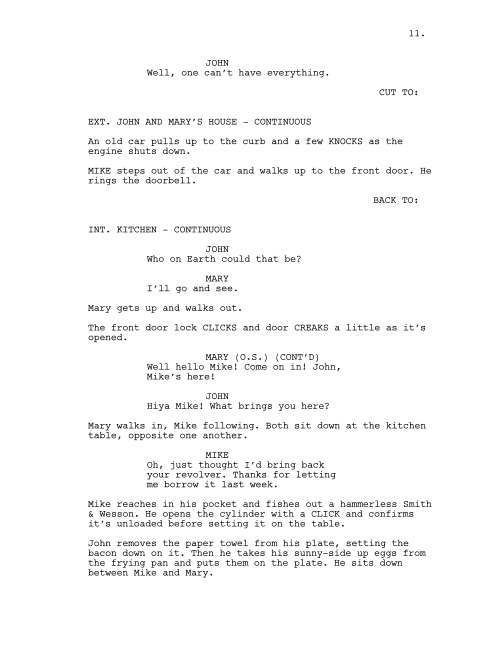
Screenwriting is fiction written for film or television. It uses a specific script format with scene headings, action lines, and dialogue. Unlike a novel, a screenplay is a blueprint for a collaborative production, so the writing tends to be visual and concise.
Poetic and Reflective Forms
Poetry expresses emotions, experiences, and ideas through carefully chosen and arranged language. Poets rely heavily on rhythm, imagery, and figurative devices like metaphor and simile. A poem can be as short as two lines or span many pages, but every word choice tends to carry more weight than in prose.
Creative nonfiction tells true stories using literary techniques. The facts are accurate, but the writing reads more like a novel or essay than a textbook. Memoir and the personal essay are two of the most common forms (more on those below).
Fiction Genres
Categorizing Fiction by Style and Technique
Not all fiction gets categorized by subject matter. Some categories describe how a story is told rather than what it's about.
- Genre fiction follows the established conventions of a specific category (romance, mystery, science fiction). Readers come in with certain expectations, and the writer works within or against those expectations.
- Literary fiction prioritizes artistic expression, character depth, and thematic exploration over plot-driven conventions. It often features complex narrative structures and more ambiguous endings.
- Experimental writing pushes the boundaries of traditional storytelling. This might mean nonlinear timelines, stream-of-consciousness narration, or unusual formatting on the page. The goal is to create a reading experience that feels genuinely new.
These categories aren't rigid walls. Plenty of great books blend literary ambition with genre conventions.

Popular Commercial Fiction Genres
- Romance centers on the development of a romantic relationship between protagonists and typically ends with a satisfying emotional resolution, often called the "happily ever after." It's consistently one of the best-selling fiction genres.
- Mystery revolves around a crime or puzzle to be solved. A detective or amateur sleuth unravels clues to identify the culprit, and the reader often tries to solve the case alongside them.
- Science fiction explores imaginative concepts grounded in scientific or technological possibilities. Think time travel, alien encounters, or dystopian societies. The best sci-fi uses these speculative elements to examine real human questions.
- Fantasy creates immersive imaginary worlds with magical or supernatural elements, often drawing on mythology and folklore. Epic quests, mythical creatures, and alternate realities are common features.
Creative Nonfiction Genres
Personal Narratives and Life Stories
Memoir is autobiographical writing that focuses on a specific theme, event, or period in the author's life. Unlike a full autobiography, a memoir doesn't try to cover everything. It zeroes in on a particular experience and uses narrative techniques to convey personal growth or insight.
Personal essays explore the author's thoughts and reflections on a particular topic. They blend storytelling with analysis and introspection. A personal essay might start with a specific moment but then expand outward into bigger ideas.
Blending Fact and Creative Expression
These genres take real-world subjects and present them with the vividness and narrative pull of fiction.
- Travel writing combines factual accounts of journeys and destinations with vivid descriptions, anecdotes, and personal impressions. The goal is to transport readers to a place, not just inform them about it.
- Nature writing observes and reflects on the natural world, blending scientific knowledge with poetic language and philosophical reflection. Writers like Annie Dillard and Robin Wall Kimmerer are well-known examples.
- Literary journalism applies storytelling techniques to report on real events and people. It maintains factual accuracy while immersing readers in scenes, dialogue, and character. You might also hear this called narrative nonfiction or creative reportage.
See Fiveable more often in Google
Mark Fiveable as a preferred source and Google is more likely to show you our guides in Top Stories, with a "preferred" badge in AI Mode and AI Overviews.