14.4 Revising Based on Feedback

📓Intro to Creative Writing Unit 14 Review
14.4 Revising Based on Feedback
📓 Intro to Creative Writing
Editing Approaches
Revision is where writing actually takes shape. Getting feedback is only half the equation; the other half is knowing what to do with it. That means understanding the different levels of editing, choosing the right revision strategies, and working with beta readers effectively.

Top images from around the web for Types of Editing
What developmental editors do for authors - Late Last Night Books View original
Is this image relevant?
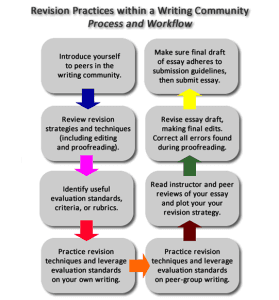
Editing and Proofreading | English Composition 1 View original
Is this image relevant?
What is Editing? – Effective Editing View original
Is this image relevant?
What developmental editors do for authors - Late Last Night Books View original
Is this image relevant?
Editing and Proofreading | English Composition 1 View original
Is this image relevant?
Types of Editing
Not all editing is the same. Each type targets a different layer of your writing, and recognizing which one you need saves a lot of wasted effort.
Developmental editing focuses on big-picture elements: structure, pacing, characterization, and plot. This is where you ask whether scenes are in the right order, whether a character's arc makes sense, or whether the middle of your story sags. Developmental feedback often sounds like "I lost interest in chapter three" or "I don't understand why this character made that choice."
Line editing is a line-by-line review of the text to improve clarity, flow, and language. It addresses sentence structure, word choice, and paragraph organization. This is where you vary sentence length to control rhythm, cut redundancies, and sharpen your prose so each sentence earns its place.
Rewriting means making substantial changes to content, often in response to issues flagged during developmental editing. This could mean reorganizing entire sections, cutting or adding material, or significantly altering tone and style. That might look like completely reimagining a character, restructuring the plot from scratch, or scrapping a scene and writing a new one that serves the story better.
Applying Editing Approaches
These three types of editing correspond roughly to different stages of revision:
- Developmental editing comes first, while the work's foundation is still being established. There's no point polishing sentences in a scene you might end up cutting.
- Line editing comes next, once the core elements are in place and you're confident in the structure.
- Rewriting can happen at any point but is most common after developmental feedback reveals a major problem.
In practice, the process is rarely this linear. You might do several rounds of developmental editing, move into line editing, and then realize a structural issue that sends you back to rewriting. That's normal. Revision is iterative, and each pass through the work tends to reveal something new.
Revision Techniques
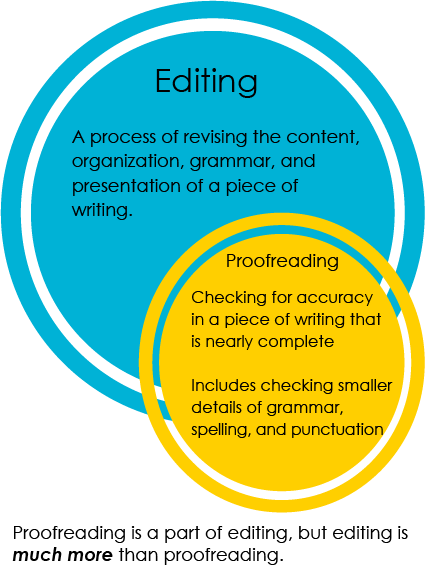
Strategies for Effective Revision
A common mistake is sitting down to "revise" without a clear plan, reading through the whole draft, and making scattered changes. That approach tends to produce a lot of small tweaks but misses bigger problems. A more effective approach is to give each revision pass a specific focus:
- Single-focus passes. Dedicate one read-through to dialogue, another to description, another to pacing. This keeps you from getting overwhelmed and helps you catch problems you'd miss if you were trying to fix everything at once.
- Break it into sections. Revising a full manuscript is daunting. Working through it scene by scene or chapter by chapter makes the task more manageable and gives you a sense of progress.
- Incorporate feedback in stages. After receiving critique, sort the suggestions by type (structural, stylistic, line-level) and address them in that order. Structural changes come first because they can make some line-level notes irrelevant.
Structural Changes
Structural revision modifies the underlying framework of a piece. Common structural moves include:
- Rearranging the order of scenes to improve pacing and narrative flow
- Adding or removing subplots to streamline the story and maintain focus
- Adjusting the balance between action, dialogue, and description for better cohesion
If multiple readers say the story "drags in the middle" or "the ending felt rushed," that's almost always a structural problem, not a sentence-level one. No amount of line editing will fix a scene that's in the wrong place.
Stylistic Improvements
Stylistic revision is about refining your voice and making the language more precise and evocative. This includes:
- Matching tone to content. Lyrical, flowing prose suits a literary romance; short, terse sentences build tension in a thriller. If the tone clashes with what's happening in the story, readers feel it even if they can't name why.
- Employing literary devices like metaphor, alliteration, and foreshadowing to add depth. Use these deliberately rather than decoratively.
- Pruning extraneous words to create leaner, more impactful writing. Common targets: unnecessary adverbs, weak dialogue tags ("he said angrily" vs. showing the anger through action), and filler phrases that don't carry meaning.

Consistency Checks
Consistency errors are easy to introduce during revision, especially after multiple drafts. Before you consider a piece finished, verify:
- Character details remain constant throughout (appearance, backstory, motivations). If a character has brown eyes on page 10, they shouldn't have blue eyes on page 80.
- Plot logic holds up without contradictions or gaps. Each event should follow plausibly from what came before. It helps to outline your revised draft after the fact to check for holes.
- Point of view and narrative voice stay consistent across the entire work. An unintentional POV shift can pull readers right out of the story.
- Timeline and setting details stay accurate. If it's winter in chapter two, make sure it hasn't become summer by chapter three without explanation.
Feedback Sources
Beta Readers
Beta readers are people who read your work before publication and offer feedback from a reader's perspective. They're often other writers, but they can also be avid readers with no writing experience. What matters is that they give you honest reactions: where they got confused, where they lost interest, which characters they connected with, and which plot points didn't land.
Why beta readers matter: As the writer, you know what you meant to put on the page. Beta readers tell you what actually came through. If three out of four readers misunderstand a character's motivation, the problem is on the page, not with the readers.
Choosing the right beta readers:
- Look for people who read and enjoy your genre. A reader who loves literary fiction may not give you useful feedback on a horror story, and vice versa.
- Aim for a mix of backgrounds and perspectives (age, gender, cultural context). A diverse group of readers better simulates the range of responses your work will get from a broader audience.
- Try to find readers who can articulate why something isn't working, not just that it isn't. "This part was boring" is less useful than "I skimmed this section because the dialogue felt repetitive."
Working with beta reader feedback:
- Approach suggestions with an open mind, but keep a clear sense of your own vision for the piece.
- Consider each suggestion carefully and decide which ones align with your goals. You don't have to accept every piece of advice.
- Pay special attention to patterns. If one reader dislikes something, that might be personal taste. If several readers flag the same issue, it's worth addressing. The diagnosis might differ from reader to reader, but if they're all pointing to the same spot, something there needs work.
See Fiveable more often in Google
Mark Fiveable as a preferred source and Google is more likely to show you our guides in Top Stories, with a "preferred" badge in AI Mode and AI Overviews.