5.3 World-Building Techniques

📓Intro to Creative Writing Unit 5 Review
5.3 World-Building Techniques
📓 Intro to Creative Writing
Setting Elements
World-building is the process of crafting a fictional universe that feels real enough for readers to inhabit. Even if your story takes place in a version of the real world, you're still making choices about what details to include, what rules govern the space, and how the environment shapes your characters. Strong world-building doesn't require epic fantasy or sci-fi. It just requires that the world on the page holds together and feels lived-in.

Top images from around the web for Fictional Universe and Geography
lord of the rings - Did maps in Middle-Earth have west on the top? - Science Fiction & Fantasy ... View original
Is this image relevant?
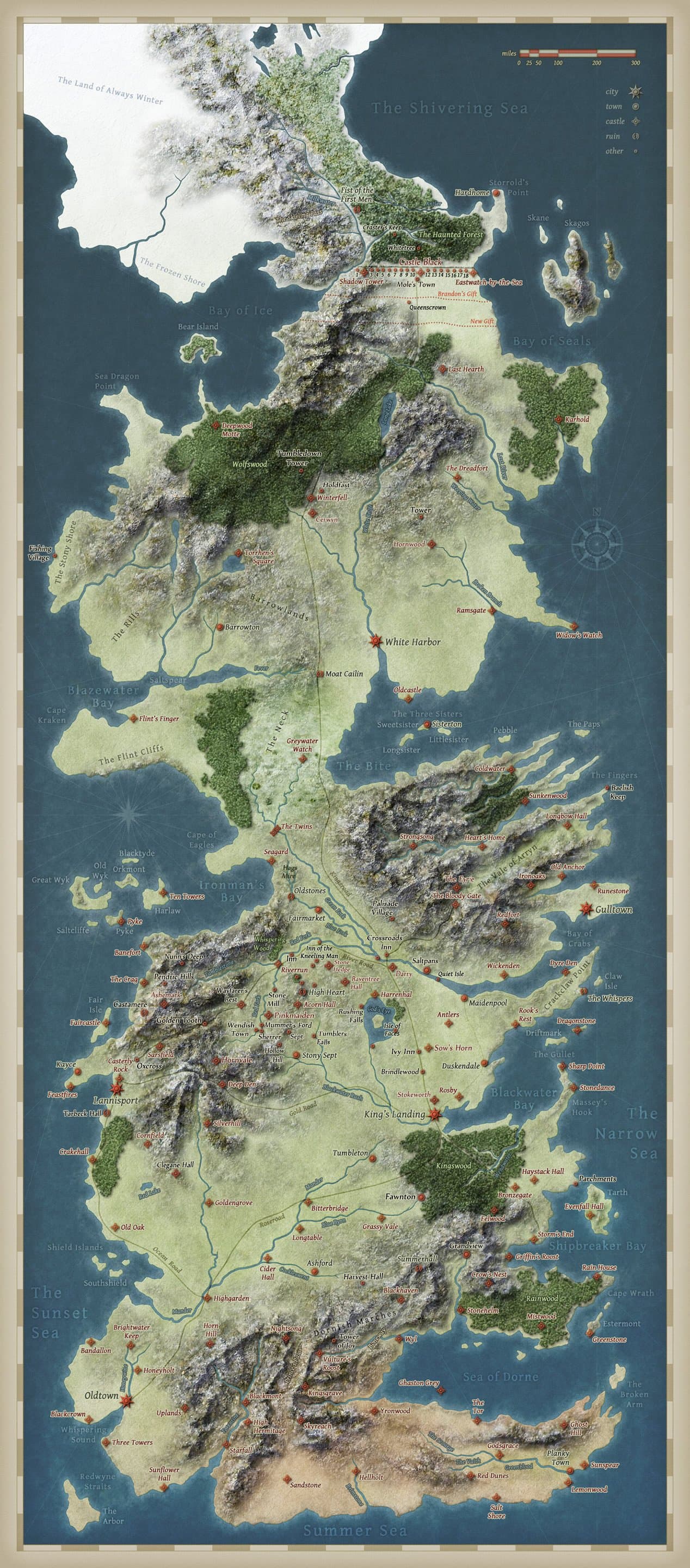
File:Map of westeros.jpg - A Wiki of Ice and Fire View original
Is this image relevant?
Kingdoms of Westeros by Keyser94 on DeviantArt View original
Is this image relevant?
lord of the rings - Did maps in Middle-Earth have west on the top? - Science Fiction & Fantasy ... View original
Is this image relevant?
File:Map of westeros.jpg - A Wiki of Ice and Fire View original
Is this image relevant?
Fictional Universe and Geography
Your fictional universe is everything about the imaginary world you create, from its physical landscape to its weather patterns and ecosystems. Geography matters because it directly shapes how civilizations develop, how cultures form, and what your characters care about. A desert society will have different values, conflicts, and daily routines than one built around a river delta.
When building geography, think about how the physical world creates constraints and opportunities for the people living in it:
- Landscapes like mountains, coastlines, and forests affect trade routes, borders, and isolation between groups
- Climate influences what people eat, wear, and build, plus how they spend their time
- Ecosystems determine what resources are available and what dangers exist
You don't need to draw a full map (though some writers find that helpful). What matters is that the physical world feels consistent and that it connects to how your characters live. Tolkien's Middle-earth works because the geography creates real obstacles for the journey. George R.R. Martin's Westeros uses a massive ice wall in the north and a narrow sea to the east to shape the entire political landscape.
History and Culture
History is the backstory of your world: the wars, migrations, discoveries, and disasters that happened before your story begins. You won't dump all of this on the reader, but you need to know it because it explains why things are the way they are. A kingdom that survived a famine fifty years ago will have different laws and anxieties than one that's known only prosperity.
Culture covers the customs, beliefs, languages, and social norms of your world's inhabitants. This is where world-building gets personal, because culture shows up in small, specific details:
- How do people greet each other? What's considered rude?
- What do they celebrate, and what do they mourn?
- What stories do they tell their children?
Frank Herbert's Dune builds the culture of Arrakis around water scarcity. The Fremen's rituals, language, and values all grow from that single environmental fact, which makes the culture feel organic rather than invented. In the Harry Potter series, Rowling layers in wizard customs (moving portraits, enchanted mail, magical candy) that make the world feel textured and fun.
The goal is to develop cultural elements that connect logically to your world's geography and history, not just to pile on exotic details.
Technology and Magic Systems
The level of technology in your world shapes everything from daily life to political power. A world with printing presses will have different information flow than one relying on oral tradition. You don't have to write sci-fi to think about this. Even a realistic contemporary story involves choices about how technology affects your characters.
Some common technology frameworks in speculative fiction:
- Steampunk features steam-powered, Victorian-era-inspired machinery
- Cyberpunk imagines high technology alongside social inequality (think neon-lit cities and corporate dystopias)
- Low fantasy keeps technology roughly medieval or pre-industrial
If your world includes magic, you need to decide how it works. A magic system is the set of rules governing supernatural abilities in your story. The key question is: what are the limits? Magic without limits removes tension, because characters can solve any problem instantly.
Brandon Sanderson (author of Mistborn) talks about a useful principle: the more clearly readers understand a magic system's rules, the more satisfying it is when magic solves problems. His "Allomancy" system requires characters to ingest specific metals to gain specific powers, and each power has a cost. That structure creates real stakes.
Even looser, more mysterious magic systems (like in The Lord of the Rings) still have implied boundaries. Gandalf can't just fix everything, and readers accept that because the story treats magic as rare and costly.

Consistency and Coherence
Maintaining Consistency
Once you establish how your world works, you have to stick to those rules. Consistency is what keeps readers trusting your story. If you establish that magic requires physical exhaustion, your character can't cast spells all day without consequence in Chapter 12 just because the plot needs it.
Inconsistencies pull readers out of the story. They stop thinking about your characters and start thinking about your mistakes.
Practical techniques for staying consistent:
- Keep a world-building document where you record rules, place names, distances, and details as you invent them
- Build a timeline of major events, both in your world's history and during the story itself
- Track character knowledge. Characters should only know what they'd realistically know given where they've been and who they've talked to
- Reread with an eye for contradictions during revision, specifically checking details like travel time, weather, and how systems (magic, technology, government) behave
Coherence in Social Structures
Social structures are how society is organized in your world: who holds power, who doesn't, and why. These structures need to make sense given everything else you've established about the world's history, resources, and culture.
Ask yourself questions like:
- Who controls the most valuable resource, and how did they get that control?
- What happens to people who break the rules?
- Are there groups in conflict, and what's the root of that conflict?
In Aldous Huxley's Brave New World, the rigid caste system (Alphas through Epsilons) is coherent because it connects directly to the world's advanced reproductive technology and its philosophy of social stability above all else. The social structure grows from the technology, which grows from the history. Everything links together.
When social structures feel arbitrary or unexplained, readers lose their grip on why characters behave the way they do. Coherent structures give characters clear motivations and make conflicts feel real.

Storytelling Techniques
Exposition and World-Building
Exposition is how you deliver information about your world to the reader. The challenge is that readers need context to understand your story, but they don't want a lecture. Dumping large blocks of explanation (often called info-dumping) kills narrative momentum and bores readers.
The goal is to weave world-building details into the story so naturally that readers absorb them without noticing. Here are techniques that work:
- Reveal through character interaction. Two characters arguing about a law tells the reader about the legal system and advances the conflict at the same time.
- Use environmental details. Describing a crumbling statue in a town square can convey history without a single line of backstory narration.
- Tie exposition to plot. Readers pay attention to information when it matters to what's happening right now. Explain the magic system when a character needs to use it, not three chapters earlier.
- Let characters be curious. A newcomer or outsider character gives you a natural reason to explain things, because they'd genuinely need to ask.
In Dune, Herbert drops readers into a complex political and ecological world and lets them piece it together through dialogue, rituals, and conflict. It's disorienting at first, but it rewards attention. Rowling takes a gentler approach in Harry Potter, using Harry's own ignorance of the wizarding world as a vehicle for the reader to learn alongside him.
"Show, Don't Tell" in World-Building
"Show, don't tell" means revealing your world through concrete sensory details, character actions, and lived experience rather than direct explanation.
Compare these two approaches:
Telling: The people of Kael were deeply religious and feared the ocean.
Showing: Maren knelt at the tide line, pressing her forehead to the wet sand. Behind her, the other villagers watched the waves from a distance, their hands clasped around the bone charms at their throats.
The second version communicates the same information (religious, ocean-fearing culture) but lets the reader experience it. You see the ritual, the body language, the specific detail of bone charms. The reader draws their own conclusions, which makes the world stick in their memory.
Techniques for showing your world:
- Sensory details. What does this place smell, sound, and feel like? A market scene with spice smoke, shouting vendors, and sticky heat tells you about the economy, climate, and daily life all at once.
- Character behavior. How people act reveals cultural norms. If a character flinches when someone uses a certain word, that tells you something about the society without any explanation.
- Everyday consequences. Show how technology or magic affects ordinary routines. In Ursula K. Le Guin's The Left Hand of Darkness, the alien biology of the Gethenians isn't explained in a textbook passage. It surfaces through how characters relate to each other, how their society is structured, and what they find normal.
The strongest world-building combines both showing and telling. Pure showing can leave readers confused; pure telling can leave them bored. The skill is knowing when to let a detail speak for itself and when to give the reader a direct, brief explanation to keep them oriented.
See Fiveable more often in Google
Mark Fiveable as a preferred source and Google is more likely to show you our guides in Top Stories, with a "preferred" badge in AI Mode and AI Overviews.